 Home
Home
In Memory of
Clara Brown
MyHistoryStone Archive
1800 – 1885
Denver, Colorado, United States · 85 years
Final Resting Place
Riverside Cemetery, Denver
Location
Central City, in Gregory Gulch
In motion
5 photographs
The photographs on this page, brought to life.
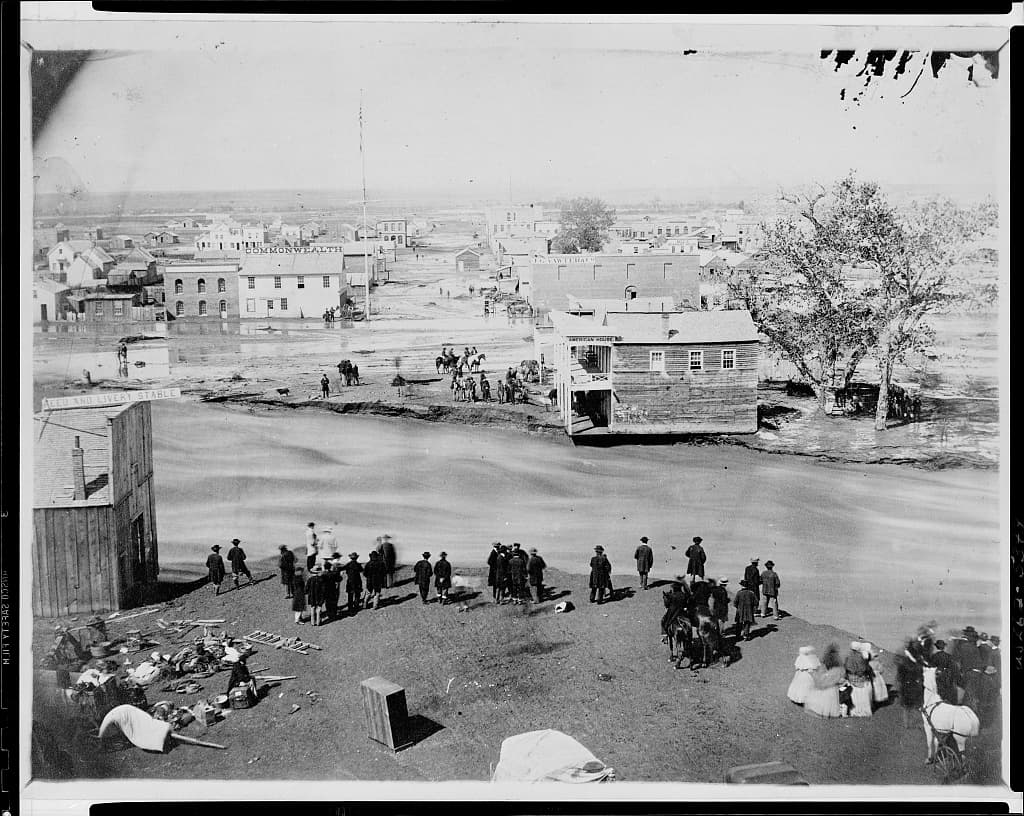
The Denver flood of 19 May 1864, five years after she walked in with the wagon train she cooked for. George D. Wakely, Library of Congress, Prints and Photographs Division
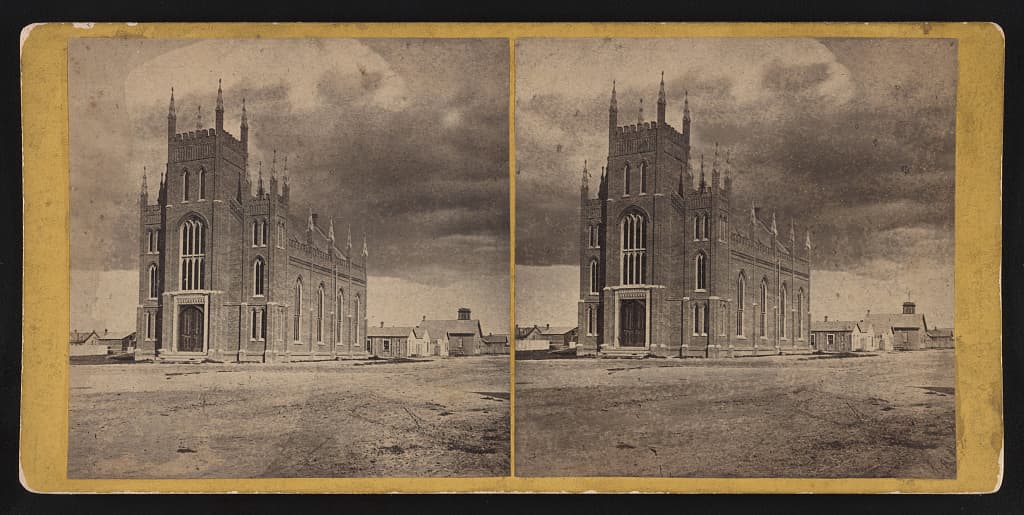
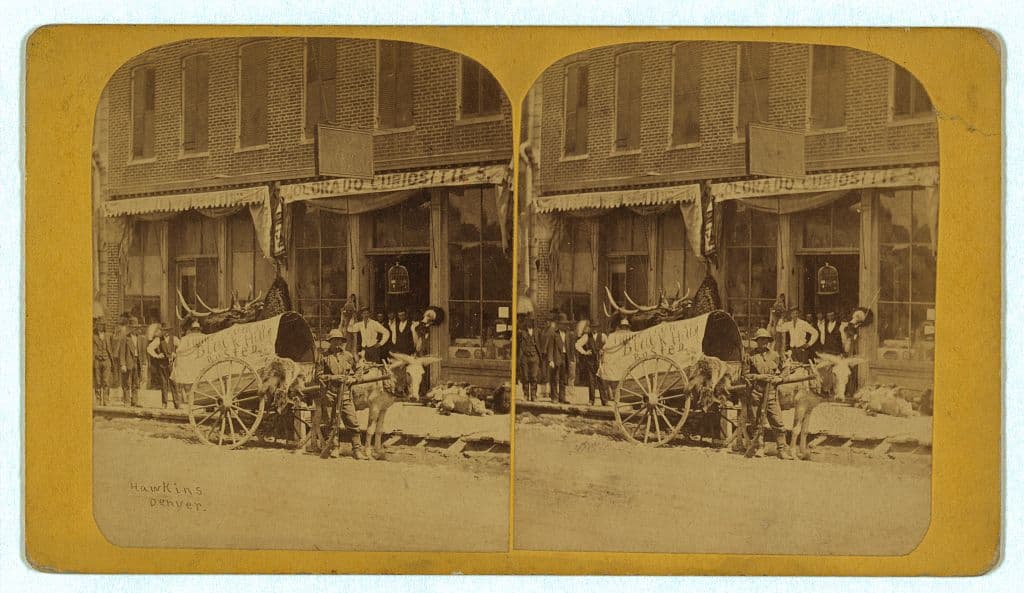
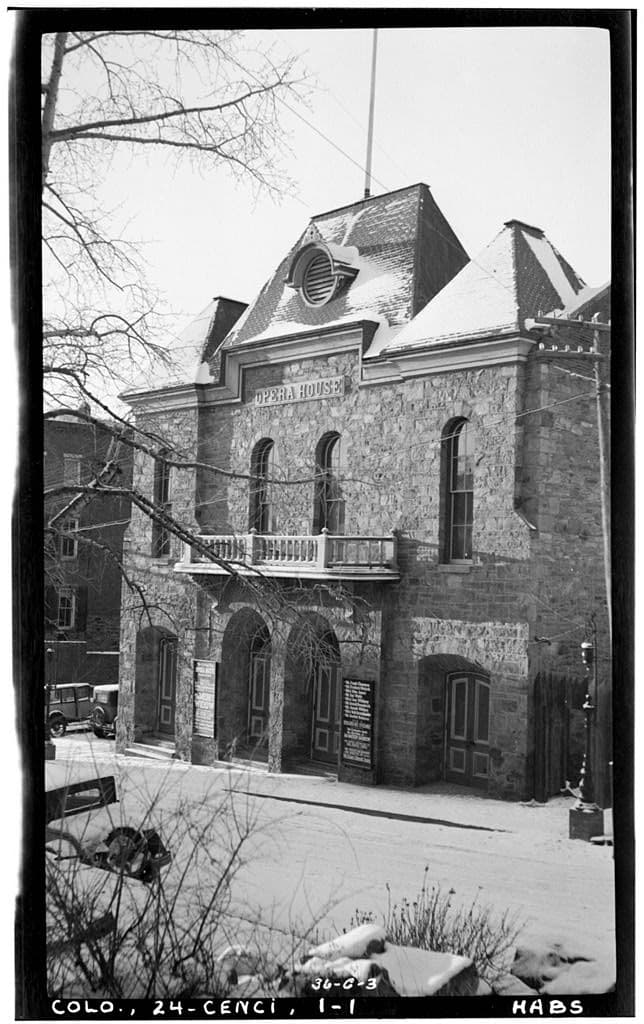
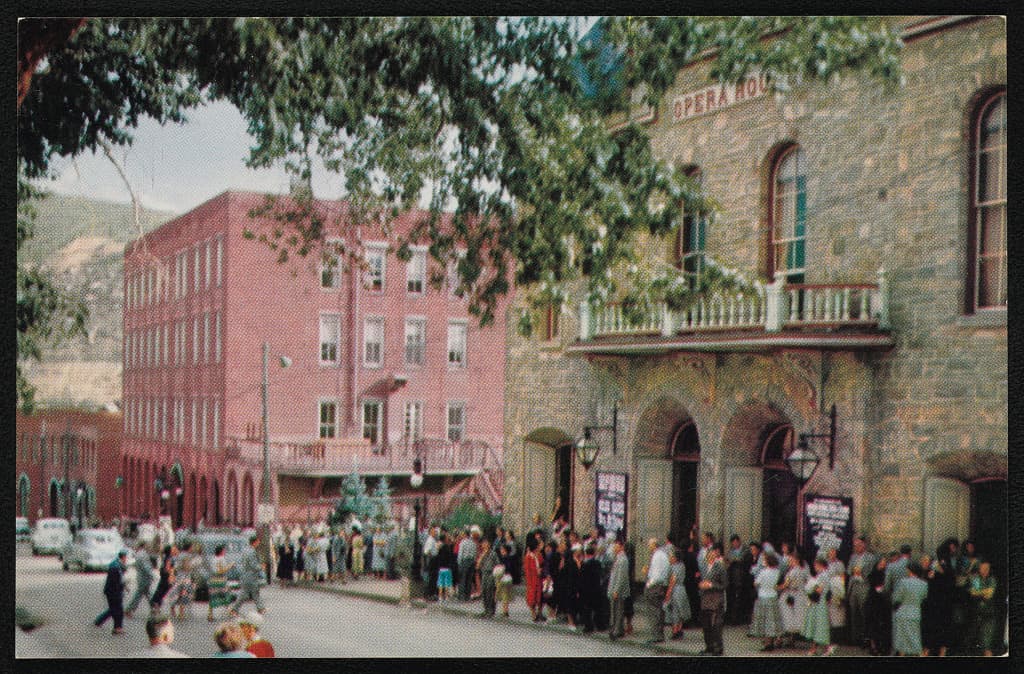
She was sold away from her husband and three of her children at auction, and she spent the next forty-seven years looking for one of them. Clara Brown was born enslaved in Virginia, near Fredericksburg. Colorado's own encyclopedia says around 1803; another account gives 1 January 1800. She was held first by a tobacco farmer named Ambrose Smith, and later in Kentucky by a man named George Brown, whose surname she carried for the rest of her life. She married a man named Richard when she was eighteen. They had four children: Richard, Margaret, and twin girls, Paulina Ann and Eliza Jane. Paulina Ann drowned as a small child. Then, in 1835, Ambrose Smith died, and settling his estate meant selling his people. The family was sold separately at auction and sent in different directions. George Brown bid high to get Clara. Her husband and her daughter Margaret both died still enslaved. Her son Richard was sold on and on until the record simply loses him. That left Eliza Jane, and Eliza Jane is what this page is about. She was freed in 1859, at fifty-six. One account says it was stipulated in George Brown's will; Colorado's encyclopedia says only that she was freed according to Kentucky law, which at the time required a freed person to leave the state. So she left. In April 1859 she was hired by a Colonel Benjamin Wadsworth as cook for a wagon train of twenty-six men, and travelled eight weeks to Denver. One southern man on the train complained the whole way about a Black woman travelling with them, and the record notes it. She is believed to have been the first African American woman of the Colorado gold rush, and the source that says so hedges it with "believed to be," so we will too. In Gregory Gulch, which became Central City, she opened what is described as the first laundry in Gilpin County, and she was very good at it. Within a few years she had saved ten thousand dollars. She held sixteen lots in Denver, seven houses in Central City, and property and mining interests in Boulder, Georgetown and Idaho Springs. One Colorado source reckons that ten thousand dollars at about a million in today's money. She spent it. She helped found churches: she was a founding member of a nondenominational Union Sunday school, one of the first Methodist services in the area was held in her house, and she gave money towards a Catholic church and towards what is called the first Protestant church in the Rocky Mountains. The marker outside Saint James Methodist in Central City records it in passing, and we quote it with its own typographical errors intact because that is what is on the sign: "Rev. George W. Fisher, a wagonmaker and lay preacher, was the first first resident pastor. For a while services where held in the home of 'Aunt' Clara Brown, a former slave." And after the war she used the money to bring formerly enslaved people west. How many is a number we cannot give you cleanly. The figure that appears in the record is sixteen, given once as "16 relatives and others who were former slaves" and once as "16 or more." Colorado's own encyclopedia gives no number at all. The figure of twenty-six that circulates in retellings appears nowhere we could reach, and we suspect it has been borrowed from the twenty-six men on the wagon train she cooked for in 1859, which is a different fact entirely. No source gives a dollar figure for what the effort cost her. She never stopped looking for Eliza Jane. In 1882, when Clara was eighty-two years old, she found her, in Council Bluffs, Iowa. A local paper, the Nonpareil, described her on 4 March 1882 as "still strong, vigorous, tall, her hair thickly streaked with gray, her face kind." She came back to Denver with a granddaughter, and Eliza Jane visited her mother until she died. Eliza Jane's married name is not in anything we could reach. Neither are the names of any other grandchildren. By then the money was gone, spent on charity, spent on the search, and taken by real estate agents who cheated her. She died in Denver on 23 October 1885 and is buried at Riverside Cemetery. The mayor of Denver, John Long Routt, and the governor of Colorado, James Benton Grant, came to her funeral. She had been voted into the Society of Colorado Pioneers, in 1884 by one account and 1885 by another, in the last year or two of her life. She is very often called its first Black member, and neither source we reached actually uses that phrase, so we are not going to either. She went into the Colorado Women's Hall of Fame in 1989 and the Colorado Business Hall of Fame on 27 January 2022. An opera about her, Gabriel's Daughter, was staged at Central City in 2003. In 2012 a hill above Central City that had been called Negro Hill was renamed Clara Brown Hill. Two things you may have read about her, we could not confirm. She is often said to have a memorial chair at the Central City Opera House; the opera's own history page names memorial chairs for other people and does not mention her. She is often said to be in a stained glass window at the Colorado State Capitol; the account of that building's windows does not name her. Both may well be true. Neither is where people say it is. And there is no photograph of her in the Library of Congress. We searched, and what came back was a mayor's wife in Baltimore, an Englishwoman on a motorcycle, and Clara Barton. If you are descended from anyone she brought west, or from Eliza Jane, we would very much like to hear from you. She spent a fortune finding one daughter. The rest of the family is still missing. Compiled by MyHistoryStone from the Colorado Encyclopedia, published biographical accounts of Clara Brown, the Council Bluffs Nonpareil of 4 March 1882 as quoted in the published record, the Central City Opera's own published history, and the Saint James Methodist Church historical marker in Central City, Colorado.
Share a memory
Leave a memory or a message for the family. What you write appears right away, and the family can remove any entry.
Loading messages...