 Home
Home
A Tribute to
The Choctaw Gift to Ireland
MyHistoryStone Archive
1847
Scullyville, Oklahoma, United States
Hometown
The Choctaw Nation, Indian Territory
Location
Midleton, County Cork, Ireland
In motion
4 photographs
The photographs on this page, brought to life.
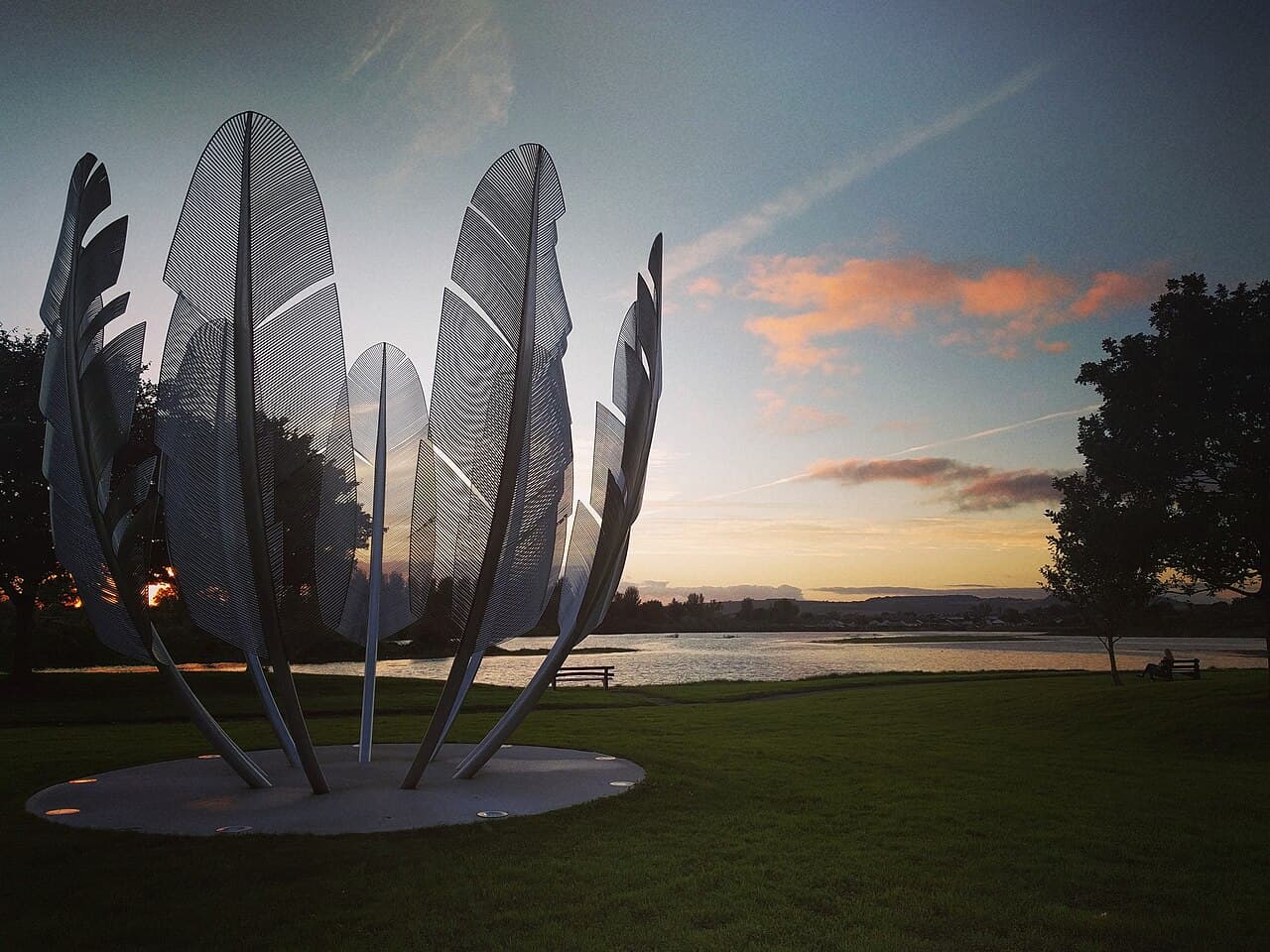
Kindred Spirits at Midleton, County Cork: nine steel eagle feathers standing in a circle. Gavin Sheridan, via Wikimedia Commons (CC BY-SA 4.0)
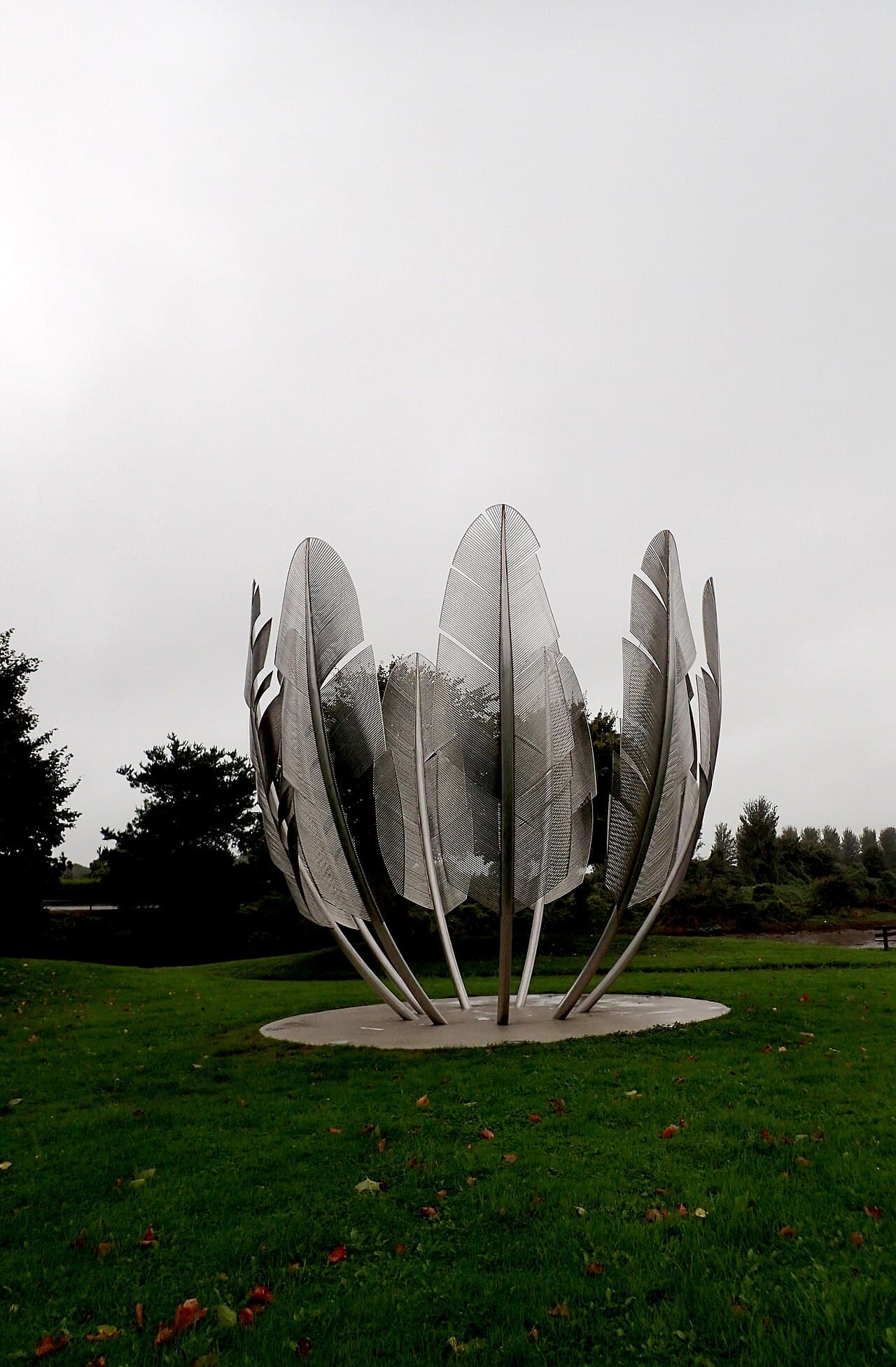
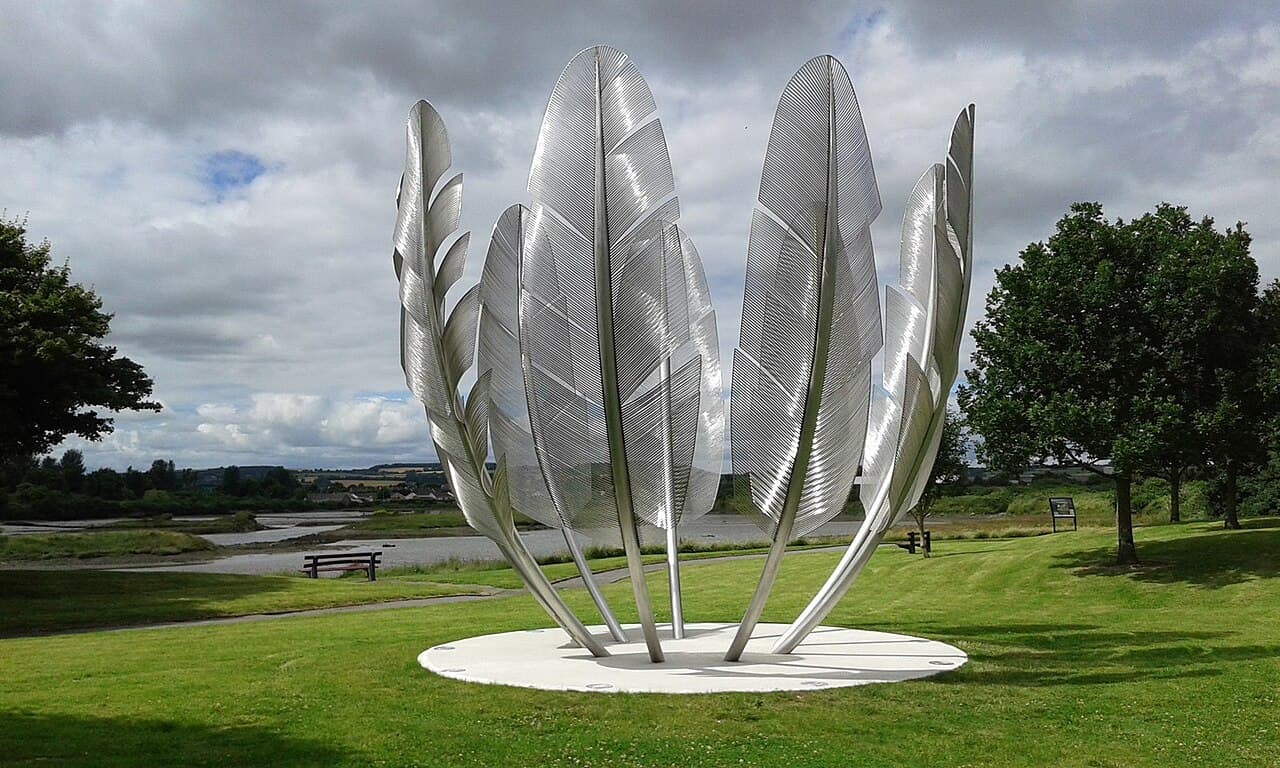
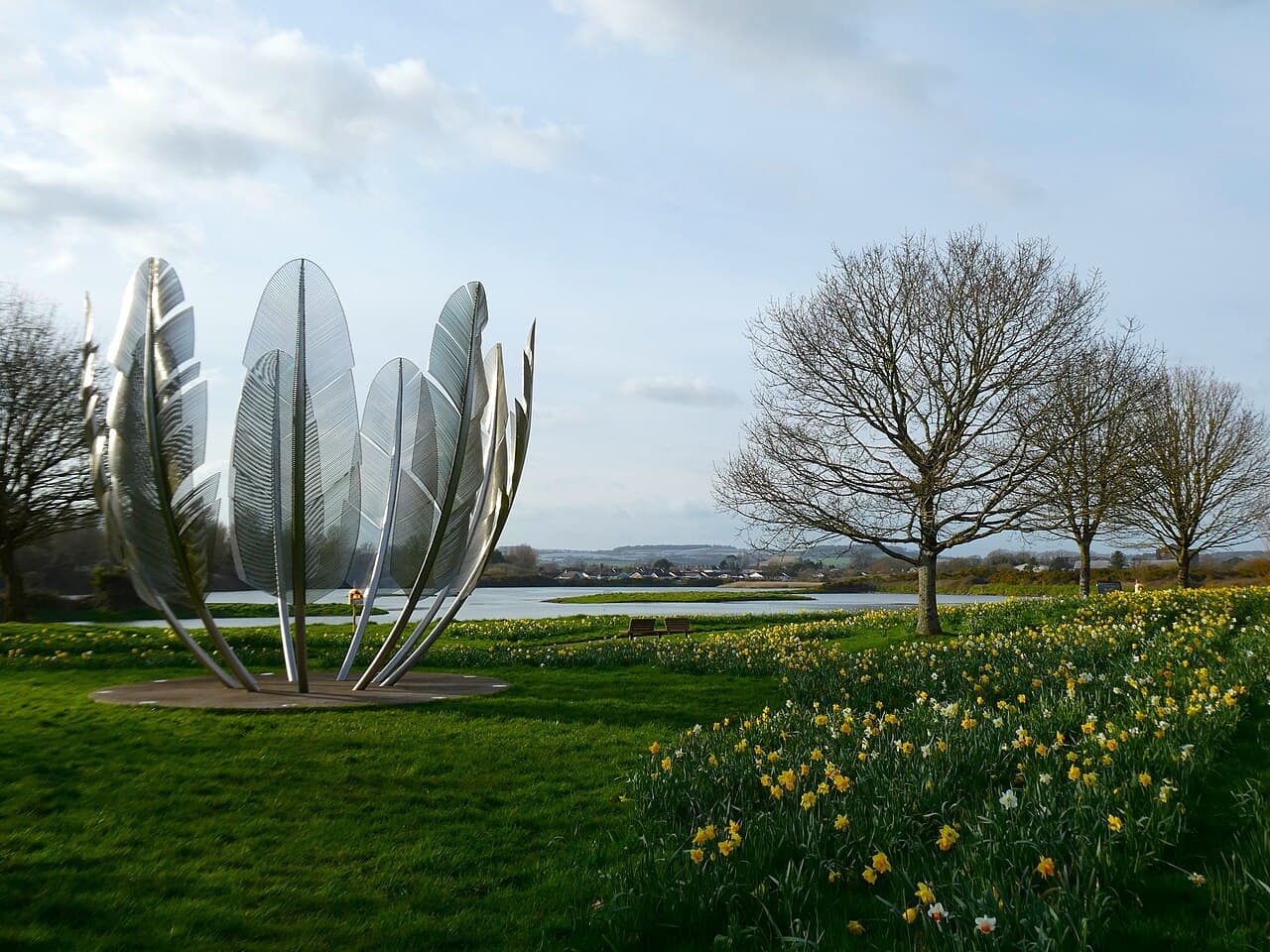
In 1847 a group of Choctaw people in Indian Territory took up a collection for the starving poor of Ireland, a country none of them had seen, four thousand miles away. They had arrived where they were by walking, under guard, sixteen years earlier. The Choctaw were the first nation removed under the Indian Removal Act, walking west between 1831 and 1833. Estimates of how many died on that road run from two thousand five hundred to six thousand. It is a Choctaw chief who is credited with the phrase that came to name it, calling the journey a "trail of tears and death," and the sources that quote him do not give his name. Judy Allen, writing in the Choctaw Nation's own newspaper in 1992, put the interval plainly: "It had been just 16 years since the Choctaw people had experienced the Trail of Tears." How much they gave has never been settled, and this is the part of the story we most want you to see honestly. The figure everyone uses is $170. One careful account calls it only "the usual figure cited," which is a quiet way of saying nobody has proved it. What that money is worth now depends entirely on who did the conversion and when: about $5,000 in today's money by the Choctaw Nation's own reckoning, $5,218 in 2019 values by one source, approximately $5,700 in 2024 dollars by another, and as high as $20,000 in 2015 dollars by a third. One account converts it a different way again, into 8.22 troy ounces of gold, worth roughly $14,000 in 2020. Six answers to one question. There is even a hint in the record that the figure was corrected at some point. After Angie Debo published her history of the Choctaw republic in 1934, "various articles corrected the cited amount of this donation, saying it was $170," which implies a different number had been circulating before, though no source we could reach says what it was. What we could not establish, and we looked hard, is nearly everything else about the transaction. The meeting is usually dated to 23 March 1847 at Scullyville in the Choctaw Nation, and we could not confirm that date in any source we reached. Who called the meeting, who attended, whether it was a formal act of the council or a subscription passed among individuals: not found. Whether the money travelled through the Memphis Irish Relief Committee, or through Quaker relief, or by some other hand: not found. Not one person involved, on either side of the ocean, is named anywhere we could reach. There is a Skullyville historical marker in Oklahoma and its inscription does not mention Ireland at all. What is documented is where it landed. The Choctaw Nation says the donation reached Midleton, in County Cork. Ireland in 1847 was in the worst year of the famine, the year still called Black '47. Estimates of the dead across the whole famine converge on about a million people, with modern calculations ranging from 775,000 to 1.5 million, and more dying of disease than of hunger outright. Between one and a half and two million left the country by 1854. The Choctaw Nation's own framing of why its people gave is better than any sentiment written about them since, and it uses a Choctaw word. Chief Gary Batton describes the act as iyyikowa, which the nation glosses as serving those in need. Its own website sets the two peoples beside each other without straining: "Two ancient peoples share a modern connection separated only by ocean. Both the Choctaw Nation and Ireland experienced colonization by outside powers, nearly lost their native languages, and successfully preserved their cultures through deliberate effort." Batton's own line on it is six words long: "Adversity often brings out the best in people." Whether anyone outside the two communities noticed at the time, we cannot tell you. We found no evidence of contemporary newspaper coverage in either country, and no date on which the story became widely known in Ireland. What the record does show is a long quiet and then a sudden warmth. Around 1992, to mark the anniversary, eight Irish people came to the United States and retraced the Trail of Tears, raising money for famine relief in Somalia. President Mary Robinson of Ireland visited the Choctaw Nation in 1995 to say thank you; she is often described as having been made an honorary Choctaw chief, and her own published biography does not mention the Choctaw Nation at all, so we are leaving that where we found it. In 2018 the Taoiseach, Leo Varadkar, went to Choctaw headquarters and established annual scholarships for Choctaw students to study in Ireland. And in Bailick Park in Midleton there is now a sculpture called Kindred Spirits, by Alex Pentek. Nine stainless steel eagle feathers, each twenty feet tall, standing in a circle and leaning inward so that together they form the shape of an empty bowl. No two feathers are identical. It took more than twenty thousand welds and a year to build. Chief Gary Batton, Assistant Chief Jack Austin Jr. and a delegation of twenty Choctaw came for the unveiling, which is dated to June 2017 by one source, 2017 by the Choctaw Nation, and 2015 by another. Even the sculpture's birthday is disputed, which by now will not surprise you. Then in 2020 the thing came back around. As the pandemic hit the Navajo Nation and the Hopi Reservation harder than almost anywhere outside New York and New Jersey, a relief fundraiser drew tens of thousands of donations from Ireland and raised more than four million dollars, with Irish donors saying openly why they were giving. Chief Batton's response was this: "We have become kindred spirits with the Irish in the years since the Irish potato famine. We hope the Irish, Navajo and Hopi peoples develop lasting friendships, as we have." A hundred and seventy dollars, or whatever the sum truly was, sent by people who had just buried thousands of their own on a road they were forced to walk. It is the least resolved page in this archive and one of the few where the uncertainty does not matter very much. The amount is disputed. That it happened is not. If your family carries any part of this story, on either side of the water, we would be glad to add it. Somebody wrote the receipt. It may still exist. Compiled by MyHistoryStone from the Choctaw Nation of Oklahoma's own account of its Irish connection, published histories of the Trail of Tears and the Great Famine, the Choctaw Nation newspaper Bishinik, published material on the Kindred Spirits sculpture at Midleton, Library of Congress catalogue records, and the Skullyville historical marker in Le Flore County, Oklahoma.
Share a memory
Leave a memory or a message for the family. What you write appears right away, and the family can remove any entry.
Loading messages...