 Home
Home
The Story of
The Whiskey Rebellion
MyHistoryStone Archive
1791 – 1794
Washington County, Pennsylvania, United States · 3 years
Location
Bower Hill and Braddock's Field
In motion
5 photographs
The photographs on this page, brought to life.
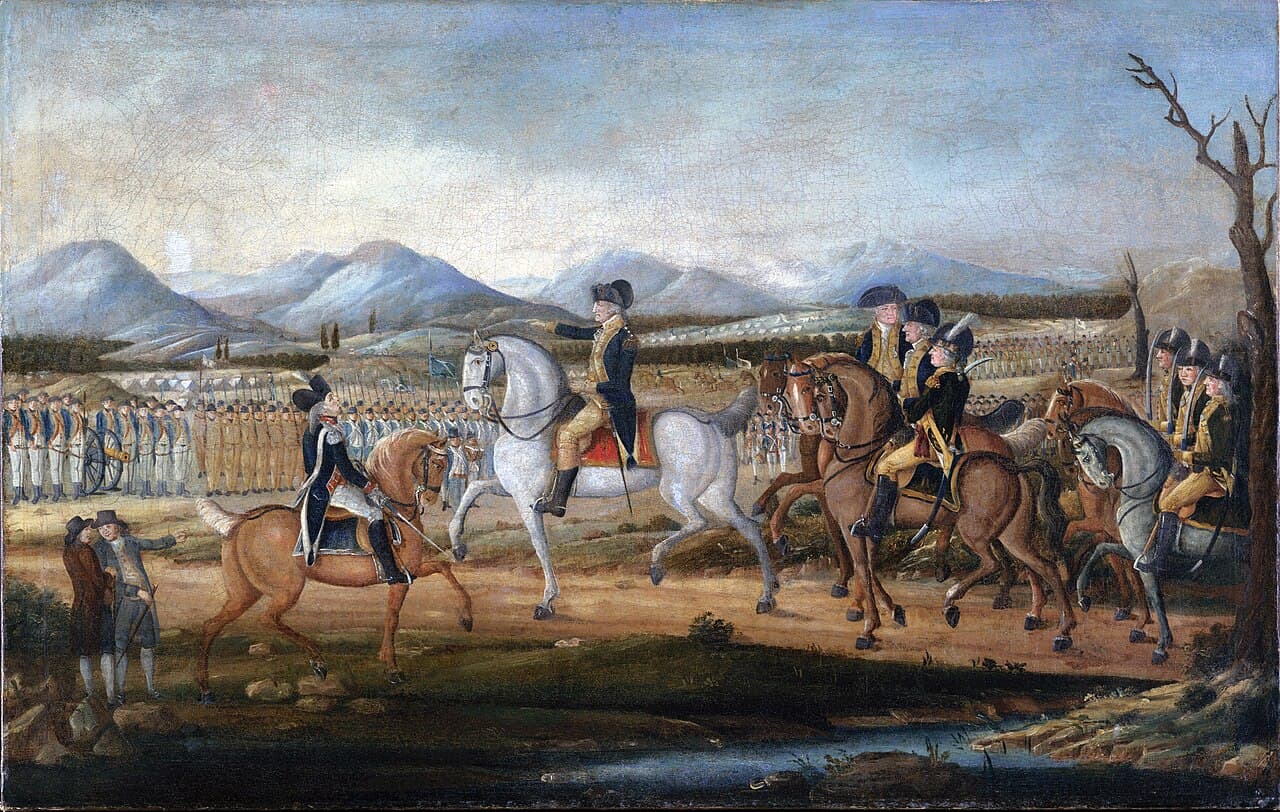
Washington reviewing the western army, painted about 1795 and attributed to Frederick Kemmelmeyer. Attributed to Frederick Kemmelmeyer, via Wikimedia Commons
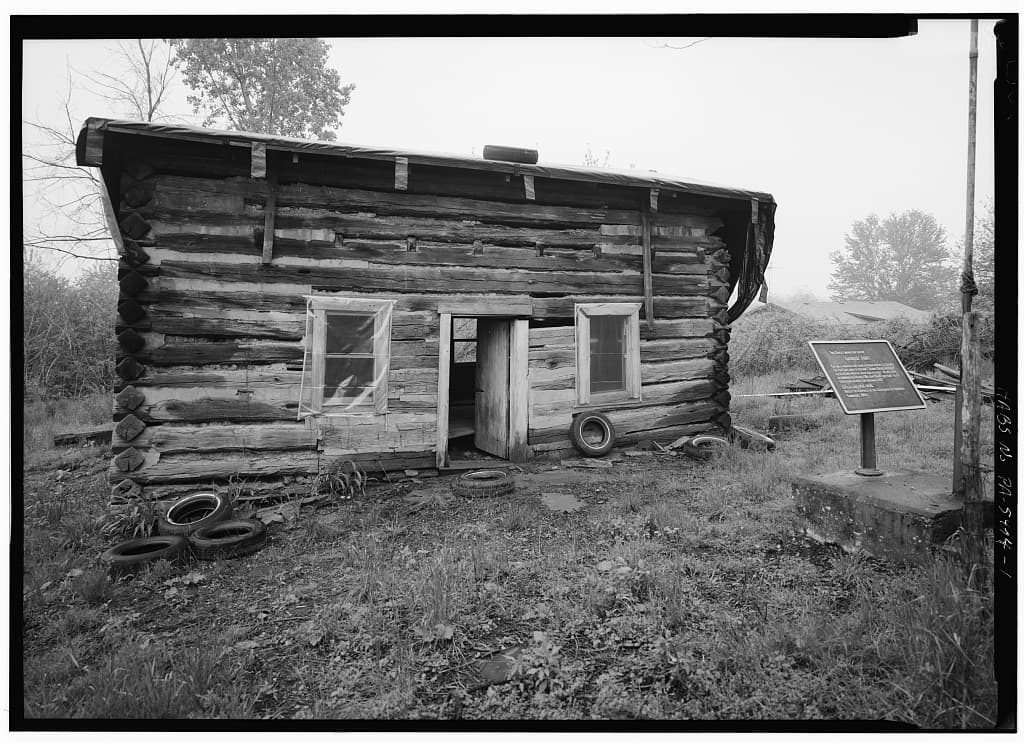
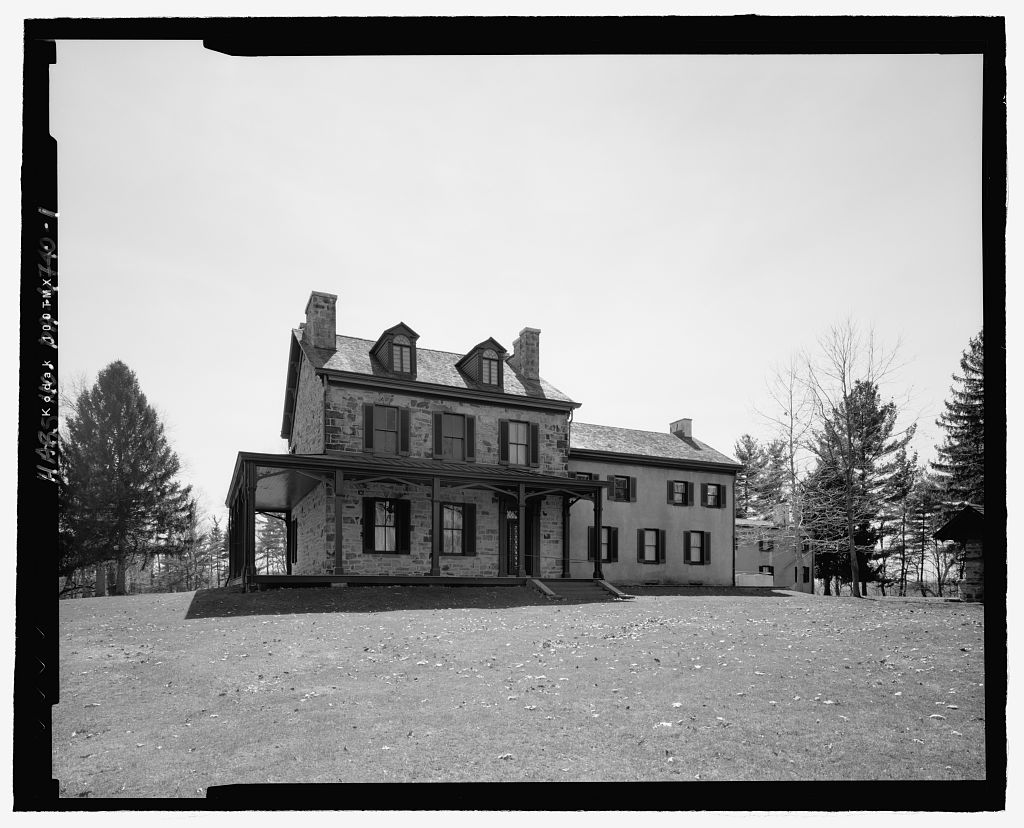
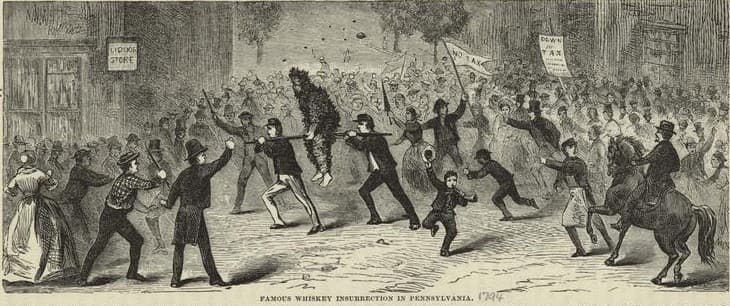
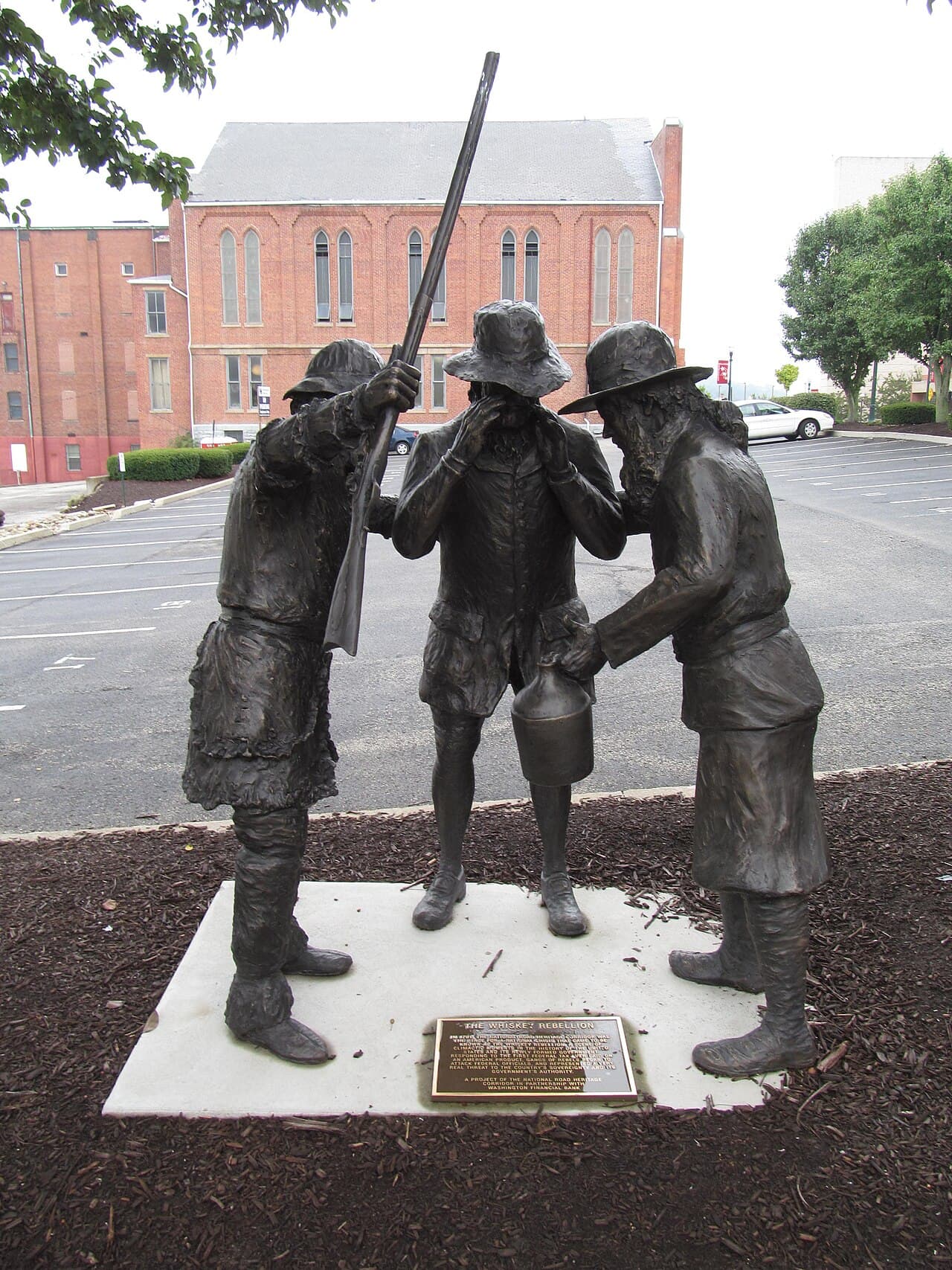
The first tax the United States ever laid on a domestic product was a tax on whiskey, and within three years it had seven thousand armed men gathered on a field outside Pittsburgh and a president riding west with an army bigger than the one he had commanded at Yorktown. The excise was enacted on 3 March 1791, proposed by Alexander Hamilton to service the war debts the federal government had just assumed from the states. Read the statute and the trouble is visible in the text. Spirits distilled from domestic materials in a city, town or village were taxed by the gallon, from nine cents up to twenty-five depending on strength. But a still out in the country could instead pay a flat annual rate of sixty cents for every gallon of the still's capacity. That sounds like a kindness to small producers. It was the opposite. A large distiller running at capacity all year spread the flat fee across an enormous output and paid, by Hamilton's own reckoning, as little as six cents a gallon. A western farmer with a small still and a few weeks of surplus grain could not run it year round, so his flat fee was spread across very little whiskey and he ended up paying nine cents. The tax was structured so that the more whiskey you made, the less you paid on each gallon of it. And whiskey was not a luxury in the west. Grain could not be carried profitably over the Appalachians, but grain distilled into whiskey could, so whiskey went over the mountains instead of corn. It also did the work of money in a region with almost no coin. The law required the tax to be paid in specie. For people who were themselves paid in whiskey, that made the excise, in one plain summary, "essentially an income tax that wealthier easterners did not have to pay." Resistance started immediately and it was physical. On 6 September 1791, or 11 September depending on the account, a newly appointed collector named Robert Johnson was tarred and feathered by a disguised gang in Washington County. The man sent afterwards to serve warrants on Johnson's attackers was whipped, tarred and feathered in his turn. Liberty poles went up, the same poles that had gone up against the British fifteen years earlier, which tells you exactly how the people raising them understood what they were doing. It came to a head in July 1794, when the federal marshal David Lenox rode out to serve writs on delinquent distillers. On 15 July warning shots were fired at him. On 16 July at least thirty militiamen from Mingo Creek surrounded the fortified house of General John Neville, the regional inspector of revenue, at Bower Hill outside Pittsburgh. Neville had ten soldiers under Major Abraham Kirkpatrick and, the record notes, his slaves helping to defend the house. Neville fired the shot that mortally wounded a rebel named Oliver Miller. The next day the crowd came back six hundred strong, seven hundred by another count, under Major James McFarlane, a veteran of the Revolution. A ceasefire broke down, a shot came from the house, and McFarlane fell dead. The rebels burned the place, including the slave quarters, and Kirkpatrick surrendered. On 1 August they gathered at Braddock's Field. Seven thousand people, says one account; five to six thousand, says a footnote to one of Washington's own letters. What is striking is who they were: the crowd "consisted primarily of poor people who owned no land, and most did not own whiskey stills," which means most of the people at the high tide of the Whiskey Rebellion had no whiskey to be taxed. There was talk of marching on Pittsburgh, which the radicals were calling Sodom, of looting the houses of the rich and burning the town. There was talk of leaving the United States altogether and joining with Spain or Britain. The federal response ran through a lock that Congress had built two years earlier. The Militia Act of 2 May 1792 let the president call out the militia only where the laws were opposed "by combinations too powerful to be suppressed by the ordinary course of judicial proceedings," and only after "the same being notified to the President of the United States, by an associate justice or the district judge." On 4 August 1794 Justice James Wilson supplied that notification. On 7 August Washington issued a proclamation reciting that combinations "have from the time of the commencement of those laws existed in some of the Western parts of Pennsylvania," and commanded the insurgents to "disperse and retire peaceably to their respective abodes" by 1 September. Then he raised 12,950 men, a figure most sources give, though the same reference work elsewhere says 13,000. It was drawn from the militias of New Jersey, Maryland, Virginia and Pennsylvania. Here is where the popular version needs correcting. Washington is very often described as the only sitting president to lead troops in the field, and the historian Joseph Ellis is quoted saying exactly that. What he actually did was ride out from Philadelphia on 30 September, go to Reading, and then as far west as Bedford, Pennsylvania, where he handed command to Henry "Light-Horse Harry" Lee, the governor of Virginia, and turned back. Lee took the army the rest of the way. So the claim is true in the narrow sense that he rode with troops toward a rebellion, and misleading in the sense most people hear it. He did not lead them into anything. There was nothing to lead them into: by the time the army reached Pittsburgh the rebels had gone home. About a hundred and fifty people were arrested. Ten stood trial for treason. Two were convicted: Philip Wigle, who had beaten a tax collector and burned his house, and John Mitchell, described in the record as a simple man who had been talked by David Bradford into robbing the United States mail. Washington pardoned them both. His stated reasoning was that "the misled have abandoned their errors," and that it seemed to him "no less consistent with the public good than it is with my personal feelings to mingle in the operations of Government every degree of moderation and tenderness which the national justice, dignity, and safety may permit." Bradford, who had urged the violence and organised the mail robbery, fled before the army arrived and was never among the ten. One man came out of it with a career. Albert Gallatin, a Swiss immigrant living in western Pennsylvania, had opposed the excise as ruinous to the western economy and then, when the rebellion came, refused to join it and talked angry farmers out of it by arguing that armed resistance would destroy the Union. The Park Service's own timeline for his home at Friendship Hill records 1794 simply as: "Advocates peaceful settlement of Whiskey Rebellion." He is widely said to have called his own part in it a folly, and we could not find those words anywhere, so we are not putting them in quotation marks. He went on to be Secretary of the Treasury for thirteen years under Jefferson and Madison, cut the national debt from eighty-three million dollars to forty-five, championed the Louisiana Purchase, helped negotiate the treaty that ended the War of 1812, and helped found New York University. The whiskey tax was repealed in 1802, under Jefferson. The usual verdict is that the episode proved the new government could enforce its own laws, and that is fair. The less usual verdict is also in the record: that the excise remained hard to collect, that many westerners went on refusing to pay it, and that resentment of internal taxes helped put Jefferson in office in 1800 and repeal the thing outright. Both readings are true. The government won and the tax lost. If your family was in the four western counties in 1794, on either side of it, we would like to hear what came down to you. The men who gathered at Braddock's Field are mostly nameless in the record, and most of them did not even own a still. Compiled by MyHistoryStone from the excise act of 3 March 1791 and the Militia Act of 2 May 1792 as printed in the United States Statutes at Large, Washington's proclamation of 7 August 1794 and his correspondence as published in Founders Online, the National Park Service at Friendship Hill National Historic Site, the Washington Library at Mount Vernon, and historical marker inscriptions at Bower Hill, Braddock's Field and Washington, Pennsylvania.
Share a memory
Leave a memory or a message for the family. What you write appears right away, and the family can remove any entry.
Loading messages...