 Home
Home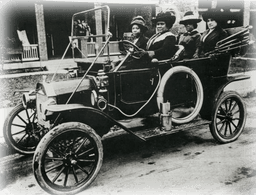
In Memory of
Madam C. J. Walker
MyHistoryStone Archive
1867 – 1919
Indianapolis, Indiana, United States · 52 years
Final Resting Place
Woodlawn Cemetery, the Bronx
Location
Villa Lewaro, Irvington-on-Hudson
In motion
5 photographs
The photographs on this page, brought to life.
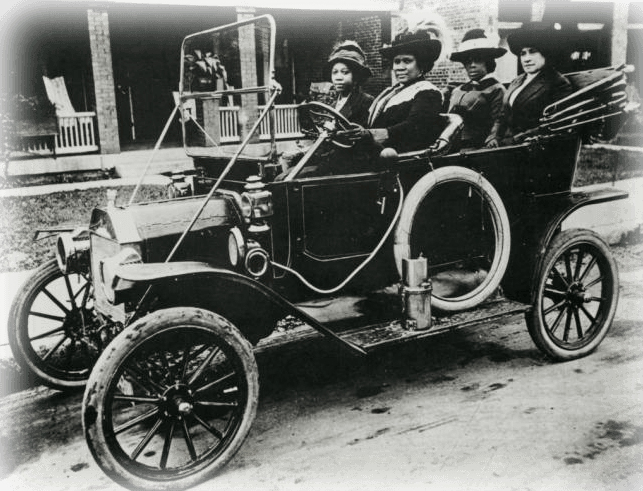
Madam C. J. Walker at the wheel of an automobile in 1911, with three other women. Unknown photographer, via Wikimedia Commons
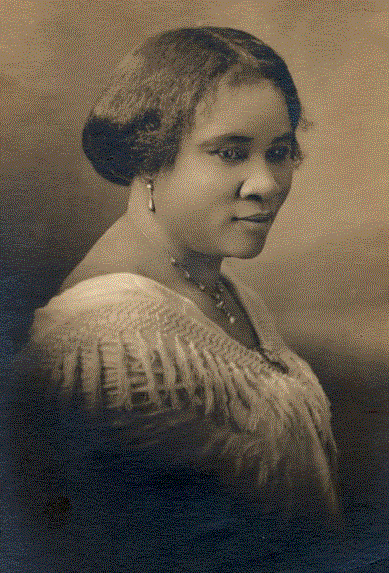

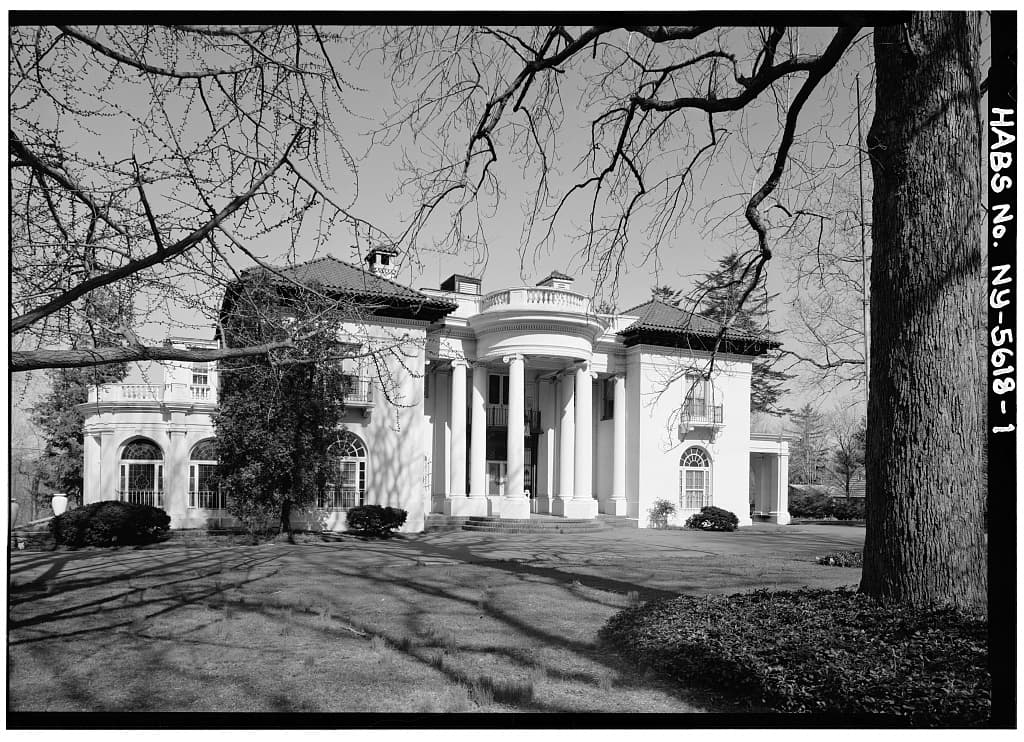
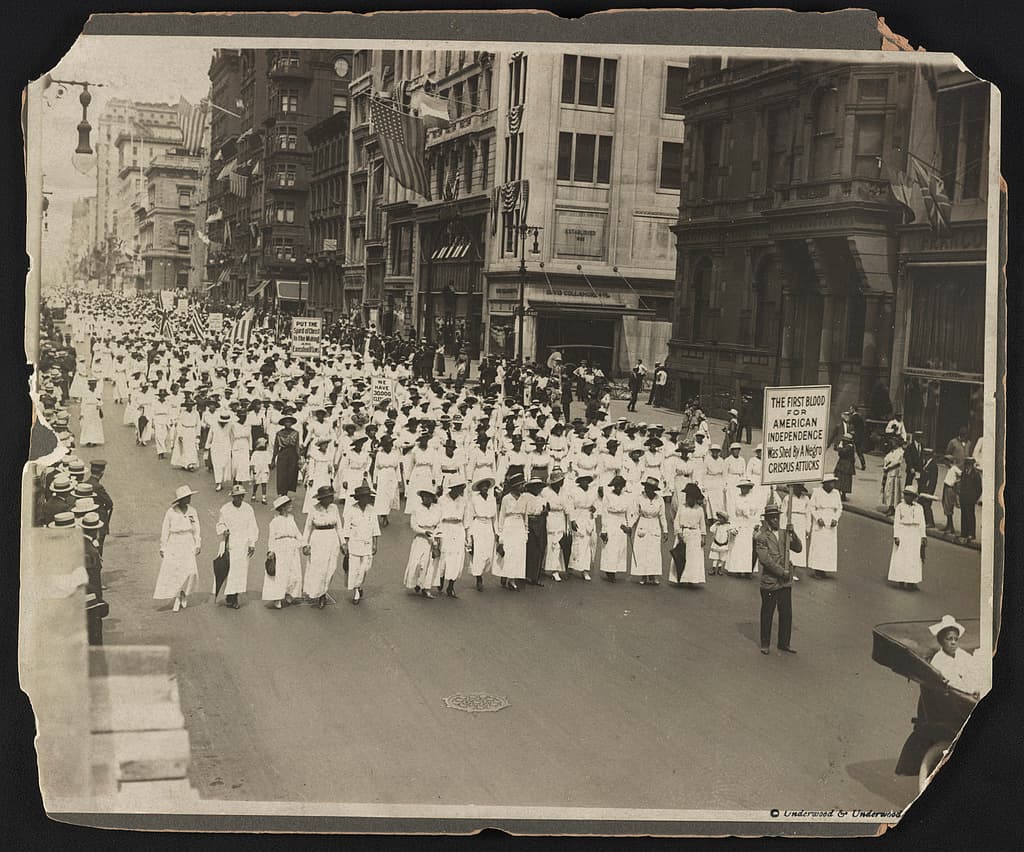
She was born on a plantation in Delta, Louisiana on 23 December 1867, to Owen and Minerva Breedlove, who had both been enslaved on that ground. She was the first of their children born free. Both parents were dead by the time she was seven. She married at fourteen, was widowed at twenty, and took in washing in St. Louis for barely more than a dollar a day. She died fifty-one years later in a mansion she had built on the Hudson, and her will directed two thirds of the future profits of her estate to charity. Between those two facts is a story that is told about a hundred times a year, usually with one name left out of it. Before there was a Madam C. J. Walker there was Annie Turnbo Malone, another Black woman with a hair care company, and Sarah Breedlove sold her products. Britannica states it without a hedge: "For about two years, she was a sales agent for Annie Turnbo, the founder of the Poro Company." She began in St. Louis, kept selling Turnbo products after moving to Denver, and then left and started her own line. Malone's own account carries a sharper claim, and its own hedge with it: that Breedlove "allegedly took the original Poro formula and created her own brand of it," which the source immediately marks as "disputed." Malone afterwards copyrighted her products because of what she called fraudulent imitations. We raise it because of what happens in the sources. The main encyclopedia entry on Madam C. J. Walker does not mention Annie Turnbo Malone at all. Neither does Louisiana's own state encyclopedia entry on her. Two of the fullest accounts of this woman's life leave out the woman she worked for, and you cannot understand either of them without the other. The business itself was built on something she genuinely did. She had lost much of her own hair, and she made a scalp preparation to treat it, and it worked, and she sold it: Madam Walker's Wonderful Hair Grower. She started with a dollar twenty-five. In 1905 she went to Denver, where the market was less crowded; in 1906 she married Charles Joseph Walker, a newspaper advertising salesman, and took the name she would be known by; in 1908 she moved to Pittsburgh; and in 1910 she built a factory in Indianapolis and incorporated the Madam C. J. Walker Manufacturing Company. The thing she actually invented was the sales force. Women went door to door and taught the method as they sold it, and they were trained, organised into clubs, and brought together in conventions. How many is another number nobody agrees on: several thousand agents between 1911 and 1919, nearly twenty thousand women trained by 1917, more than twenty thousand agents by 1919, twenty-five thousand "claimed" by 1919, or forty thousand people employed in total. Three thousand worked in the factory. We could not find, anywhere, a figure for what an agent actually earned set against what Black women were paid for domestic or farm work at the time, which is a shame, because that comparison is the entire point of the enterprise. She is called the first female self-made millionaire in America, and the record will not quite carry it. The claim rests on the Guinness Book of World Records, and Guinness's own current site returns nothing at that record. The most careful statement of her wealth says she "was considered worth between a half million and a million dollars" at her death. And in 1917 a newspaper reported her saying it herself: that "she was not yet a millionaire, but hoped to be some time, not that she wanted the money for herself, but for the good she could do with it." Britannica declines the superlative entirely and calls her "one of the first African American female millionaires." Meanwhile Annie Turnbo Malone was a multi-millionaire by the 1920s and paid nearly forty thousand dollars in income tax in 1924 alone. Two women, the same trade, one of them famous. None of which is the interesting thing about her. In 1912 she went to the National Negro Business League convention and was not called on to speak, so she stood up from the floor and spoke anyway: "I am a woman who came from the cotton fields of the South. From there, I was promoted to the washtub. From there, I was promoted to the cook kitchen. And from there, I promoted myself into the business of manufacturing hair goods and preparations. I have built my own factory on my own ground." She gave the money away in her lifetime and with her name on it. A thousand dollars to the Senate Avenue YMCA in Indianapolis. Five thousand to the NAACP's anti-lynching fund, described as the largest gift the organisation had ever had from an individual. The largest single donation to the effort to buy and preserve Frederick Douglass's house in Anacostia. Tuition for six students at the Tuskegee Institute. In 1917 she sat on the executive committee of the New York NAACP chapter that organised the Silent Protest Parade, when more than eight thousand African Americans walked down Fifth Avenue in silence over a riot in East St. Louis that had killed thirty-nine Black people. Villa Lewaro, her house at Irvington-on-Hudson, was built between 1916 and 1918 for an estimated quarter of a million dollars, and she chose Vertner Woodson Tandy to design it, who is described as the first African American architect registered in New York State. It is a National Historic Landmark. In 2018 the New Voices Foundation bought it, intending an institute for women of colour in business. She died there on 25 May 1919, at fifty-one, of kidney failure. She had been diagnosed with nephritis in November 1917. She is buried at Woodlawn Cemetery in the Bronx. Her will left nearly a hundred thousand dollars to orphanages, institutions and individuals outright and two thirds of all future net profits to charity. Her daughter A'Lelia Walker took over the company. The Walker Theatre opened in Indianapolis in December 1927. She was on a postage stamp in 1998 and in the National Women's Hall of Fame in 1993. The Indiana marker put up in 2025 gets the emphasis right: "Walker provided economic opportunities for Black women, who were her sales agents and beauty culturists." If your grandmother or great-grandmother sold for her, and you have the case, the certificate, the club photograph or the name, we would like to add it here. There were tens of thousands of them and the company kept the records under one name. Compiled by MyHistoryStone from 64 Parishes, the National Women's History Museum, Britannica, published accounts of Annie Turnbo Malone and Villa Lewaro, Library of Congress catalogue records, and the inscriptions on the Madam C.J. Walker markers in Indianapolis.
Share a memory
Leave a memory or a message for the family. What you write appears right away, and the family can remove any entry.
Loading messages...