 Home
Home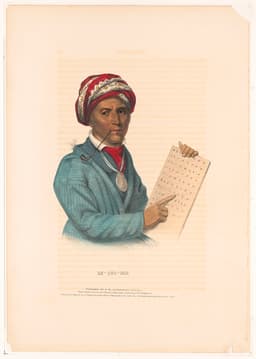
In Memory of
Sequoyah
MyHistoryStone Archive
1770 – 1843
Sallisaw, Oklahoma, United States · 73 years
Hometown
Tuskegee, on the Little Tennessee River
Location
The Cherokee Nation
In motion
5 photographs
The photographs on this page, brought to life.
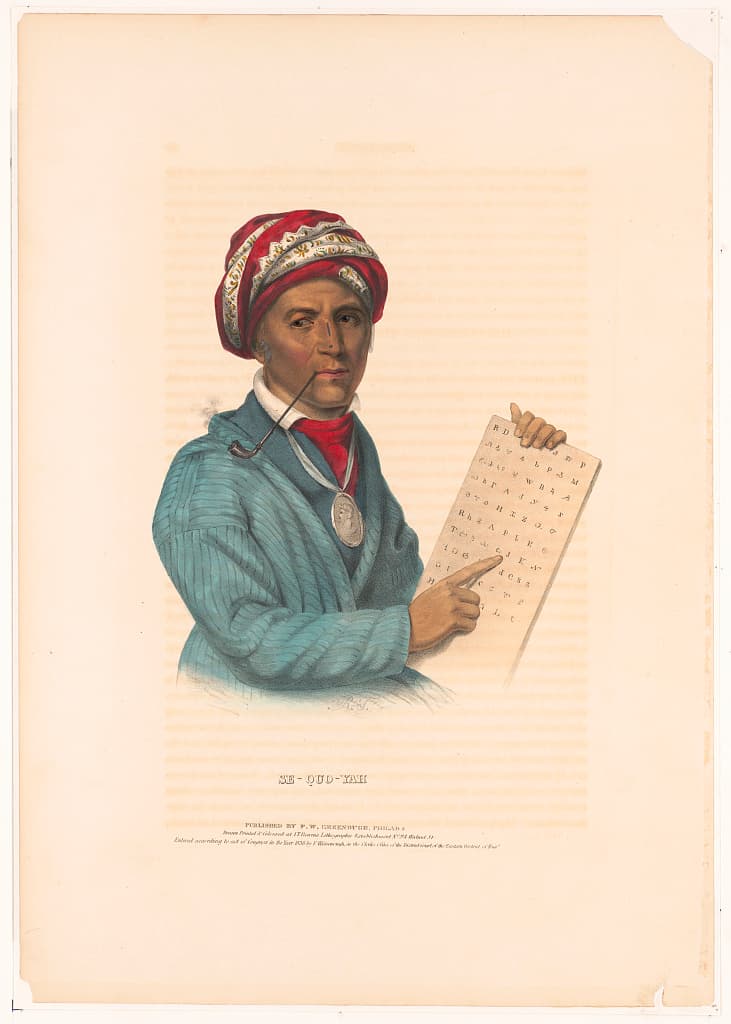
Se-Quo-Yah, a hand coloured lithograph of about 1838. He is holding the Cherokee alphabet. I. T. Bowen lithographic establishment, Library of Congress, Prints and Photographs Division
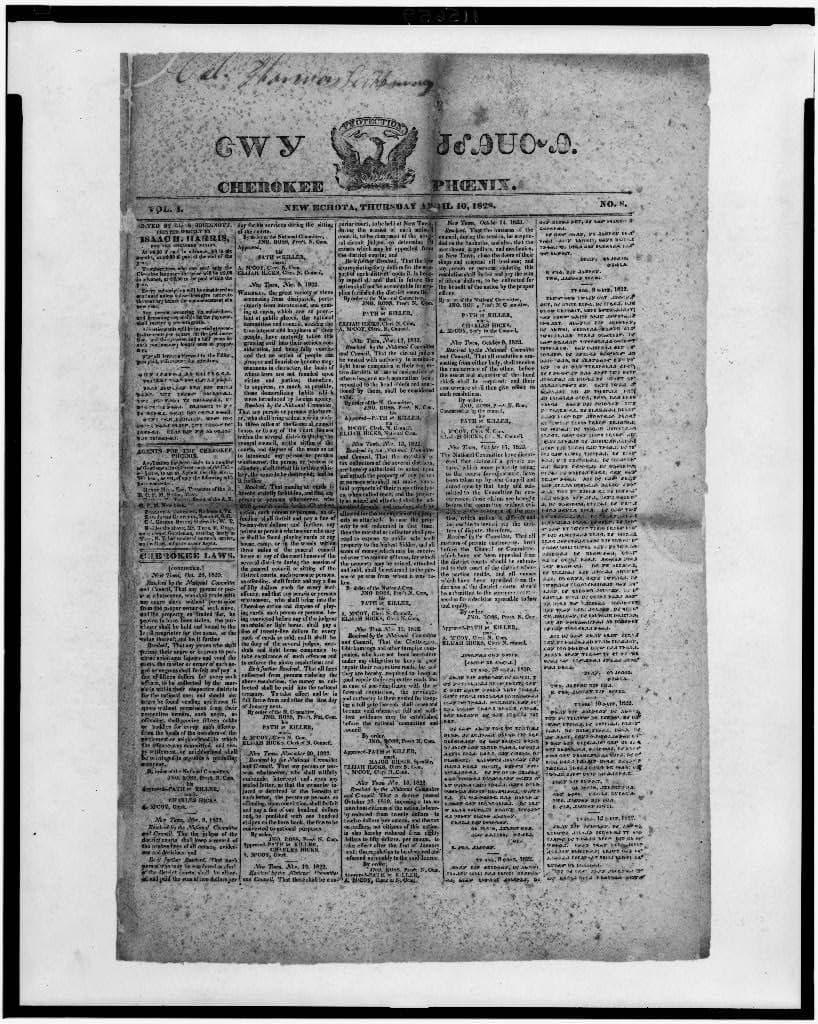
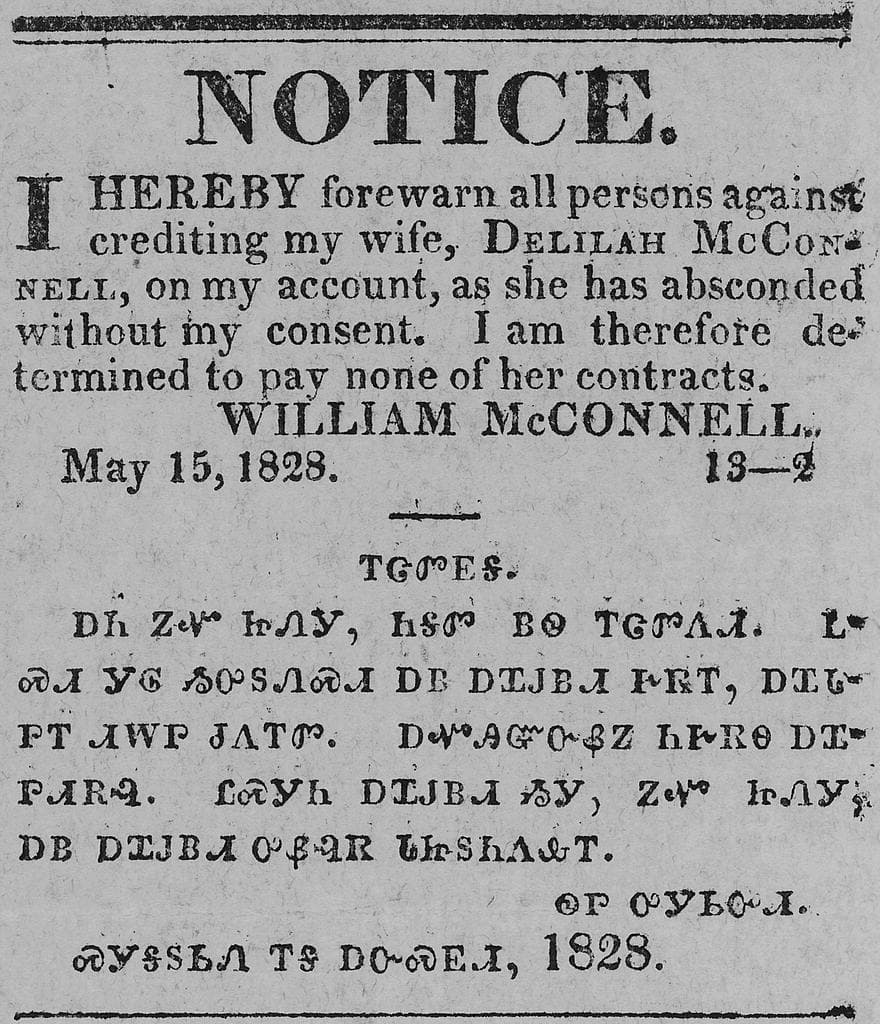
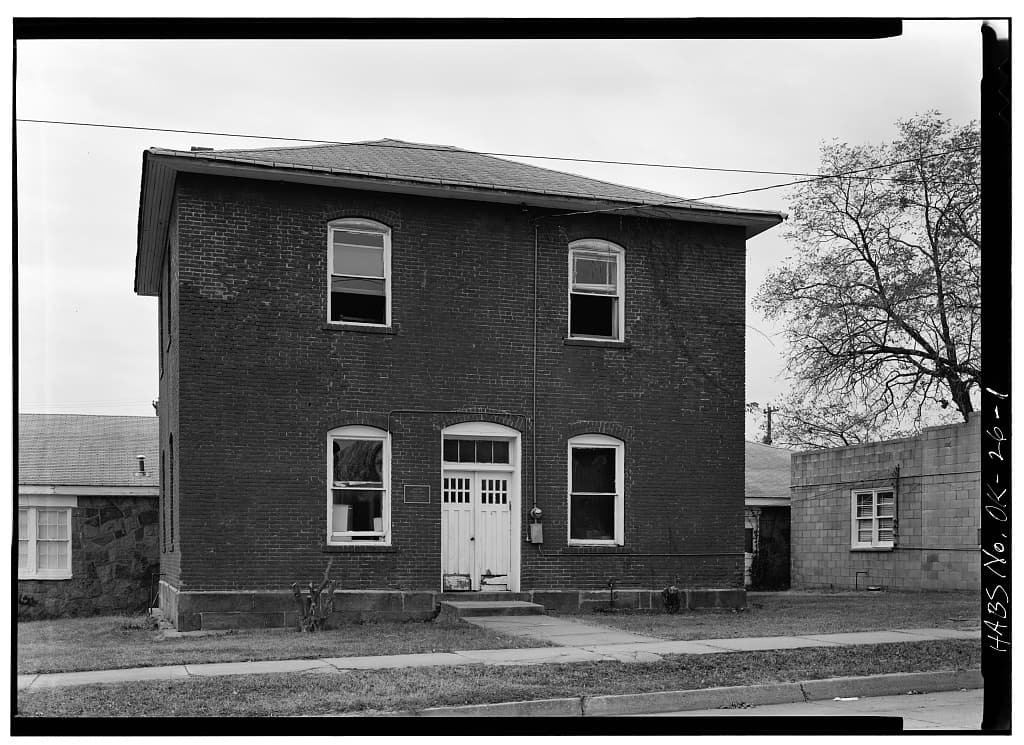
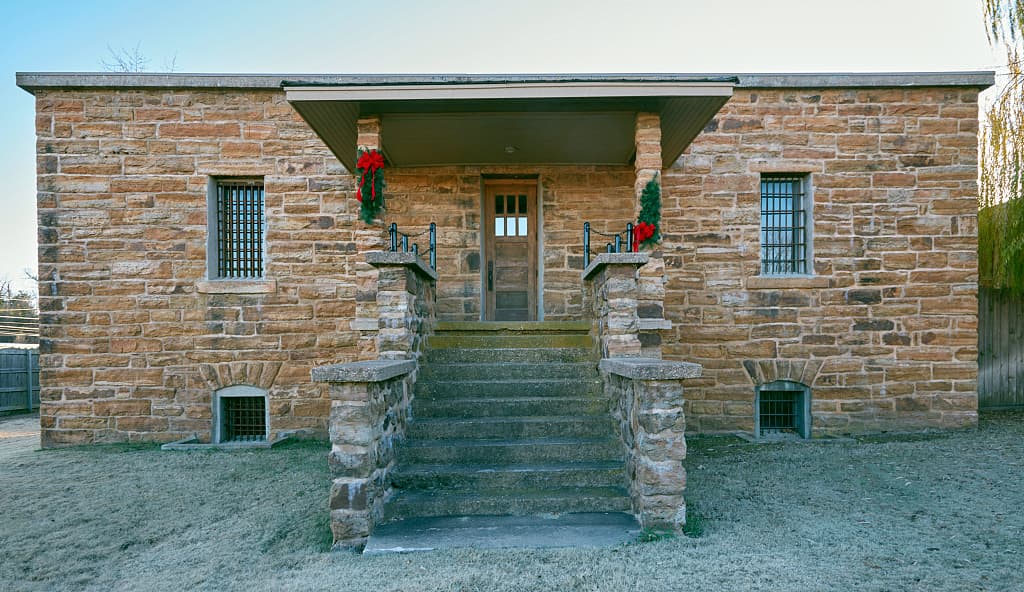
He could not read. Not English, not anything. There was nothing to read in his own language, because his own language had never been written down. That is the fact to hold on to, because everything else about Sequoyah is disputed and that one is not. One account of his life says plainly that "Sequoyah never went to school and never learned English," and elsewhere that he and his mother "spoke only Cherokee." He was a silversmith and a blacksmith. He had seen white men making marks on paper and understood what the marks were doing. And then, over roughly twelve years, working alone, he built a writing system for a language that had none. Almost nothing else is settled. His Cherokee name is written ᏍᏏᏉᏯ or ᏎᏉᏯ. His English name was George Gist, also spelled Guess or Guest. His mother was Wut-teh, or Wuh-teh, or Wurtah, said to be of a prominent Cherokee family. His father is unknown: the candidates are a colonel in the Continental Army named Nathaniel Gist, a Virginia fur trader of a similar name, and a German peddler. One reference work states simply that the father is "not properly known." He was born at Tuskegee on the Little Tennessee River, in what is now Monroe County, Tennessee, in a year given variously as about 1770, about 1778, 1764 and about 1765. A marker in Oklahoma gives 1764. Take your pick; nobody can help you. He fought in the Creek War in 1813 and 1814, at Horseshoe Bend, under Colonel Gideon Morgan. The Tennessee Encyclopedia dates the beginning of his real work to about 1809 and is careful to tell you where that date comes from: "Cherokee oral tradition suggests that Sequoyah first became fascinated with the ability of whites to communicate by making marks on paper while recuperating from a hunting accident in 1809." Oral tradition, stated as such. That is the right way to hand something on. He began with pictures, one for each word, and gave it up when he understood how many words there are. What he arrived at instead was a syllabary: a symbol for each syllable rather than for each sound. This is the part most often described wrongly. He did borrow the look of letters from Latin, Greek, Cyrillic and Glagolitic script, and he attached none of their sounds to them. The shapes, in one careful description, "resemble characters from other scripts... but are not used to represent the same sounds." He took the forms and left the meanings, because the meanings were no use to him. The cost of it is told, not documented. His neighbours thought he was practising witchcraft. The account of his wife burning his papers is always given with a hedge, and here is the hedge in full: "His wife is said to have burned his initial work, regarding it to be witchcraft, a notion shared by some of his peers." Said to have. We are not going to firm that up for you. The first person to learn the system was his daughter, Ayokeh, also written Ayoka, who was six years old. When word spread that the two of them had invented a new way to talk, the town chief brought them to trial. They were separated and made to send messages to each other, and the messages arrived. The warriors overseeing it, and then the whole town, came to believe it. The council of chiefs approved the work, and it was formally adopted in 1825. There were eighty-six characters, reduced to eighty-five when Elias Boudinot modified the system for the printing press in 1828. It spread with what one account calls "almost instantaneous popularity," and by 1825 "the majority of Cherokees could read and write in their newly developed orthography." A Cherokee learner could read within weeks; an English learner took about two years. That comparison comes from Albert Gallatin, and it is about the speed of learning, not about rates. Which matters, because of the claim you have certainly heard. It is said everywhere that within a generation the Cherokee were more literate than their white neighbours. One source puts it at "almost 100%," another at "approximately 90% were literate" by 1830, a third at "thousands of Cherokees were literate, far surpassing the literacy rates of their white neighbors." Not one of them attaches a census, a survey, a missionary count or any figure at all for the white neighbours they are being compared with. It may well be true. It is repeated in near identical wording by independent sources and sourced by none of them, and we would rather tell you that than pass it along as though somebody had counted. On 21 February 1828, at New Echota, the Cherokee Nation began printing the Cherokee Phoenix, in Cherokee and English, edited by Elias Boudinot, on type cast for the syllabary by Samuel Worcester. Readers who read only Cherokee got it free. English readers paid two dollars fifty a year. It stopped in 1834 when the federal government failed to pay the Cherokee annuities, and in August 1835 the Georgia Guard came and took the press away so that nothing further could be printed. Sequoyah moved west to Arkansas in 1824 and later to Indian Territory, and in 1839 helped negotiate the Act of Union that brought the Old Settlers and the Ross Party into one nation with one constitution. He died in August 1843, of a respiratory infection, at San Fernando de Rosas in Coahuila, Mexico, while looking for a band of Cherokee who had gone south. One account widens the window to somewhere between 1843 and 1845. An expedition in 1938 found a grave by a spring in Coahuila and could not establish that it was his. It has never been established since. The giant sequoia is said to be named for him, and that is genuinely unresolved. The Austrian botanist Stephan Endlicher published the genus in 1847 and, in the flat words of the record, "left no specific reasons for choosing that name, and there is no record of anyone else speaking to him about its origin." A 2017 paper argued for the connection. A rebuttal pointed out that the resemblance only works if you say the name in English, which Endlicher did not, and that the Latin prefix more likely comes from the verb to follow. The most famous tree in America may or may not carry his name and nobody alive can tell you. His cabin, built in 1829 near Sallisaw, Oklahoma, was made a National Historic Landmark in 1965 and bought by the Cherokee Nation in 2016. His statue stands in the National Statuary Hall in the Capitol, and it was, in the Architect of the Capitol's words, "the first honoring a Native American to be chosen for the National Statuary Hall Collection." The syllabary is on street signs in Tahlequah and in Cherokee, North Carolina, it is taught in immersion schools, it went into Unicode in 1999, and it appeared on the quarter honouring Wilma Mankiller in 2023. A 2018 survey counted about twelve hundred speakers in the Cherokee Nation, two hundred and seventeen in the Eastern Band and a hundred and one in the United Keetoowah Band, most of them over forty. There is no photograph of him. He died before there could be one. The picture you have seen is an engraving. If your family holds anything written in the syllabary, a letter, a ledger, a Bible, a note, we would like to hear about it. He built it so that ordinary people could write ordinary things down, and the ordinary things are what survive worst. Compiled by MyHistoryStone from the Tennessee Encyclopedia, NCpedia, the Cherokee Nation's own published history, the Architect of the Capitol, published accounts of the Cherokee syllabary and the Cherokee Phoenix, Library of Congress catalogue records, and historical marker inscriptions at Fort Payne, Alabama, Nashville, Tennessee and Anadarko, Oklahoma.
Share a memory
Leave a memory or a message for the family. What you write appears right away, and the family can remove any entry.
Loading messages...