 Home
Home
A Tribute to
The Harvey Girls
MyHistoryStone Archive
1883
Florence, Kansas, United States
Residence
The dormitory above the lunchroom
Worked At
The Santa Fe eating houses
In motion
5 photographs
The photographs on this page, brought to life.
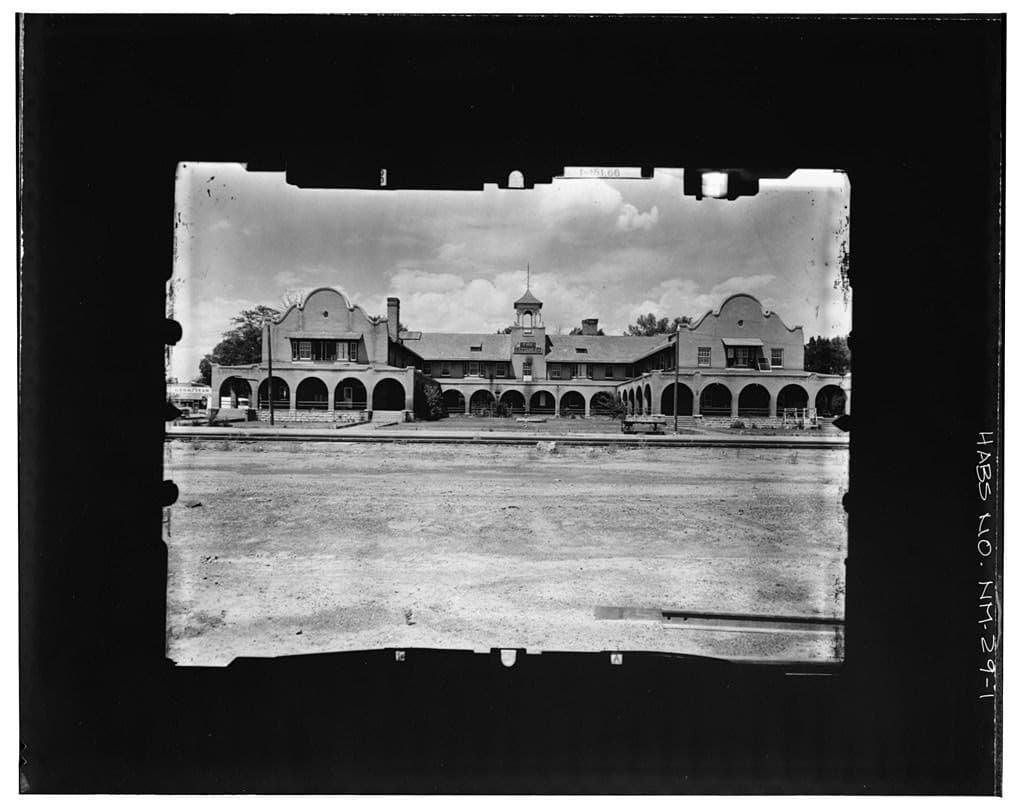
The Castaneda at Las Vegas, New Mexico, seen from the Santa Fe tracks. A Harvey House of 1898. Historic American Buildings Survey, Library of Congress
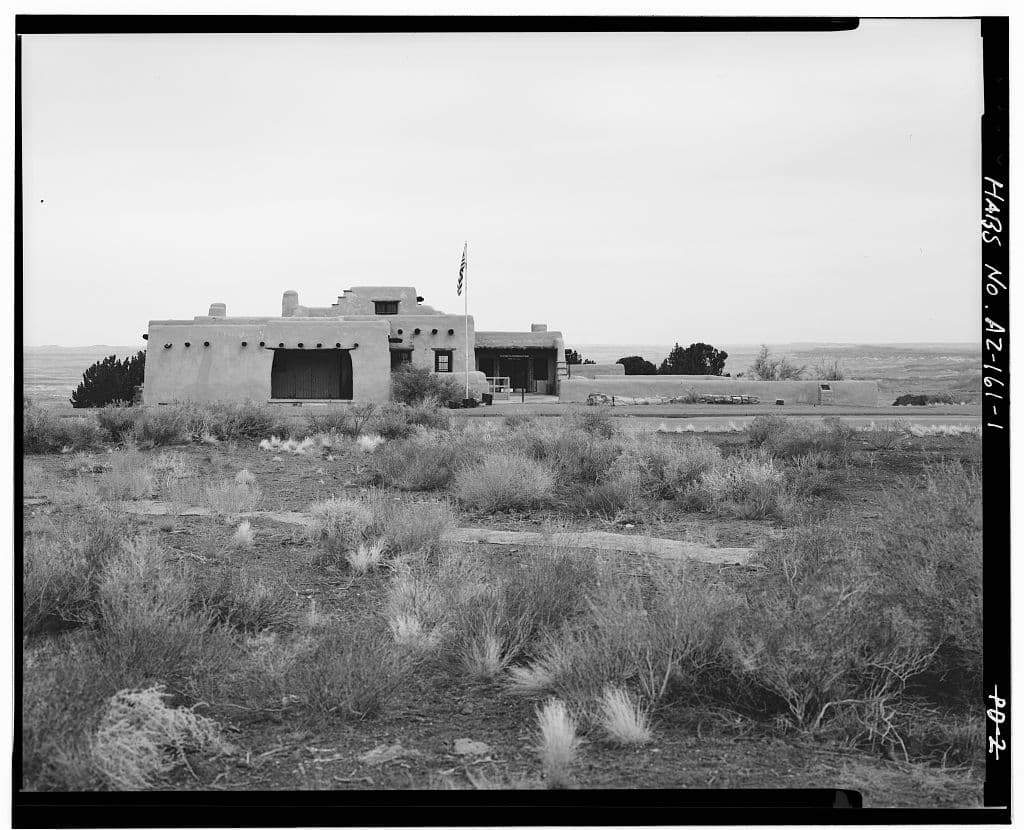
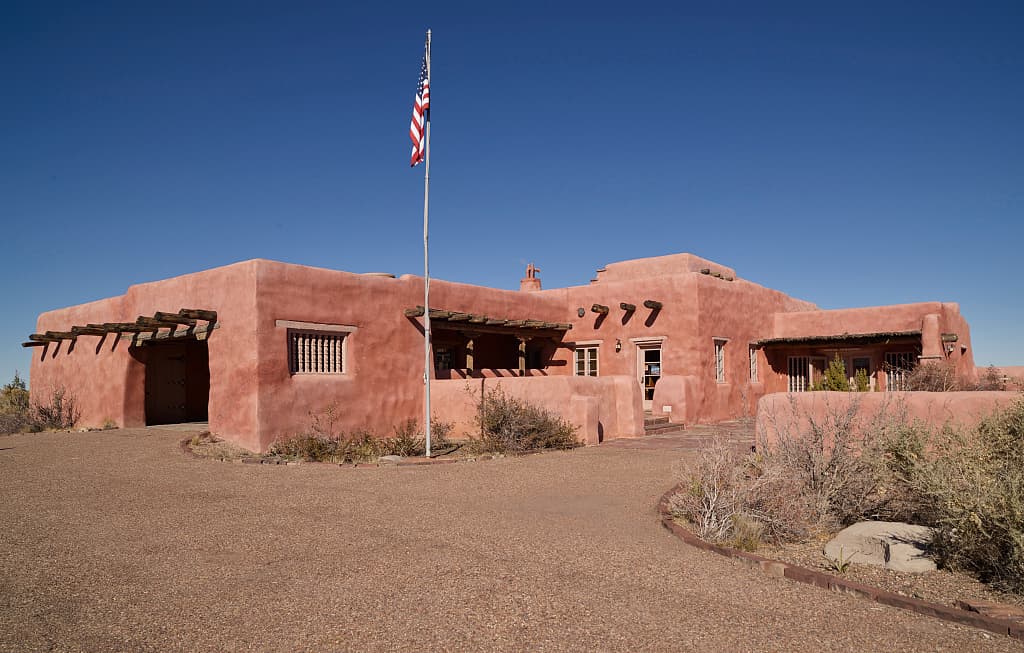
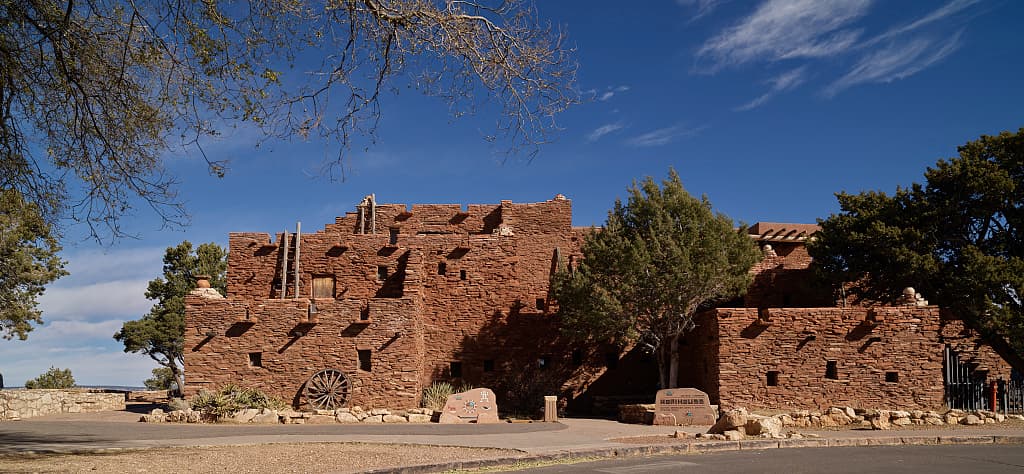
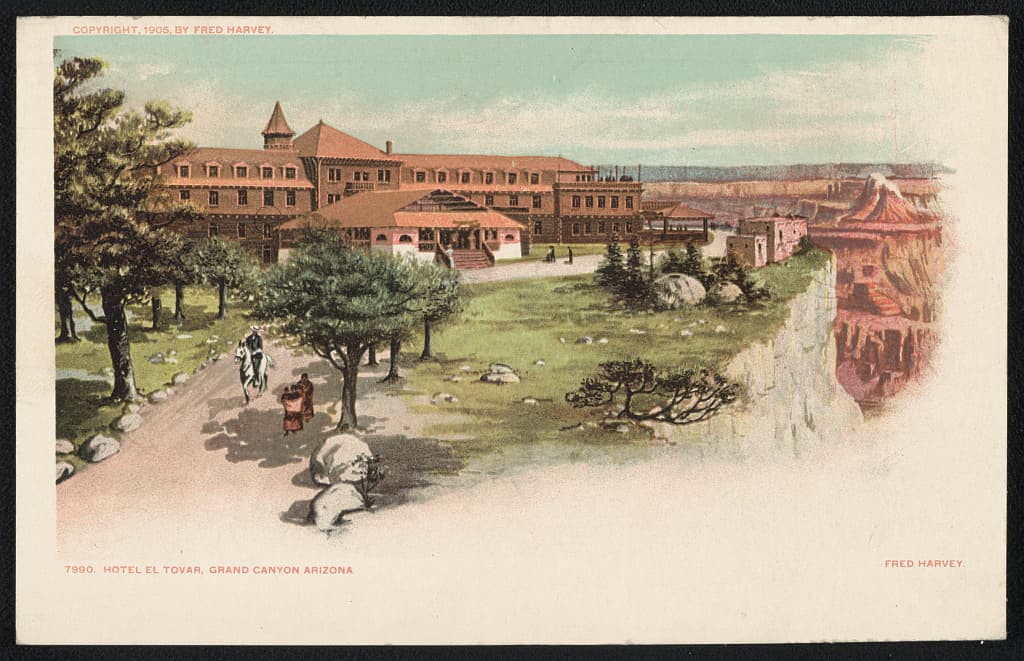
Something like a hundred thousand young women worked as Harvey Girls. We went looking for their names. After two full passes through the Kansas and New Mexico historical societies, the National Park Service, the Library of Congress and every historical marker we could find, we came back with one. Her name was Eva Fuqua and she worked in 1936 and 1937. Her recorded interview survives at the Belen Harvey House Museum in New Mexico, and this is her, in her own words: "We were trained how to walk, talk and to give the best service." And: "The rules were very strict." And then, immediately after: "And sometimes we would break the rules." She said the friends she made then were still her friends when she told the story, and that she had used what she learned all her life. That is the whole problem with this subject in one paragraph. The women were the product, they were photographed constantly, a Hollywood musical was made about them in 1946, and the individual record of who they were is nearly gone. Fred Harvey was born in London in 1835, came to the United States at fifteen or seventeen depending on the source, and washed dishes in a New York restaurant. By 1876 he had a deal with the Atchison, Topeka and Santa Fe Railway that worked like this: the railroad supplied the buildings and carried all the food, the supplies and even the dirty laundry for free, and Harvey hired, trained and supervised every person and guaranteed the quality. His stated policy, according to the marker in Leavenworth, was "maintenance of standard, regardless of cost." He started with a twenty seat lunchroom in the Topeka depot. Florence, Kansas, in 1878, is usually called the first true Harvey House. The waiting staff were men, and in 1883 they were replaced with women. Why is the interesting part. The story everyone tells is that Harvey sacked the men after a brawl in Raton, New Mexico. We looked for it specifically and could not find that story in a single source we were able to reach. The Kansas Historical Society, Wikipedia and the markers all simply state that the change happened, and one marker dates it to 1881 rather than 1883. So the founding anecdote of the whole enterprise appears to be something everyone repeats and nobody can show you. The recruiting advertisement is quoted everywhere in the same form: "white, young women, 18 to 30 years of age, of good character, attractive and intelligent." We reproduce it with a caution, because we could not establish whether that is a real period advertisement or a later reconstruction that has hardened into a quotation. What is not in doubt is the first word of it. The terms were hard and precisely specified. The wage was seventeen dollars fifty a month according to New Mexico's state history project and a marker in La Junta, Colorado, and eighteen dollars fifty according to another account. Room and board came with it. The contract ran six months, and breaking it forfeited half the base pay. Curfew was ten o'clock. They lived in dormitories above the restaurant or in a house next door, supervised by a matron who was usually a senior Harvey Girl, with male visitors chaperoned. And they could not marry. One marker puts it at a full year of work before marriage was permitted. Marriage was, in the end, the most common reason a Harvey Girl stopped being one. The uniform was a starched black and white dress with a skirt that hung no more than eight inches from the floor, an Elsie collar, opaque black stockings and black shoes. Hair went in a net with a regulation white ribbon. Makeup was absolutely prohibited. So was chewing gum on duty. The system was the point of all of it. A train stopped only as long as the engine needed water, and in that time an entire carriage of passengers had to be fed a full meal. The company ran a set of signals that let the dining room have everything ready to feed a whole train in thirty minutes. The famous detail, the cup code, in which the angle a cup was left on its saucer told the next waitress which drink the passenger had ordered, is repeated as fact in one reference work and corroborated by none of the historical societies, the Park Service or any marker we read. Treat it as a good story until somebody produces the source. At Fred Harvey's death in 1901 the company had, depending on which account you take, forty-five restaurants and twenty dining cars in twelve states, or more than sixty hotels and eating places and thirty dining cars and a ferry on San Francisco Bay, or forty-seven restaurants, fifteen hotels and thirty dining cars. Three sources, one moment in time, three different companies. By the late 1880s there was a Harvey dining room every hundred miles along the Santa Fe. The hundred thousand figure does have a source, and it is worth stating precisely who is behind it. New Mexico's state history project, crediting the Kansas State Historical Society, says: "It is estimated that more than 100,000 girls worked for Harvey House restaurants and hotels and of those, 20,000 married their regular customers." It is an estimate, attributed at one remove, and it is the only total anyone offers. There is one more silence here worth naming. The advertisement specified white women. What actually happened in practice, in New Mexico and Arizona where most of the available labour was Hispanic and Native, is addressed by nothing we could reach. Not the state history project, not the Belen museum, not the Winslow collection, not the Park Service. Nobody says they were hired and nobody says they were not. The Fred Harvey Company did employ Hopi artisans to make and sell craftwork at Hopi House at the Grand Canyon, and the Santa Fe Railway sponsored a band of Navajo, Hopi and Laguna musicians who toured through the 1940s and 1950s. Those people are in the record. The question of who was allowed to carry the plates is not. The buildings outlasted the arrangement. Mary Colter, the company's architect for thirty-eight years, designed Hopi House, Hermit's Rest, the Desert View Watchtower and Bright Angel Lodge at the Grand Canyon, La Posada at Winslow and much of the interior of La Fonda at Santa Fe. El Tovar opened in 1905 and is still running. The Castañeda at Las Vegas, New Mexico opened on 1 January 1899, closed in June 1948, and reopened in 2019 after a six million dollar restoration. La Posada closed in 1957, was turned into railroad offices, was nearly demolished in 1994, and was saved. Temple, Texas lost its Harvey House to the Depression in 1933 and had it demolished in 1937. If your grandmother was a Harvey Girl, we would like her name, and anything else you have. One recoverable name out of a hundred thousand is not a record. It is what is left when nobody thought the women were the history. Compiled by MyHistoryStone from the Kansas Historical Society, New Mexico History, the Belen Harvey House Museum's own account of Eva Fuqua, published histories of the Fred Harvey Company and Mary Colter, National Park Service material on El Tovar and the Painted Desert Inn, and historical marker inscriptions in Leavenworth, Albuquerque, Las Vegas New Mexico, Winslow, Barstow, Slaton, Temple, Monett and La Junta.
Add to this story
Know something about The Harvey Girls? Add it here - a memory, a detail, a correction. What you write appears right away, and the page owner can remove any entry.
Loading messages...