 Home
Home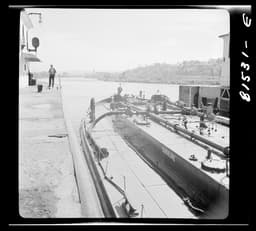
A Tribute to
The Erie Canal
MyHistoryStone Archive
1817 – 1825
Lockport, New York, United States · 8 years
Location
Buffalo to Albany, three hundred and sixty three miles
In motion
5 photographs
The photographs on this page, brought to life.
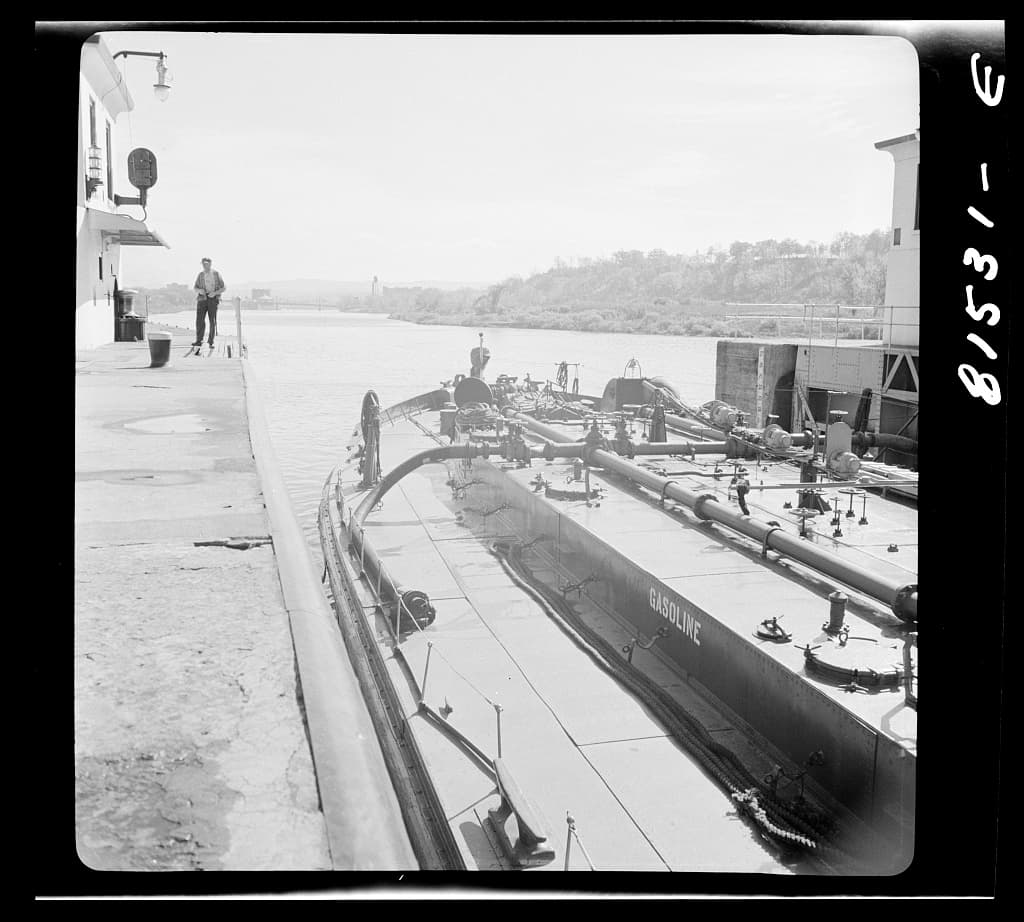
The Erie Canal in New York, photographed for the Farm Security Administration in October 1941. John Collier Jr., Library of Congress, Prints and Photographs Division
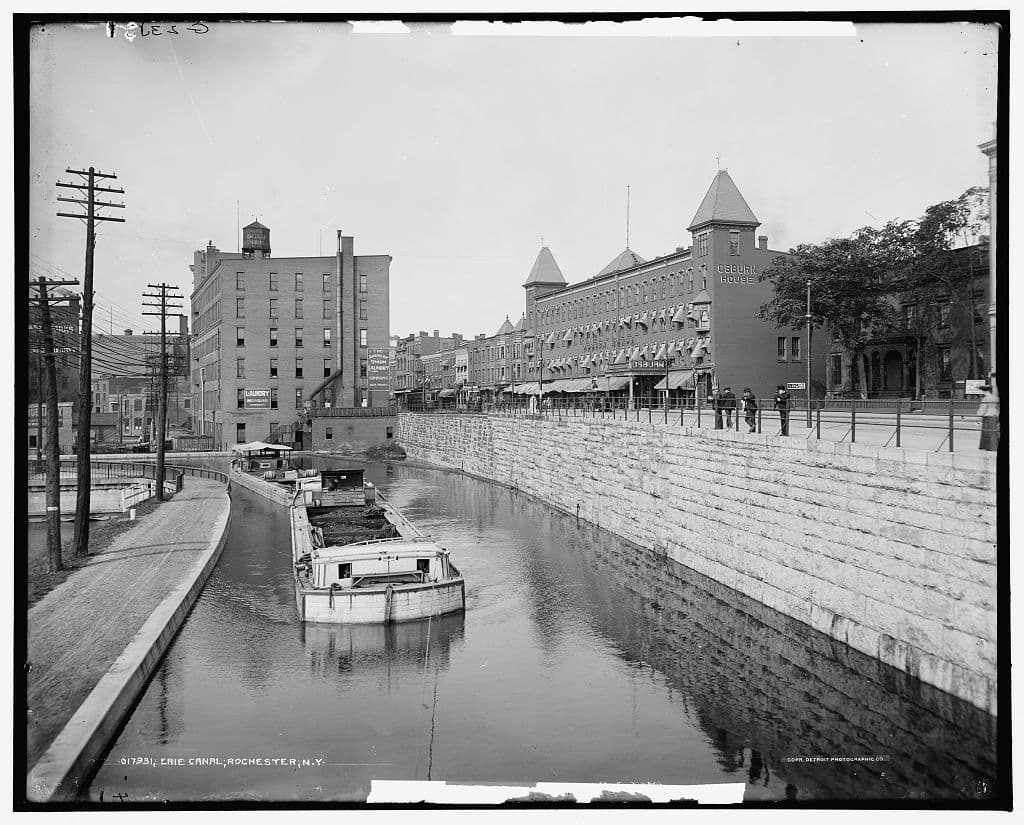
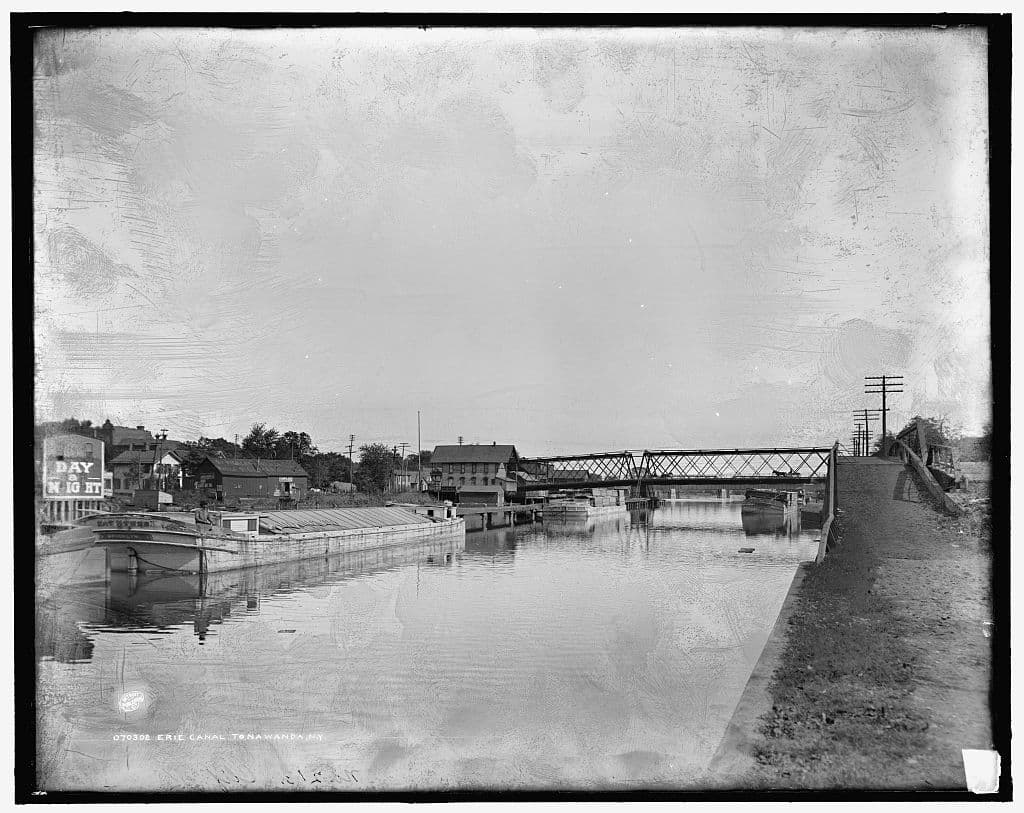
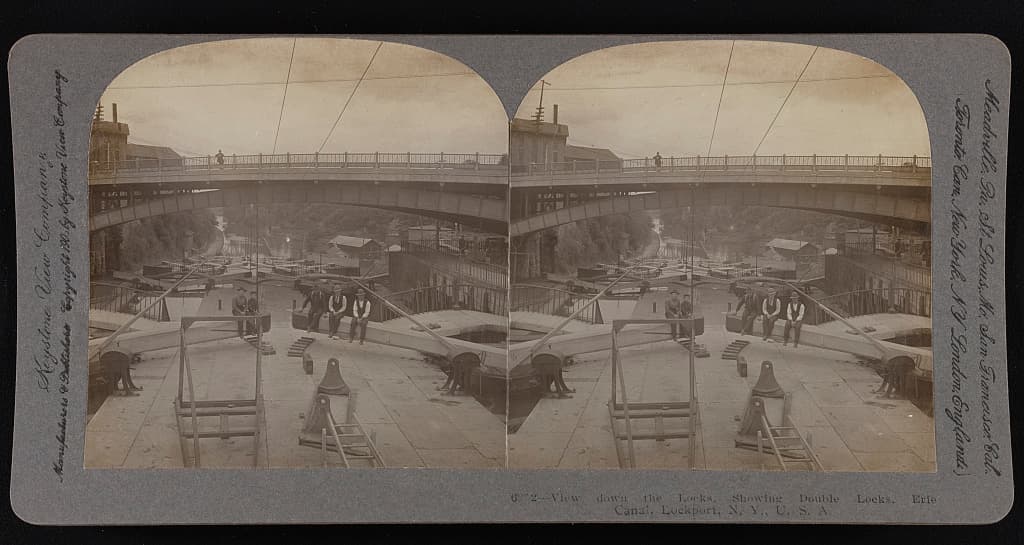
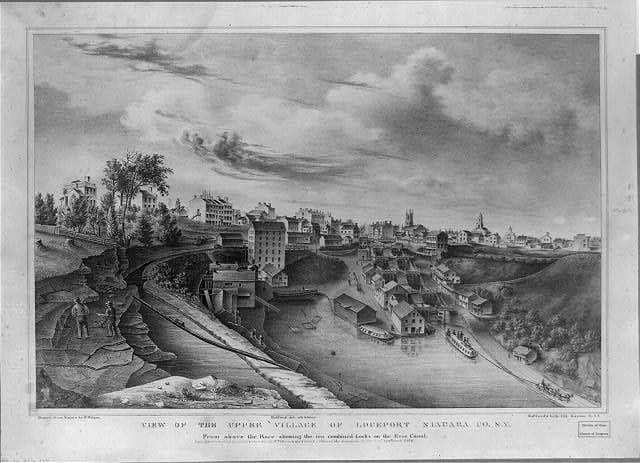
It is three hundred and sixty-three miles long, it was dug by hand, and the men who surveyed it were a judge, a mathematics teacher and a twenty-seven year old who had never built anything. The Erie Canal ran from the Hudson River to Lake Erie. Construction began on 4 July 1817, at Rome, New York according to most accounts and near Utica according to others, and it opened on 26 October 1825. As first dug it was forty feet wide and four feet deep, with locks ninety feet by fifteen. The total rise and fall is about five hundred and sixty-five feet. It cost roughly $7.143 million, and the tolls covered the construction debt inside the first year of operation. The man who forced it through was DeWitt Clinton, governor of New York, president of the canal commission, and the target of everyone's jokes. It was called Clinton's Folly, Clinton's Ditch, Clinton's Big Ditch and DeWitt's Ditch depending on who was sneering. Thomas Jefferson is very widely quoted as calling the proposal "little short of madness." We want to be careful with that one: the quotation is repeated everywhere without a visible citation, and the Jefferson Foundation's own register of spurious quotations neither confirms it nor lists it as false. So it may be real. We simply cannot show you that it is. Who actually dug it is the question this page turns on, and the answer everybody gives is probably too simple. It is commonly said the Erie Canal was built by Irish immigrants. One reference work states it flatly: "The Canal was built by Irish laborers and German stonemasons," and elsewhere in the very same article softens to "many of the laborers working on the canal were Irish," a group of about five thousand. Another account reverses the emphasis entirely and describes the workforce as "some Irish immigrants, but most U.S.-born men," largely local farmers. We could not find a total workforce figure, a wage, or an hours figure anywhere. What is not in dispute is that canal labourers were assaulted, and that the hostility they met was directed at them as immigrants. The deaths are the same shape of problem. It has long been said that more than a thousand men died of swamp fever in the Montezuma Marsh. The most careful statement we found immediately qualifies it: that "recent research has revealed that the death toll was likely much lower, as no contemporary reports mention significant worker mortality, and mass graves from the period have never been found in the area." No other source we could reach gives an independent figure at all. So the number stands as a rumour that has outlived its evidence, which is worth saying plainly rather than repeating. The engineering was done by men who learned it on the job because there was nobody else. Benjamin Wright, a judge by training who had surveyed boundary disputes, became chief engineer; the American Society of Civil Engineers named him the Father of American Civil Engineering in 1969, and the first boat to run the finished canal was called the Chief Engineer in his honour. James Geddes was another judge, who had used surveying instruments for the first time only hours before he started work. Nathan Roberts was a mathematics teacher and land speculator. And Canvass White, twenty-seven years old, went to England at his own expense to walk the canals there, came back, and patented a natural hydraulic cement that would set underwater. That cement was later used on the Delaware and Hudson Canal and on the Brooklyn Bridge. What they built with it still stands up as engineering. At Lockport the canal climbs the Niagara Escarpment through two sets of five locks, sixty feet of lift, with the final approach cut thirty feet deep through solid limestone. At Irondequoit the canal crosses a valley on an embankment thirteen hundred and twenty feet long and seventy-six feet above the creek, which runs beneath it through a culvert. The Genesee aqueduct carried the canal over a river on eleven arches for eight hundred and two feet. What it did to the country is easier to state than to believe. The cost of moving a barrel of flour from Rochester to Albany fell from three dollars to seventy-five cents. Freight moved at roughly a tenth of the previous cost in less than half the time. Buffalo went from two hundred settlers in 1820 to more than eighteen thousand by 1840. The populations of Syracuse, Rochester and Buffalo quadrupled between 1830 and 1850. As late as 1852 the canal carried thirteen times more freight tonnage than every railroad in New York State combined. Note that the figure you usually see quoted, a fall from a hundred dollars a ton to ten, we could not source anywhere, so it is not stated here. The opening was properly theatrical. A line of cannon was set along the canal and down the Hudson, each within earshot of the next, and the news of the opening was fired from Buffalo to New York City in about ninety minutes. Clinton sailed the whole length aboard the Seneca Chief over ten days and poured a keg of Lake Erie water into the Atlantic, which is why it is called the Wedding of the Waters. On the way back the boat carried Atlantic water, and Judge Samuel Wilkeson poured it into Lake Erie at Buffalo. Then it was a working road for a century. Boats drawing up to three and a half feet were pulled by horses and mules on the towpath, at four miles an hour or five depending on which page of the record you read. The driver walking beside the team was called a hoggee. A single mule could carry two hundred and fifty pounds on its back and pull thirty thousand. One thing to know before you sing it. "Low Bridge, Everybody Down," the song everybody thinks the boatmen sang, is credited to Thomas S. Allen, was first recorded in 1912 and published in 1913. It was written when the Barge Canal was already under construction and mule power was going away, which makes it not a work song but an elegy for one, composed by a professional songwriter looking back. It found its way into the folk repertoire afterwards and has been sung by Pete Seeger, the Kingston Trio and Bruce Springsteen. It is a good song. It is not evidence. The canal was enlarged, and then in 1903 New York authorised the Barge Canal, built between 1905 and 1918 at a cost of $96.7 million. It used the rivers where it could, which meant more than half the original route was abandoned or destroyed, and the towpath went with it. Tolls were abolished on 1 January 1883. The last regular commercial hauler, the Day Peckinpaugh, stopped in 1994. In 2000 Congress designated the Erie Canalway National Heritage Corridor, five hundred and twenty-four miles across twenty-three counties, and about eighty percent of upstate New York's population lives within twenty-five miles of it. One absence should be named rather than skated over. The canal was cut across the homeland of the Haudenosaunee. We looked specifically for what the record says about that, in the Park Service's own corridor pages and elsewhere, and found nothing at all. Not a disputed account, not a contested figure. Nothing. That silence is a finding, and it belongs on the page. If your family worked the canal, drove a team on the towpath, or lived in one of the towns it made, we would like to hear it. Three hundred and sixty-three miles of it was dug by people whose names nobody wrote down. Compiled by MyHistoryStone from the National Park Service's Erie Canalway National Heritage Corridor, the New York State Canal Corporation, published histories of Benjamin Wright and Canvass White, the Thomas Jefferson Foundation's register of spurious quotations, and historical marker inscriptions at Pittsford, Syracuse and Lockport, New York.
Add to this story
Know something about The Erie Canal? Add it here - a memory, a detail, a correction. What you write appears right away, and the page owner can remove any entry.
Loading messages...