 Home
Home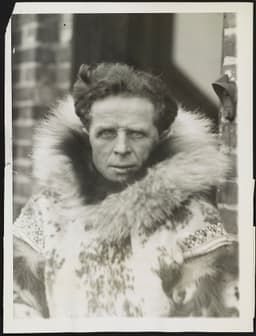
A Tribute to
The 1925 Serum Run to Nome
MyHistoryStone Archive
January 27, 1925
Nome, Alaska, United States
Hometown
Nenana, Alaska
Location
The Iditarod Trail
In motion
3 photographs
The photographs on this page, brought to life.
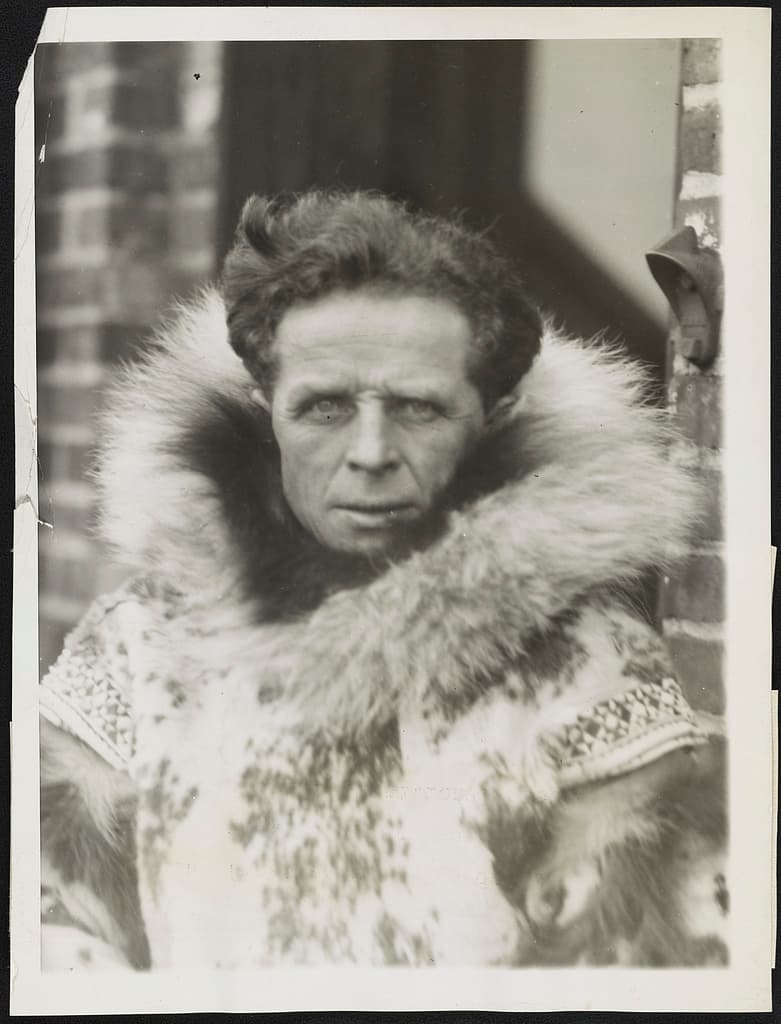
The Library names this Leonhard Seppala, and its caption recalls his dash carrying serum in the Alaskan epidemic. Paramount News, Library of Congress, New York World-Telegram and the Sun Newspaper Photograph Collection
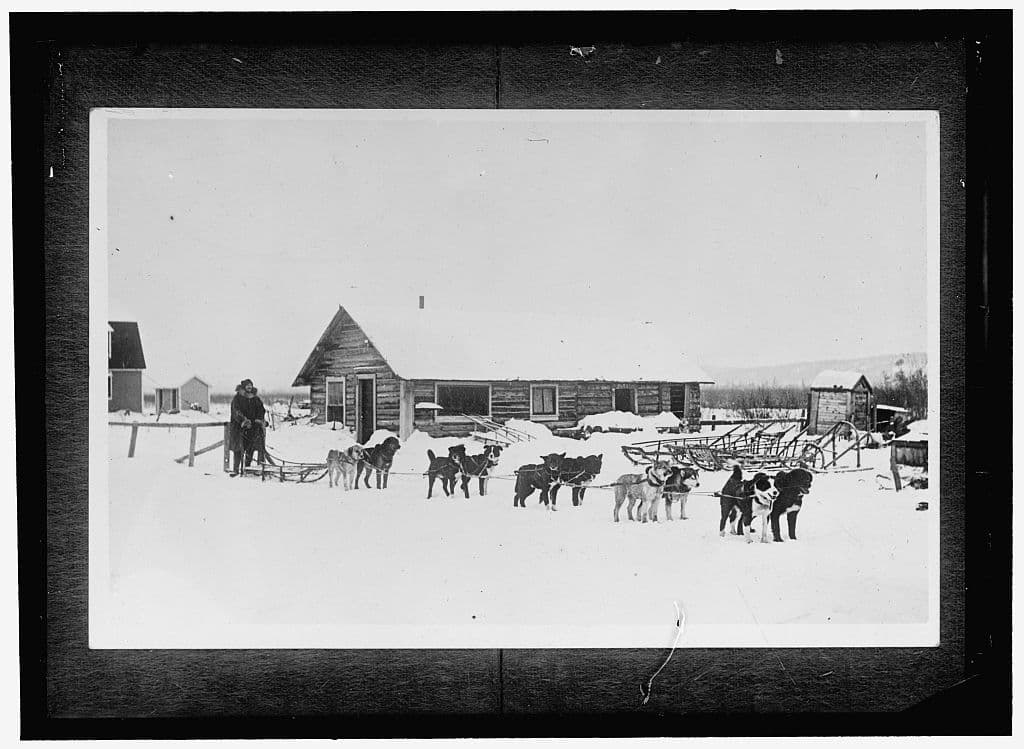
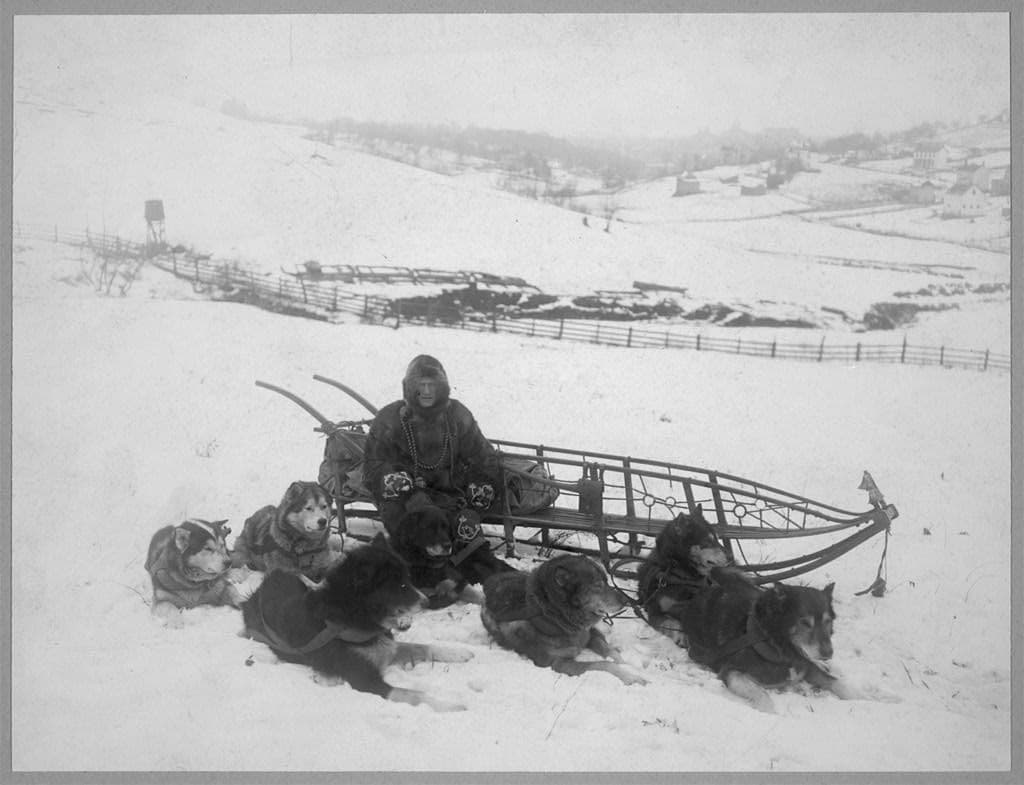
In January 1925 the only doctor in Nome, Alaska sent a telegram out of a town that was frozen in for the winter. The wording survives: "An epidemic of diphtheria is almost inevitable here [STOP] I am in urgent need of one million units of diphtheria antitoxin STOP Mail is only form of transportation STOP I have made application to Commissioner of Health of the Territories for antitoxin already STOP There are about 3000 white natives in the district." Curtis Welch had missed it at first. Through December he had been calling the cases sore throats and tonsillitis. The first officially diagnosed case was a three year old boy, who died about a fortnight after he fell ill. Diphtheria grows a membrane across a child's throat within two or three days and the toxin attacks the heart and the nerves. The hospital's entire supply of antitoxin had expired. Three hundred thousand units were found in a hospital in Anchorage on 26 January, packed into glass vials, wrapped in quilts and sealed in a metal cylinder weighing a little over twenty pounds. A million were needed. More was found near Juneau, and a further 1.1 million units were located on the west coast and shipped, but that shipment could not reach Nome before 8 February, and Welch did not have until 8 February. There was a serious public argument about flying it in. There were three biplanes in the whole territory, with open cockpits and water cooled engines, and all three were dismantled for the winter. The longest test flight anyone had managed was two hundred and sixty miles, against the six hundred and thirty a direct run would need. The idea was rejected by the board of health, by experienced pilots, by the Navy and by Governor Scott Bone. So it went by dog. Six hundred and seventy-four miles from the railhead at Nenana to Nome, twenty men and about a hundred and fifty dogs, out of Nenana at nine in the evening on 27 January and into Nome at about half past five in the morning on 2 February. A hundred and twenty-seven and a half hours, five and a half days. A mail team took roughly thirty days to cover the Nulato to Nome stretch alone. The men should be named, because for most of a century they were not. Bill Shannon took the first leg, fifty-two miles, with nine inexperienced dogs behind a leader called Blackie, in temperatures given as fifty below falling to sixty-two below, and came in with hypothermia and frostbite. Edgar Kalland ran thirty miles at fifty-six below and had to have his hands thawed off the sled handlebar with boiling water. Dan Green. Johnny Folger. Sam Joseph, thirty-five years old, of the Tanana, with seven malamutes. Titus Nikolai. Dave Corning. Harry Pitka, seven dogs, at night. Bill McCarty, behind a leader called Prince. Edgar Nollner, twenty-one, behind an eight year old dog named Dixie. George Nollner. Charlie Evans, also twenty-one, who lost both his lead dogs to frostbite and is reported to have pulled the sled himself. Tommy Patson. Jackscrew, described in the record as a small man. Victor Anagick. Myles Gonangnan, eight malamutes, out at five in the morning. Henry Ivanoff, whose leg was half a mile long and who mattered enormously, because he is the man who ran into Leonhard Seppala coming the other way. Charlie Olson, twenty-five miles into a wind chill of seventy below, who arrived with his hands badly frozen. Most of those men were Athabascan and Inupiaq and Inuit, and the record is unusually direct about what happened next: the media largely ignored the Alaska Native mushers, who covered two thirds of the distance to Nome. Edgar Kalland's own comment on it is the best line in the whole story. "It was just an everyday occurrence as far as we were concerned." Leonhard Seppala had been sent out from Nome to meet the serum, which is why his leg was the long one and the bad one. He was born in Norway in 1877; the family name comes from the Finnish word for a smith. He was judged the most qualified man on the trail to attempt the shortcut, which meant crossing the sea ice of Norton Sound, and he crossed it twice. The ice ran from broken hills to glare ice, the wind chill reached eighty-five below, and within hours of his crossing the ice broke up altogether and went out to sea. His lead dog Togo was twelve years old and had led for seven of them. One day of that run covered eighty-four miles. Gunnar Kaasen took the last leg behind Balto. The sled went over in the dark and the cylinder of serum was thrown off and buried in the snow, and he found it with his bare hands and froze them doing it. He reached Front Street in Nome at half past five in the morning with not a single ampule broken, and there were no further deaths from the disease. He had passed through Point Safety without waking Ed Rohn, who was to have taken the final stretch; Kaasen said there were no lights on and he did not want to lose the time, and Rohn and other mushers thought he wanted the glory. Which is the argument that has never gone away. Balto got the newsreels, the tour, and a statue in Central Park within ten months. Seppala's view of that dog was not gentle: he called Balto "a scrub freight dog that he left behind when he set out on the trip," and said he "was never in a winning team." Balto ran fifty-five miles. Togo is credited with two hundred and sixty-one in most accounts, two hundred and sixty in another, and "nearly 300 miles, farther than any other dog in the relay" on the marker that New York City put up for him in 2020. The footage of Balto arriving in Nome was re-shot hours later, once the sun was up, and speculation has never stopped about whether his position at the head of that team was quite what the cameras showed. Seppala, in 1960, was still saying it: "I never had a better dog than Togo. His stamina, loyalty, and intelligence could not be improved upon. Togo was the best dog that ever traveled the Alaska trail." We are not going to settle that here. Both dogs ran. One of them ran a great deal further. What happened to them afterwards is its own small disgrace and its own small redemption. Balto toured the west coast for a year and starred in a thirty minute film, and then ended up in a sideshow living in horrible conditions. A Cleveland businessman named George Kimble organised a fundraising campaign among the city's children to buy him and his team out, and Balto arrived at the Cleveland Zoo on 19 March 1927. He was put down in 1933 at fourteen and is on display at the Cleveland Museum of Natural History. Togo was put down in December 1929 at sixteen, and is now in a glass case at the Iditarod headquarters in Wasilla, Alaska. His skeleton is at the Peabody Museum at Yale. One thing gets overstated so often it is worth correcting plainly. The Iditarod Trail Sled Dog Race, founded in 1973, is very widely described as a commemoration of the serum run over the same route. The race's own account says the opposite: that the original start "had nothing to do with the 1925 serum run to Nome or the famous dog, Balto," and that the race "is not a commemoration of the 1925 serum delivery." Other accounts say it carries many traditions commemorating the run, and that the two follow the same route from Ruby to Nome, which is part of the way and not all of it. A third says flatly that it follows the same route. All three are in print. The version you usually hear is the one that claims the most. The Balto statue was unveiled in Central Park on 15 December 1925, and its inscription is worth reading against the rest of this page: "Dedicated to the indomitable spirit of The Sled Dogs that relayed antitoxins six hundred miles over rough ice across treacherous waters through arctic blizzards from Nenana to the relief of stricken Nome in the winter of 1925. Endurance, Fidelity, Intelligence." Six hundred miles, it says. It was six hundred and seventy-four, and the dedication is to the dogs, all of them, which is the fairest thing anyone carved about it. Between five and seven deaths were officially recorded in the outbreak. Welch believed there were probably at least a hundred more cases in the camps outside the town that never reached his count. If your family carries one of these names, or ran a roadhouse on that trail, or kept a photograph of a team on the ice, we would be glad to add it here. Compiled by MyHistoryStone from published accounts of the 1925 serum run and of Leonhard Seppala, Gunnar Kaasen, Togo and Balto, the Centers for Disease Control on diphtheria, the Bureau of Land Management on the Iditarod National Historic Trail, and the inscriptions on the Balto memorial in Central Park and the Togo memorial at Seward Park, New York.
Share a memory
Leave a memory or a message for the family. What you write appears right away, and the family can remove any entry.
Loading messages...