 Home
Home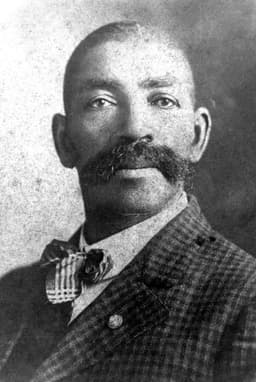
In Memory of
Bass Reeves
MyHistoryStone Archive
1838 – 1910
Muskogee, Oklahoma, United States · 72 years
Residence
Fort Smith, Arkansas
Worked At
The Indian Territory
In motion
6 photographs
The photographs on this page, brought to life.
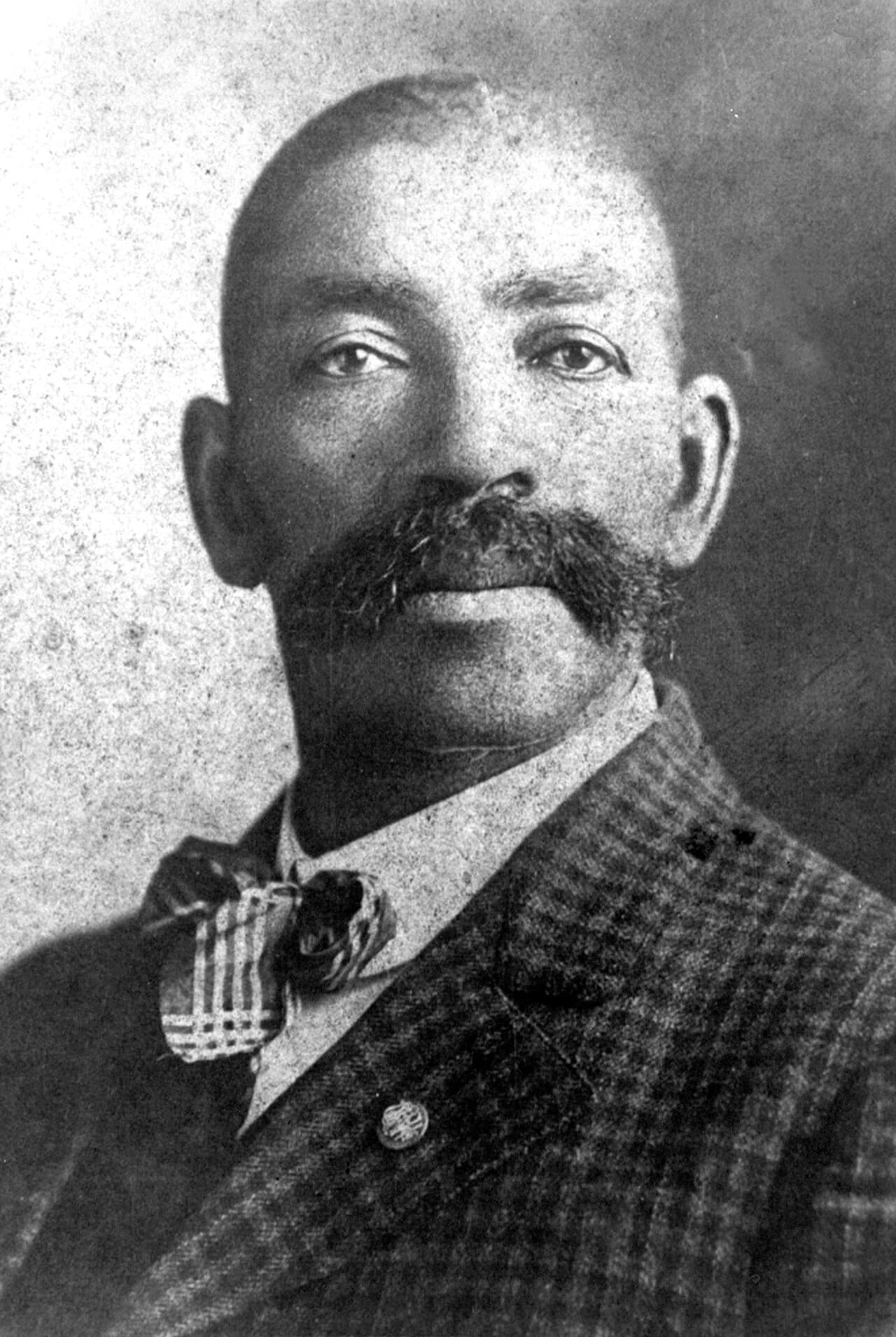
Bass Reeves, Deputy United States Marshal. The record dates the photograph to before his death in 1910. Unknown photographer, via Wikimedia Commons
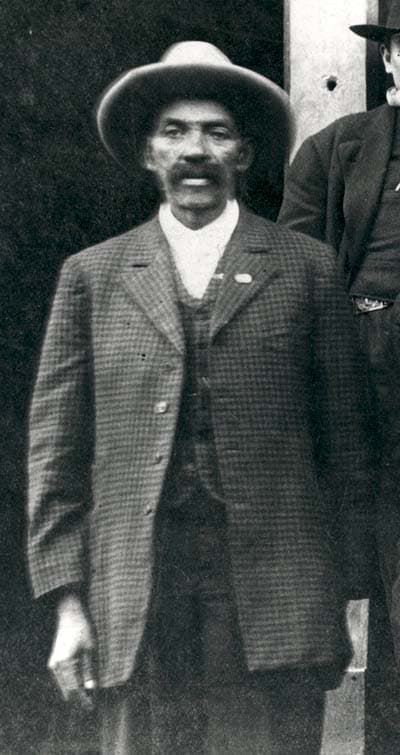
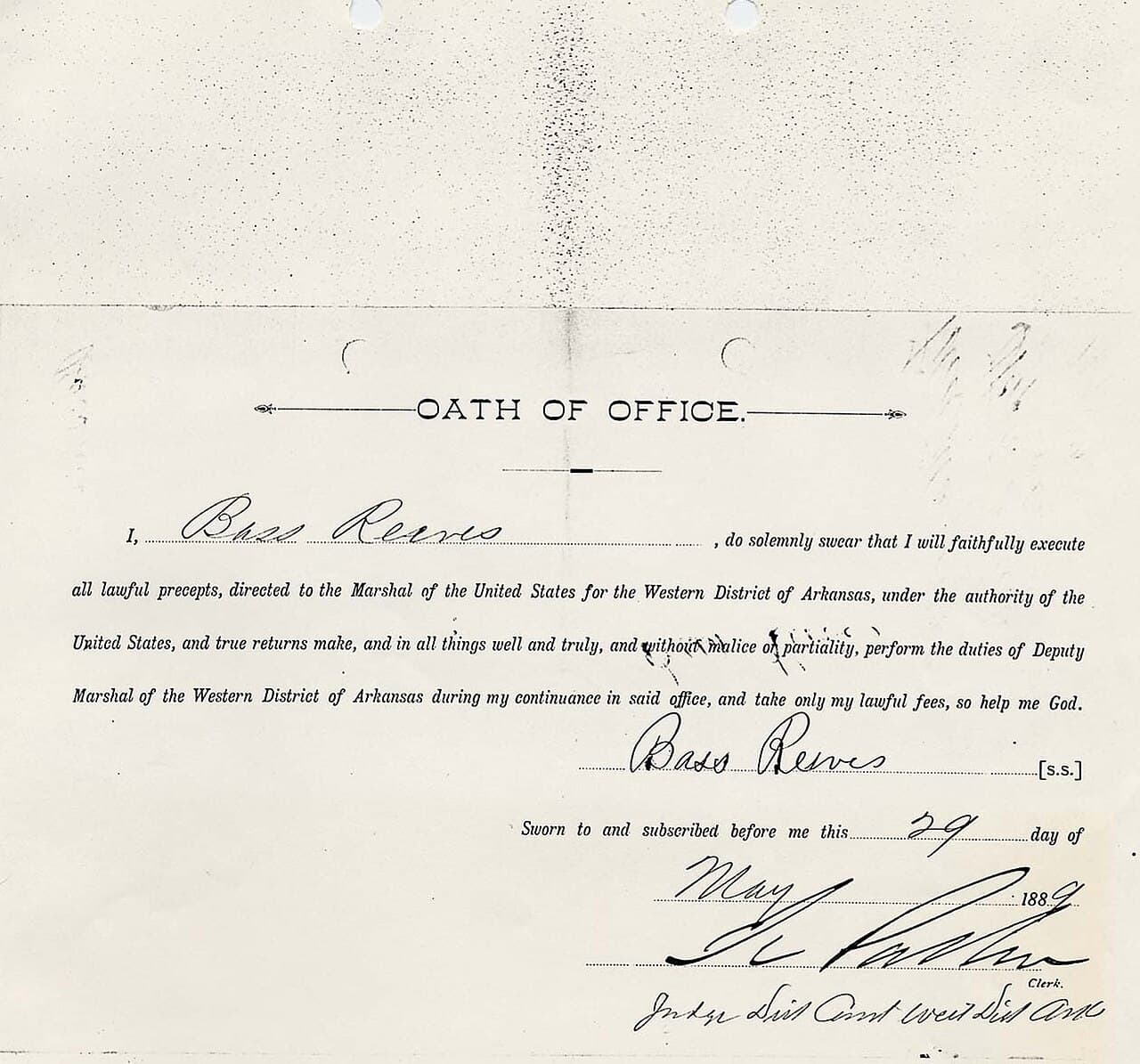
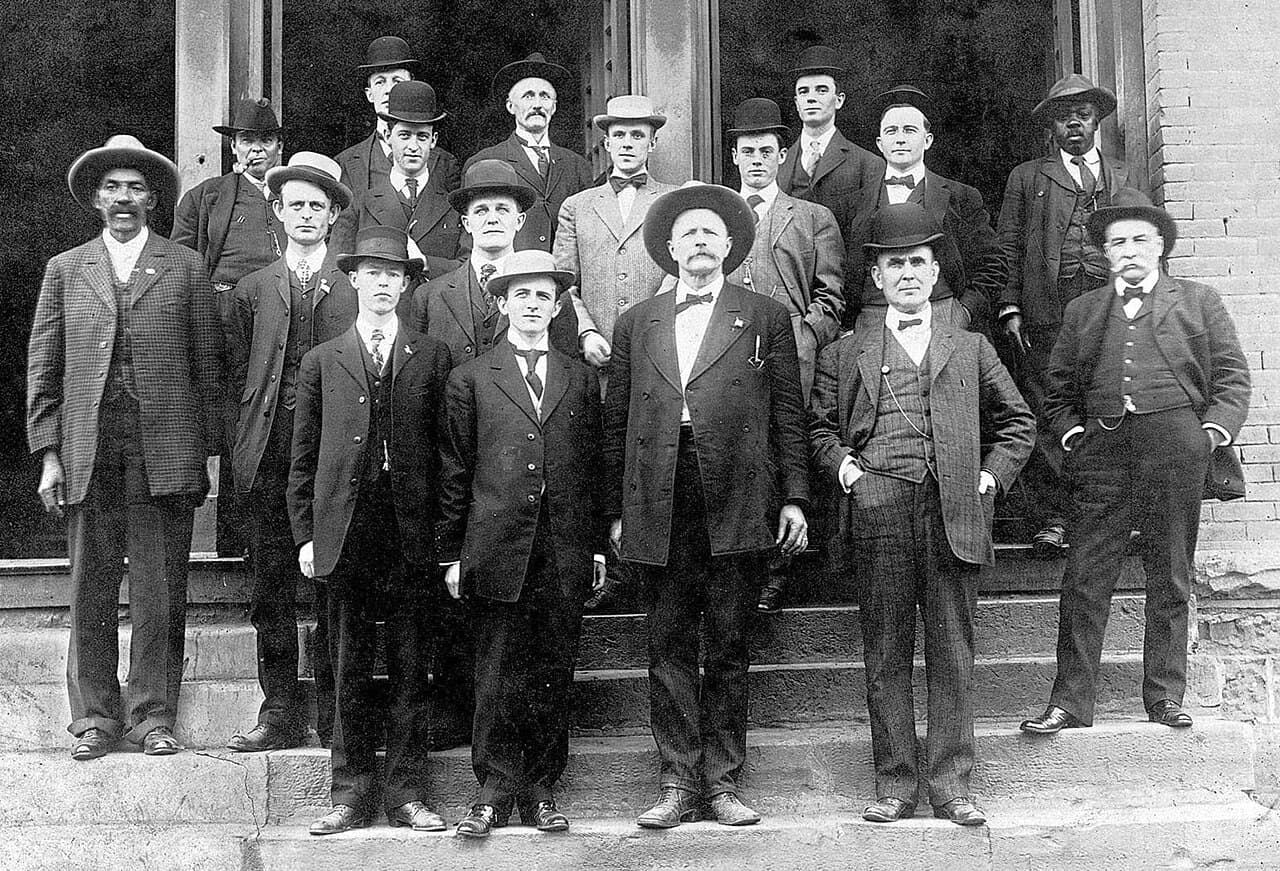
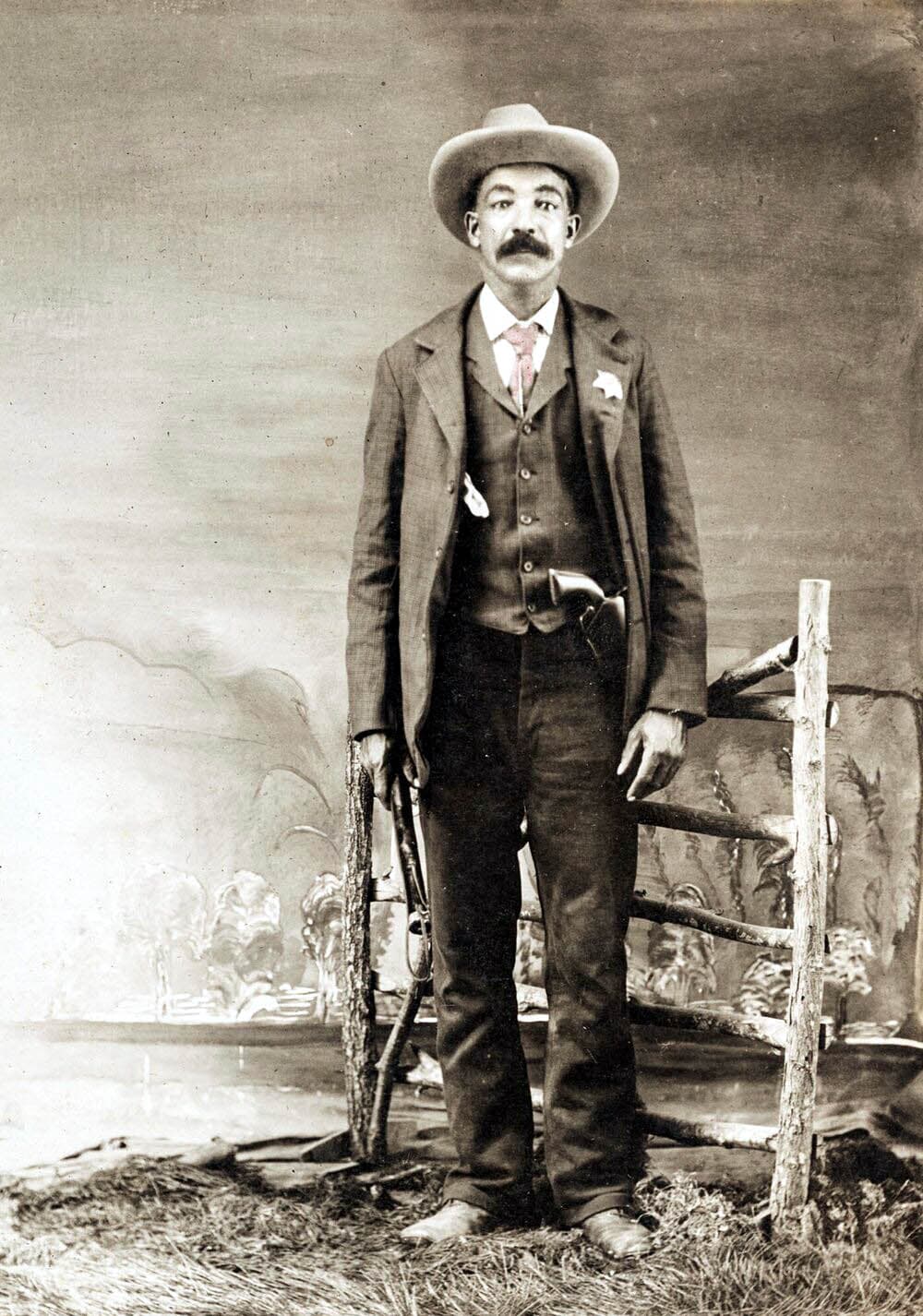
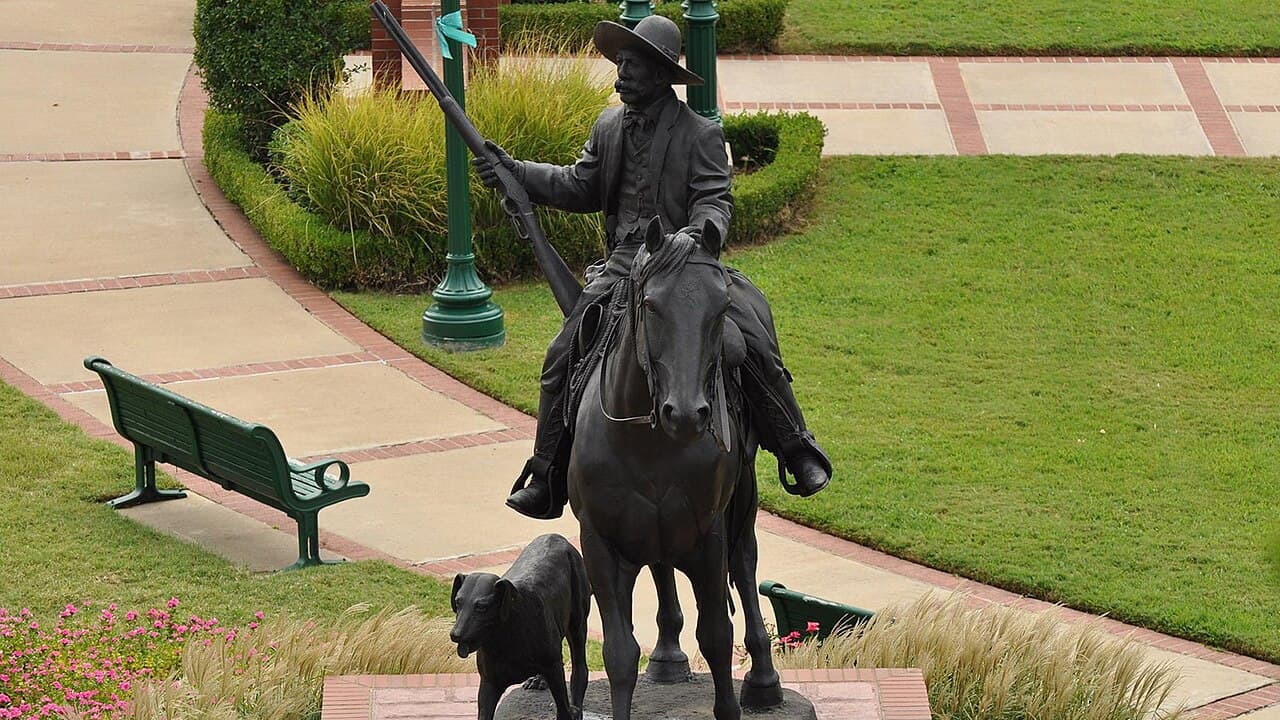
Every account of Bass Reeves reaches the same number: more than three thousand arrests. It is on the statues, in the encyclopedias, and in every article written about him. It is worth knowing where it comes from. In 1901 a territorial newspaper interviewed him, and he said it himself. That is not a reason to doubt the man. It is a reason to be careful with him, because Bass Reeves has more folklore stuck to him than almost any other American lawman, and the folklore is now thick enough that separating it out is most of the work. He was born in July 1838. Most accounts say Crawford County, Arkansas, enslaved by a state legislator named William Steele Reeves. The Oklahoma Historical Society's own entry, written by the historian who has done more work on him than anyone, instead has him growing up in Lamar and Grayson counties in Texas, belonging to Colonel George R. Reeves. The National Park Service simply calls him "a former slave from Texas." Family tradition says he was named for his grandfather, Bass Washington. The story of how he got free is the one everybody tells: that some time between 1861 and 1862 he beat the man who held him after a quarrel over a card game and ran for the Indian Territory. Every careful source attributes that to the Reeves family rather than to a document. Britannica gives it as coming from "Reeves's family members." The Park Service does not tell that story at all. What it says instead is hedged and short: "It is believed that Reeves fought in the Indian Territory during the Civil War with the Union Indian brigades." Both cannot be the whole truth, and neither is written down anywhere we could reach. What is not in doubt is where he ended up. He lived among the Cherokee, Creek and Seminole, and in 1875, when Judge Isaac C. Parker took over the federal court at Fort Smith, Reeves was commissioned a deputy United States marshal at the age of thirty-seven. That court had jurisdiction over more than 75,000 square miles, the largest federal court in the history of the United States. Parker was authorised to hire two hundred deputies and normally had between twenty and thirty. More than a hundred and twenty of them were killed before Oklahoma became a state in 1907. He is very often called the first Black deputy marshal west of the Mississippi. Read the sources side by side and a pattern appears. The Oklahoma Historical Society says he "is believed to be one of the earliest African Americans to receive a commission." The Encyclopedia of Arkansas says "one of the first Black federal lawmen west of the Mississippi River." Britannica says "one of the first deputy U.S. marshals of African descent in the American West." The statue in Fort Smith says "recognized as one of the first." A mural marker in Alva, Oklahoma, and the popular websites say flatly: the first. The scholarship hedges and the monuments do not, and that gap is worth noticing before repeating either one. The killings are counted two ways as well. The Park Service reports that he said he had killed fourteen men in self defence, and that at the time of his death newspapers reported he had killed over twenty. The Fort Smith statue carries the higher figure. Most reference works carry the lower one. Both are in circulation, and one of them is his own account of himself. He could not read. He memorised his warrants, and the Park Service adds the hedge that goes with the story: "it is said he never arrested the wrong person due to the fact he couldn't read." He was known to work in disguise, though no source we could reach ties any particular disguise story to a case file. Twice the record turns on him rather than for him. In 1886 or 1887, sources differ, he was charged with murdering his posse cook, a man whose name appears as both William Leach and William Leech. Reeves said he had shot him by accident while cleaning his gun. He was defended by W. H. H. Clayton, a former United States attorney, tried before Judge Parker, and acquitted. The other is harder. His son Bennie was charged with murdering his wife, Castella Brown. He was found guilty by a jury on 22 January 1903 and sent to Leavenworth for the term of his natural life. The Park Service states that Bass took the warrant himself and brought his own son in for murder. Other accounts say it is not settled whether the father captured him or the young man turned himself in. What happened afterwards splits too: one account has Bennie released after eleven years and living out his life quietly, another has him pardoned. At statehood in 1907 his commission was abolished. He was sixty-nine years old and had worked thirty-two years as a deputy marshal, the only one on record to have served Parker's court from 1875 all the way through. He took a beat in downtown Muskogee as a city policeman for about two years, and it is reported that no crime was recorded on it. He died there on 12 January 1910 of Bright's disease. Sources give his age at death as seventy-one and as seventy-two. Where he lies is not established in anything we could reach. Which brings us to the reason most people arrive at his name. Bass Reeves is widely described as the inspiration for the Lone Ranger. Britannica is the clearest: "While there is no definitive proof of the connection, Reeves is sometimes speculated to have been the inspiration." Wikipedia attributes the argument to a named historian, Art T. Burton, who says Reeves "is the closest person to resemble the Lone Ranger" and points to his Native partners and the silver dollars he handed out. And here is the part worth sitting with: the two encyclopedia entries written by that same historian, for the Oklahoma Historical Society and for the National Park Service, do not mention the Lone Ranger at all. Nothing we could find connects Reeves to the radio show through any evidence from the 1930s. The claim is an argument by resemblance, made in our own time, and it is how most people meet a man who does not need it. He has monuments now. A bronze more than twenty-five feet tall by Harold T. Holden was dedicated at Ross Pendergraft Park in Fort Smith in 2012. A bridge over the Arkansas River between Muskogee and Fort Gibson carries his name. A life size statue was unveiled in Muskogee by the Three Rivers Museum on 11 January 2025, a hundred and fifteen years and a day after he died. If you are descended from a family he arrested, or from a deputy who rode that territory, or if you know where his grave is, we would like to hear it. The record on this man is thin in exactly the places that matter most. Compiled by MyHistoryStone from the National Park Service at Fort Smith National Historic Site, the Encyclopedia of Oklahoma History and Culture, the Encyclopedia of Arkansas, Britannica, and the inscriptions on the Fort Smith and Alva historical markers.
Add to this story
Know something about Bass Reeves? Add it here - a memory, a detail, a correction. What you write appears right away, and the page owner can remove any entry.
Loading messages...