 Home
HomeBreathing Device

In Memory of
Garrett Augustus Morgan
MyHistoryStone Archive
March 4, 1877 – July 27, 1963
Cleveland, Ohio, United States · 86 years
Final Resting Place
Lake View Cemetery, Cleveland
Location
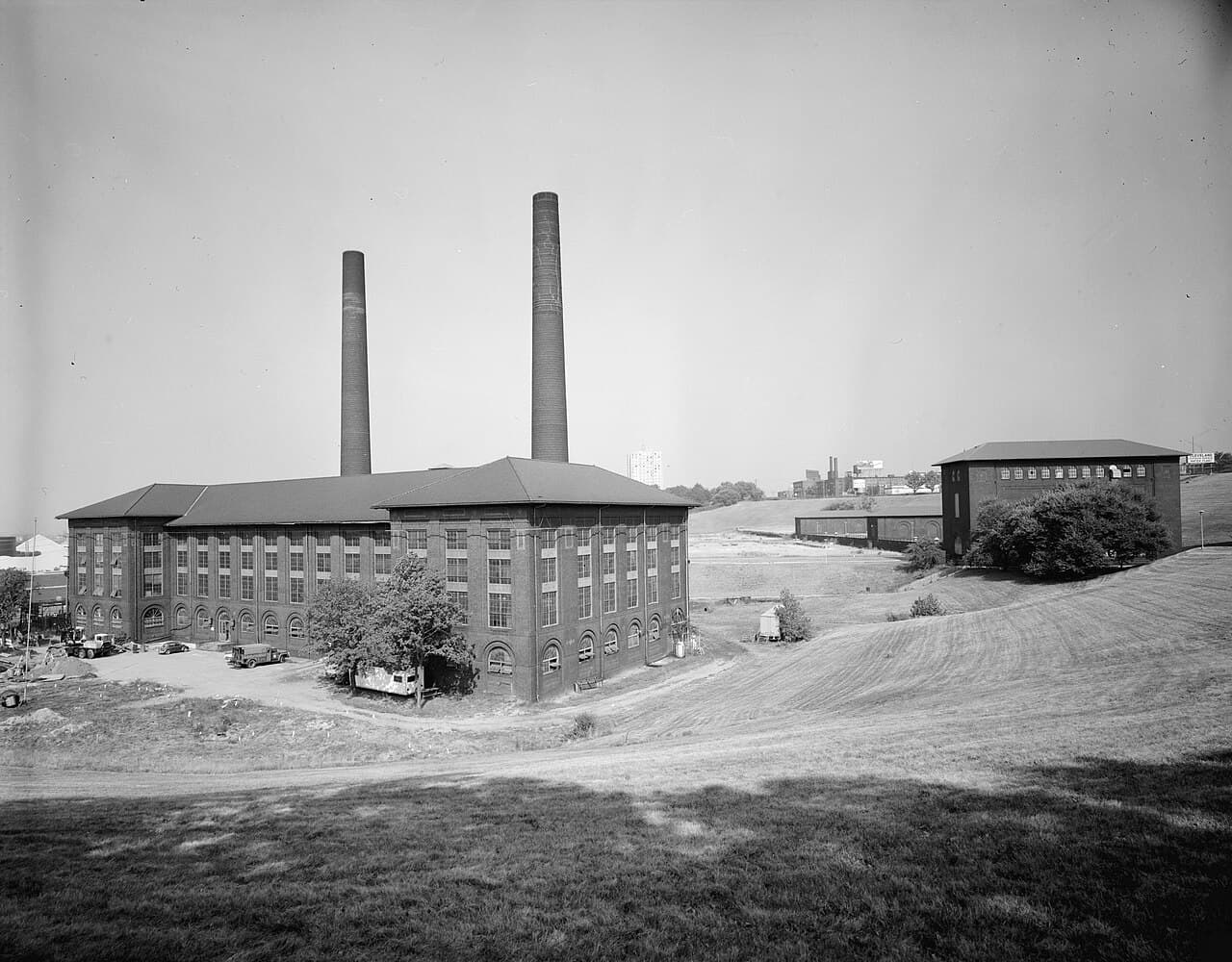
The Cleveland Waterworks Tunnel
In motion
5 photographs
The photographs on this page, brought to life.
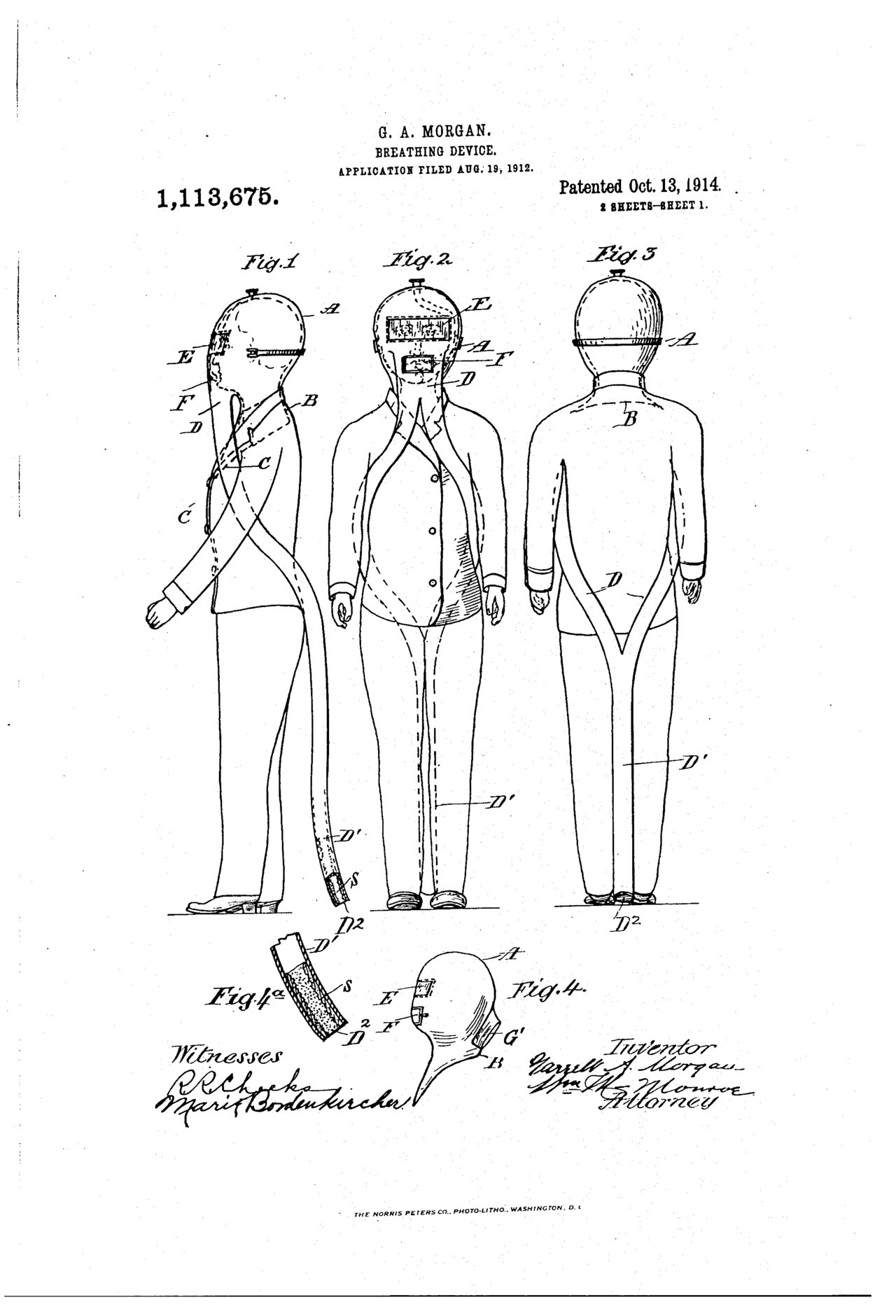
The drawing filed with United States patent 1,113,675, titled simply Breathing device, patented October 1914. United States Patent Office. CC0, via Wikimedia Commons.
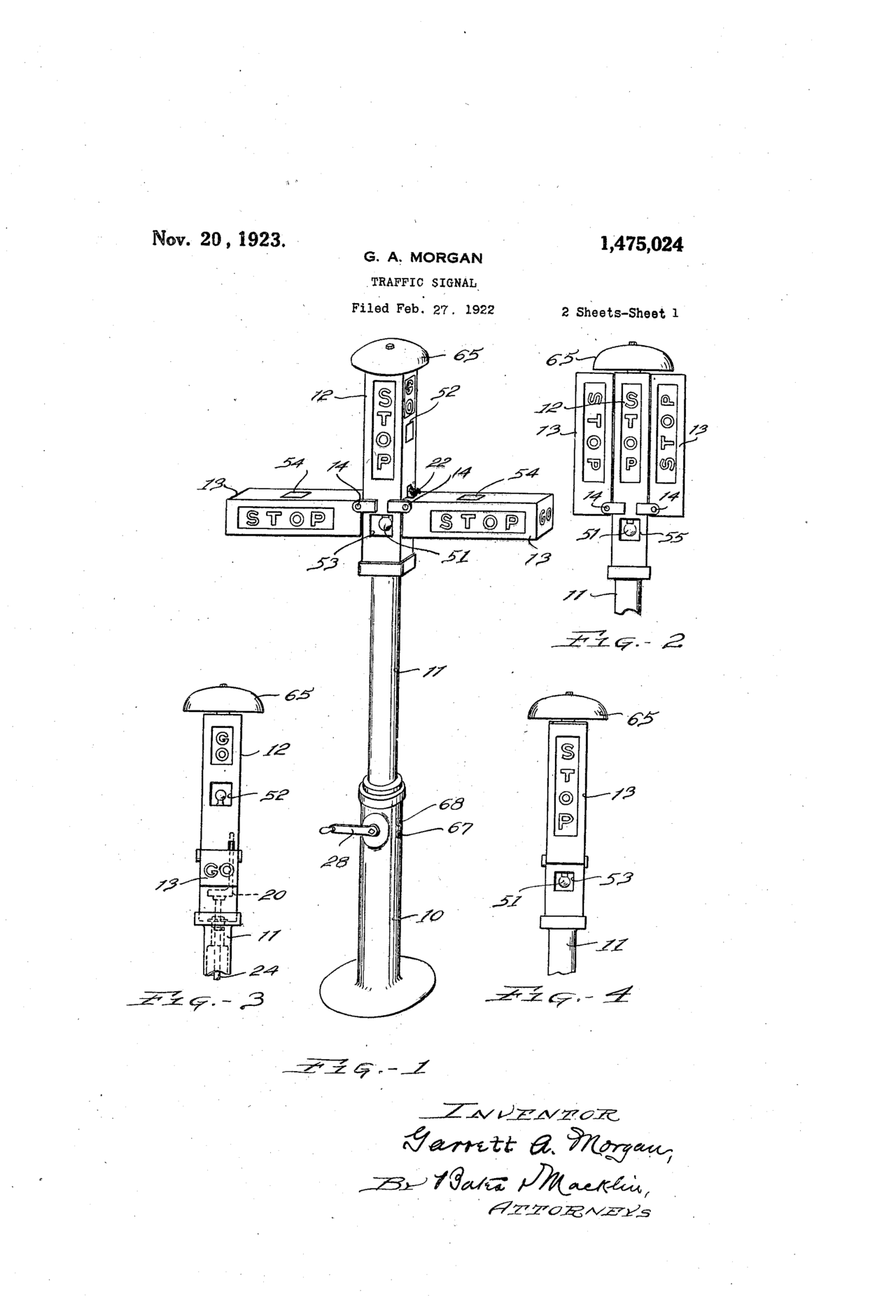
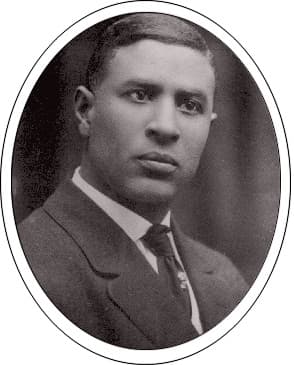
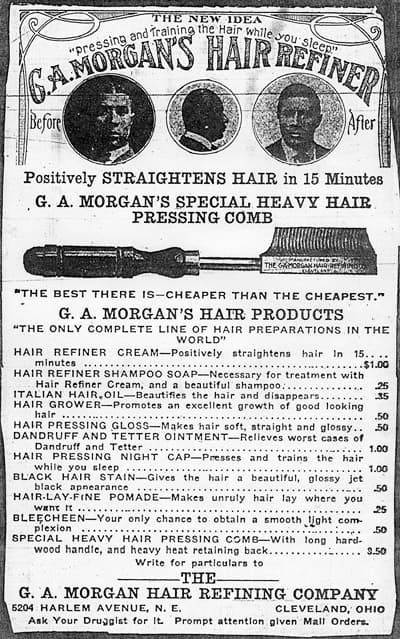
He had six years of school. He held the patent on the thing that got the men out. Garrett Augustus Morgan was born on 4 March 1877, sometimes given as 1879, in Claysville, the Black section of Paris, Kentucky, the seventh of eleven children of Sydney and Eliza Reed, both formerly enslaved. It is often written that his father was the son of the Confederate raider John Hunt Morgan; one source calls that man a general and another a colonel, and the Encyclopedia of Cleveland History says there are no historical documents to prove the assertion and that census data makes it unlikely. His mother is called Eliza in one account and Elizabeth in another, the daughter of a Rev. Garrett Reed. He went to Branch Elementary in Claysville and left home at fourteen for Cincinnati with six years of schooling behind him. In Cincinnati he worked and hired a tutor to keep going. He reached Cleveland on 17 June 1895 and went to work adjusting sewing machines for clothing manufacturers, opening his own repair and sales shop in 1907. In 1908 or 1909 he and his wife Mary opened a clothing store that grew to thirty-two employees. He founded a hair refining company, dated 1906 by an Ohio marker and 1913 by the Encyclopedia of Cleveland History, to sell a straightening solution he had come across by accident in 1905 while working on a liquid to polish sewing machine needles; he tried it on pony fur cloth, on a neighbour's dog, and then on his own hair. In 1920 he founded a newspaper, the Cleveland Call, which merged in 1938 into the Call and Post. There are two breathing device patents, not one, and neither of them is called a gas mask. United States patent 1,090,936 was filed on 21 September 1912 and granted on 24 March 1914. United States patent 1,113,675 was filed on 19 August 1912 and patented on 13 October 1914. Both are titled, simply, Breathing device. The first states its object as providing means whereby a fireman having his head inclosed in a hood with which a hanging air tube communicates will be able to supply himself at will with fresh air from near the floor or other suitable place and at the same time forcibly remove smoke or injurious gases from the air tube. The second describes a hood of flexible rubber or asbestos cloth, twin tubes running down the body and supported at the hips, an intake reaching down into comparatively pure air, a gravity valve, an exhaust valve worked by the wearer's own breath, and small ear trumpets so that the man inside could hear. On the night of 24 July 1916, or 25 July depending on the source, gas vented up from the bed of Lake Erie and ignited in a waterworks tunnel running out toward Crib No. 5, nearly four miles offshore. Nine men of the original crew were trapped. A first rescue party under John Johnston went in without understanding what they were walking into and ten of them died. A second, led by Gus Van Duzen's stepson Tom Clancy, brought out one or two of the first party. The toll is given as twenty, or twenty-one counting Luigi Bucciarelli, a sandhog who drowned during the recovery of the bodies. Morgan came with his brother Frank and several of the hoods. One account says he arrived barefoot after a police officer fetched him; another says the brothers turned up in their pyjamas with four hoods. How many men he brought out is not a settled question and the sources are not close. An Ohio History Connection marker of 2023 says he rescued two men. One encyclopedia says he made four trips, came out carrying a victim on his back with his brother behind him carrying another, and that several lives were saved. The Carnegie Hero Fund's own account says his party pulled out Gus Van Duzen, barely alive, and retrieved several of the dead. Cleveland Historical says outright that because of confusion and inconsistent reports in the Cleveland newspapers it is unclear exactly who rescued whom. All nine of the original crew were recovered by 21 August. The medal is the part that gets told wrong in both directions, so here is what the records say. The Carnegie Hero Fund received nominations for twenty-two men and sent an investigator to Cleveland two months later. Four medals were awarded on 24 January 1917, to William J. Dolan, Thomas J. Clancy, James McGrath and James J. Keating. Eighteen nominees got nothing, among them Garrett and Frank Morgan, who were the only two Black men on the list of twenty-two. That they were nominated at all sits against the widely repeated account that the city excluded Morgan from the request; one biography says Mayor Harry L. Davis left his name off the list of recommended heroes, and Cleveland Historical says the award was tainted by the city's refusal to support his nomination. The Fund's manager wrote on the day the medals were awarded that Morgan's action was commendable but that it did not appear to be attended by any extraordinary risk to his own life, the reasoning being that his own invention had reduced the risk that the earlier rescuers faced blind. The Fund states plainly that although many publications have claimed Morgan was denied the medal because of his race, there is no evidence to support the claim, and notes it had awarded medals to Black recipients as early as 1907. Both of those things are in the record, and we have printed both. In 1917 a group of Cleveland citizens gave him a diamond studded gold medal to make up for the omission. A letter from Victor M. Sincere of the Bailey Company that went with the effort said: your deed should serve to help break down the shafts of prejudice with which you struggle. Morgan himself believed the exclusion was racially motivated. He was later made an honorary member of the International Association of Fire Engineers and given a gold medal by them. There is a famous story that he had to hire a white actor to pose as the inventor at demonstrations in the South, going into the smoke filled tent himself in the character of Big Chief Mason, and that southern cities cancelled orders once photographs revealed he was Black. Two sources state it as fact and neither hedges it. The Encyclopedia of Cleveland History, the National Inventors Hall of Fame and the Carnegie Hero Fund do not mention it at all. We could not find a named fair or a named city. The traffic signal is patent 1,475,024, filed on 27 February 1922 and patented on 20 November 1923. Its stated object is the provision of a visible indicator which is useful in stopping traffic in all directions before the signal to proceed in any one direction is given. That is the invention: an all directional stop, so that a vehicle already partway across an intersection could clear it before anything else moved. It was a hand cranked semaphore with arms that rose, revolved and lowered, not a light and not a yellow one, though the Encyclopedia of Cleveland History describes it as a third cautionary signal between stop and go and the National Inventors Hall of Fame calls it stop, caution and go. Every account says he sold the rights to General Electric for forty thousand dollars in 1923. The patent's own assignment record lists the original and current assignee as Individual, with no legal events recorded. We have printed both, because only one of them can be a complete account. He helped found the Cleveland Association of Colored Men in June 1908 and served as its treasurer; it held weekly public meetings, investigated discriminatory practices and negotiated with officials. He ran for Cleveland City Council in 1931 as an independent and was not elected. With the traffic signal money he bought a hundred and twenty-one acres in Huron County in 1924 and founded the Wakeman Country Club, advertising a village of our own and offering two hundred and forty-seven lots at sixty dollars each, with fishing, hunting, swimming, riding, a restaurant, a dance hall and an amphitheatre. It waned during the Second World War and no buildings remain. Glaucoma took his sight; he was functionally blind by 1943 and went on inventing anyway, including a self extinguishing cigarette with a water filled pellet in front of the filter. He died on 27 July 1963 in Cleveland while preparing an exhibition of his life's work for an exposition in Chicago, and was recognised at the Emancipation Centennial there a month after his death. He is buried at Lake View Cemetery. The Division Avenue filtration plant, which had been running since 1918, was rededicated in his name in 1991. The National Inventors Hall of Fame inducted him in 2005. The Ohio marker put up in 2003 outside the house he lived and worked in on Harlem Avenue is reported missing. If you are descended from Garrett Morgan, or from anyone who went down that tunnel, the corrections and the names belong here. Compiled by MyHistoryStone from the text and claims of United States patents 1,090,936, 1,113,675 and 1,475,024, the Encyclopedia of Cleveland History at Case Western Reserve University, the Carnegie Hero Fund Commission's own account of its 1917 decision, Cleveland Historical, the Cleveland Division of Water history, the National Inventors Hall of Fame, and the Ohio and Kentucky historical markers as transcribed by the Historical Marker Database.
Share a memory
Leave a memory or a message for the family. What you write appears right away, and the family can remove any entry.
Loading messages...