 Home
HomeTwelve Years
A Tribute to
The Brotherhood of Sleeping Car Porters
MyHistoryStone Archive
1925 – 1978
Chicago, Illinois, United States · 53 years
Location
Harlem, New York City
Worked At
The Pullman Company
In motion
5 photographs
The photographs on this page, brought to life.
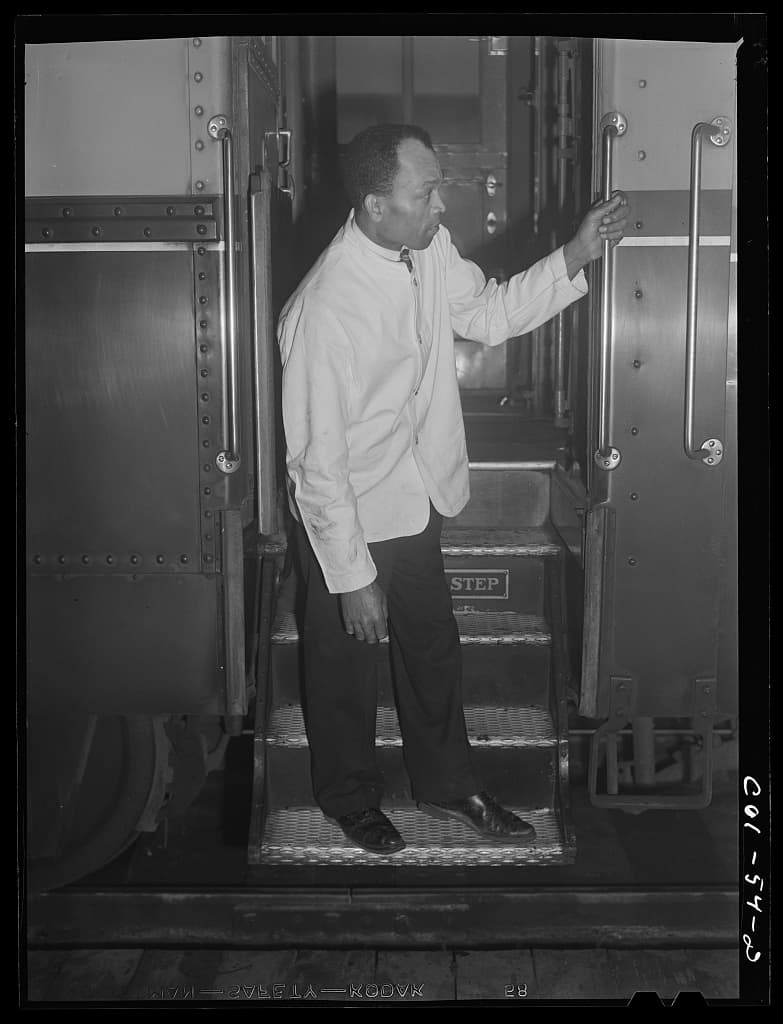
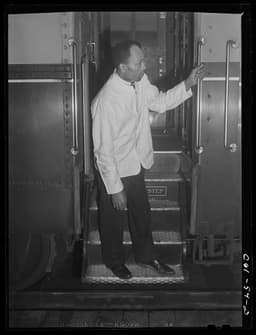
Alfred MacMillian, Pullman porter, waiting for the train to start aboard the Capitol Limited, March 1942. Jack Delano, Office of War Information. Library of Congress.
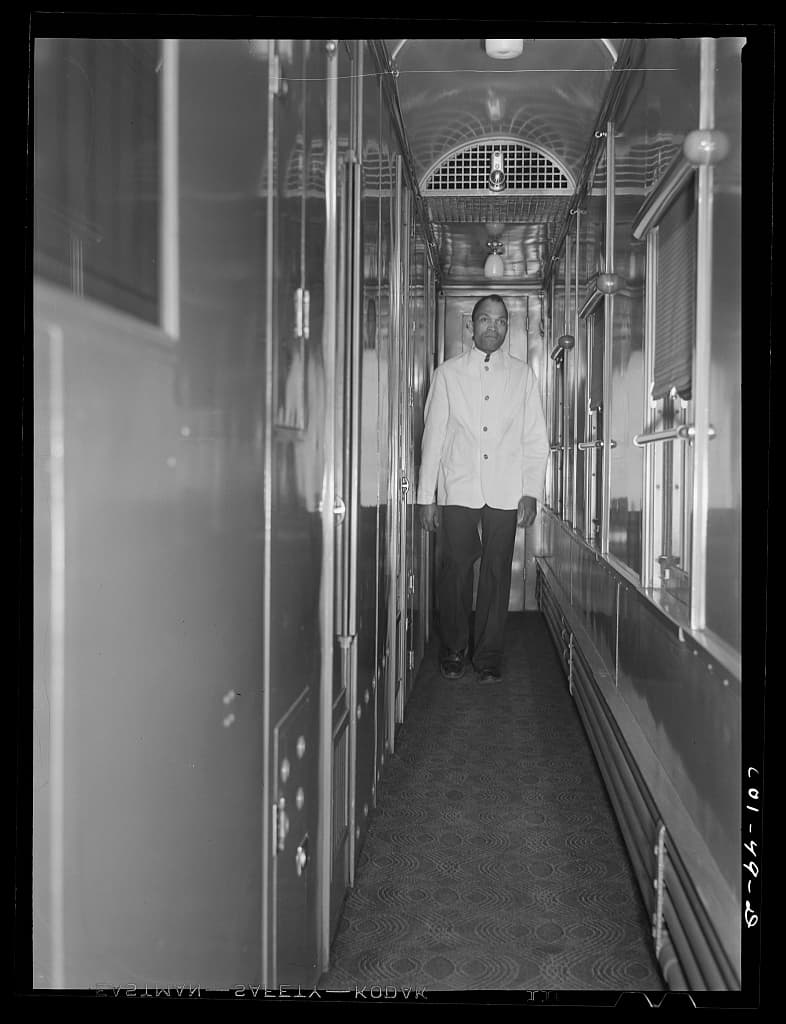
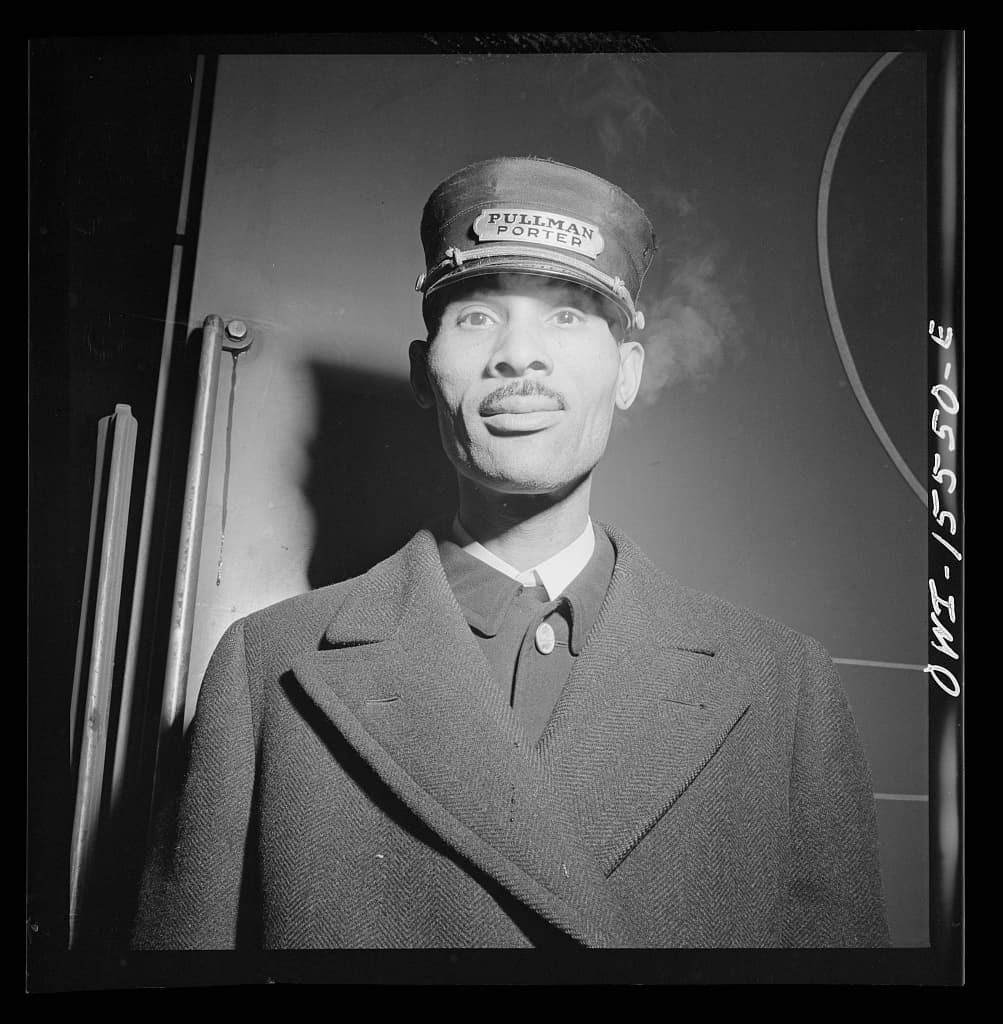
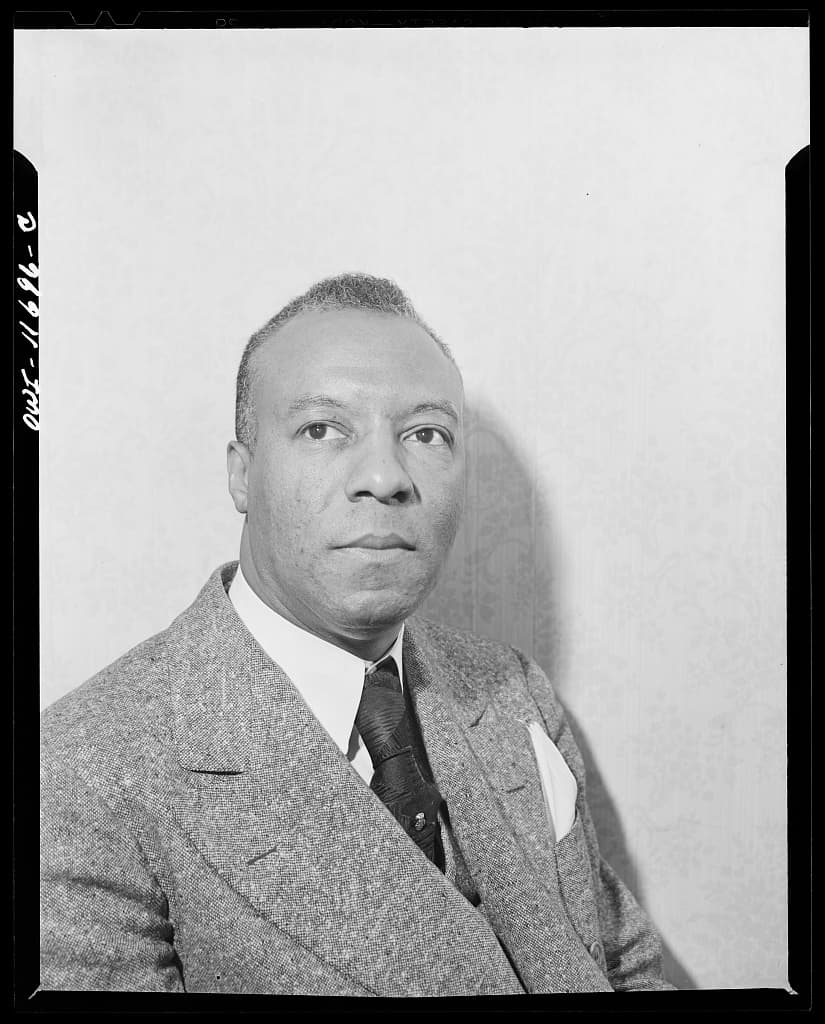
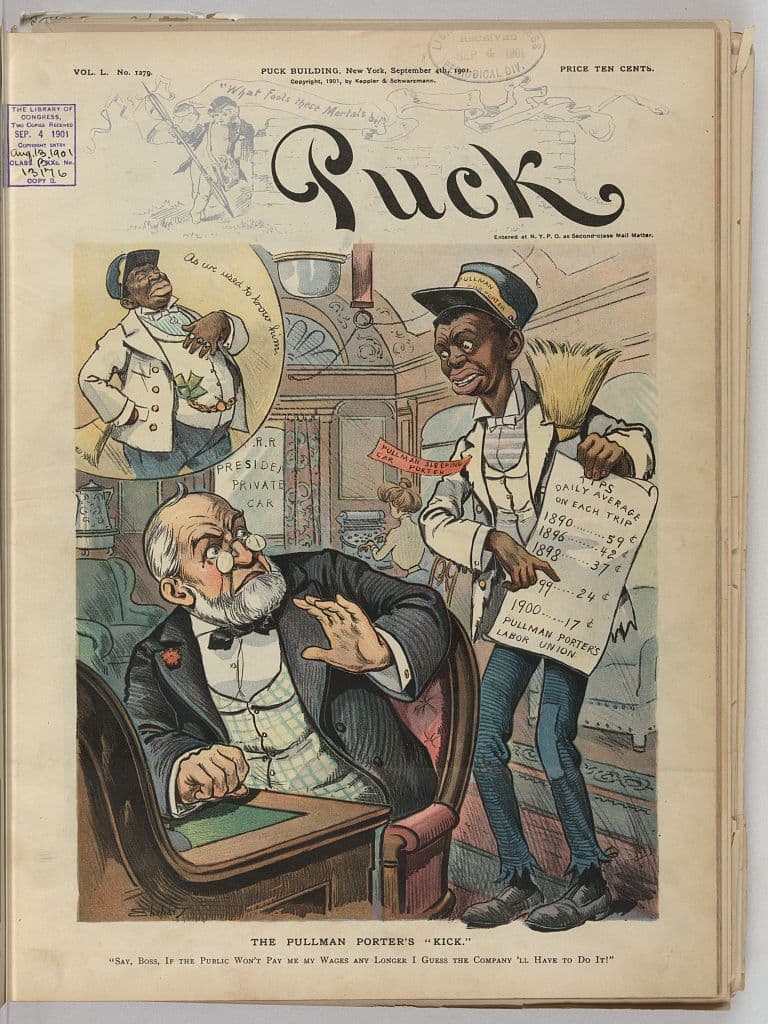
Passengers called every porter George. In 1926 the company finally put name cards in the cars, and of the twelve thousand porters and waiters it employed, three hundred and sixty-two were actually named George. George Pullman began hiring porters in 1868, recruiting Black men, many of them newly freed. At its height the company employed twelve thousand porters alongside twenty-eight thousand conductors, or ten thousand porters and about two hundred maids the following year, depending on which count you take. A presidential proclamation of 2015 states that by 1937 the Pullman Company had been the nation's largest employer of African Americans for over twenty years, and that porters made up forty-four percent of its workforce. The porters were, throughout the company's history, exclusively African American men. The job was this. To earn the basic wage a porter had to travel eleven thousand miles or work close to four hundred hours in a month. About a tenth of his time was unpaid, in preparatory and terminal work setting up and cleaning the car. He might work twenty hours at a stretch. On an overnight run he was allotted three or four hours of sleep and the pay for it was deducted. In 1934 porters on regular assignments averaged over seventy-three hours a week at 27.8 cents an hour, while manufacturing workers averaged under thirty-seven hours at 54.8 cents. Out of that he bought his own meals, lodging, uniforms and shoe shine supplies, which the union's own 1926 survey put at thirty-three dollars and eighty-two cents a month against a minimum wage of seventy-two fifty and an average of seventy-eight eleven. Tips averaged fifty-eight dollars and fifteen cents. A Pullman conductor, who was white, had a minimum of a hundred and fifty dollars for a two hundred and forty hour month. When a passenger stole a towel or a water pitcher, the porter was charged for it. On the night of 25 August 1925, five hundred porters met in Harlem and founded the Brotherhood of Sleeping Car Porters. A union organiser named Ashley Totten had invited A. Philip Randolph to speak to the Porters Athletic Association, and Randolph was elected president. He was chosen precisely because he had never worked for Pullman and so could not be fired by it. The exact date and the attendance figure come from one source; the Park Service and other institutional accounts give only August 1925, and no source we reached names the hall or the street. Randolph was born in Crescent City, Florida on 15 April 1889, the son of a tailor and minister and a seamstress. He had co-founded The Messenger in Harlem in 1917 with Chandler Owen, a paper the Department of Justice called the most able and the most dangerous of all the Negro publications, and had run for New York State Comptroller and Secretary of State on the Socialist ticket. He led the Brotherhood for four decades. He did not do it alone, and the others are worth naming. Milton P. Webster, born in Clarksville, Tennessee in 1887, had been a porter for about eighteen years before he left in 1924, and he was the union's chief negotiator while Randolph was its public voice. C. L. Dellums was a porter from 1924 until the company discharged him in 1927 for supporting the union; he became a vice president in 1929 and the Brotherhood's second international president in 1968. Rosina Corrothers Tucker, born in Washington in 1881, visited some three hundred porters in their homes, carried literature, recruited members and collected dues, and when her husband was fired over her work she went in and got him reinstated. Her account of that meeting is worth quoting: I looked him right in the eye and banged on his desk and told him I was not employed by the Pullman company and that my husband had nothing to do with any activity I was engaged in. Six weeks after the union was founded, the women formed the Women's Economic Councils, which became the International Ladies' Auxiliary in 1938. Then came twelve years of losing. The company ran its own union, called the Employee Representation Plan and later the Pullman Porters and Maids Protective Association, and set up a benefit association to go with it. It isolated and fired organisers, employed spies to report on union meetings as late as 1937, and in extreme cases its agents assaulted organisers. It recruited Filipino men as porters, which the Park Service's own history describes as stoking racial fear among Black workers. In 1928 the union voted to strike and the Mediation Board was persuaded the Brotherhood lacked the strength to carry it; Randolph called it off hours before it was to begin. Membership fell to six hundred and fifty-eight by 1933. What changed it was a law. The amendments to the Railway Labor Act approved on 21 June 1934 gave employees the right to organize and bargain collectively through representatives of their own choosing, provided that the majority of any craft or class should determine who those representatives were, and forbade carriers from requiring anyone to promise to join or not join a labor organization. Randolph got the porters brought under it. On 1 June 1935 the Brotherhood beat the company union in an election and was certified. The contract was signed on 25 August 1937, twelve years to the day after the meeting in Harlem, and took effect that October. It raised wages, set a basic two hundred and forty hour month against the four hundred hours the company had been demanding, gave time and a half after two hundred and sixty hours, and made the company pay for a porter's uniforms after ten years of service. Pullman said the wage increase would cost it about a million and a half dollars a year. It is described by the Park Service and by presidential proclamation as the first major labor agreement between a union led by African Americans and a corporation, and as one of the most important markers since Reconstruction toward African American independence from racist paternalism. No source we could reach says how many porters it covered. What the job and the union built is easier to see than to measure. Porters held status in Black communities, sent children to school on steady wages, and carried the Chicago Defender south by rail, which the paper's own history describes as an informal arrangement rather than a documented operation, and no source we found names a single porter or route. Edgar Daniel Nixon of Montgomery joined the Brotherhood in 1928 and ran its branch there for years; he is the man who chose Rosa Parks as the plaintiff, arranged her lawyer, and pulled in the ministers, and Martin Luther King Jr. called him one of the chief voices of the Negro community in the area of civil rights. Randolph and Bayard Rustin were the moving force behind the March on Washington in August 1963, where Randolph gave the opening remarks and closed the programme. Some of what is repeated about the porters is thinner than it sounds, and this archive would rather say so. Thurgood Marshall, Malcolm X and Gordon Parks appear on an unsourced list of former porters that no institutional source we reached confirms. The Society for the Prevention of Calling Sleeping Car Porters George, founded as a joke by a lumber baron in 1914 and eventually claiming thirty-one thousand members including Babe Ruth and King George V, rests on a single account, though it is that society that got the name cards installed, which is how anybody knows about the three hundred and sixty-two. The Library of Congress does hold an 1894 portrait catalogued as J. W. Mays, Pullman car porter, which is one man the record names. The Brotherhood merged into the Brotherhood of Railway Clerks in 1978. The Pullman National Historical Park is at 610 East 111th Street in Chicago, and the A. Philip Randolph Pullman Porter Museum, founded in 1995, is a few blocks away on South Maryland Avenue. There is a statue of Randolph in Washington Union Station and a nine foot bronze by Tina Allen at Boston's Back Bay station. A Pullman Porter Monument was unveiled at Penn Station in Newark in April 2024. If your father or grandfather was a porter, his name and his run belong here, and we would like to print them. Compiled by MyHistoryStone from Presidential Proclamation 9233 establishing the Pullman National Monument as published by the Government Publishing Office, the 1934 amendments to the Railway Labor Act at 48 Statutes at Large 1185 and the codified text at 45 United States Code section 152, the National Park Service pages and 2019 Historic Resource Study for Pullman, the United States Department of Labor Hall of Honor, BlackPast, and the Library of Congress photograph collections.
Add to this story
Know something about The Brotherhood of Sleeping Car Porters? Add it here - a memory, a detail, a correction. What you write appears right away, and the page owner can remove any entry.
Loading messages...