 Home
HomeHeadrights

The Story of
The Osage Reign of Terror
MyHistoryStone Archive
1918 – 1931
Pawhuska, Oklahoma, United States · 13 years
Hometown
The Osage Reservation
In motion
5 photographs
The photographs on this page, brought to life.
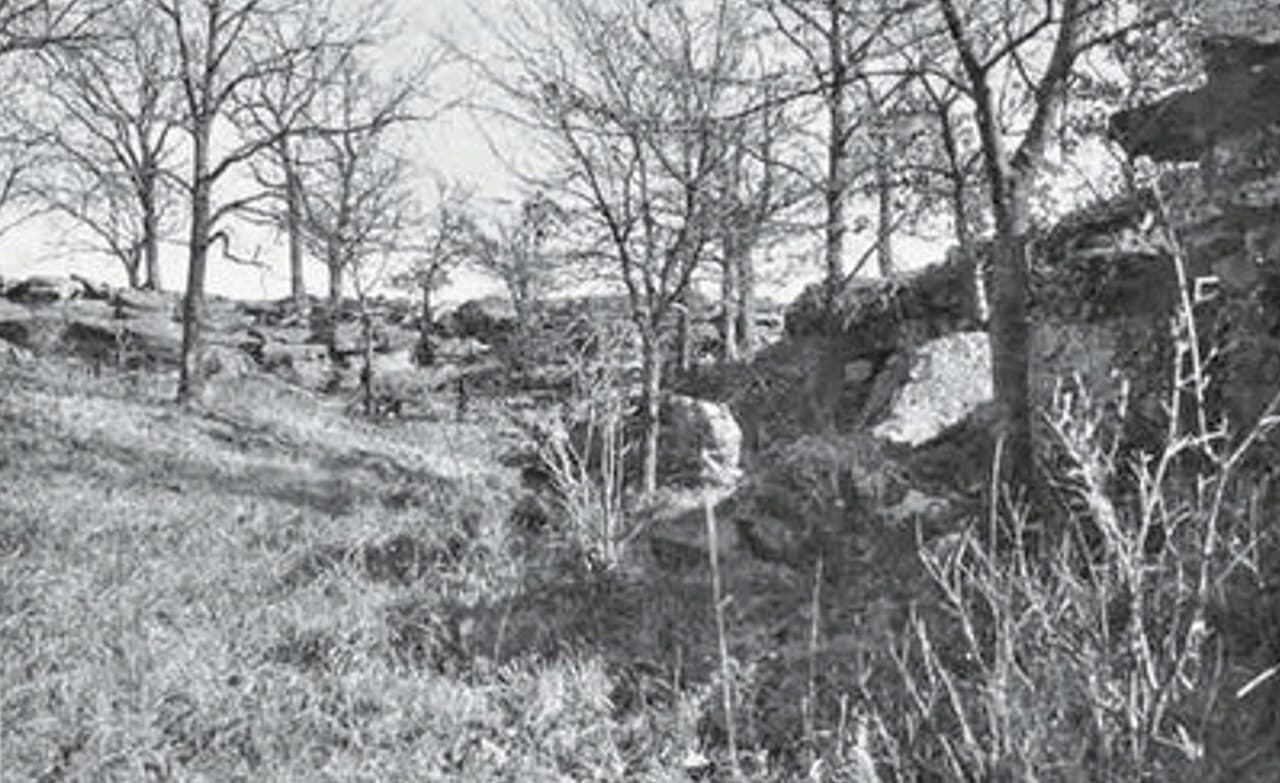
The ravine where Anna Brown's body was found in May 1921. Her death was first ruled accidental. Federal Bureau of Investigation. Public domain, via Wikimedia Commons.
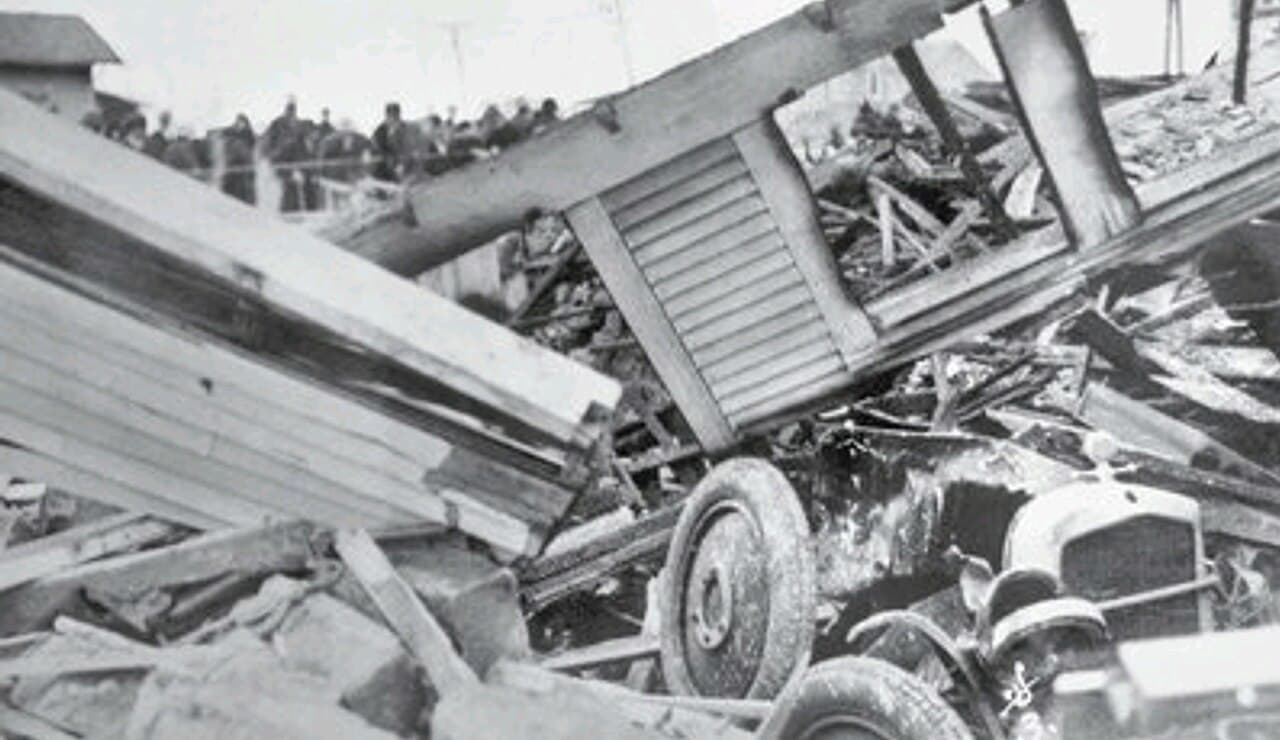
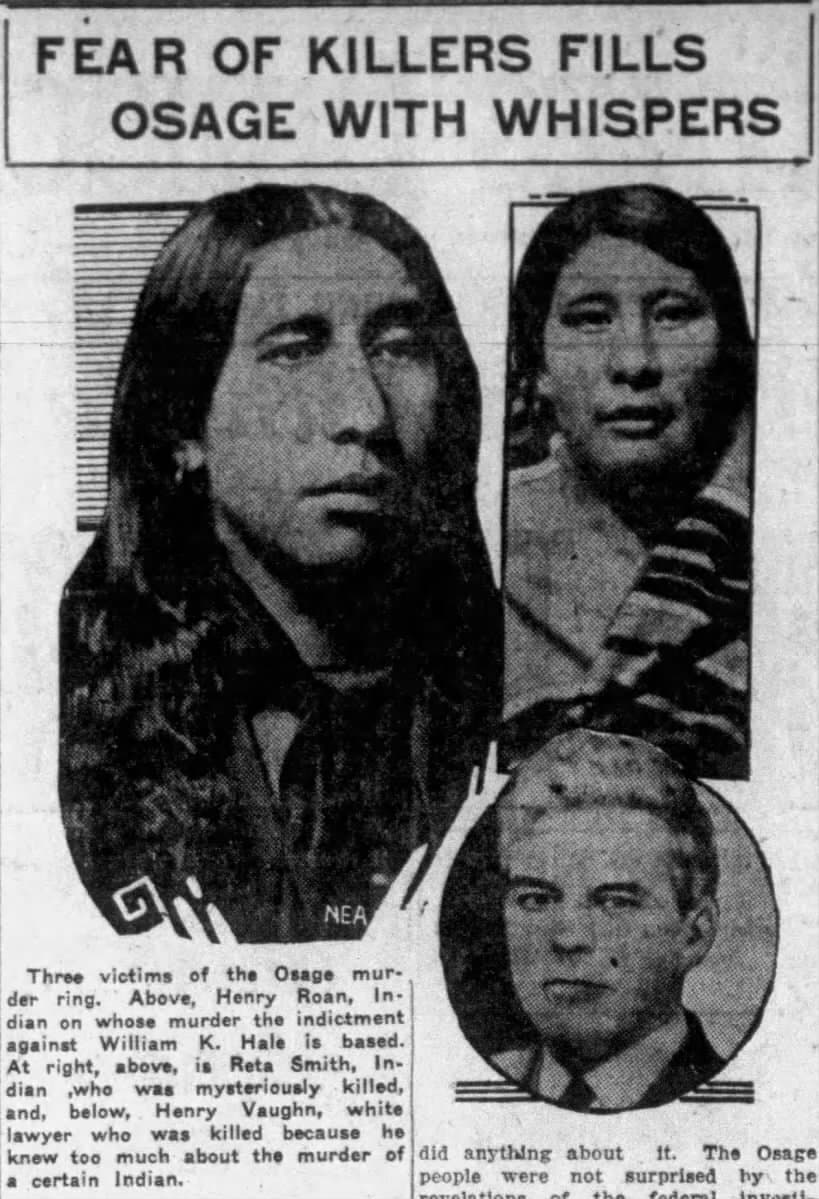
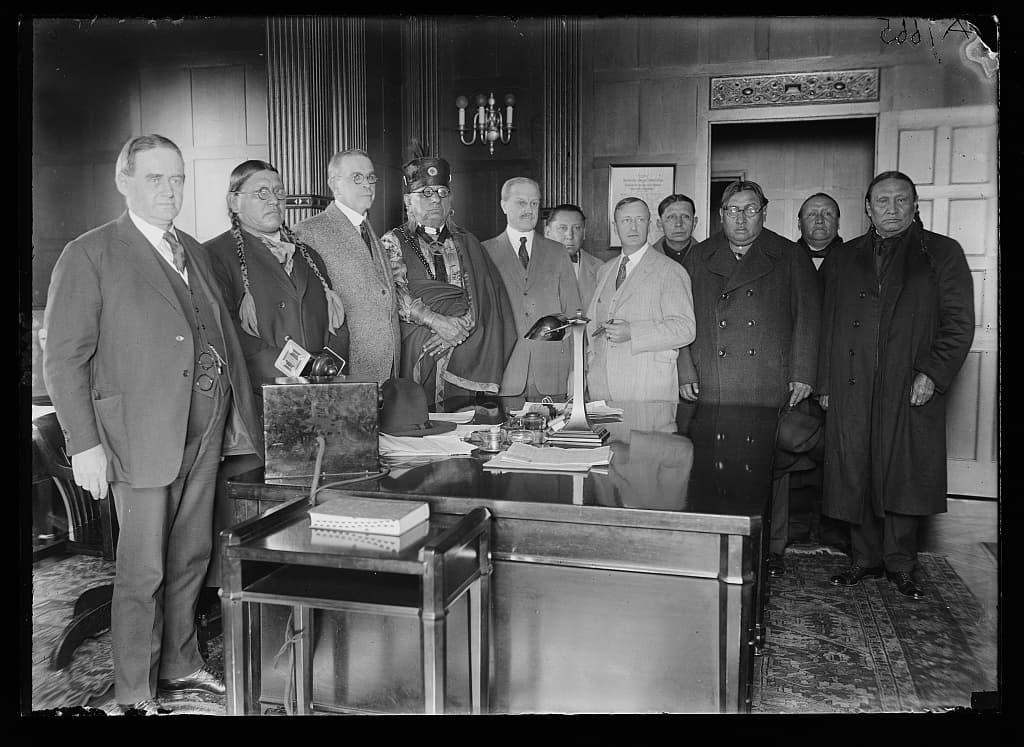
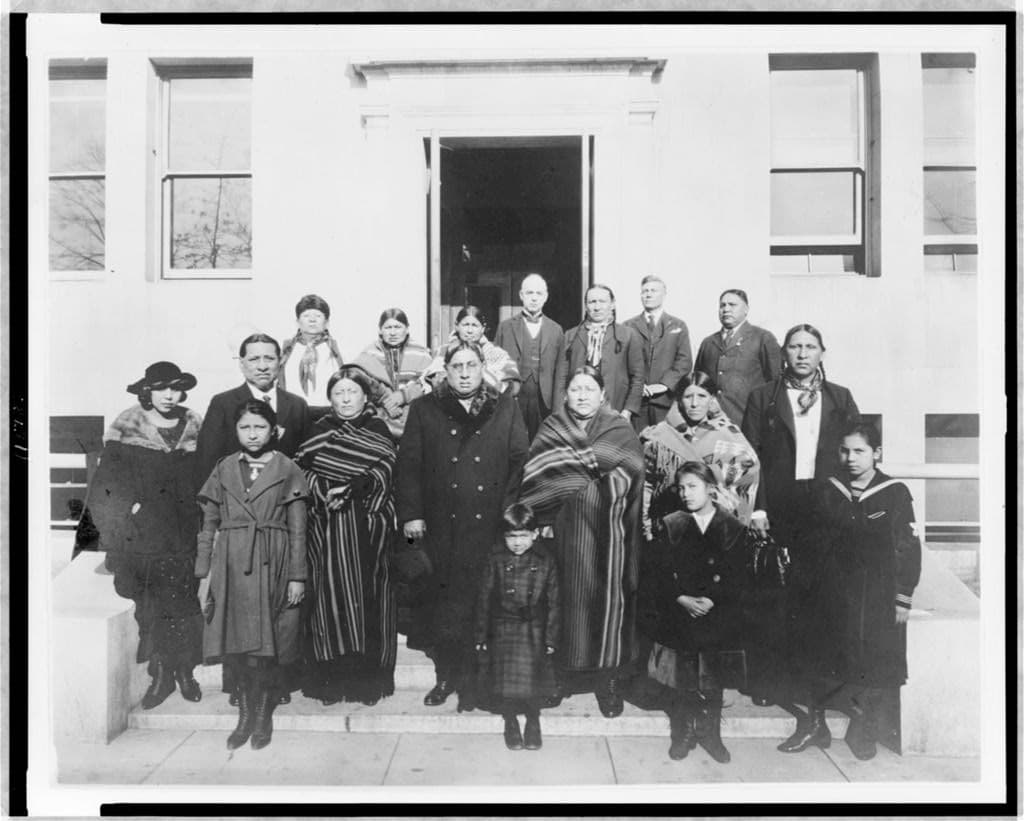
In 1923 the Osage took in more than thirty million dollars from the oil under their own land, and most of them could not spend a dollar of it without asking a white guardian for permission. The Osage bought their reservation in northeastern Oklahoma, and when allotment came in 1906 they kept the minerals. The Oklahoma Historical Society records that the separation of mineral rights from surface rights by federal law first happened in the Osage oil fields, and that all subsurface minerals within the reservation were held communally in trust. Every person on the 1906 roll received one equal share of the mineral income, called a headright, along with an allotment of just over six hundred and forty acres, which one source gives as six hundred and fifty-seven acres to each of two thousand two hundred and twenty-eight enrolled citizens. The Supreme Court later described the arrangement plainly: the oil, gas and other minerals were expressly reserved to the tribe, and the income from the leases was placed in the Treasury to the credit of the members and distributed quarterly. The money was extraordinary. In 1923, at the height of the boom, the tribe took in more than thirty million dollars. Per headright the annual figures given run from eleven or twelve thousand dollars in the early 1920s to about thirteen thousand at the 1925 peak, which for a family of four all on the roll came to fifty-two thousand eight hundred dollars in a single year. A line from the period, quoted ever since, called them the richest nation, clan or social group of any race on earth, including the whites, man for man. Then Congress required guardians. From 1921, any Osage of half or more Osage ancestry had to have a court-appointed guardian manage their money until they could demonstrate competency, and the courts appointed local white lawyers and businessmen. Oklahoma courts routinely found Native people incompetent without considering mental capacity at all. One woman had a guardian appointed on the reasoning that her savings showed she did not understand the value of money. Guardians could take two hundred to a thousand dollars a year from each ward, with attorneys claiming up to two hundred more. In 1924 the Department of the Interior charged two dozen guardians with corruption. In 1929, twenty-seven million dollars was still being held by the guardian system on behalf of eight hundred and eighty-three Osage families. How many Osage were murdered is not a settled number, and we are not going to settle it here. The Oklahoma Historical Society says approximately twenty-four died violent or suspicious deaths in the early 1920s and calls that an estimate. The FBI gives no total at all, only that at least two dozen people turned up dead. One account puts it at at least sixty wealthy full-blood Osage between 1918 and 1931. Another, citing Fixico, counts eighteen Osage and three non-Osage in a short period. Another, citing Grann, says the toll may have been in the hundreds. A fourth figure works out to about ten percent of the five hundred and ninety-one full-blood Osage recorded in the 1930 census. We could not find an official list of the dead published by the Nation or by the state. The names we could source are these. Minnie Smith, poisoned, 1918. Anna Brown, shot in the back of the head and found in a ravine, on 22 May 1921 by one account and 27 May by another, her death first ruled accidental alcohol poisoning. Charles Whitehorn, shot, May 1921, who appears in no state historical entry we could reach. Lizzie Q. Kyle, July 1921, poison suspected, her death first ruled old age. Barney McBride, 12 August 1922, stabbed more than twenty times. William Stepson, 1922, suspected poisoning. Henry Roan, shot in the head in January or on 6 February 1923, whose twenty-five thousand dollar life insurance policy William K. Hale had arranged to be paid to himself. Tillie Powell Morrison, 1923, suspected poisoning. Rita Smith, her husband William, and Nettie Brookshire, killed when their Fairfax house was blown up with nitroglycerin on 10 March 1923, Bill dying of his injuries either that day or four days later depending on the account. James Bigheart, poisoned whiskey, 28 June 1923. W. W. Vaughan, an attorney, found beside the railroad tracks the next day with his skull crushed, a death the coroner called suspicious without ruling it murder. Joe Grayhorse and Anna Sanford are named as victims with no detail attached. Mollie Burkhart was born on 1 December 1886 and lost her sister Minnie, her sister Anna, her mother Lizzie and her sister Rita in five years. She was married to Ernest Burkhart, whose uncle William K. Hale had encouraged the marriage to reach her family's headrights. She told her priest she believed she was being poisoned at home, and he told her not to touch liquor under any circumstances. She recovered after her husband's arrest. In 1931 she sued successfully to end her guardianship and take control of her own money, and she died on 16 June 1937 of unrelated causes, her children inheriting her estate. A letter she wrote to Ernest while he awaited trial has been digitised by the National Archives at Fort Worth. The investigation began because the Osage asked for it. The Tribal Council petitioned the federal government for detectives, and the newly created Bureau of Investigation received the petition in April 1923. Hale was convicted of the murder of Henry Roan in federal court after a Supreme Court ruling settled jurisdiction, through a hung jury in July 1926 and a series of retrials, with the final conviction dated variously to January 1929, October 1929 and November 1929, and sentenced to life at Leavenworth. He was paroled on 31 July 1947, was never pardoned, never admitted the murders, and died in a Phoenix nursing home on 15 August 1962 at eighty-seven. Ernest Burkhart pleaded guilty in June 1926 and was sentenced to life with hard labour, was paroled in 1937, was sent back in 1940 for robbing his former sister-in-law's house, was paroled again in 1959, and was pardoned in 1966 by Governor Henry Bellmon on a three to two vote of the Oklahoma Pardon and Parole Board. In 1925 Congress changed the law so that non-Osage could no longer inherit the headrights of tribal members with half or more Osage ancestry. The change is described in the sources as an effort to protect the Osage, and it came after the killings, not before them. The record is still opening. The guardianship files are sealed in Osage County and require a judge's signature, but the federal copies are not: the National Archives at Fort Worth has digitised a hundred and ninety page Register of Guardians covering 1919 to 1924, listing guardians and administrators with their addresses and the names and roll numbers of their wards. The Osage News has used records like these to look at deaths nobody counted, among them Mary Elkins, found dead in her bed in 1932 at thirty, holding eight and a half headrights and an estate of a million dollars. One family in that story learned who their grandfather was not from a document but from a friend of the family, because the paperwork said only that he was an Englishman. The Nation has kept saying what this was. In 2011 the United States settled with the Osage for three hundred and eighty million dollars over mismanagement of the mineral estate; at the signing, the chairman of the Osage Trust Team told the government that people were desperate and that it had a real responsibility to pay the funds out. In February 2022 Osage citizens protested a bank in Fairfax that had put William K. Hale's spurs on display as part of a collection of Reign of Terror memorabilia, and a former Principal Chief said that exploiting the tragedy in the tribe's history for someone to benefit financially or otherwise is wrong. When a film crew came to the county, Principal Chief Geoffrey Standing Bear reminded them that in the 1920s Osage full bloods walked the streets of Pawhuska in their blankets, speaking the language, and that those people are still in the community. If your family is Osage, or held a headright, or appears in the Register of Guardians, the names and the corrections belong here, and they will be printed as you give them. Compiled by MyHistoryStone from the Oklahoma Historical Society entries on the Osage and the Osage murders, the FBI's case history, the opinion of the Supreme Court of the United States in the Osage mineral case, the Osage News, the Osage Nation Museum, the Bureau of Indian Affairs Osage Agency, and the National Archives at Fort Worth.
Share a memory
Leave a memory or a message for the family. What you write appears right away, and the family can remove any entry.
Loading messages...