 Home
HomeSeminary Hall
The Story of
The Cherokee National Female Seminary
MyHistoryStone Archive
1851 – 1909
Tahlequah, Oklahoma, United States · 58 years
Neighborhood
Park Hill, then Tahlequah
Circa
1851
In motion
4 photographs
The photographs on this page, brought to life.
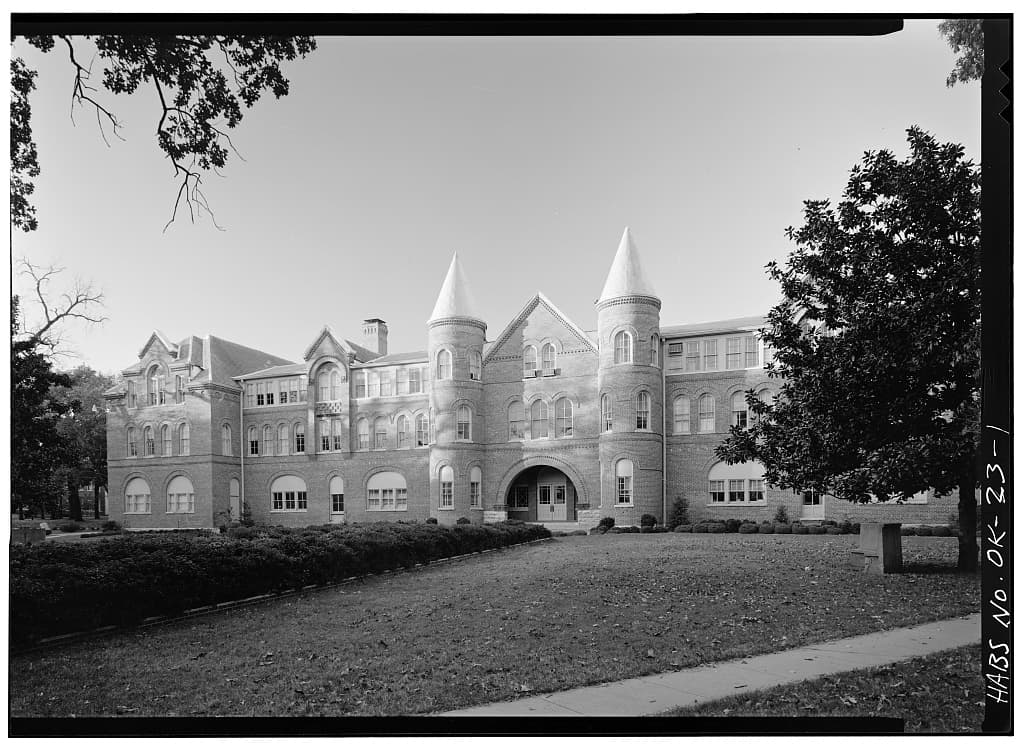
Seminary Hall, the building the Nation put up in 1889 after the first one burned. Walter Smalling Jr., Historic American Buildings Survey. Library of Congress.
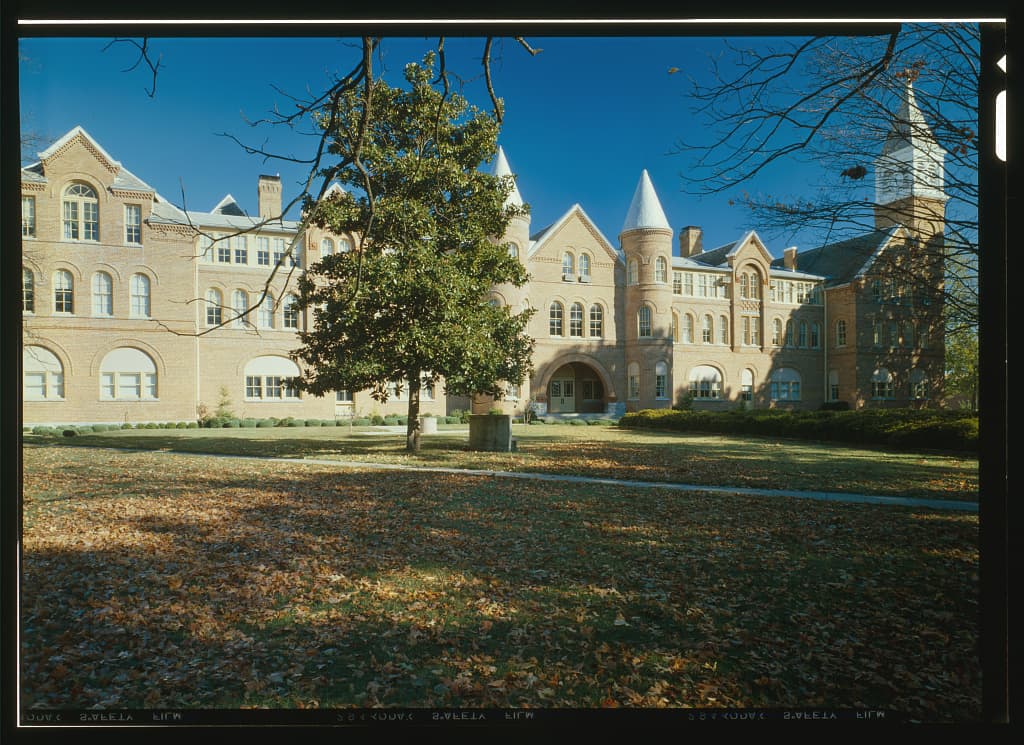
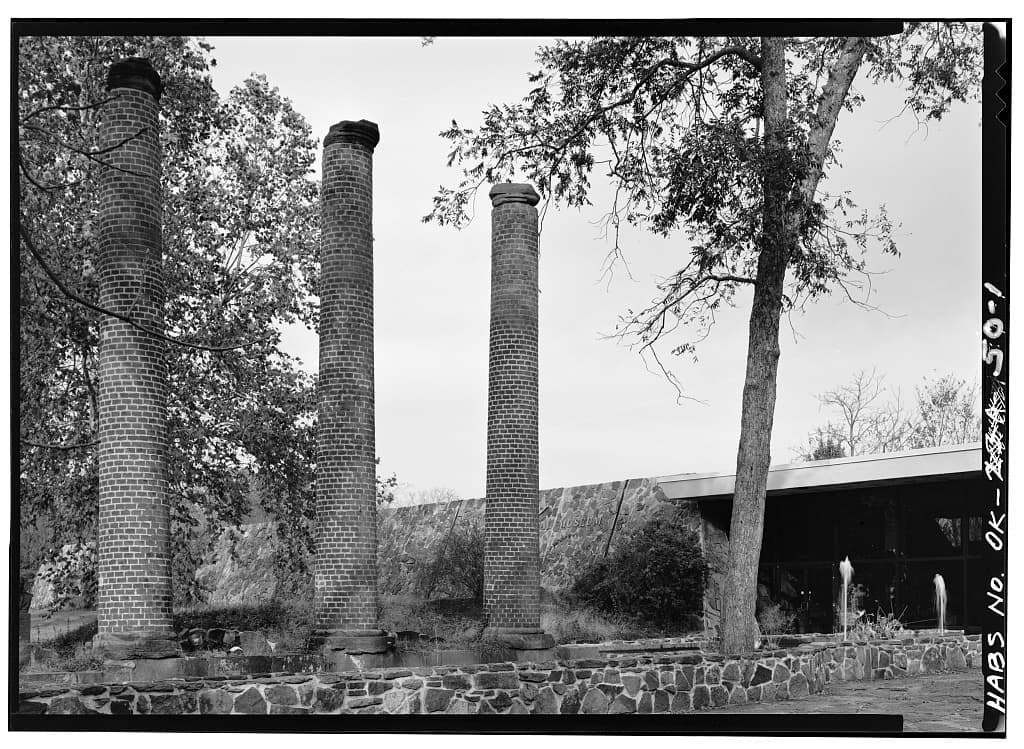
The Cherokee Nation built it, paid for it, and staffed it, in Indian Territory, twenty years before Oklahoma existed. Then the state bought it for forty thousand dollars. In 1846 Principal Chief John Ross proposed two seminaries, one for boys and one for girls. The warrant was already written into the Cherokee Constitution of 1827: religion, morality and knowledge being necessary for good government, schools and all means of education shall be forever encouraged in this nation. The first cornerstone of the Female Seminary was laid on 21 June 1847 at Park Hill. In 1850 William P. Ross and David Vann travelled to Mount Holyoke in Massachusetts to find teachers. Both schools opened on the same day, 7 May 1851. The buildings were identical three-storey brick, and both were boarding schools run by the tribal government. Each took two hundred students a year, fifty of them without charge. The five-dollar fee covered board, room, medical care, textbooks and supplies. Admission was by a two-day examination, and students who passed attended at the Nation's expense. The curriculum came almost wholesale from Mount Holyoke, along with Mount Holyoke graduates to run it. The girls studied Latin, algebra, botany, music, geography, grammar and arithmetic. The boys' preparatory course ran to Greek, Latin, German and French, chemistry, botany, geology, astronomy, zoology, history and philosophy, and the sources describe the girls' course as rigorous but less intensive. Neither school taught Cherokee language, history or culture. That sentence appears flatly in the Oklahoma Historical Society's encyclopedia and it is the fact that most accounts of this place leave out. The Council was explicit about what it wanted. Students were expected to take on white society's value system, and the encyclopedia entry on the school's longest-serving principal says her role was to model that. Most students came from affluent mixed-blood families. Early attrition was heavy. After the schools reopened in the 1870s, students had to pay for room and board, with an indigent department for families who could not, and entrance requirements were lowered and children of other tribes admitted to fill the seats. That principal was Ann Florence Wilson, born in Washington County, Arkansas in 1842, who graduated from La Grange Female College at sixteen and ran the Female Seminary from 1875 until 1901. Her discipline included daily doses of sulphur and molasses and supervised walks. In 1900 the Cherokee National Council appointed her principal for life. President William McKinley vetoed the Nation's decision. She resigned the following year. On Easter Sunday 1887 the seminary burned. Wilson got every student out and saved the school's records; someone who was there wrote that it was tragic and pitiful to stand by helpless and see the dear old building burn. Nobody was hurt. The Nation rebuilt, on a new site north of Tahlequah, at a final cost of over sixty thousand dollars, and dedicated the new building on 7 May 1889, thirty-eight years to the day after the first one opened. Wilson spent the interval taking an advanced English course at Oswego Normal School and came back as principal. The building is still there. Three storeys of brick, two hundred and twenty-seven feet across, two turreted towers flanking the entrance, a wooden clock tower ninety-eight feet up, about a hundred and twenty-seven rooms. It went on the National Register in 1973 as the Cherokee Female Seminary, and the Park Hill site was listed separately the following year. What it was first at is claimed three different ways in the same document. The National Register nomination calls it the second oldest public institution of higher learning west of the Mississippi River, and then, a few lines later, the oldest public institution of higher learning in the trans-Mississippi West dedicated to a liberal arts education for women. Wilma Mankiller said the seminaries were among the first educational systems built west of the Mississippi, Indian or non-Indian. Northeastern State University says it is Oklahoma's oldest institution of higher education, which is a smaller and safer claim. No source we found states flatly that it was the first school of higher learning for women west of the Mississippi, which is the version usually repeated. The same nomination also claims it was the first institution in America to pay men and women professors equally, and the first to provide tuition, books, room, board and supplies free of charge. Indian Territory became part of Oklahoma in 1907. Federal officials had been dismantling tribal control of education for years before that. In 1909 the state bought the seminary for forty thousand dollars and opened Northeastern State Normal School in it on 14 September with five hundred and eleven students. The Male Seminary, by then coeducational, burned in 1910, and the last graduates of the Cherokee National Seminaries took their commencement at Northeastern that spring. There is a marker at Park Hill from 1940 and a plaza at Northeastern dedicated in 2009 that names the seminaries and honours Sequoyah. What is missing is the students. We found photographs, the classes of 1909 lined up in front of Seminary Hall in matching dresses and the 1909 basketball team, and a gradebook. The school newspaper, the Cherokee Rose Buds, we could not find digitised anywhere. Beyond Ellen Whitmore, Sarah Worcester, Esther Butler and Ann Florence Wilson, all of them from outside the Nation, no source we could reach names a single Cherokee woman who taught or graduated here. Twenty-six women had graduated from the two schools by 1856, and in 1855 John Ross noted the Nation had twelve Cherokee teachers, most of them educated in its own institutions. Their names are somewhere. They were not anywhere we could get to. If you are Cherokee and one of them was your great-grandmother, that is exactly the gap this page exists to fill. Compiled by MyHistoryStone from the Encyclopedia of Oklahoma History and Culture, the National Register nominations for the Cherokee Female Seminary and the First Cherokee Female Seminary Site, the Cherokee Heritage Center, Northeastern State University's own history and digital library, and markers transcribed by the Historical Marker Database.
Add to this story
Know something about The Cherokee National Female Seminary? Add it here - a memory, a detail, a correction. What you write appears right away, and the page owner can remove any entry.
Loading messages...