 Home
HomeNumber 34

In Memory of
Wendell Scott
MyHistoryStone Archive
August 29, 1921 – December 23, 1990
Danville, Virginia, United States · 69 years
Hometown
Danville, Virginia
Location
Speedway Park, Jacksonville
In motion
3 photographs
The photographs on this page, brought to life.
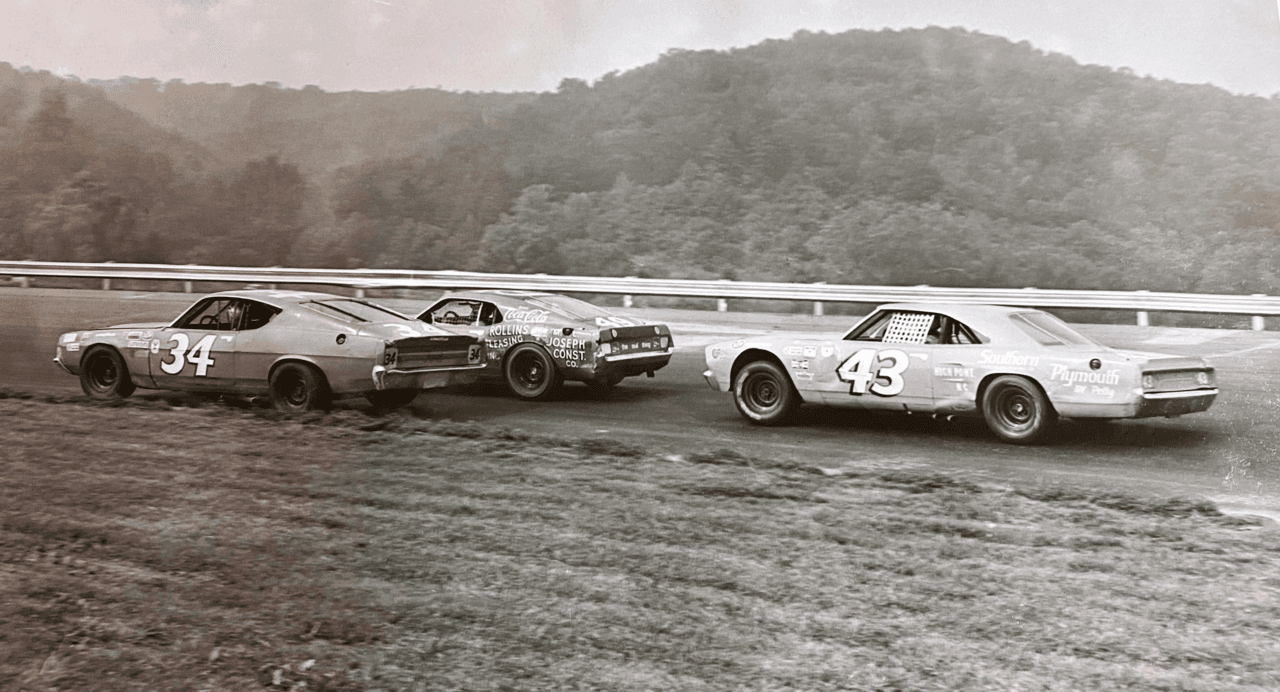
Scott in the 34 car at Ona Speedway, 8 August 1971, with Bobby Allison and Richard Petty. Jgarrett71, CC BY-SA 4.0, via Wikimedia Commons.
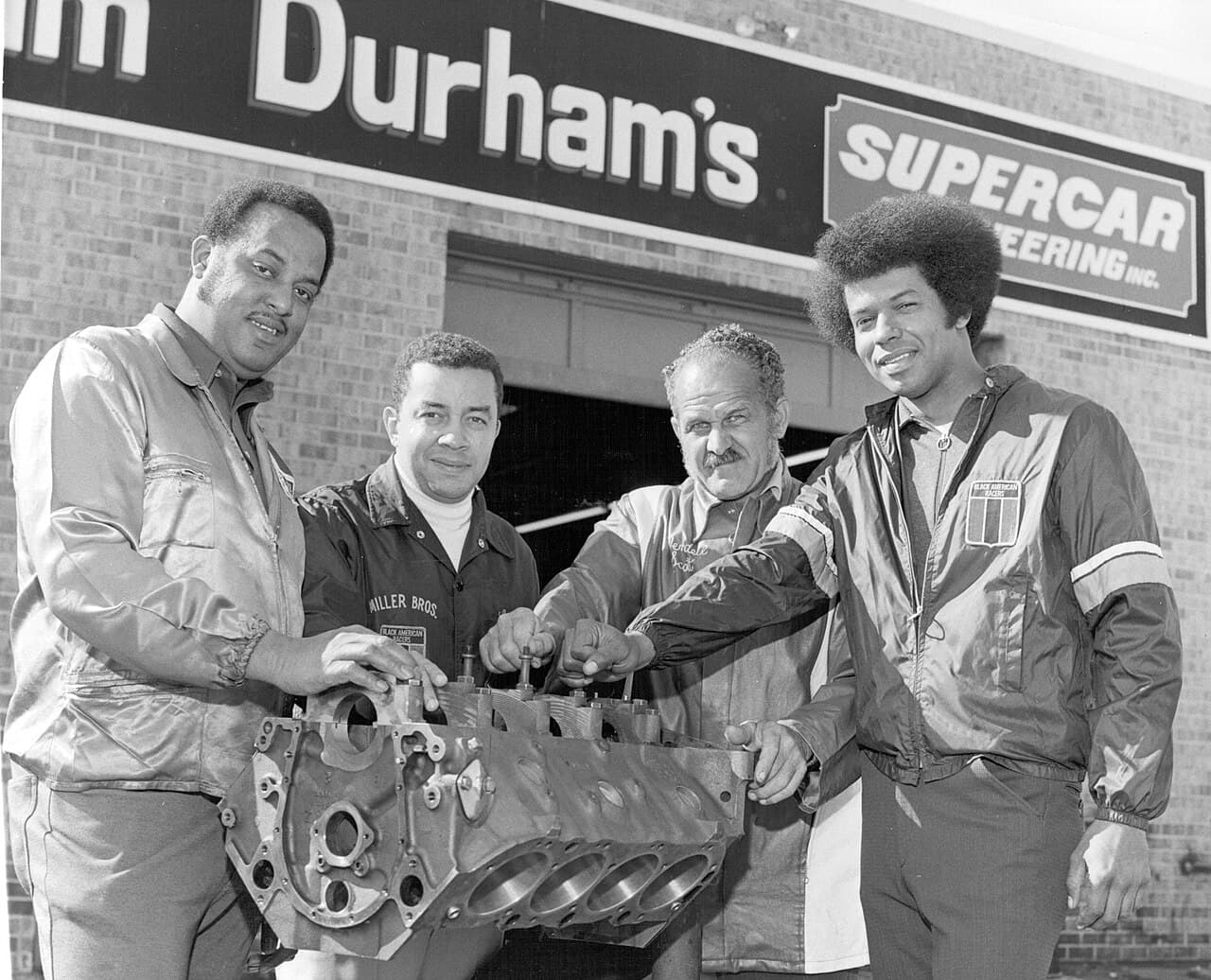
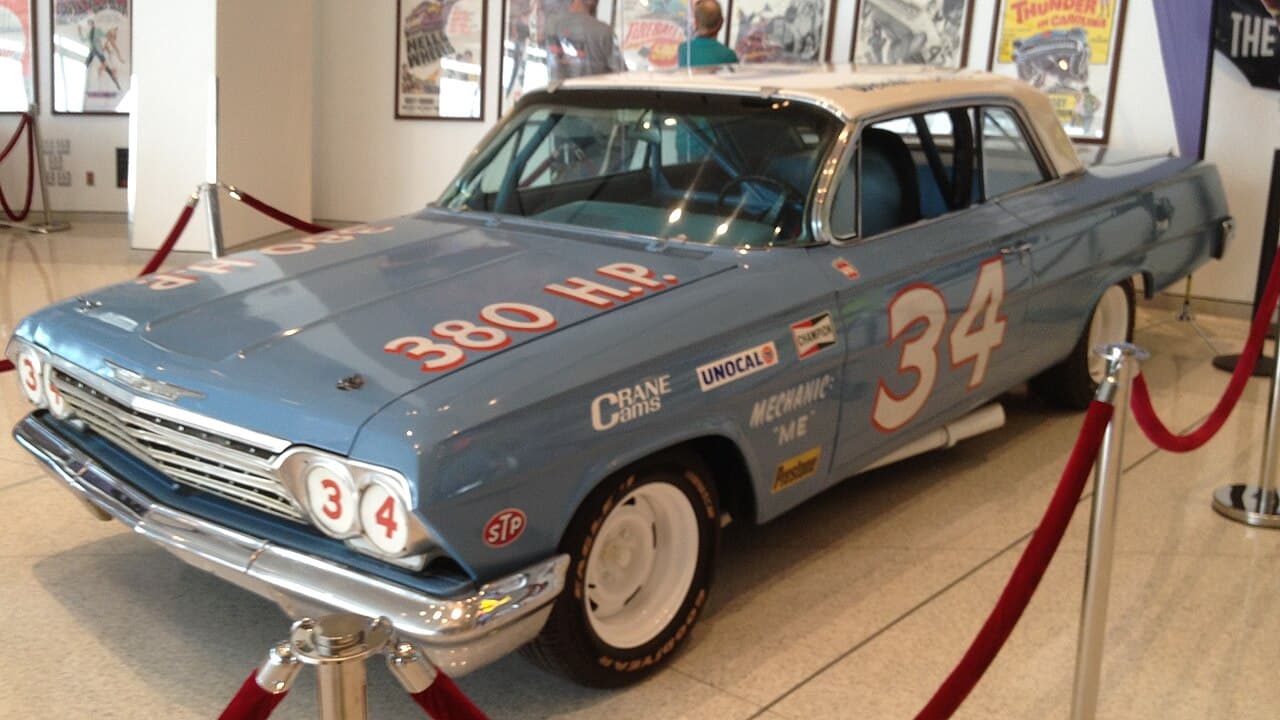
He won the race, and the man who finished second was flagged the winner, and it took fifty-eight years for the trophy to reach his family. Wendell Oliver Scott was born in Danville, Virginia on 29 August 1921. His father was a driver and mechanic for white families and taught him the trade. He left high school, drove a taxi, and served in Europe in the segregated army as a mechanic. He came home, opened a repair shop, married Mary Coles in 1943, and had seven children. He also ran moonshine, which the sources state as fact rather than rumour. He was caught once, in 1949, and given three years' probation, and he kept doing the runs. When he started racing is given four different ways. NASCAR says 1947, after the army. One account says officials of the Dixie Circuit decided in 1951 to recruit a Black driver as a marketing draw and picked him, and that he won at Lynchburg twelve days into his career. His own foundation says he got his NASCAR licence around 1953; another account says a steward at Richmond approved it in 1954. The recruitment story traces to his biographer rather than to any contemporary document, and we have not been able to get behind it. Before he ever reached the premier series he had won more than a hundred races on local tracks, including twenty-two at Southside Speedway in Richmond in 1959, the year he took the Sportsman Division and the Virginia Sportsman title. His premier-series record: 495 starts between 1961 and 1973, one win, one pole, twenty top-five finishes and a hundred and forty-seven top tens. He finished in the top ten in more than a quarter of the races he entered, which is the statistic that tells you what he was doing with the equipment he had. His best points finish was sixth, in 1966. His career earnings came to $226,561 across thirteen years. His best single season was 1969, when he made $47,451. He never had a commercial sponsor. Not once. He bought the car he won in, a 1962 Chevrolet, secondhand from another driver, Ned Jarrett. He towed to a sanctioned event at Winston-Salem and officials refused to let him race because of his colour. He was poisoned at Dover. He had death threats at Spartanburg, Darlington, Talladega, Jacksonville and Daytona. Some drivers wrecked him deliberately and others appointed themselves his bodyguards at tracks where the crowd was ugly. On 1 December 1963 at Speedway Park in Jacksonville, Florida, he started fifteenth in a two-hundred-lap race on a half-mile dirt track, led twenty-seven laps and finished two laps ahead of everybody. Buck Baker was flagged the winner and went to victory lane. Officials worked out afterwards that Scott had won; one account says it took two hours, and NASCAR says only that it followed a scoring review. He got the win in the record book and no trophy, no photograph, no ceremony. One detail in the standard account does not survive checking. It is often written that Scott passed Richard Petty for the lead with twenty-five laps to go. The race record has Petty finishing fifth, nine laps down, having led a hundred and three laps earlier in the race. Something in that sentence is wrong, and we would rather say so than repeat it. On 6 May 1973, on lap nine of the Winston 500 at Talladega, twenty-three cars crashed. Scott came out of it with a fractured left leg, a pelvis broken in several places, three broken ribs, a damaged kidney and his left forearm opened to the bone. He was fifty-one. He started one more race that year, the National 500 at Charlotte, and finished twelfth, and that was the end of it. The team was his family. Mary drove the truck that hauled the car. The children went to the races. His son Frank spoke for him at the Hall of Fame; his daughter Sybil later worked as a consultant on NASCAR's diversity programme. He died of spinal cancer in Danville on 23 December 1990, aged sixty-nine. The International Motorsports Hall of Fame took him in 1999. Virginia's sports hall of fame took him in 2000. On 30 January 2015 he became the first Black driver in the NASCAR Hall of Fame; Frank Scott accepted, and said there were two words forbidden in the Scott household growing up, and those words were can't and never. The Automotive Hall of Fame followed in 2024. Virginia put up a marker outside the house he built after the war, at what is now 120 Wendell Scott Drive. On 28 August 2021, at Daytona, NASCAR presented his family with a trophy for Jacksonville. Frank Scott took it, with three of his siblings and about a dozen grandchildren and great-grandchildren there. NASCAR's own vice-president said the moment had not been celebrated the way it should have been. There is a loose thread even here: the article most often cited for the trophy story is headlined that his family got the long-lost trophy in 2010, eleven years earlier, and we could not reach it to find out which is right. What he said himself is harder to find than any of the statistics. Two lines survive in the sources we could reach. His foundation carries one as its motto: when it's too tough for everyone else, it's just right for me. And, watching Black drivers a generation later get the sponsorship he never had: I came along too soon. There is a museum planned in Danville. If you saw him race, or your family worked on that car, or you have a photograph from a track that did not want him there, put it here. Compiled by MyHistoryStone from NASCAR and the NASCAR Hall of Fame, the Wendell Scott Foundation, the Virginia Department of Historic Resources marker as transcribed by the Historical Marker Database, and the lap-by-lap record of the Jacksonville 200 of 1 December 1963.
Add to this story
Know something about Wendell Scott? Add it here - a memory, a detail, a correction. What you write appears right away, and the page owner can remove any entry.
Loading messages...