 Home
HomeThe Iron Road
A Tribute to
The Chinese Workers of the Central Pacific
MyHistoryStone Archive
1864 – 1869
Promontory Summit, Utah, United States · 5 years
Location
Sierra Nevada to Promontory
Worked At
The Central Pacific Railroad
In motion
5 photographs
The photographs on this page, brought to life.
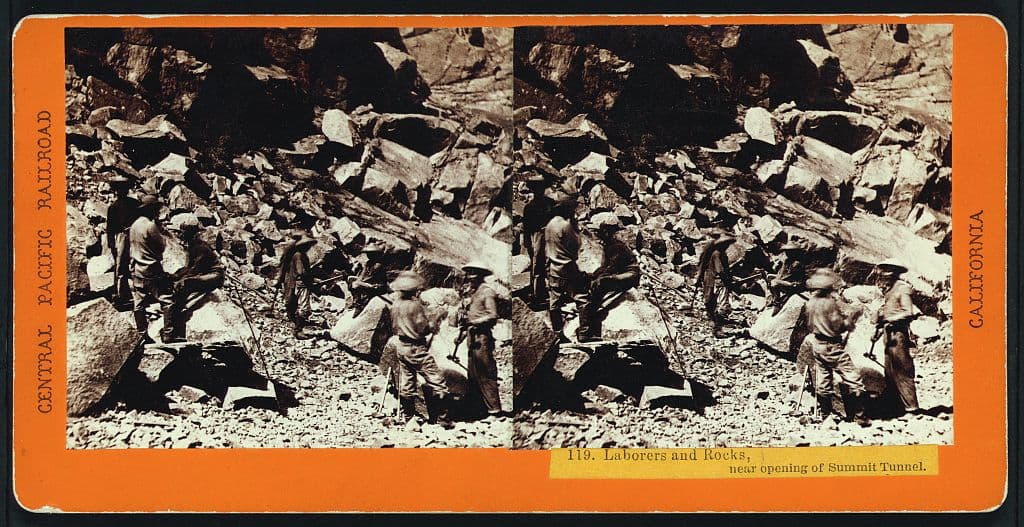
Near the opening of the Summit Tunnel. The Library's summary says the photograph shows Chinese railroad workers. Alfred A. Hart. Library of Congress.
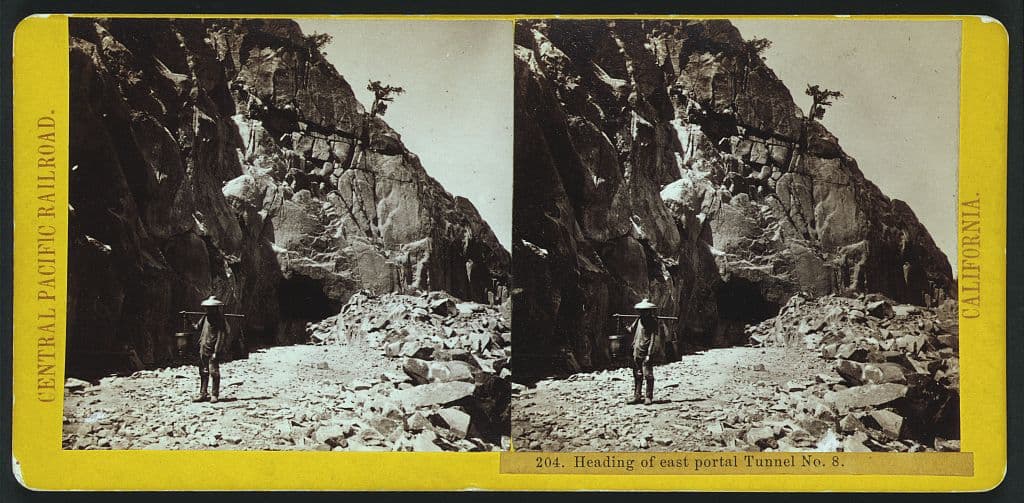
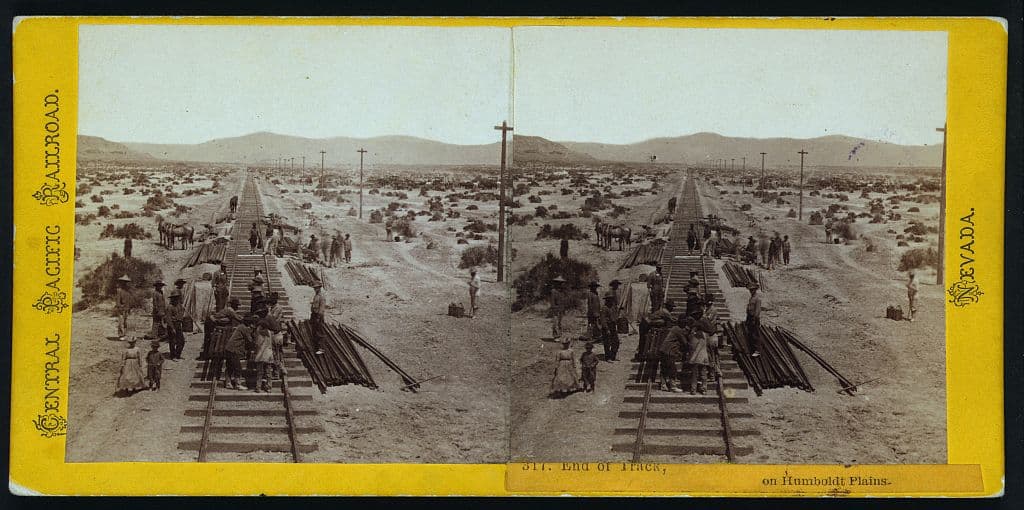
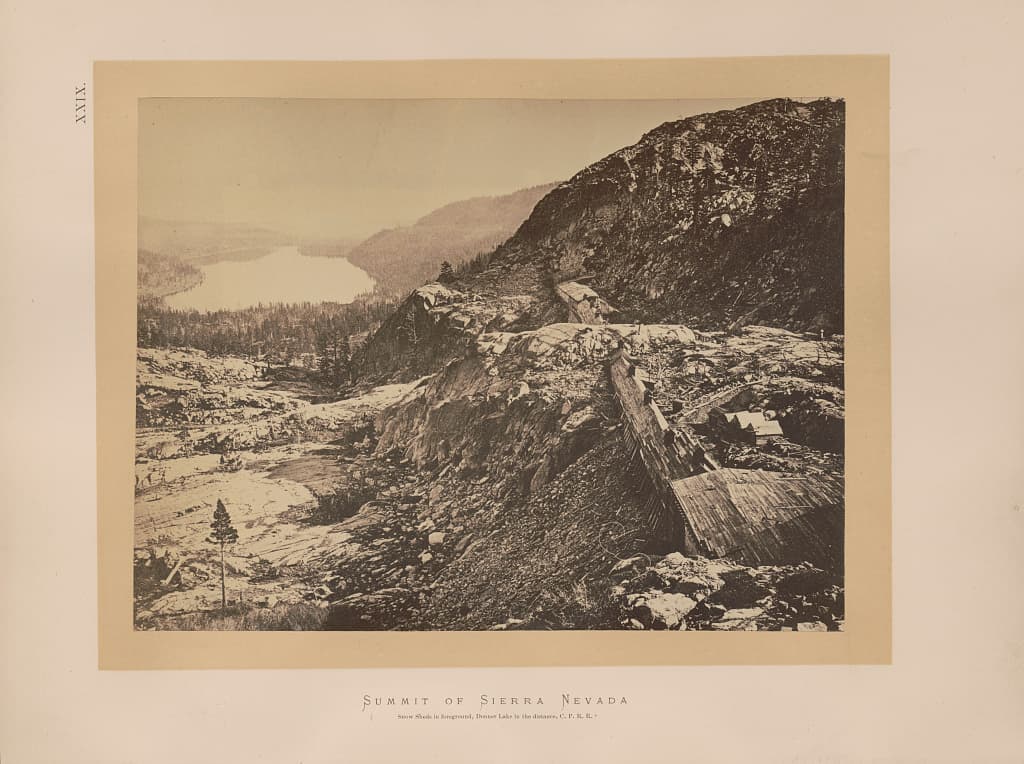
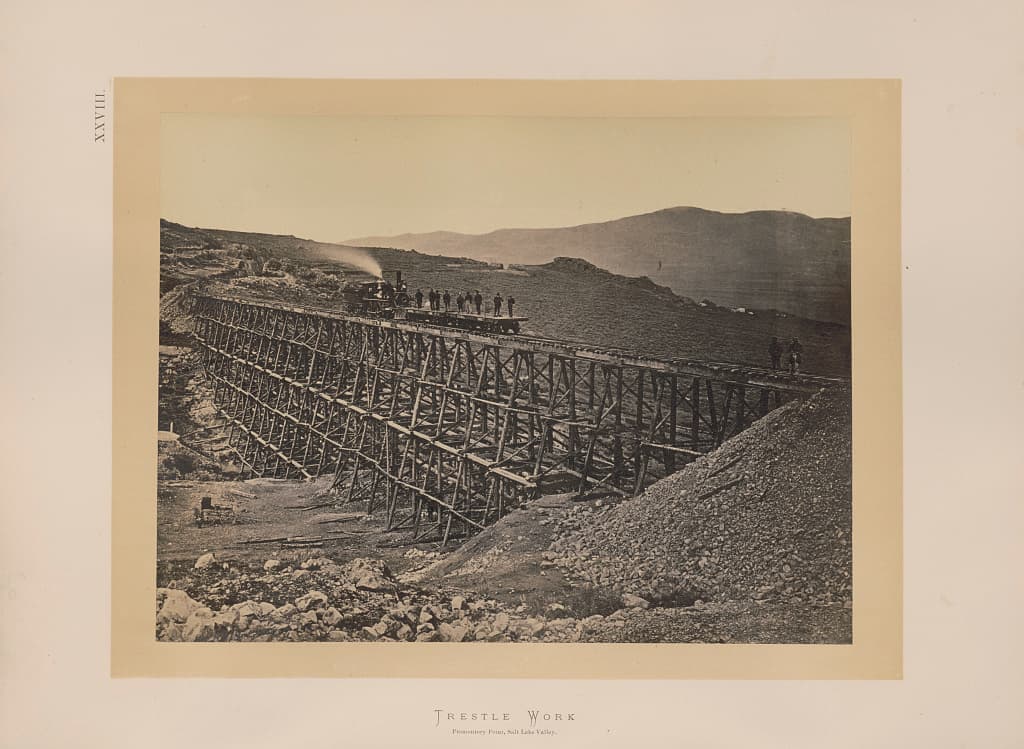
The Central Pacific kept no record of the deaths of any of its workers. That is not a gap in the archive. That is the archive. Between 1864 and 1869 the Central Pacific Railroad built the western half of the first transcontinental line, from Sacramento over the Sierra Nevada and across Nevada and Utah to Promontory Summit. Most of the men who built it were Chinese. How many is unsettled. The Park Service says the company started with fifty Chinese workers and employed about ten thousand in all. The Stanford project that has done the most work on this estimates ten to fifteen thousand at any given time, with the total higher because of turnover. The Department of Labor says twelve thousand. A marker at Donner Summit says they made up eighty per cent of a workforce of up to twelve thousand. Reading the payrolls, the Central Pacific Railroad Museum puts the maximum at nine thousand Chinese and notes the superintendent testified that the whole workforce never quite reached ten thousand men. By February 1867 the Stanford project reckons about eight thousand were on the tunnels and three thousand laying track, roughly ninety per cent of everyone working. Pay is a smaller number and an equally awkward one. The company's own account, quoted by the railroad museum, is this: Irish labourers received thirty dollars a month in gold and board; Chinese, thirty-one dollars, boarding themselves. One dollar more, and they bought and cooked their own food. The Park Service states it the other way round, that Chinese workers were paid thirty per cent less and also paid for their own lodging, supplies and equipment, and that the camps were segregated. Both statements can be true at once if you count board, which is the point. Stanford estimates Chinese labour cost the company between a half and two-thirds of what white labour cost. The Sierra work was fifteen tunnels driven through granite. The Summit Tunnel is 1,659 feet long and took about a year, finished in August 1867. They experimented with liquid nitroglycerine and mostly used enormous quantities of black powder. Nobody we could reach records the rate of progress per day, which is a shame, because it is the figure that would tell you most. In the winter of 1866 and 1867 about forty feet of snow fell and the settled depth at Donner Pass was eighteen feet; they dug tunnels through the snow to reach the work. Thirty-seven miles of wooden snowsheds had to be built afterwards to keep the line open. Superintendent Strobridge said of the camps that men were buried and many of them were not found until the snow melted the next summer. He gave no number. On 24 June 1867 about three thousand Chinese workers stopped work along thirty miles of line from Cisco to Truckee, coordinated across sites, five days after a tunnel explosion killed one white worker and five Chinese ones. The Park Service says it was the largest organised labour strike in the United States at the time. They asked for forty dollars a month instead of thirty-five, a ten-hour day instead of eleven, and eight-hour shifts inside the tunnels. They also demanded an end to the right of the company's overseers to whip them, or to stop them leaving the road to look for other work. Charles Crocker cut off their food. It lasted eight days. He told the strikers he would shoot down any man who tried to injure the labourers, and conceded nothing at the time; afterwards the company quietly raised pay for skilled men and later paid bonuses for the heat in the Nevada desert. On 28 April 1869 the Central Pacific laid ten miles and fifty-six feet of track in a single day. Eight Irish rail handlers moved the iron. About four hundred Chinese workers did everything else. The San Francisco Evening Bulletin wrote up the eight, noted admiringly that they were water-drinkers and had refused to be relieved, and every account since has repeated it. We looked for the names of any of the four hundred and found none. We also looked for the names of the eight and could not find those either, which is worth saying: the record kept the category and lost the men. Then Promontory, 10 May 1869. A Chinese crew laid the last rail. Andrew J. Russell photographed them doing it, and captioned it. He also made the famous photograph of the two locomotives and the crowd, and the Park Service states plainly that no Chinese workers appear in the mid-morning photographs. Both things are true and they are not the same picture. Four Chinese men are named in the Park Service's list of people known to have been there: Ging Cui, Wong Fook, Lee Chao and Wah Kee. Fifty years later, at the 1919 anniversary at Ogden, three of them were still alive to attend. Naming anyone at all is hard here, and Stanford says why: the payrolls rarely recorded actual names, using forms like Ah Fong, or a slur. No letters or journals written by any of these men have ever been found. What exists is a labour contractor named Hung Wah, traceable through the 1860 census, newspaper advertisements, court records and the company payrolls, and a Colt revolver inscribed By Hung Wah. Sam Hing and Ah Lee kept a laundry at Promontory City. Descendants have since recovered a list of ancestors' names through oral history, among them Chin Lin Sou, Lee Wong Sang, Lim Lip Hong, Fong See and Jim King. Which brings back the first question. Estimates of the dead run from fifty, to a hundred and fifty, to three hundred, to about twelve hundred, to over a thousand. The Park Service says over a thousand. The railroad museum says likely no more than a hundred and fifty, reasoning from engineers' reports and contemporary newspapers. The twelve-hundred figure comes from arithmetic on an 1870 report of about twenty thousand pounds of bones being shipped home, and another report of the same train said there were fifty. The Chinese Six Companies organised searches along the line and recovered the remains of three hundred. None of these is a count. There was never a count. Thirteen years after the last spike, Congress passed the Chinese Exclusion Act, suspending the immigration of Chinese labourers and barring the courts from naturalising Chinese residents. The National Archives page on the Act does not mention the railroad. The Park Service's own 1969 planning document for the centennial recommends celebrating the railroad and does not mention Chinese workers at all. In 2014 the Department of Labor put them in its Hall of Honor. In June 2022 a monument by Ilan Averbuch was unveiled at Golden Spike National Historical Park, granite ties standing for the tunnels. The site became a National Historical Park in 2019. Stanford's project collected more than forty oral histories from descendants before it wound down in 2020. If one of these men was your family's, the name belongs here. Compiled by MyHistoryStone from the Chinese Railroad Workers in North America Project at Stanford, the National Park Service at Golden Spike National Historical Park and its 1969 handbook and special history studies, the Central Pacific Railroad Museum's reading of the company payrolls, the United States Department of Labor Hall of Honor, the National Archives, and markers transcribed by the Historical Marker Database.
Add to this story
Know something about The Chinese Workers of the Central Pacific? Add it here - a memory, a detail, a correction. What you write appears right away, and the page owner can remove any entry.
Loading messages...