 Home
HomeThe Omaha Nation
In Memory of
Dr. Susan La Flesche Picotte
MyHistoryStone Archive
June 17, 1865 – September 18, 1915
Walthill, Nebraska, United States · 50 years
Final Resting Place
Bancroft Cemetery, Nebraska
Location
The Omaha Reservation
In motion
4 photographs
The photographs on this page, brought to life.
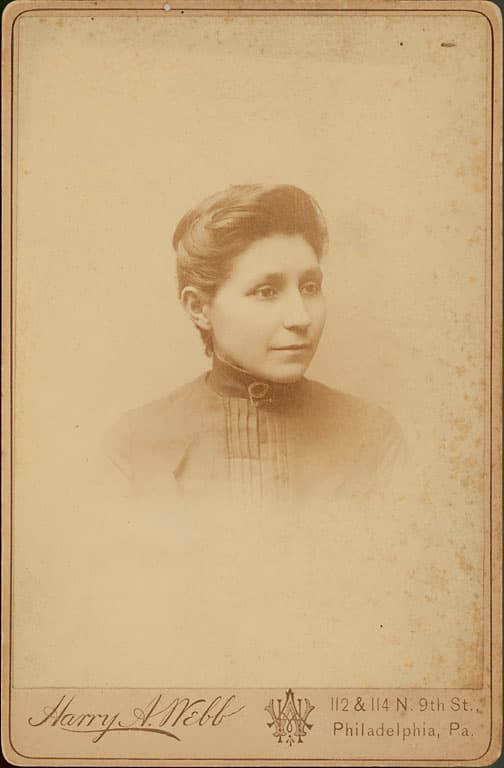
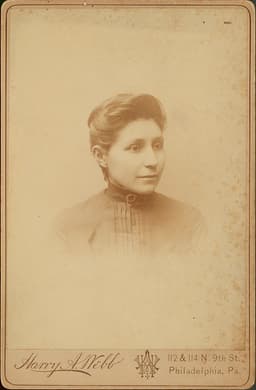
Susan La Flesche, in a cabinet card by Harry A. Webb of Philadelphia. The date is not recorded. Harry A. Webb. Public domain, via Wikimedia Commons.
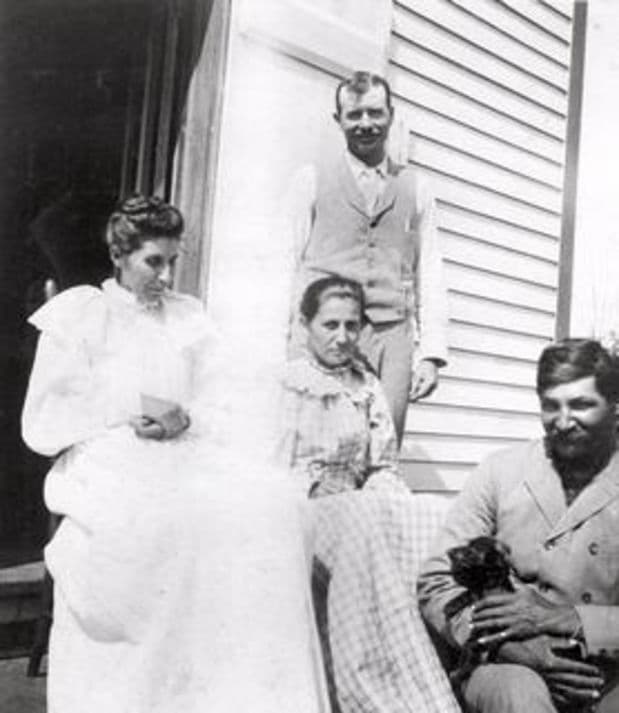

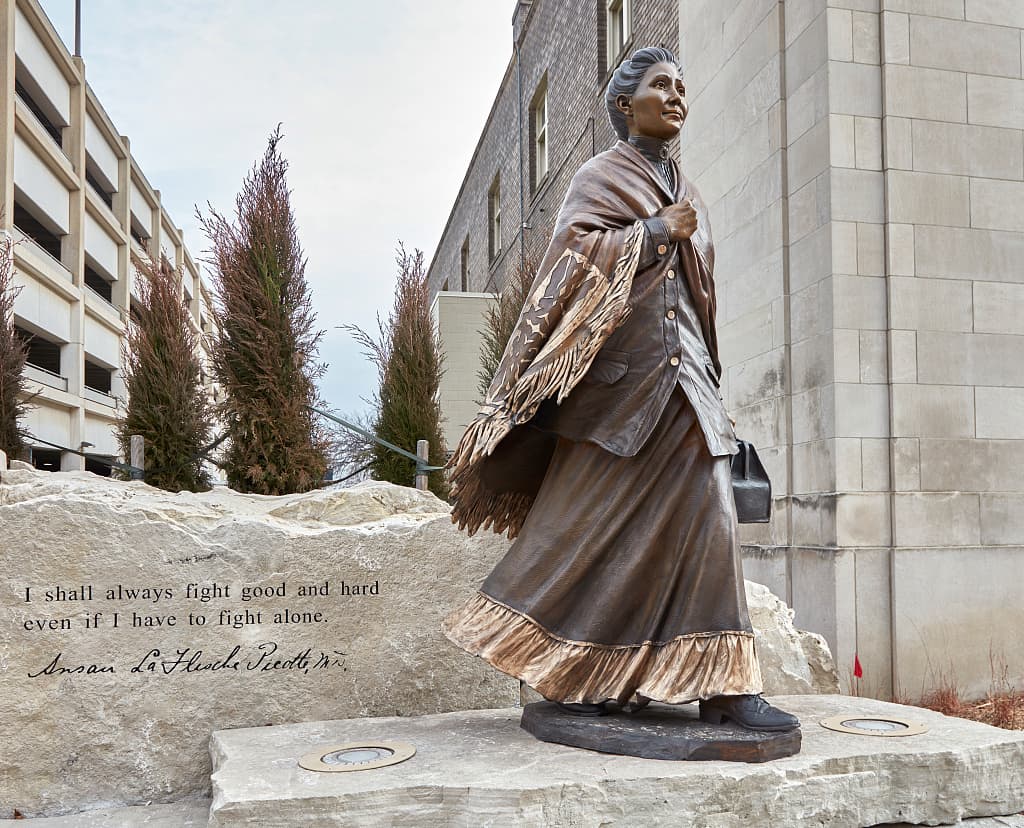
She came home from medical school to be the only doctor for more than twelve hundred people spread across hundreds of square miles, and she was twenty-four. Susan La Flesche was born on 17 June 1865 on the Omaha Reservation in northeastern Nebraska, the youngest daughter of Joseph La Flesche, called Iron Eye, and Mary Gale, called One Woman. Her father is described as the last traditionally recognised chief of the Omaha. He told his children there was a coming flood which would soon reach them, and advised them to prepare for it. Her sisters prepared in different directions. Susette La Flesche, called Inshata Theumba, Bright Eyes, interpreted for Standing Bear at Fort Omaha in 1879 and testified about conditions in Indian Territory, then toured the country and later Britain speaking on his behalf. There is a page in this archive about Standing Bear; the woman standing next to him translating was Susan's sister. Rosalie La Flesche Farley managed the tribe's leases and finances and argued that unallotted Omaha land should stay under tribal control rather than pass to the state or the federal government. Marguerite taught at the agency school and became a field matron. Their half-brother Francis became an ethnologist. Susan went to the Elizabeth Institute in New Jersey, then to Hampton in Virginia, then to the Woman's Medical College of Pennsylvania. She graduated on 14 March 1889. How she graduated is told six different ways: first in her class of thirty-six, or top of her class, or valedictorian, or first in her class one year ahead of schedule, in two years of a three-year programme, or in three. The only version that puts a number to the class is Nebraska Studies, which says thirty-six. Her fees were paid partly by the federal Office of Indian Affairs and partly by the Connecticut Indian Association. She stayed a further year in Philadelphia for an internship and then went home. What she went home to is also given several ways. The National Library of Medicine says more than thirteen hundred people across four hundred and fifty square miles. The National Historic Landmark nomination says she took on the health care of all 1,244 members of the tribe when the senior physician left. Other accounts say the reservation ran to something nearer thirteen hundred and fifty square miles. She worked twenty-hour days. Her first office was twelve feet by sixteen and doubled as a place for people to meet. The roads were bad and if she could not hire a team of horses she walked. In summer she might reach ten patients in a day. She kept a lamp lit in her window so people would know they could knock at night. She treated tuberculosis, influenza, cholera, dysentery and trachoma, and she did a great deal that was not medicine: financial advice, family disputes, letters, translation, arguments with the Office of Indian Affairs about land patents. In 1906 she led a delegation to Washington to press for prohibition of alcohol on the reservation. In 1910 she went back to argue against consolidating the Omaha and Winnebago agencies. In 1911 she pushed for a bill protecting the inheritance rights of Native women and children. She sat on the Walthill board of health, helped found the Thurston County Medical Society in 1907, and chaired the state health committee of the Nebraska Federation of Women's Clubs. Her public health campaign was screens, fresh air, clean water and killing flies. She married Henry Picotte in 1894 and they had two sons, Caryl and Pierre. He died of tuberculosis in 1905. She had been ill herself since the early 1890s, and went gradually deaf from a degenerative condition in the bone. She had surgery for it in 1915 and died of the complications on 18 September that year, at Walthill. At her funeral three priests spoke, and then an Omaha man gave the last words in the Omaha language. The hospital was the thing she built. It opened at Walthill in January 1913, cost about eight thousand dollars, and was paid for by the Presbyterian Board of Home Missions, the Society of Friends, local subscribers, a benefit concert at Carnegie Hall in 1910, and land her sister gave. The National Park Service calls it the first hospital on an Indian reservation not funded by government money. It had two general wards, five private wards, a maternity ward, an operating room, a kitchen, a reception room and two bathrooms. In 1915, the year she died, it admitted 448 patients, of whom 126 were Indian. It treated Omaha and white patients alike. Afterwards it was a nursing home, then a bakery, then a family house, then an auto upholstery shop, then a museum. It is the Susan La Flesche Picotte Center now. It went on the National Register in 1988 and was made a National Historic Landmark in 1993, though the Nebraska historical society says 1992. In 2018 it was on the National Trust's list of the eleven most endangered places in the country. What she is called depends on who is writing. The National Library of Medicine says the first American Indian woman in the United States to receive a medical degree. The Park Service's own quick facts drop the word woman and say the first American Indian to receive a medical degree. Its National Register feature says the first American Indian woman to practise medicine. The Nebraska marker says the first Native American woman physician. Her biographer Joe Starita says he has seen the graduation certificates and that there is no doubt she was the first, male or female. No source we found names a rival claimant. The disagreement is entirely about whether the word woman belongs in the sentence. She wrote, in a letter quoted in the landmark nomination: I am enjoying my work exceedingly, and feel more interest in and more attached to my people than ever before. I have not a single thing to complain of. And at her Hampton graduation, before any of it: We are only beginning; so do not try to put us down, but help us to climb higher. Give us a chance. Her papers are at the Nebraska State Historical Society and much of what she wrote has never been published. If you are Omaha, or descended from one of the people she treated, or you have a letter, this page is where it should go. Compiled by MyHistoryStone from the National Park Service, the National Historic Landmark nomination for the Dr. Susan La Flesche Picotte Memorial Hospital, the National Library of Medicine's Changing the Face of Medicine, the Nebraska State Historical Society and Nebraska Studies, the Smithsonian, and the Nebraska state historical markers at Walthill.
Share a memory
Leave a memory or a message for the family. What you write appears right away, and the family can remove any entry.
Loading messages...