 Home
HomeQueen Bess

In Memory of
Bessie Coleman
MyHistoryStone Archive
January 26, 1892 – April 30, 1926
Atlanta, Texas, United States · 34 years
Final Resting Place
Lincoln Cemetery, Chicago
Location
Waxahachie, Texas
In motion
4 photographs
The photographs on this page, brought to life.
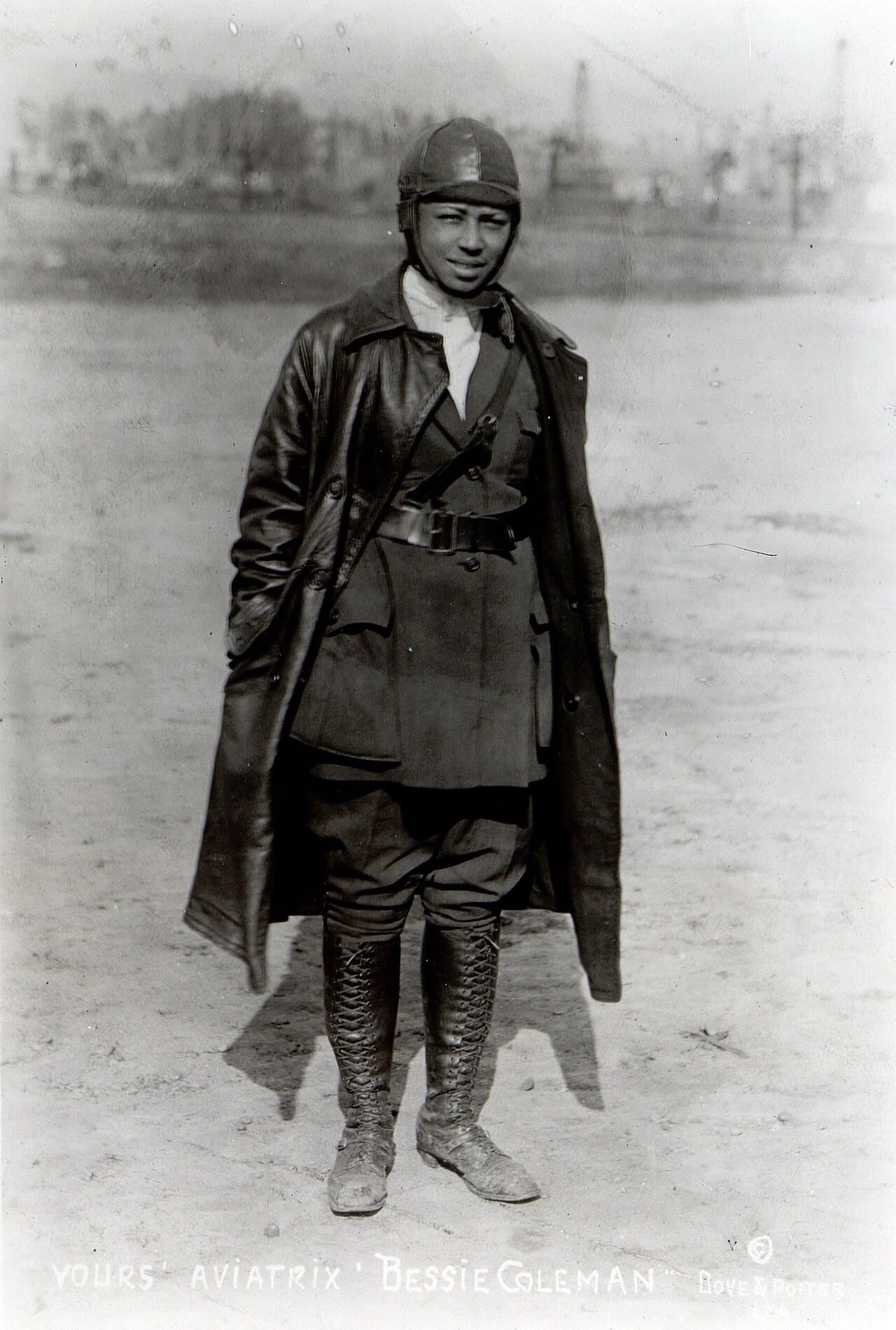
Bessie Coleman in flying leathers, about 1922. Dove and Porter. Public domain, via Wikimedia Commons.
.jpg%2F1280px-Bessie_Coleman_and_her_plane_(1922).jpg&w=3840&q=75)
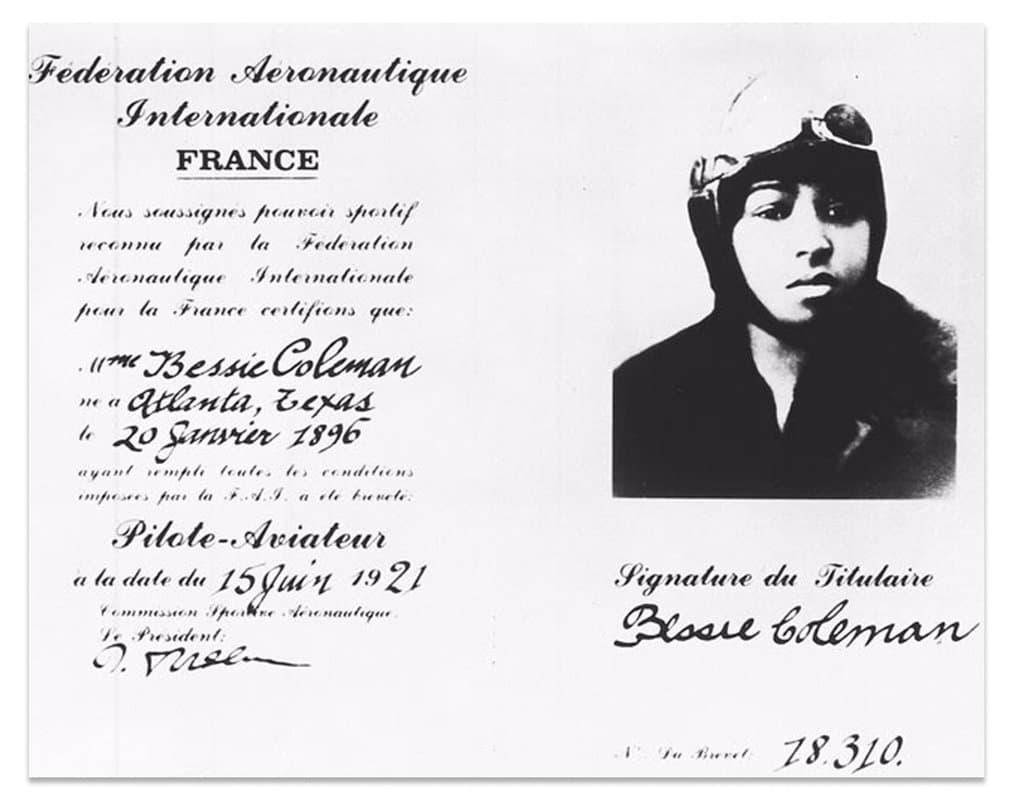
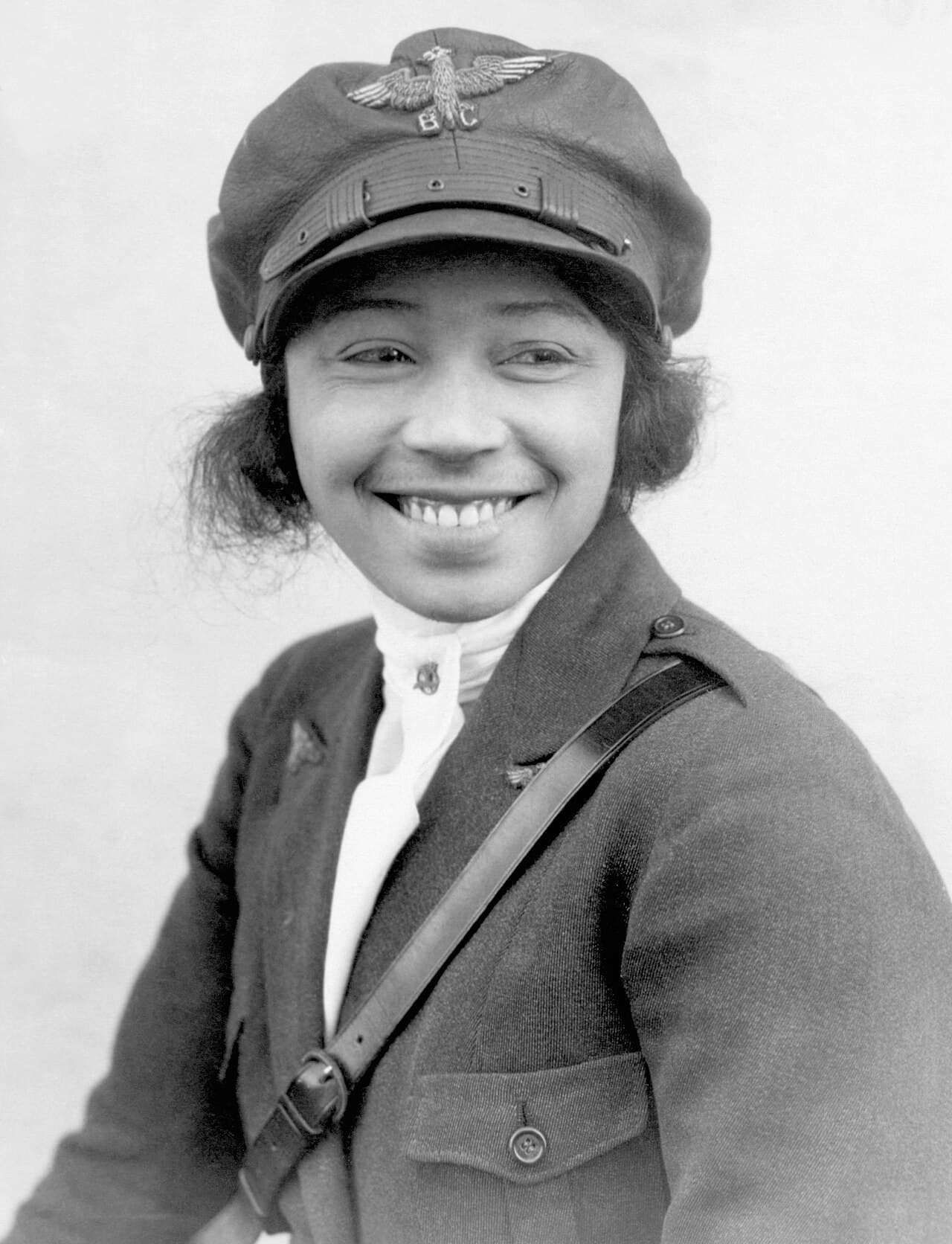
No American flight school would take her, so she learned French. Bessie Coleman was born on 26 January 1892, the daughter of George and Susan Coleman, sharecroppers who could neither read nor write. Almost every source says she was born in Atlanta, Texas and that the family moved to Waxahachie when she was two. The National Women's History Museum says she was born in a one-room cabin in Waxahachie, and adds the detail that explains the disagreement: her birth was recorded neither on a birth certificate nor in a family Bible. She was the tenth of thirteen children, except in the Handbook of Texas, which says the twelfth. She is regularly called the first Native American woman to hold a pilot's licence, and that claim rests on ground nobody has documented. Wikipedia says her father may have had Cherokee or Choctaw grandparents. The National Women's History Museum says three of his grandparents were Native, most likely Choctaw or Cherokee. The Handbook of Texas and BlackPast do not mention it at all. We could find no roll, census or record cited by anyone. She picked cotton at harvest and helped with the laundry her mother took in. She got one semester at the Colored Agricultural and Normal University in Langston, Oklahoma before the money ran out. Her father had already gone back to Indian Territory in 1900. In 1915 she followed two of her brothers to Chicago, trained at the Burnham School of Beauty Culture, and worked as a manicurist at the White Sox barbershop and later ran a chili parlour. One of her brothers came back from France and teased her that Frenchwomen could fly and she could not. Robert Abbott, who had founded the Chicago Defender, told her to go to France and get it done, and he and the banker Jesse Binga helped pay for it. She took French at Berlitz and sailed on 20 November 1920. She trained at the Caudron brothers' school at Le Crotoy in a Nieuport, a twenty-seven-foot biplane known to fail, sometimes in the air. She watched a fellow student die during the course. How long it took is given as ten months and as seven. On 15 June 1921 the Fédération Aéronautique Internationale issued her licence, two weeks after the Tulsa massacre. No reference work we consulted gives the number. The certificate does: 18,310, written at the foot of it. And it records something no account of her mentions. Under her name it gives her birth as Atlanta, Texas, on 20 January 1896 - four years after the date every biography uses, and six days off the day. Her own signature is on the same sheet. She may have taken years off to get through the door, or a clerk may have written down what she told him; either way, the one document she signed disagrees with every book about her about when she was born. She came home to a country that had no work for her and made her own. Her first American appearance was on 3 September 1922 at Curtiss Field on Long Island, at an event honouring the 369th Infantry, in front of about three thousand people. Six weeks later she flew in Chicago. She flew Curtiss Jennies mostly, and did loops, figure eights, barrel rolls, dives and parachute jumps, and lectured in schools and churches to raise money for a flying school for Black students. The press called her Queen Bess. She was known too as Brave Bessie, and in the notices of the day as the only Race aviatrix in the world. On 4 February 1923 her motor stalled shortly after take-off at Santa Monica and the aeroplane went into the ground. With a broken leg and fractured ribs she asked the doctors to patch her up enough to perform. Every account says she refused to fly for segregated crowds. Only one source names an occasion, and it names two: at Waxahachie, where the organisers planned separate gates and she said there would be one entrance or there would be no show; and at an Orlando flower show, where she threatened to withdraw on finding it was to be for white people only. Neither is dated and neither cites a document. What is documented is that at her funeral Viola Hill, who with her husband had taken Coleman in at their parsonage in Orlando and treated her as a daughter, eulogised her for exactly that refusal. She had bought a Curtiss Jenny in Dallas. On 30 April 1926, at Paxon Field in Jacksonville, Florida, William D. Wills, a twenty-four-year-old mechanic, was flying it and she was in the other seat with her harness off, because she was planning a parachute jump the next day and needed to lean out and look at the ground. About ten minutes in the aeroplane dived and then spun. She was thrown out and killed instantly. Wills went in with the aircraft and died too. A wrench left in the machine had jammed the controls, or the engine, or the gearbox, or the control gears, depending which account you read; she fell from two thousand feet, or three thousand, or three and a half. We could find no record of any official inquiry, no accident report, and no investigating authority named by anyone. Ten thousand people came to the funeral in Chicago. Ida B. Wells was mistress of ceremonies. There were twenty-two pallbearers, among them Congressman Oscar DePriest and the attorney Earl B. Dickerson. She is buried at Lincoln Cemetery. In 1929 William J. Powell founded the Bessie Coleman Aero Club in Los Angeles, and it fed directly into the generation that produced the Tuskegee Airmen. From 1931 the Challenger Pilots Association flew over Lincoln Cemetery every year and dropped flowers on her grave, and Black aviators still do it. The Post Office issued a thirty-two-cent stamp in 1995. In 2023 she was the first honoree in the American Women quarters series, and the Mint released the design at an event held at the Federal Aviation Administration, which is a sentence worth reading twice given that no American aviation authority would license her in 1920. If you have something about her that is not in the standard accounts, or you know where the licence number is recorded, we would very much like it here. Compiled by MyHistoryStone from the Handbook of Texas, the Smithsonian National Air and Space Museum, the National Aviation Hall of Fame, the National Women's Hall of Fame, the National Women's History Museum, BlackPast, PBS American Experience, Britannica, and the Texas, Illinois and Florida historical markers transcribed by the Historical Marker Database.
Share a memory
Leave a memory or a message for the family. What you write appears right away, and the family can remove any entry.
Loading messages...