 Home
HomePoems in the Walls
The Story of
The Angel Island Immigration Station
MyHistoryStone Archive
1910 – 1940
San Francisco Bay, California, United States · 30 years
Neighborhood
Angel Island, San Francisco Bay
Circa
1910
In motion
4 photographs
The photographs on this page, brought to life.
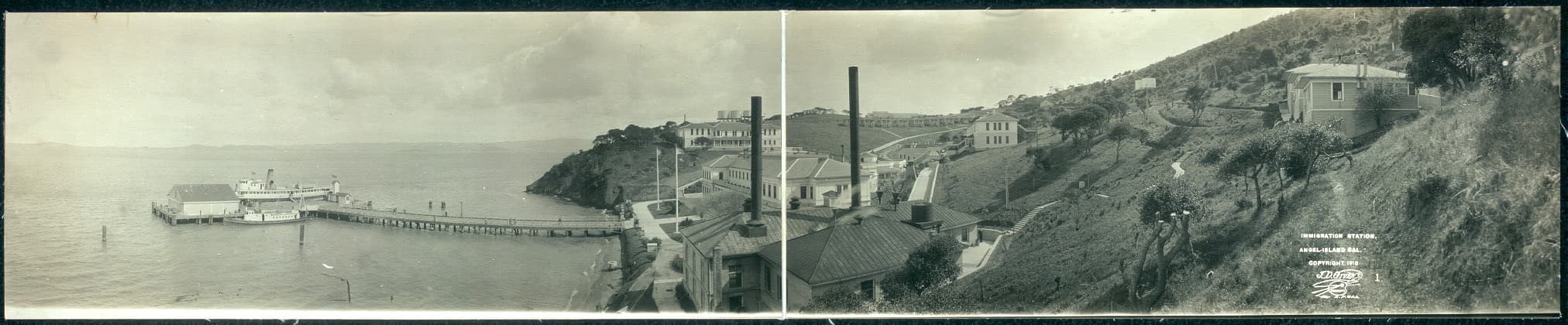
The immigration station from the water about 1915, on a panoramic print a metre wide. J. D. Givens. Library of Congress.
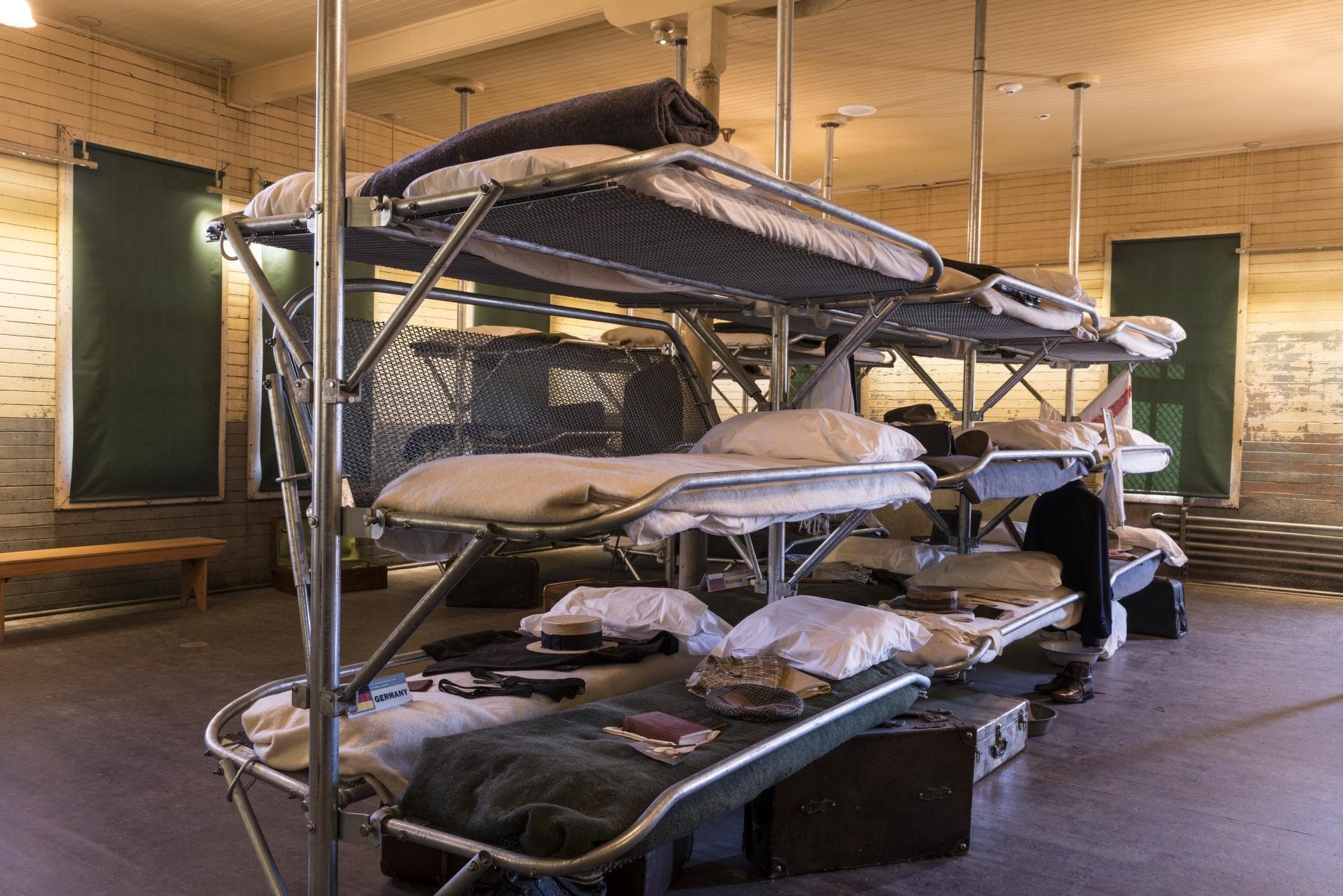
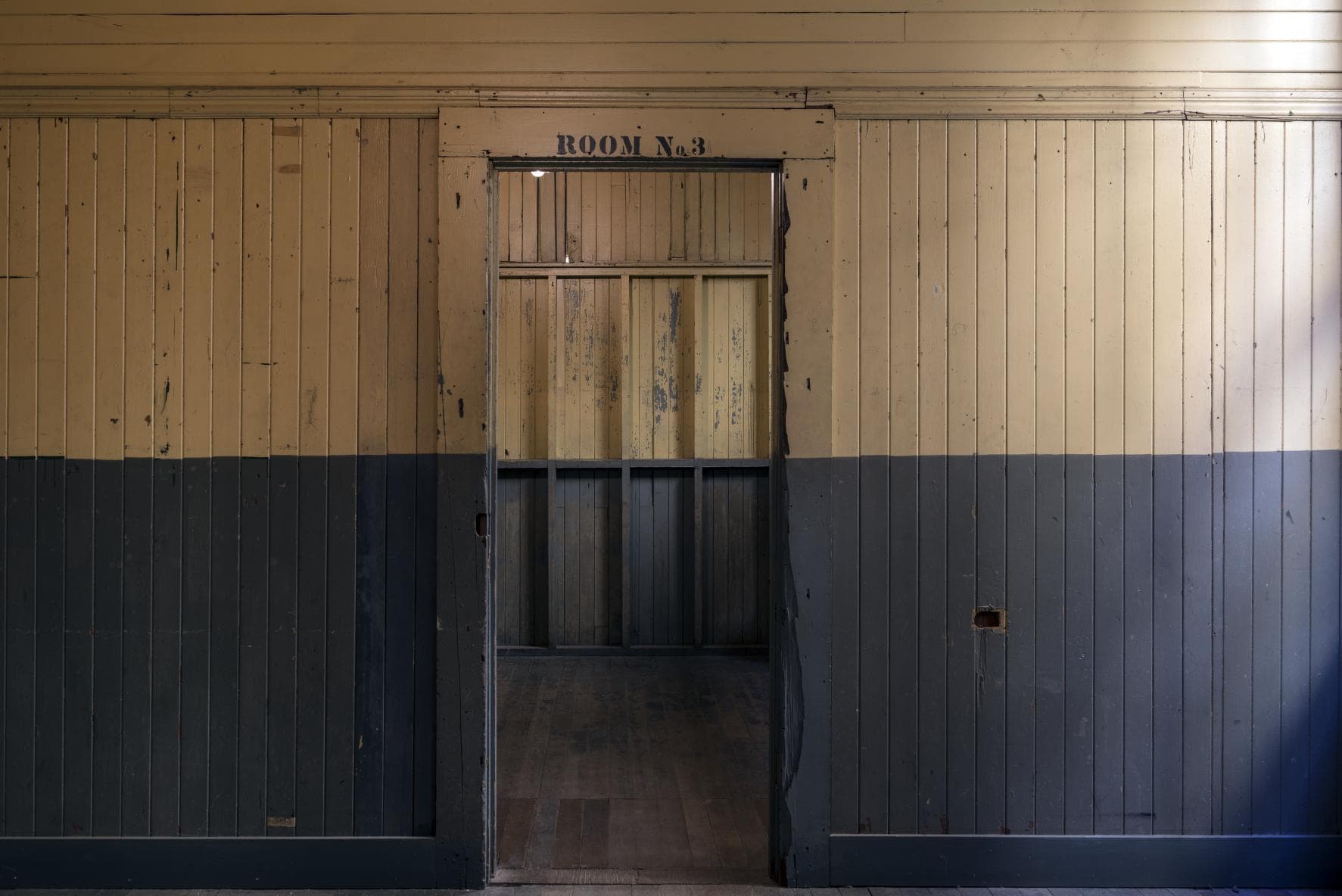
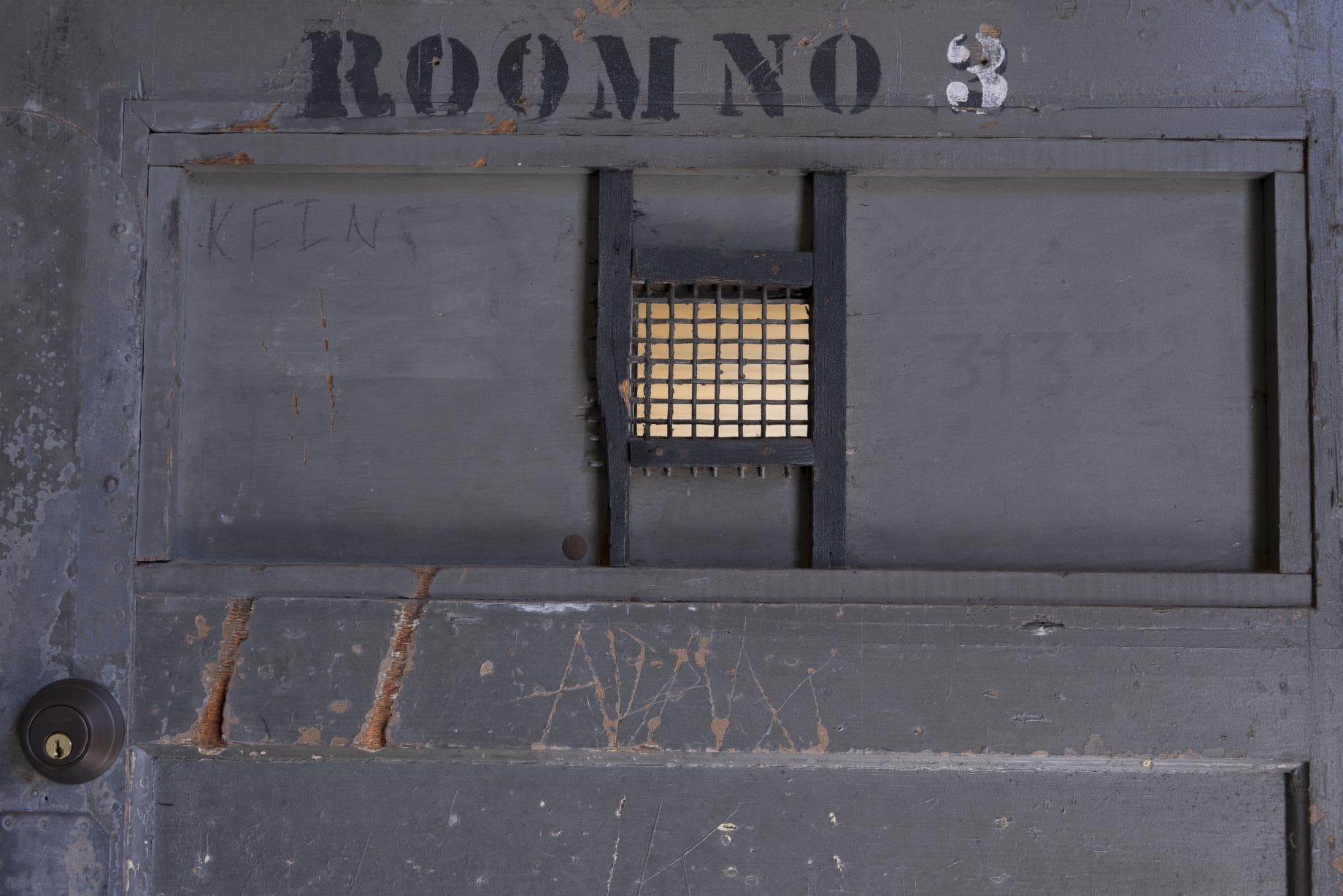
The poems are cut into the walls. A park ranger found them in 1970, with the building already scheduled for demolition. The immigration station on Angel Island opened on 21 January 1910 and worked until 1940. It was built where it was for the same reason as Ellis Island, on an island that could be controlled, and one of the park's own signs says it was modelled on Ellis Island. Another of the park's signs, on the same site, says the opposite about what it was for: unlike Ellis Island, Angel Island came to symbolise discrimination and exclusion instead of welcome. Both are official. Both are correct about something. How many people passed through is not settled and the gap is enormous. A marker at the station says about one million people from eighty countries. The station foundation's own curriculum says roughly one hundred and seventy-five thousand Chinese and sixty thousand Japanese. California State Parks says hundreds of thousands. These figures are on the same institution's channels and none of them reconciles the others. The Chinese Exclusion Act of 1882 was the first federal law to restrict immigration by nationality and race, and it is the reason the station existed in the form it took. After the 1906 earthquake destroyed San Francisco's records, identities could be claimed and sold, and men and women came as the paper sons and paper daughters of citizens. The government answered with an interrogation designed to catch a memorised life. What is your living room floor made of. Where is the rice bin kept. How many windows does your house in China have. The same questions were put to the relative already in the country, and the answers were compared. The station's own marker says what that meant: even legitimate immigrants were known to fail the examination. People prepared. Fern Mock studied a coaching book of fifty pages, questions and prescribed answers, before she arrived in 1926 at eighteen, and she was asked how many steps it took to enter her house, how many dwellings were in her village, and what she thought about anarchy. Coaching papers were routinely thrown into the sea before landing. Sympathetic Chinese staff on the island sometimes helped new arrivals, although contact between the two groups was forbidden. Most arrivals were held a few days. Chinese arrivals were held for weeks, months, or longer. Quok Shee came to join her merchant husband and was held nearly two years; her case file is thick with testimony and the foundation calls it not a typical experience but an illustration of everything that can go wrong for one person. No source calls her the record holder, so neither do we. Milton Lee was seven when he arrived in 1931 with his mother and was separated from her because the barracks were divided by sex. He learned to read the day by the hour a name was called. If they called you around eleven, he said, you were going into San Francisco. If they called you early in the morning, you were gone. The segregation was written into the buildings. European and other non-Asian arrivals slept, ate, exercised and were treated in hospital separately from those the station's paperwork called Asiatics. Men and women were separated regardless of marriage. Children were sometimes separated from their parents. The restored hospital front still has its two original entrances, one marked European and one Non-European, kept that way deliberately as a reminder of the racial prejudice of the time. Tye Leung Schulze was assigned to the station in 1910 as the first Chinese woman employed by the federal government, working in the women's quarters and interpreting for detained Chinese immigrants. She met an immigration inspector, Charles Schulze; they married in Washington State in 1912, and in 1913 both were forced to resign. Some of the men held in the barracks wrote poems on the walls in classical Chinese and then cut them into the wood. Most are unsigned and undated, which is very likely a precaution. How many there are depends on how you count: one hundred and fifty-four have been recorded and translated across two books, another source says over a hundred and thirty-five, the account of their discovery says hundreds, and the foundation says dozens or hundreds more remain, obscured under layers of paint, damaged, unfinished or gone. We have not reproduced the English translations here. The versions everybody quotes are the work of Him Mark Lai, Genny Lim and Judy Yung in Island, published in 1980, and of Charles Egan in Voices of Angel Island. They are somebody's work, and the place to read them is in those books and on the foundation's own poetry pages, where the poems are also read aloud in Toishanese, Cantonese and other regional dialects and keyed to the rooms they were cut in. In August 1940 the administration building burned, taking many records with it, and the station closed; the last detainees were moved to the mainland that November, or in early 1941, depending which account you take. During the war the barracks held German and Japanese prisoners. Then the island became a state park and the buildings rotted. In 1970 the barracks were condemned. A California State Parks ranger named Alexander Weiss went into them and found the carvings. He called George Araki, a professor at San Francisco State, and a photographer named Mak Takahashi, and they documented the walls. Bay Area Asian Americans, led by Paul Chow, formed a committee. The legislature put up two hundred and fifty thousand dollars in 1976. The barracks reopened as a museum in 1983, the station was made a National Historic Landmark in 1997, and the old hospital opened as the Angel Island Immigration Museum in 2022. Every source we found states the Weiss discovery flatly as fact, and none offers a competing account of who found the poems, which is worth saying out loud because unanimity is not the same thing as a document. If your family came through Angel Island, or you have a name, a case file number, a photograph or a story that was not told, add it here. Compiled by MyHistoryStone from the Angel Island Immigration Station Foundation, California State Parks, the National Archives Chinese Exclusion Act teaching materials, the National Park Service, the California Office of Historic Preservation, and the interpretive markers on the site as transcribed by the Historical Marker Database.
Add to this story
Know something about The Angel Island Immigration Station? Add it here - a memory, a detail, a correction. What you write appears right away, and the page owner can remove any entry.
Loading messages...