 Home
HomeSignal Corps
A Tribute to
The Hello Girls
MyHistoryStone Archive
1918 – 1979
United States · 61 years
Hometown
Recruited across the country
Location
Chaumont, France
In motion
4 photographs
The photographs on this page, brought to life.
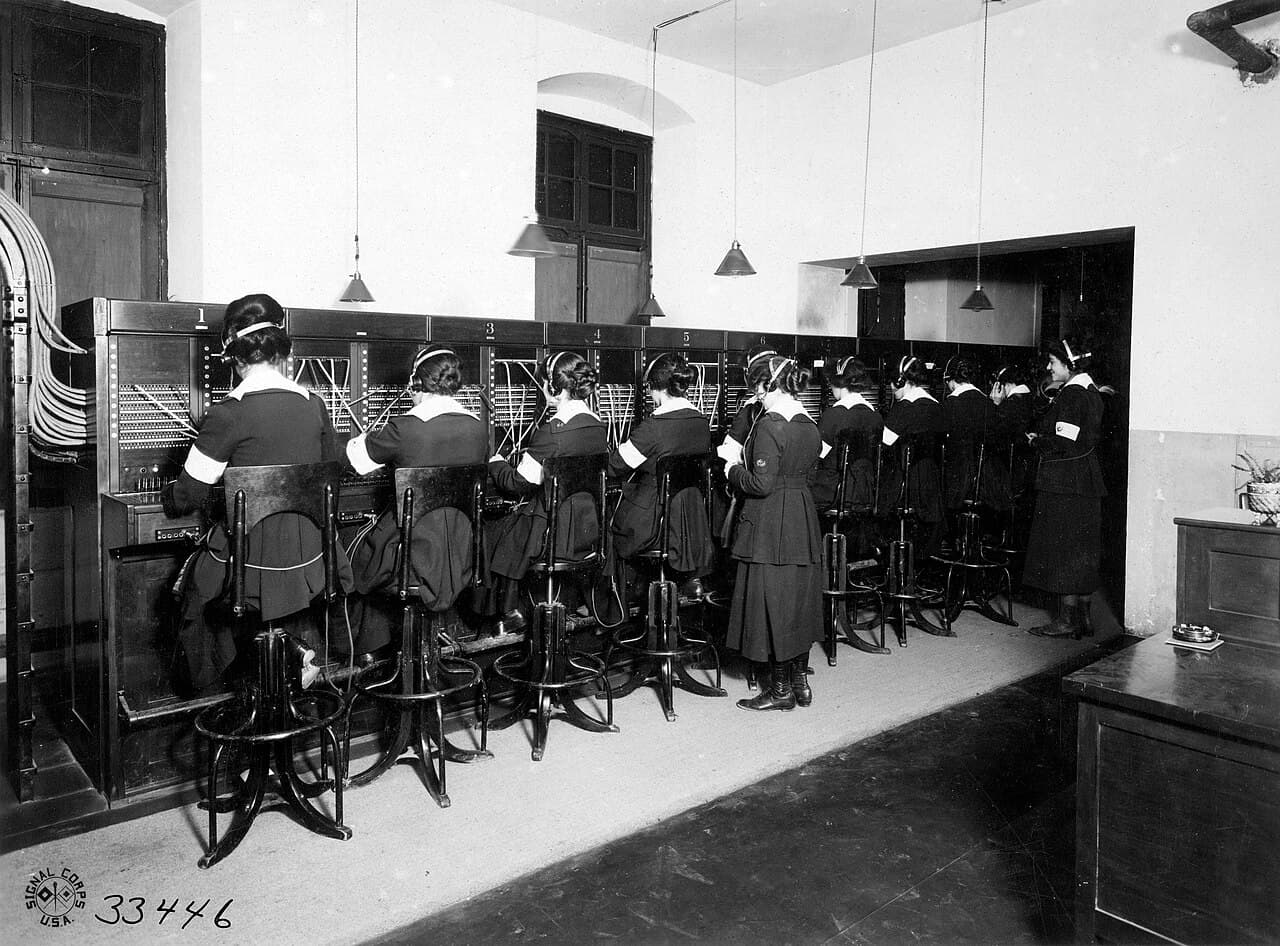
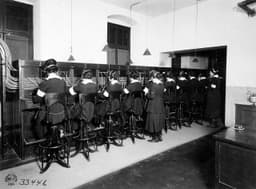
Operators at the switchboards at General Headquarters, Chaumont, in November 1918. Sgt. Abbott, U.S. Army Signal Corps. Public domain, via Wikimedia Commons.
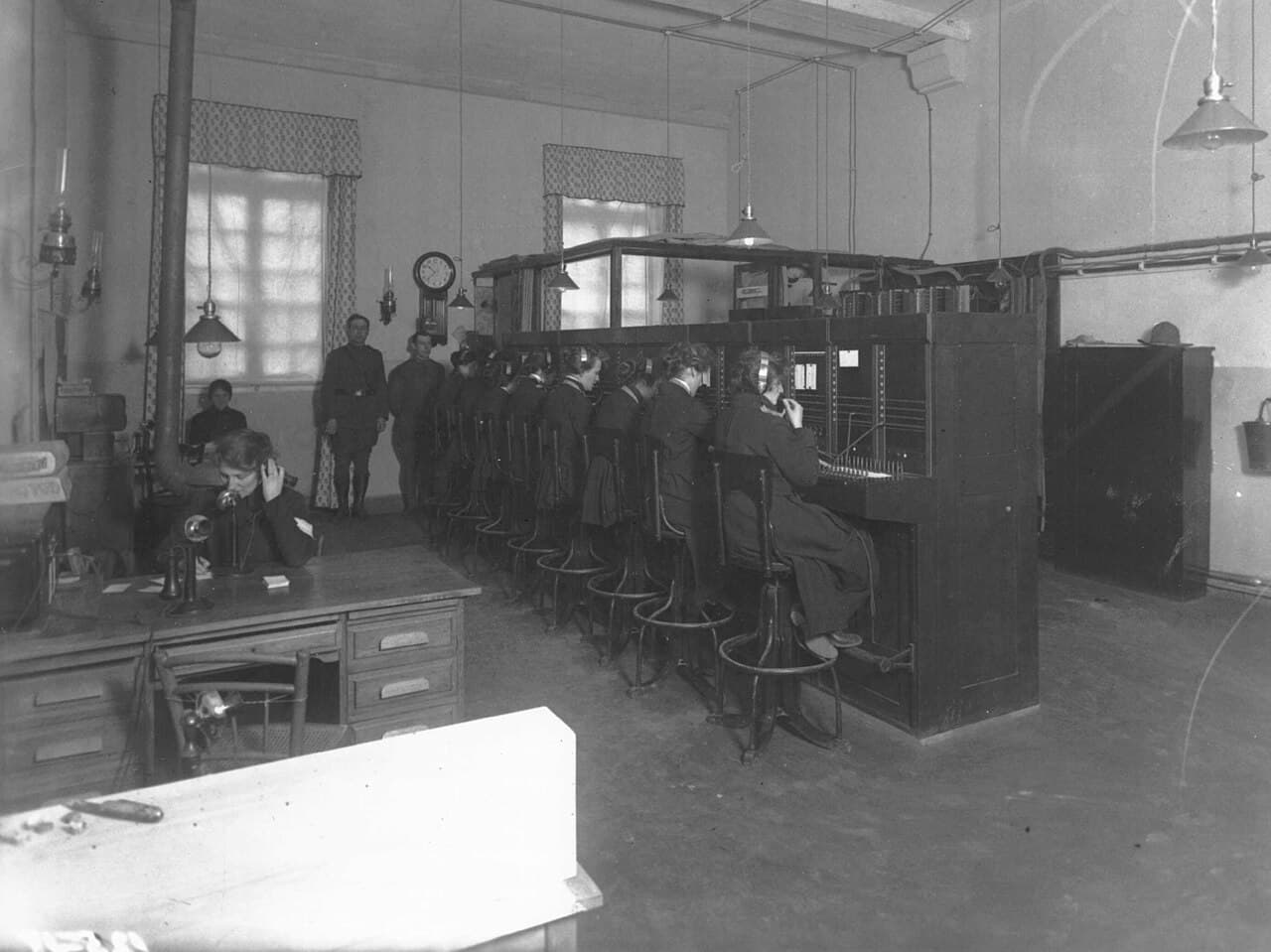
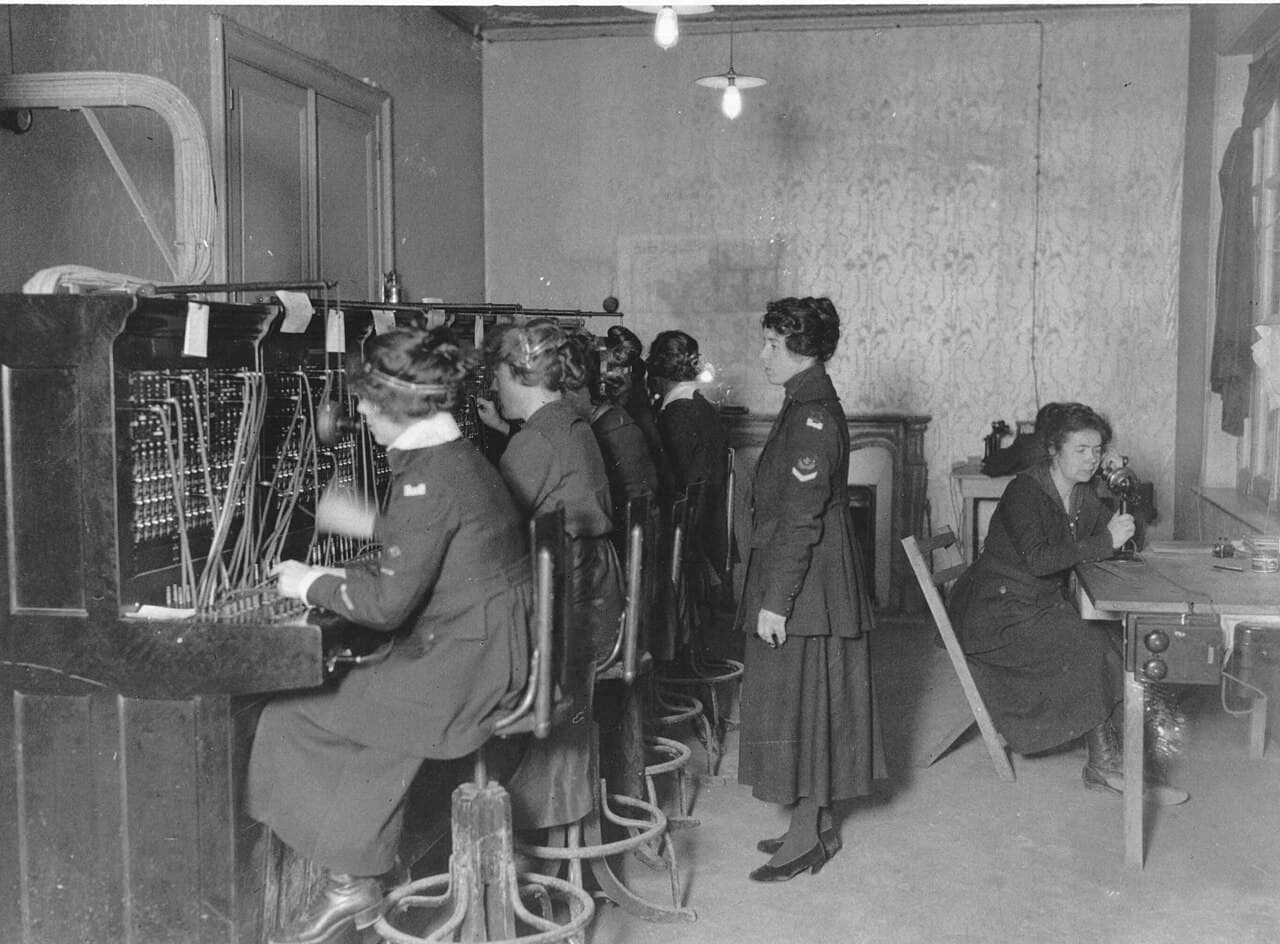
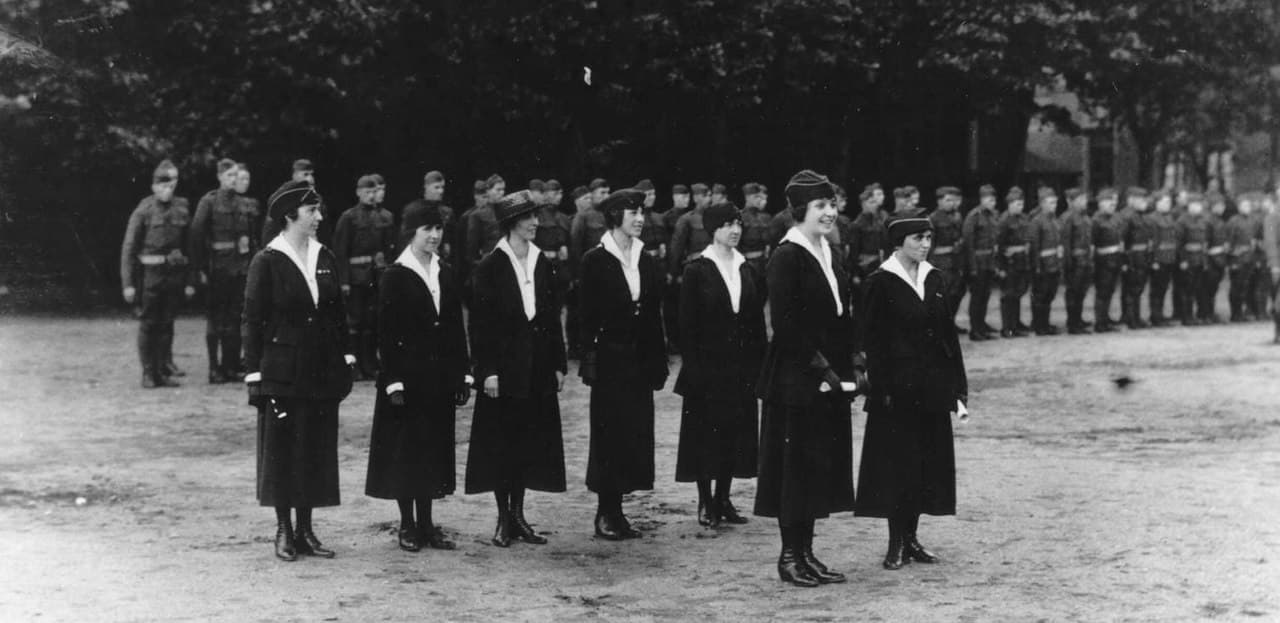
They took the Army oath, wore the Army uniform and the Army identity disc, and could be court-martialled under the Army code. When the war ended the Army told them they had been civilians all along. In 1917 General Pershing cabled Washington for a force of women telephone operators, all speaking French and English equally well. He asked for a hundred: three chief operators, nine supervisors, seventy-eight operators, ten substitutes and one man to supervise the traffic. The reason was arithmetic. A male operator took about sixty seconds to make a connection. A woman took ten. By then women already held some eighty-five per cent of the telephone operating jobs in the United States, and the Army wanted what the exchanges had. The response was enormous, and the count depends on who is doing the counting: seven thousand applicants, or more than seven thousand six hundred, or nearly ten thousand. Around four hundred and fifty were selected. Somewhere between two hundred and twenty-three and two hundred and thirty-three actually served in France; the congressional findings say 223, the Department of Veterans Affairs and a museum marker at Fort Meade say 233. The first recruits took the Army oath on 15 January 1918. The first contingent went on duty in France on 24 March. Daily calls at headquarters went from thirteen thousand to thirty-six thousand almost at once, and with five more contingents reached a hundred and fifty thousand. Between them the operators connected twenty-six million calls. Grace Banker of Passaic, New Jersey, a Barnard graduate, was chief operator of the first unit and led thirty-three women. She worked at Chaumont, then Ligny-en-Barrois, then at First Army headquarters at Bar-le-Duc during the Meuse-Argonne offensive, under German bombardment, and none of her team was hurt. She was awarded the Distinguished Service Medal in 1919, one of eighteen people out of sixteen thousand eligible Signal Corps officers to receive it. Her own account of the job is not heroic in the usual way. The work was fascinating, she wrote, and much of it was in codes that changed constantly: Ligny was waterfall, and Toul might be Podunk one day and Wabash the next. Of the women she had led: "What good sports girls were in that First Unit! They took everything in their stride." Two of them did not come home. Inez Crittenden of San Francisco, chief operator of the second unit, died of pneumonia following influenza on 11 November 1918, aged thirty-one, and was given a military funeral that the record itself notes was unusual for a civilian telephone operator. Corah Bartlett died of the same pandemic. Both are buried in France or listed as having died in the service of the United States; we could not find Bartlett's hometown, her dates, or where she lies, which is its own kind of answer. Then the war ended. The adjutant general circulated an internal memo stating that the women were civilian employees, authorised by contract and not by Army regulations. The military code allowed only for the induction of men, and it had not been changed to match Pershing's orders. So they were refused discharge papers. With that went hospital care for injuries sustained on duty, cash bonuses, pensions, the Victory Medals they had been promised in France, and the right to a flag on the coffin. Merle Egan Anderson, who had enlisted from Helena, Montana in August 1918 after the bilingual requirement was relaxed, and who had run the switchboard for the American peace commission at Versailles, spent the next sixty years on it. She and the other surviving operators petitioned Congress more than fifty times. In 1972 she gave an interview to the Seattle Times, and a lawyer named Mark Hough read it and offered to take the case. He worked on it without pay for four years, building the argument partly on the precedent of the Russian Railway Service Corps. In May 1977 the Senate Committee on Veterans Affairs heard the evidence. President Carter signed the GI Bill Improvement Act on 23 November 1977. The law does not name the Hello Girls. It names the Women Airforce Service Pilots, and then creates a mechanism by which any similarly situated group whose service had been treated as civilian employment could be reviewed and recognised. The operators applied under it and were granted veteran status in 1979. Merle Egan Anderson received her discharge papers at Fort Lawton, Washington, on 28 August 1979, at ninety-one. How many were left is one of the numbers this story turns on, and it comes back two ways. Wikipedia and the Department of Veterans Affairs say eighteen were alive when Carter signed in 1977. The congressional findings say thirty-three were alive in 1979 to receive their Victory Medals and their discharge papers. These may be counting different moments and different groups. Nobody reconciles them. Oleda Joure Christides, handed her discharge paper in 1979, raised it to her lips and kissed it. The findings record that the only thing she had ever wanted from the federal government was a flag on her coffin. Olive Shaw of Massachusetts lived to receive her honorable discharge and was the first person buried when the Massachusetts National Cemetery opened on 11 October 1980. In December 2024 Congress authorised a Congressional Gold Medal for the female telephone operators of the Army Signal Corps, to be given afterwards to the Smithsonian. Authorised is the accurate word. We could find no record that the medal has been designed, struck or presented. One more thing the record holds, from a single source and no corroboration we could find: one African American woman, Renee Messelin, also known as Ellarane Caldwell, is said to have joined the unit by claiming that she was white. We have not been able to confirm it, and we are not going to leave it out. If one of them was your grandmother or your great-aunt, we would like her name here. Compiled by MyHistoryStone from the text of Public Law 95-202 and the findings of S.815 and H.R.1572 of the 118th Congress at govinfo.gov, the National Archives Unwritten Record, the Department of Veterans Affairs, the National WWI Museum and Memorial, the United States World War One Centennial Commission, and the Fort Meade Museum marker at the Franklin Cantonment.
Share a memory
Leave a memory or a message for the family. What you write appears right away, and the family can remove any entry.
Loading messages...