 Home
HomeUndark

A Tribute to
The Radium Girls
MyHistoryStone Archive
1917 – 1938
Orange, New Jersey, United States · 21 years
Residence
Orange, New Jersey
Worked At
U.S. Radium Corporation
In motion
4 photographs
The photographs on this page, brought to life.
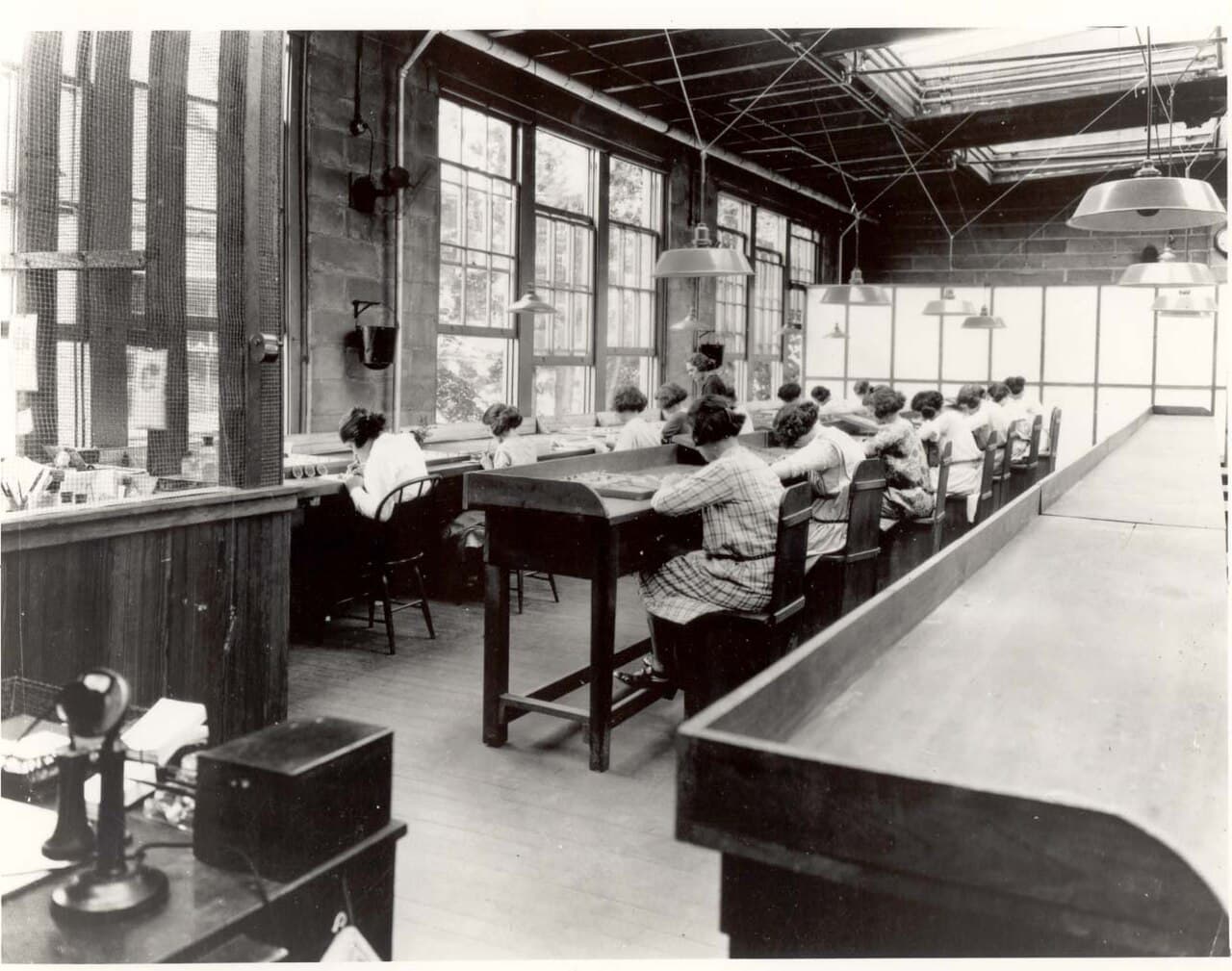
Dial painters at work in a United States Radium Corporation factory, about 1922. Unknown photographer. Public domain, via Wikimedia Commons.

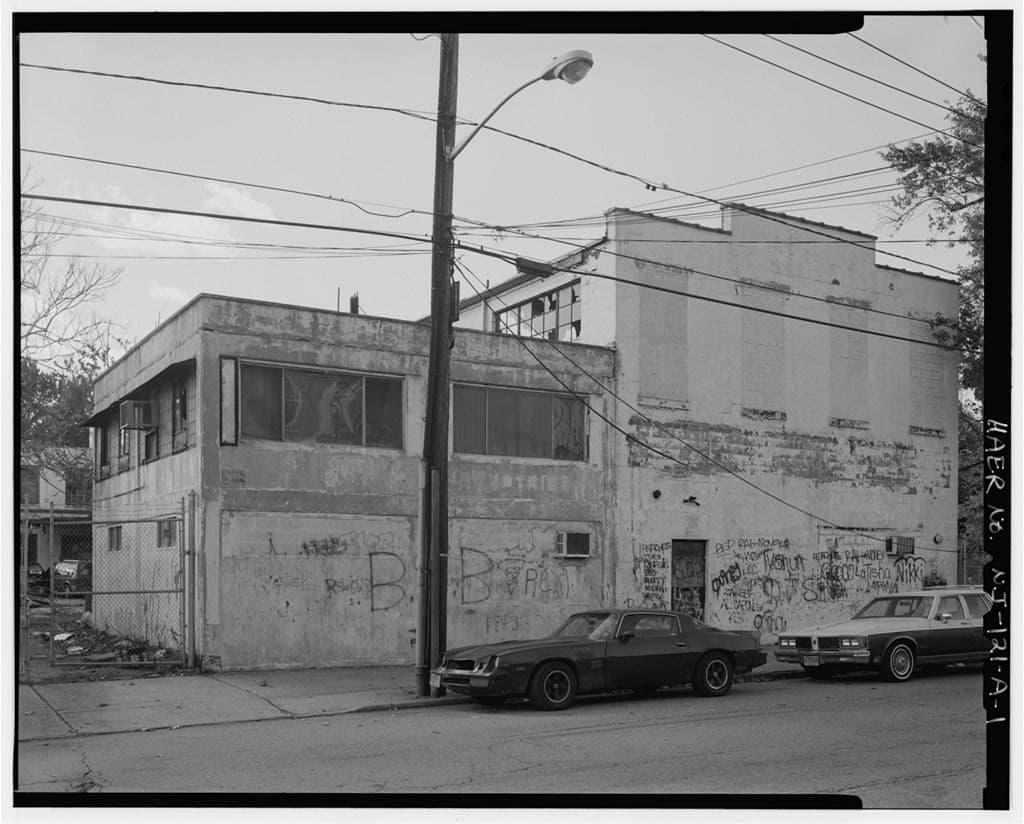
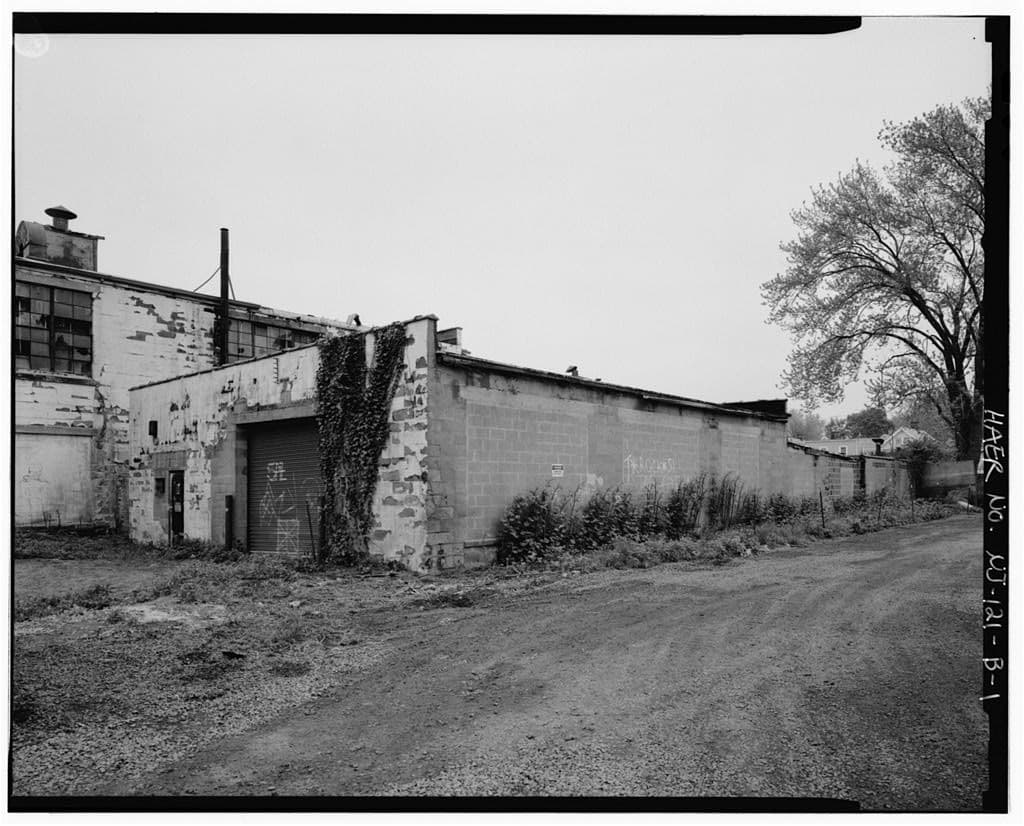
They were told the paint was harmless. Some of them were told to put the brush in their mouths. The United States Radium Corporation ran a plant in Orange, New Jersey from 1917, processing half a ton of ore a day into a luminous paint called Undark: radium, zinc sulfide, gum arabic and water. Young women painted it onto watch and clock dials. Each one mixed her own paint in a small crucible and applied it with a camel-hair brush. They were paid by the dial, and the rate is one of the many things the sources do not agree on: a penny and a half a dial, or two to three cents, or five cents a watch, at roughly two hundred to two hundred and fifty dials a shift. How many women worked there is also unsettled. One account puts seventy in the room when Grace Fryer started in the spring of 1917. The National Institute of Standards and Technology says as many as two hundred and fifty at peak. Others say three hundred. The Missouri Law Review, counting differently, says over eight hundred passed through between 1917 and 1923. These are probably not measuring the same thing, and no source we found reconciles them. Some of the workers were fifteen. In Ottawa, Illinois, where the Radium Dial Company set up in a former high school, some were eleven and thirteen. The brushes had to be kept sharp. Rinsing them in water wasted time and paint, so the women shaped the points with their lips: lip, dip, paint. Grace Fryer said afterwards, "Our instructors told us to point them with our lips. I think I pointed mine with our lips about six times to every watch dial. It didn't taste funny." The health physics collection at Oak Ridge puts it more bluntly still, that tipping the brushes was not something the dial painters decided to do, that in some plants they were trained to do it, and that the instructors sometimes swallowed a little of the paint themselves to show it was safe. The one source that does not attribute the instruction to management is the Missouri Law Review, which describes the practice without saying who taught it. That is the only dissent we found, and it comes from the most careful source on the litigation, so we have printed it rather than smoothed it away. Amelia Maggia died in 1922. Her death was recorded as syphilis. When her body was exhumed in October 1927 the autopsy found 48.4 micrograms of radium in it, about five hundred times what would later be set as a safe body burden. The company blamed infections contracted outside the factory, pre-existing poor health, and syphilis, which was the accusation it reached for most often. Its president said the firm had hired a great many people who were physically unfit to find work elsewhere, as an act of kindness. Cecil Drinker of Harvard investigated the plant in 1924 and found it saturated with radium-contaminated dust, with no steps taken to protect anyone. The version of Drinker's report submitted to the New Jersey Department of Labor had been altered to show every girl in perfect condition. Alice Hamilton found the falsification. Five women sued: Grace Fryer, Katherine Schaub, Edna Hussman, and Quinta McDonald and Albina Larice, who were Amelia Maggia's sisters. It took Fryer two years to find a lawyer willing to take the case. At the first hearing in January 1928, two of them were bedridden and none could raise an arm to take the oath. The case settled that June without any admission of liability: ten thousand dollars each, six hundred a year for life, medical and legal costs paid. The exact date is given as the fourth of June, the eleventh of June, and simply autumn, depending on the source. All five were dead within a few years. Of the eight hundred or so who had worked there, fewer than a dozen were compensated at all. In Ottawa the fight came a decade later and went worse. Catherine Donohue, whose surname is spelled Donahue about as often as Donohue, was fired in 1931 because, as she put it, her limping was causing much talk. By the time her case was heard she weighed under sixty pounds and the hearing was held at her bedside because she could not travel to it. Her lawyer, Leonard Grossman, worked without pay because his clients could not work. She said: "The doctors tell me I will die, but I mustn't. I have too much to live for." The Illinois Industrial Commission ruled for the women. Radium Dial appealed all the way up, and on 23 October 1939 the Supreme Court declined to hear it, which left the ruling standing. By then the company had moved to New York, the commission would not cross state lines to collect, and Catherine Donohue had been dead for a year. The total the company paid the Ottawa women, collectively, was ten thousand dollars. How many died has never been settled, and the range is not a rounding difference. The Missouri Law Review, counting narrowly and by name, says twenty-two dial painters are known to have died of radiation poisoning between 1922 and 1933. Several sources say more than fifty had died by 1927. New Jersey's own historic preservation office traces a rising line: one in 1923, twenty-three by 1929, forty-five by 1959. NPR Illinois says likely thousands, and says in the same sentence that there is no definite number. Around four thousand people were hired to paint dials in the United States and Canada. Nobody has reconciled the counts, and they are not all counting the same people. What came out of it: New Jersey added radium necrosis to its schedule of compensable occupational diseases in 1926, which did no good to anyone already poisoned, because it could not apply backwards. The Surgeon General convened a conference in December 1928. The National Bureau of Standards published its first radiation protection handbook in 1934. Congress passed a general occupational disease compensation bill in 1949. Argonne National Laboratory ran a Center for Human Radiobiology from 1968 until 1993, examining surviving dial painters and building files on 2,403 cases. The Manhattan Project wrote its safety rules with these women in mind. And in 1935, in LaPorte v. United States Radium Corp., a federal judge threw out a case because the two-year limitation had run out, remarking that there was no question where the sympathies of any human being would lie, and that he had no power to adjust the law. The Orange site was declared a Superfund site in 1983. The buildings came down, and soil was dug out to fifteen feet there and at some two hundred and fifty other properties in the neighbourhood that the contamination had reached. The cleanup finished in the 2000s. The site was found eligible for the National Register in 1997 and was never listed. Several of the women are buried at Rosedale Cemetery in Orange. There is no historical marker to them anywhere in New Jersey that we could find. Ottawa has one. In 2006 an eighth-grader named Madeline Piller decided her town should mark what had happened in it, and in 2011 a bronze figure of a 1920s dial painter was unveiled at Clinton and West Jefferson. Her father sculpted it. She holds paintbrushes in one hand. In the other she holds a tulip, drooping. If your family worked in Orange or in Ottawa, or you know a name that belongs on this page, add it here. Compiled by MyHistoryStone from the New Jersey Department of Environmental Protection historic preservation office, the National Institute of Standards and Technology, the Harvard T.H. Chan School of Public Health, the Missouri Law Review, the Oak Ridge Associated Universities health physics collection, the Atomic Heritage Foundation, NPR and NPR Illinois, the Historical Marker Database, and contemporary newspaper reports held by the Library of Congress.
Add to this story
Know something about The Radium Girls? Add it here - a memory, a detail, a correction. What you write appears right away, and the page owner can remove any entry.
Loading messages...