 Home
Home
The Wedding of
Richard and Mildred Loving
MyHistoryStone Archive
In motion
2 photographs
The photographs on this page, brought to life.
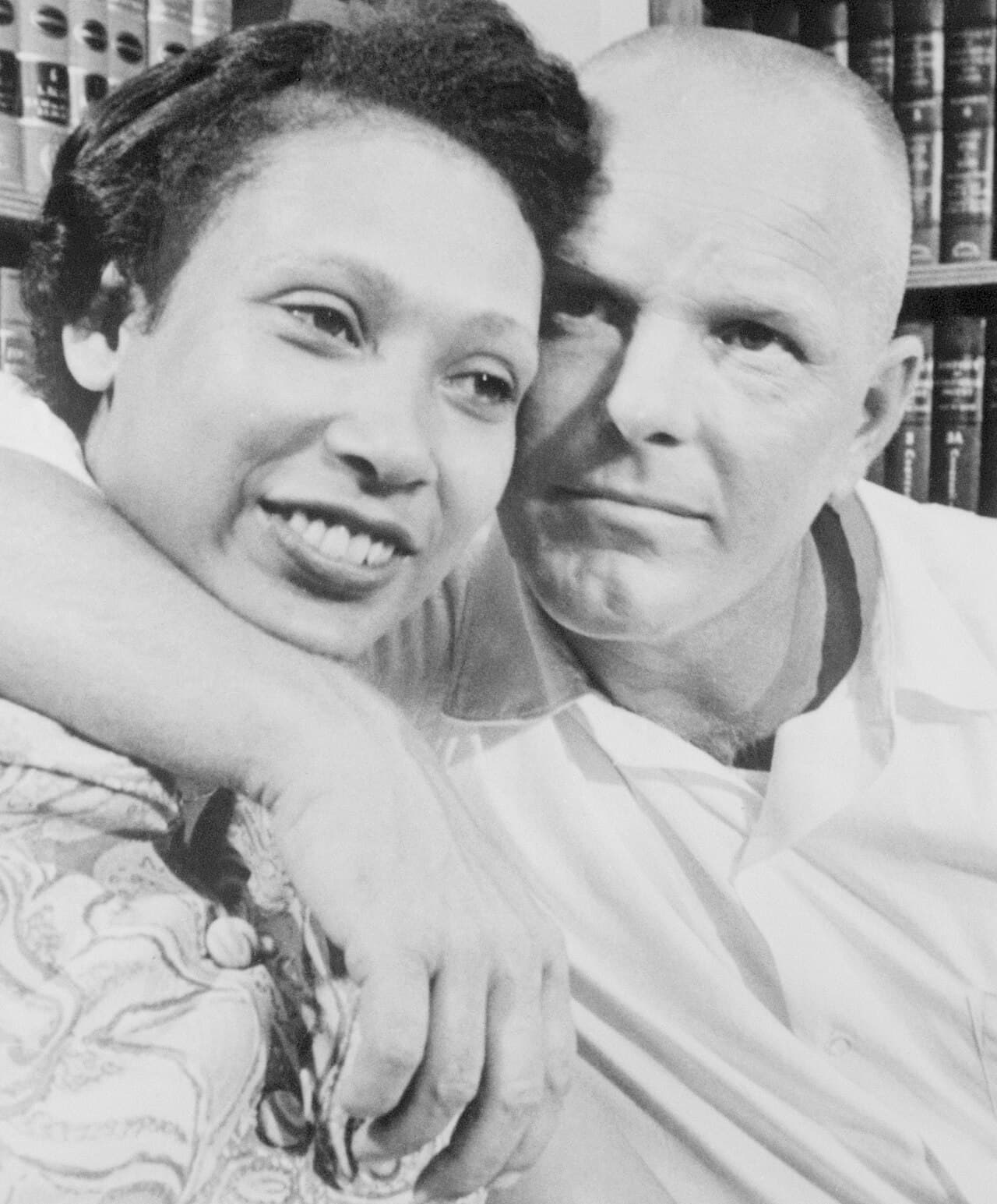
Richard and Mildred Loving, photographed by United Press International in June 1967. United Press International, via Wikimedia Commons.
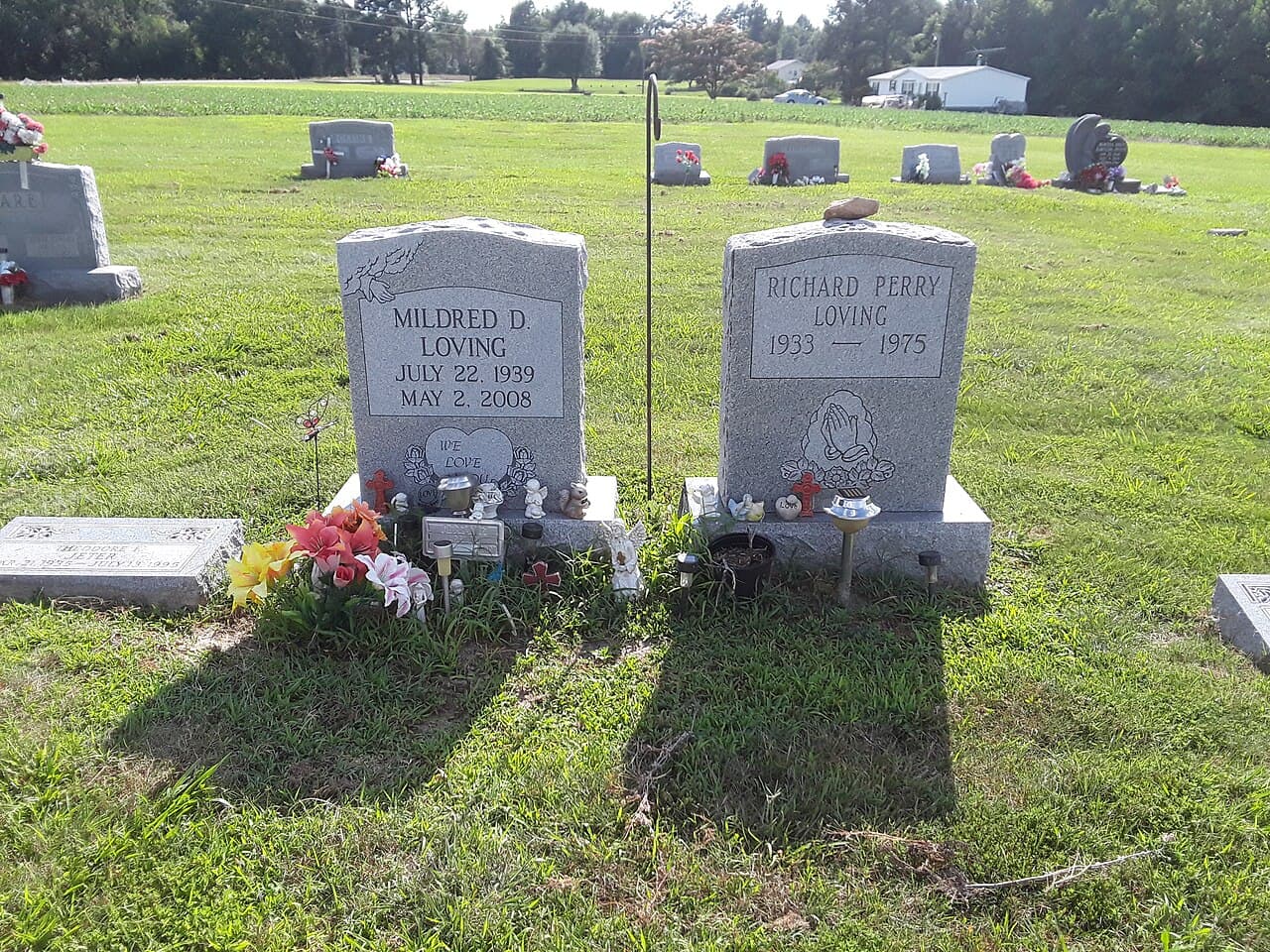
They were arrested in their own bedroom for being married to each other. It took nine years and the Supreme Court to undo it, and all they had ever wanted was to go home. Richard Perry Loving was born in Central Point, Caroline County, Virginia on 29 October 1933. Mildred Delores Jeter was born in the same place on 22 July 1939. He worked construction. They married in Washington, D.C. in June 1958, because Virginia would not let them. Mildred's own account of who she was is worth quoting, because the law and the popular telling both got it wrong. In 2004 she told a historian: "I am not black. I have no black ancestry. I am Indian-Rappahannock. I told the people so when they came to arrest me." The Supreme Court's opinion describes her only as "a Negro woman." Virginia's Racial Integrity Act of 1924 defined a white person as one with "no trace whatsoever of any blood other than Caucasian," with an exception written in for the descendants of Pocahontas. A 1928 amendment made anyone with "any ascertainable degree of negro blood" colored. The Lovings were charged under two sections of the state code. Section 20-58 covered leaving Virginia to marry and coming back. Section 20-59 set the penalty: "If any white person intermarry with a colored person, or any colored person intermarry with a white person, he shall be guilty of a felony and shall be punished by confinement in the penitentiary for not less than one nor more than five years." The sheriff came in the early hours of a July night in 1958. The date is given as the eleventh and as about the thirteenth. He knocked, then broke through the door. Mildred said she was Richard's wife. He said, "Not here you're not." The detail everyone repeats is the marriage certificate hanging on the bedroom wall, and it is documented, but the sources say it was Mildred who pointed to it. The popular version has that backwards. They pleaded guilty on 6 January 1959 and were sentenced to a year in jail, suspended for twenty-five years on condition that they leave Virginia and not return together. They went to Washington. The trial judge, Leon Bazile, explained himself, and the Supreme Court quoted him in full so that everyone could read it: "Almighty God created the races white, black, yellow, malay and red, and he placed them on separate continents. And but for the interference with his arrangement there would be no cause for such marriages. The fact that he separated the races shows that he did not intend for the races to mix." In 1963 Mildred wrote to Robert Kennedy. The Encyclopedia Virginia says what she wanted: to get back home. Kennedy sent her to the American Civil Liberties Union, and two young lawyers, Bernard Cohen and Philip Hirschkop, took it up. Virginia's own supreme court upheld the law in 1966. Loving v. Virginia was argued on 10 April 1967 and decided on 12 June, unanimously, Chief Justice Earl Warren writing: "Marriage is one of the 'basic civil rights of man,' fundamental to our very existence and survival." "Under our Constitution, the freedom to marry or not marry, a person of another race resides with the individual and cannot be infringed by the State." "These convictions must be reversed." Sixteen states' laws fell with Virginia's. Richard did not go to Washington for the argument. He sent a message with his lawyer instead. It is relayed rather than transcribed, which is worth saying, because it is now carved on a monument at Bowling Green: "Tell the Court I love my wife and it is just not fair I can not live with her in Virginia." They went home to Caroline County and built a house. On 29 June 1975 a drunk driver hit their car. Richard was killed at forty-one. Mildred lost the sight in her right eye, lived there another thirty-three years, and never much wanted to be a public figure. On the fortieth anniversary of the decision, in June 2007, she made a statement anyway: "I am still not a political person, but I am proud that Richard's and my name is on a court case that can help reinforce the love, the commitment, the fairness, and the family that so many people, black or white, young or old, gay or straight, seek in life. I support the freedom to marry for all. That's what Loving, and loving, are all about." She died on 2 May 2008. They are buried together at Saint Stephen's Baptist Church Cemetery in Central Point. On the monument at Bowling Green there is a line of hers from 1966, from before any of it was settled: "We may lose the small battles but win the big war." The twelfth of June is Loving Day. It is not an official holiday anywhere. If you knew them, or if their case is a reason your own family exists, that is worth writing down here. Compiled by MyHistoryStone from the published opinion in Loving v. Virginia, 388 U.S. 1 (1967), Encyclopedia Virginia, the Virginia Department of Historic Resources markers in Caroline County and Richmond, the U.S. Civil Rights Trail monument at Bowling Green, and Mildred Loving's statement of 12 June 2007.
Share a memory
Leave a memory or a message for the family. What you write appears right away, and the family can remove any entry.
Loading messages...