 Home
Home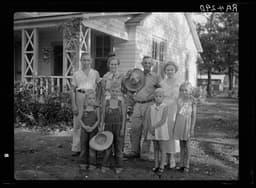
The Story of
Dyess Colony
MyHistoryStone Archive
1934 – 1951
Mississippi County, Arkansas, United States · 17 years
Location
Mississippi County
Circa
1934
In motion
5 photographs
The photographs on this page, brought to life.
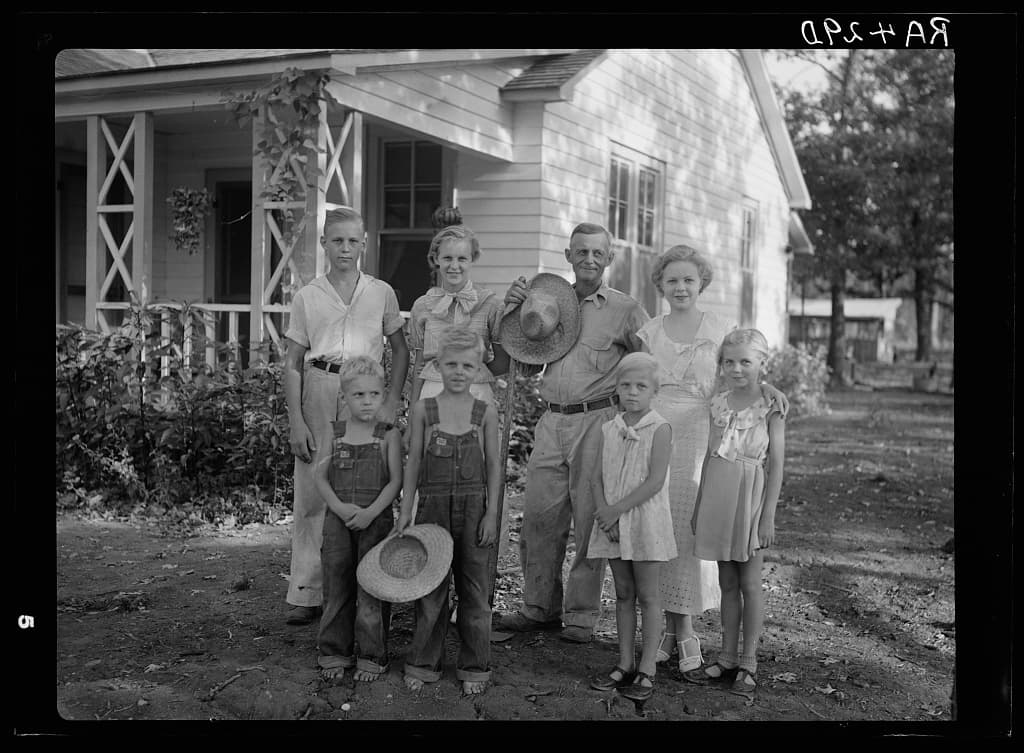
A resettled farmer and his family outside their colony house, August 1935. Arthur Rothstein, Resettlement Administration. Library of Congress.
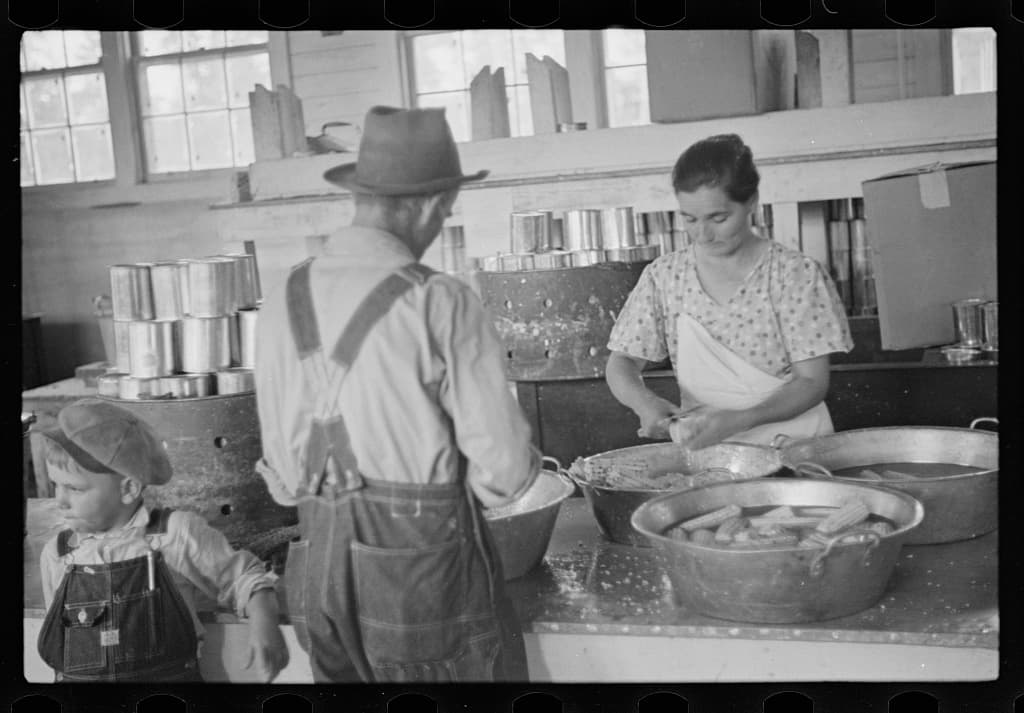
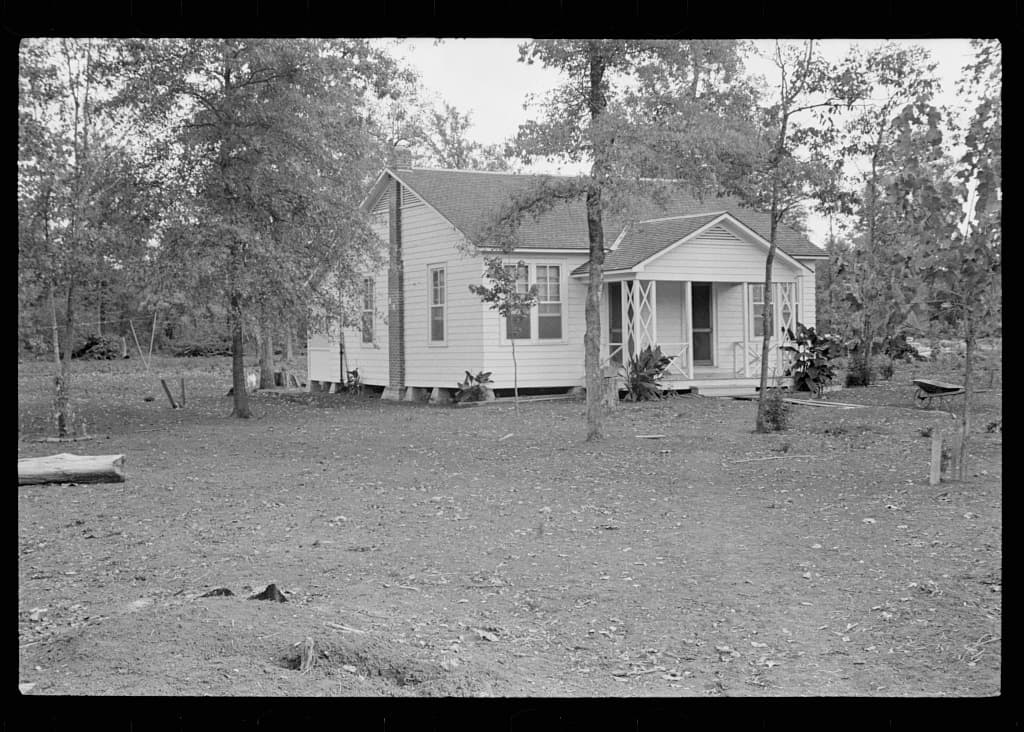
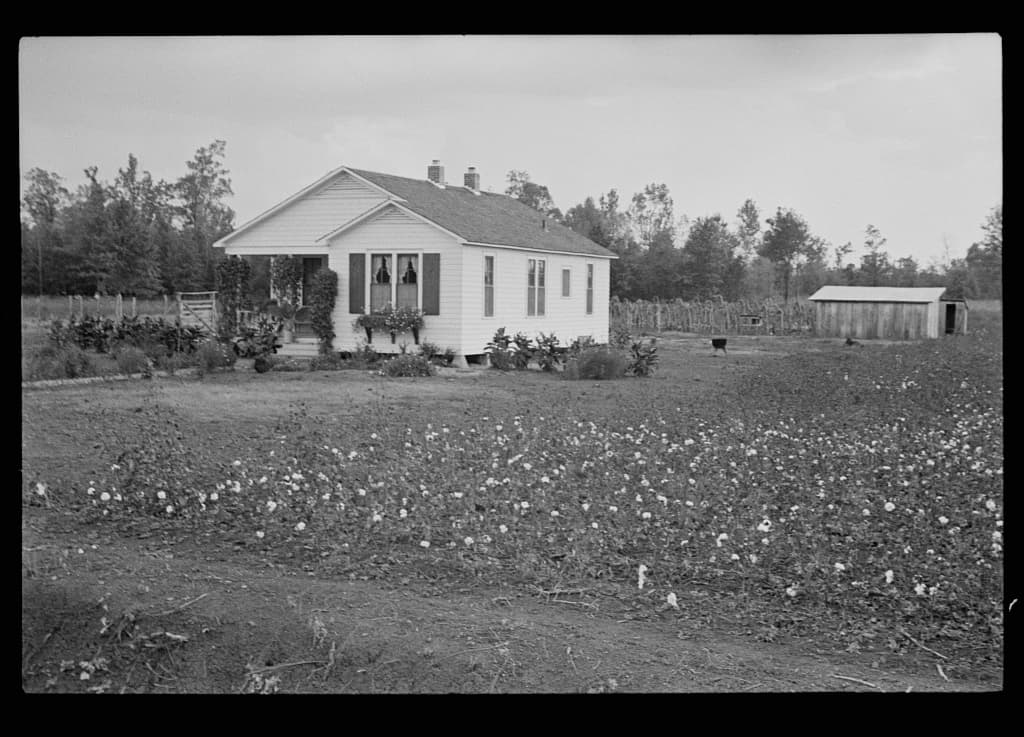
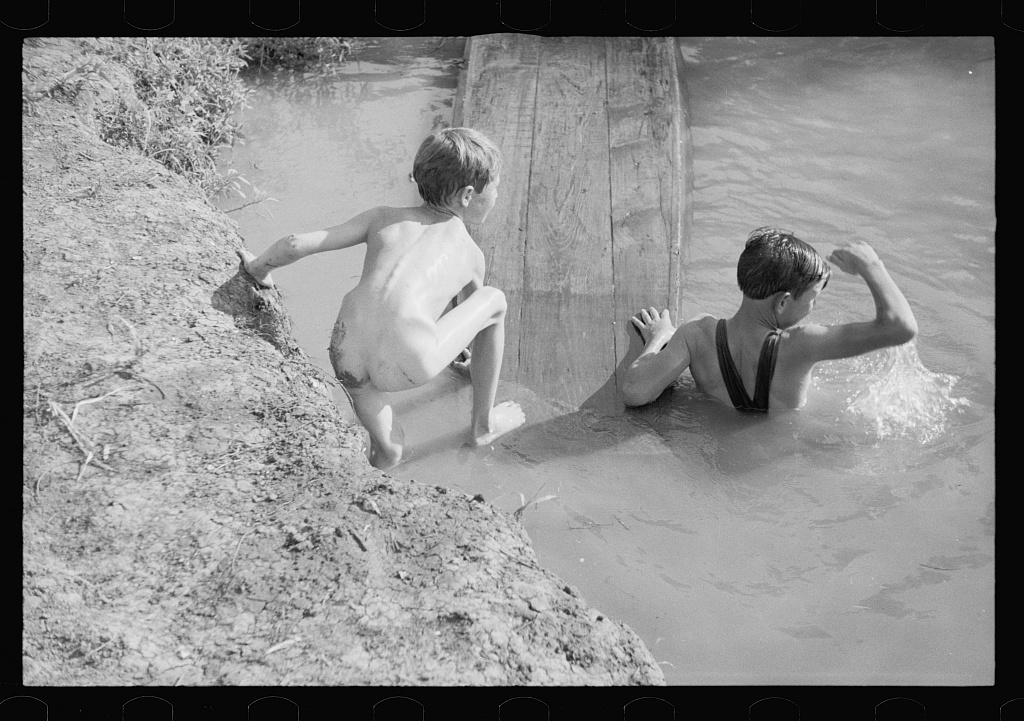
Five hundred families were given twenty acres, a mule and a debt. One of them raised Johnny Cash. In May 1934, in the worst year of the Depression, the federal government bought around sixteen thousand acres of Arkansas bottomland and set out to build a town on it. The idea belonged to William Reynolds Dyess, Arkansas's first relief administrator. It was called Colonization Project No. 1 and it was paid for by the Federal Emergency Relief Administration. About 1,300 relief workers cleared the swamp and put up five hundred houses in a wagon-wheel plan, farms radiating out from a hub that held an administration building, a commissary, a cotton gin, a hospital, a theatre and a newspaper. The first thirteen families arrived that October. Almost every number is disputed. The acreage is given as 15,144, 16,000 or 16,500 depending on the source. The plan was for 800 families and was cut to 500 for lack of money; 482 were living there by the dedication in 1936. Each family got twenty to forty acres, though the roadside marker flattens that into the older American promise: forty acres and a mule. To be chosen you had to be a farmer who had lost his farm, destitute, in good health, under fifty, an Arkansan, and white. The 1976 National Register nomination lists "Caucasian" among the eligibility requirements without comment. The Encyclopedia of Arkansas puts it plainly: the project was intended for white people only. The roadside marker does not mention it, and gives the criteria as need, farming knowledge and physical fitness. The colony ran on advances and on its own money. Families were carried for land, housing, livestock and groceries until the first harvest and traded at the co-operative store in a local scrip called doodlum. When a family had cleared its land and repaid what it owed, usually about three years, it could take the deed. By 1938, 115 families had. Ray and Carrie Cash arrived on 24 March 1935 with five children and were given Farm No. 266, a five-room house of about a thousand square feet with a barn, a smokehouse and a chicken house. Their fourth child, J. R., was three years old. Two things happened to that family here, and how each one is documented is worth noticing. The flood of 1937 put the Mississippi over the colony, and Cash wrote a song about it years later. His own words, quoted in the federal nomination: "my song 'Five Feet High and Rising' came from my own experience, not some storybook." The second is his brother. On 12 May 1944 Jack Cash was pulled into a swinging saw while cutting fence posts. He was about sixteen. He suffered for eight days and died on the twentieth. The nomination records that as fact. It records what came next differently, as what Jack "proclaimed" in his last hours, that he had seen angels. That is a careful distinction and we have kept it. Johnny Cash on his brother, in the same document: "Jack was my big brother and my hero: my best friend, my big buddy, my mentor, and my protector." The colony did not last. Recruitment closed in January 1939 and the charter was revoked. The Farm Security Administration took over in 1940, and residents felt they had traded one landlord for another, which was the thing the whole scheme was meant to end. The war took half the population away for good. Federal involvement formally ended in 1951. The commissary, which everyone called the Big Store, burned in 1957. The population was 2,500 in 1936 and 339 in 2020. The Cash family sold the farm in 1953, three years after Johnny graduated from Dyess High School. Arkansas State University bought the house in 2011 for about $100,000 and restored it with his surviving brother and sister sketching the rooms from memory. It opened to the public on 16 August 2014. Carrie Cash's piano is in it. Almost everything else was donated. Four hundred and ninety-nine other families lived here and hardly any of their names were written down. If yours was one of them, this is the place for it. Compiled by MyHistoryStone from the Encyclopedia of Arkansas, Arkansas State University, the National Register nominations for the Dyess Colony Center (1976) and the Johnny Cash Boyhood Home (2018), and the historical markers at Dyess.
Add to this story
Know something about Dyess Colony? Add it here - a memory, a detail, a correction. What you write appears right away, and the page owner can remove any entry.
Loading messages...