 Home
Home
A Tribute to
The Miller Brothers 101 Ranch
MyHistoryStone Archive
1893 – 1932
Kay County, Oklahoma, United States · 39 years
Location
Near Ponca City, OK
In motion
5 photographs
The photographs on this page, brought to life.

The company under the Miller Brothers 101 Ranch banner, season 1927. V. T. Brown, 1927. Library of Congress.

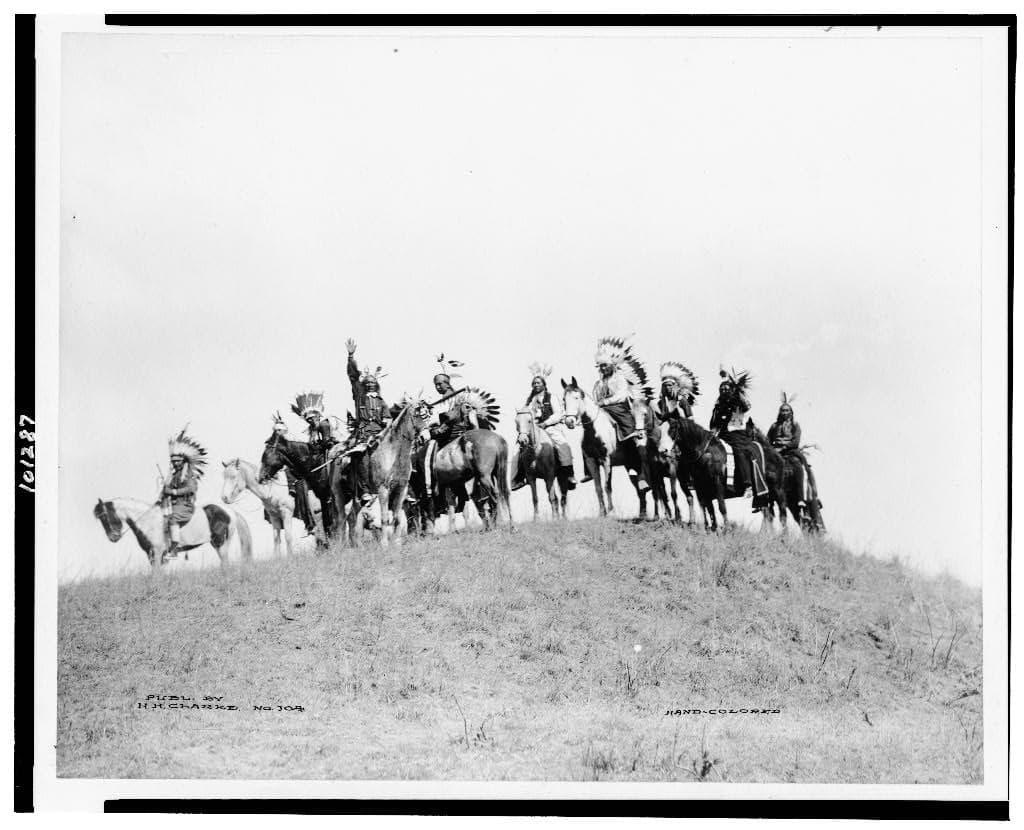
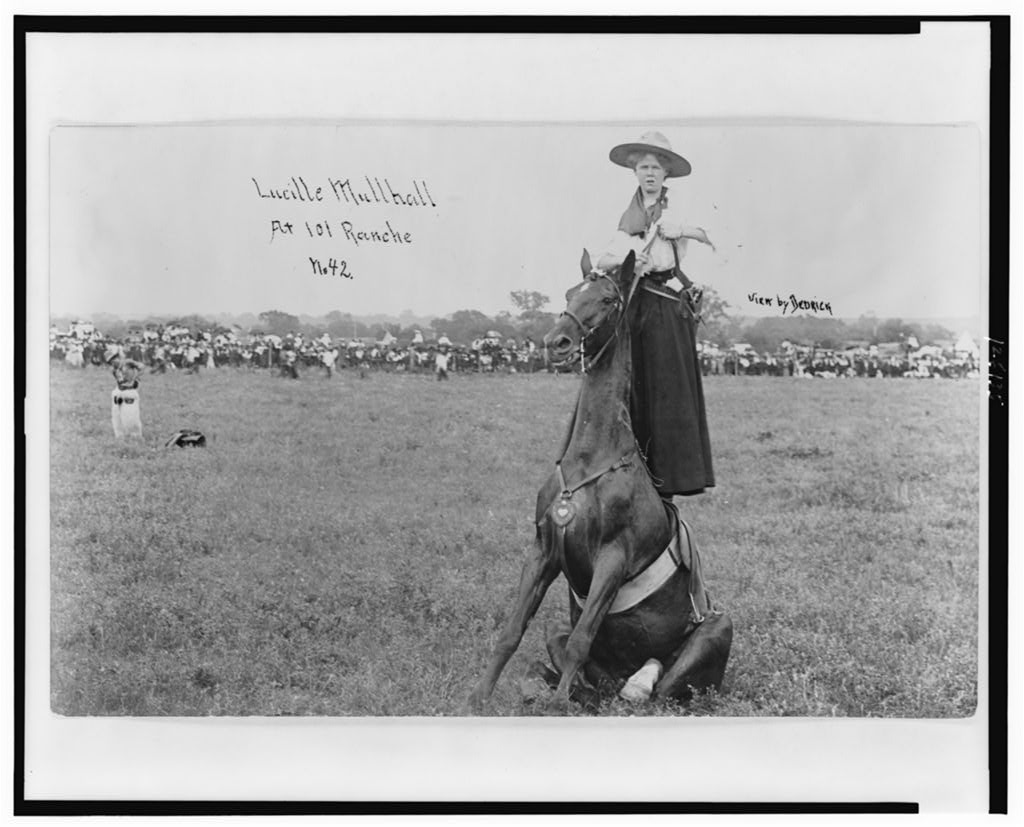
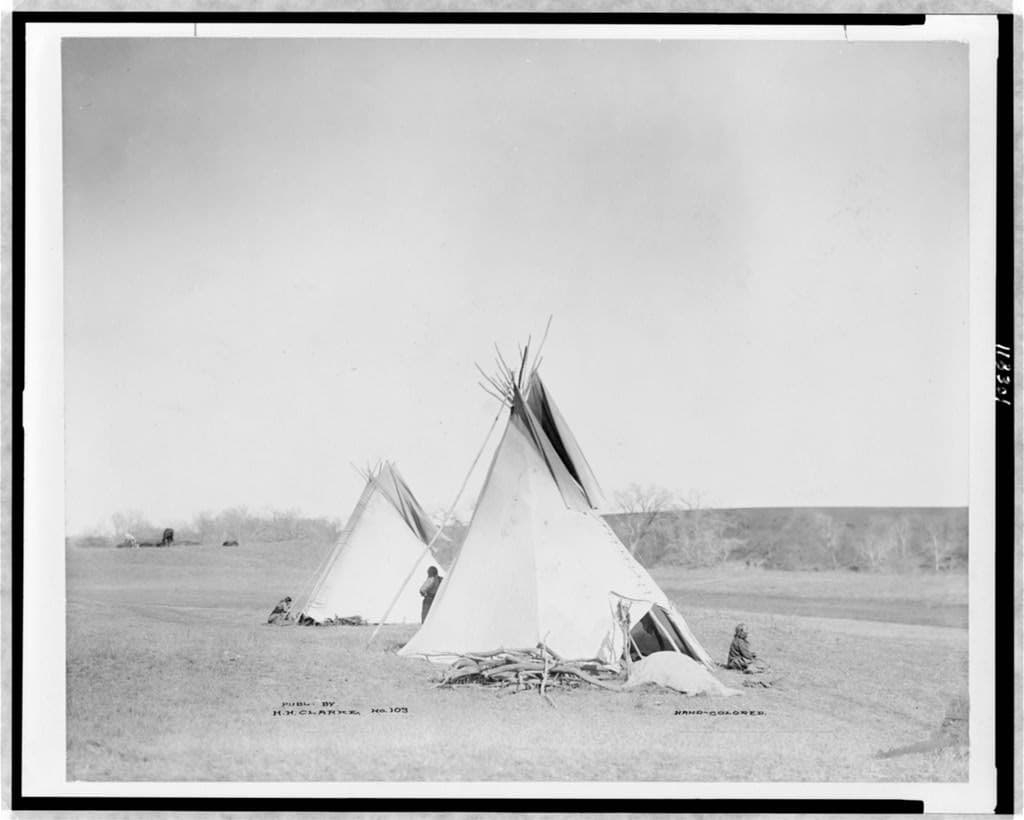
The 101 Ranch more or less invented the rodeo by accident, and the best hand on the place had to be billed as an Indian in order to compete. George Washington Miller registered the 101 brand in 1881 and built his ranch on leased land in what is now northern Oklahoma. Quapaw land first, then, after federal pressure moved him on, Ponca land leased from 1893. By 1903 the lease payments to the Ponca were running 32,500 dollars a year, and Miller had dealt closely enough with Chief White Eagle and Little Standing Buffalo that he had encouraged the tribe to settle in the Cherokee Outlet in the first place. He died of pneumonia that year, and his three sons took it over. Joe ran the farming, Zack the livestock, George the money. At its height it covered something over 100,000 acres and advertised itself as the largest diversified farm in America, which may well have been true. It grew wheat, cotton, corn, alfalfa and orchard fruit, and bred cattle, bison, hogs and horses. It had a hotel, a general store, a cafe, a jail, a blacksmith shop, a dairy, a cannery, a tannery, mills and its own electric plant. It drilled oil, and the man who ran that side of it, E. W. Marland, later became governor of Oklahoma. About two hundred men worked it. On 11 June 1905 the ranch put on a day's entertainment for the National Editorial Association. More than thirty trains came in. Geronimo was there and shot a bison from a moving car. Lucille Mulhall roped. And the main feature, according to the National Historic Landmark nomination, was a Black cowboy named Bill Pickett throwing a steer with his teeth in front of 64,000 people. That day is generally where the Wild West show begins. It toured from 1907, went dark for the war, came back in 1925 and closed in 1931. It played for King George V and Queen Mary in 1914, and for one season in 1916 it merged with Buffalo Bill himself. Bill Pickett is the reason this page exists. He was born on 5 December 1870 in Texas, one of thirteen children of Thomas and Mary Pickett, who had both been enslaved. He watched herding dogs bring cattle down by biting them on the lip, and worked out that a man could do the same thing. He would come off his horse onto the steer's horns, twist its head up, take the lip in his teeth and put the animal on the ground. He called it bulldogging. Everyone else eventually called it steer wrestling, and it is still one of rodeo's standard events, minus the teeth. Whether he invented it depends on who you ask, and the split is instructive. The National Historic Landmark nomination says flatly that "Pickett invented the art of bull-dogging", and adds that "without Bill Pickett, the 101 would have been just another western ranch". The markers at Ponca City and Fort Worth say much the same. The two state historical societies are more careful: Oklahoma says the technique evolved into steer wrestling, and Texas says he perfected a method he had learned by watching dogs. The sources cannot even agree on which part of the steer he bit, whether the nose, the upper lip or the lower. What is not in dispute is why he is not better known. The Handbook of Texas puts it plainly. He was "often billed as an Indian or not identified as Black in order to compete against Whites", and "might well have amassed a significant record as a competitor if Blacks had not been barred from most contests". He was advertised as the Dusky Demon. He appeared in two films made by an all-Black studio in Florida and is credited as the first Black cowboy film star. He died on 2 April 1932, kicked in the head by a horse in a corral at the ranch. Zack Miller buried him on a hill near the White Eagle monument and wrote a poem about him. The ranch went down at about the same time. Joe Miller was found dead in the ranch garage in October 1927 and George died in 1929. The ranch had lost nearly 120,000 dollars in 1926. It went into receivership in 1931 and was auctioned off the following year, and the federal government bought most of the land in 1941. Very little is standing now. The site was made a National Historic Landmark on 15 May 1975, and the citation reads: "Ranch where rodeo bull-dogging was developed to an art form by Bill Pickett." There is one more thing. In 1994 the Postal Service issued a Legends of the West sheet with Bill Pickett on it. The photograph was of his brother Ben. A collector spotted the error, the family confirmed it, and by then more than five million sheets had already gone out to post offices. The recall cost about 1.2 million dollars, and the Postal Service, having promised the family that none of the wrong ones would be sold, then sold 150,000 of them by lottery. The corrected stamp was issued on 9 October 1994. The man who invented the event could not enter it under his own name, and the first time his country put his face on a stamp, it was somebody else's face. Somebody in Kay County has photographs of this place. If that is you, put them here. Compiled by MyHistoryStone from the Oklahoma Historical Society, the Handbook of Texas, the National Historic Landmark nomination for the 101 Ranch Historic District, the National Cowboy and Western Heritage Museum, and the historical markers at Ponca City, Marland and the Fort Worth Stockyards.
Add to this story
Know something about The Miller Brothers 101 Ranch? Add it here - a memory, a detail, a correction. What you write appears right away, and the page owner can remove any entry.
Loading messages...