 Home
Home
The Story of
Malaga Island
MyHistoryStone Archive
1860 – 1912
Phippsburg, Maine, United States · 52 years
Location
New Meadows River
Circa
1860s
In motion
3 photographs
The photographs on this page, brought to life.
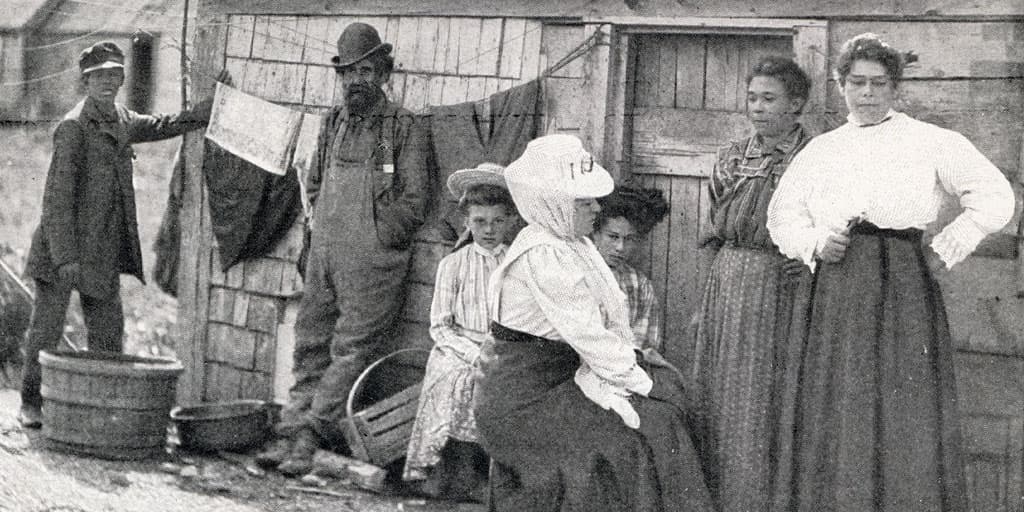
Malaga Island residents with a missionary in 1909, three years before the eviction. Harper's Weekly; Maine Historical Society, via Wikimedia Commons.
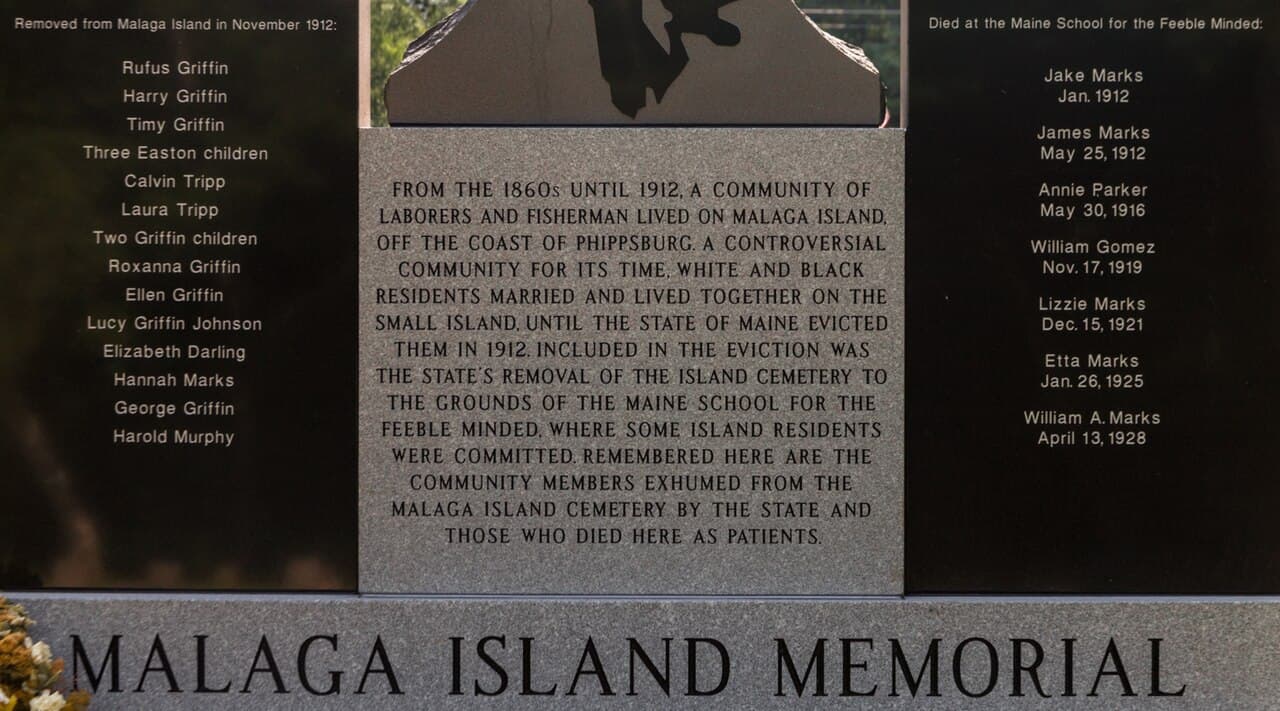
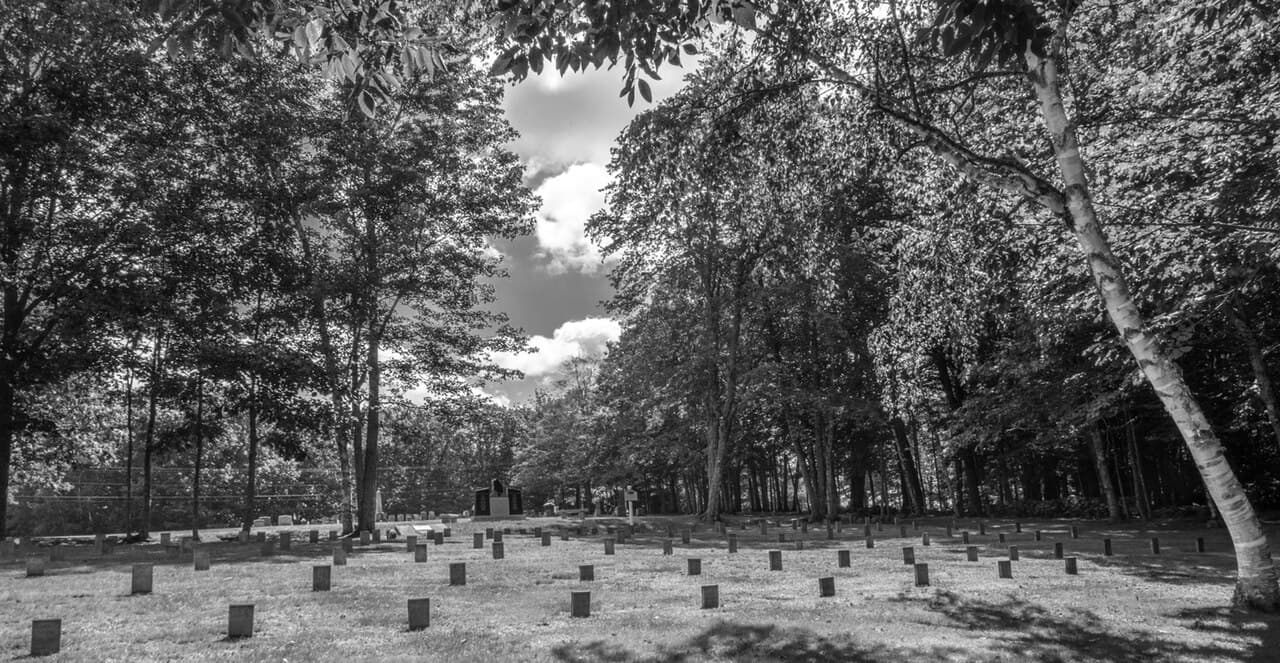
In 1912 the State of Maine evicted an entire community from an island, committed eight of its people to an institution for the feeble-minded, and dug up its graveyard. Malaga is forty-two acres in the mouth of the New Meadows River, off Phippsburg. The community there traced back to Benjamin Darling, a Black man who bought a neighbouring island in 1794. Henry Griffin and his wife Fatima Darling Griffin were most likely the first to live on Malaga itself, in the early 1860s. Over the next fifty years it became a settlement of Black, white and mixed-race families, around forty-five people at its height. They lived the way coastal Mainers lived. They fished for cod and lobster, dug clams, kept sheep, built boats, did carpentry and took in laundry from the mainland boarding houses. John Eason was a stonemason and a well-known singer. Eliza Griffin took in so much washing that a journalist in 1909 reported she out-earned the fishermen, and when archaeologists excavated near her house a century later they found thousands of buttons. Missionaries ran a school out of Salome McKinney's front room, and a proper schoolhouse went up around 1906 or 1908 depending on the source. The ledgers survive. A trustee of the Phippsburg Historical Society who read them said the children's penmanship was better than her own. The newspapers of the day found the island irresistible. They ran headlines like "Queer Folk of the Maine Coast", called it a degenerate colony, and printed claims about children born with horns. One 1911 piece described John Murphy, the island's best fisherman, as "a genuine white man, a Yankee that came from a respectable family up the Kennebec, but who somehow drifted to Malaga", and noted that his wife was "a good-looking negro woman". Governor Frederick Plaisted visited in July 1911 with his entire executive council. He is recorded as saying that the best plan would be to burn the shacks down with all their filth. In December 1911 the state sent a judge, a doctor and a sheriff. On the ninth, eight residents were committed to the Maine School for the Feeble-Minded. A newspaper printed the names five days later: James Marks, Etta Marks, Lizzie Marks, Lottie Marks, Abbie Marks, Mrs Annie Parker. A descendant's account adds Jacob Marks and Etta's son Willie. The testing, that descendant says, was designed so that they would fail. Islanders were judged deficient for failing to identify a telephone, or for not knowing that Taft had succeeded Roosevelt. They were not allowed to bring their clothes or their Bibles, because those were considered dirty, and the men and women were separated on arrival. Jacob died soon after he got there. James died of tonsillitis at about twenty-five. Most of the rest never came out. Lottie Marks did. She was released at twenty-five, lived to a hundred and two, remembered Malaga clearly, and had blocked out the institution entirely. On 14 December 1911 the executive council authorised the purchase of the island from its owners. The remaining residents were told to be gone by 1 July 1912. What happened to the houses is told four different ways: that they were ordered to take them or see them burned, that they were paid a hundred dollars and dismantled them, that all of them were burned, that they were simply moved. A newspaper in July 1912 described what it actually looked like. The houses, some of them not much bigger than a single room, were loaded onto empty casks and towed up the river by a power boat. "Instead of a village on the island the colony has been changed to a village on the water." The same article explained that the islanders were "said to be indolent and shiftless" and that the state had obliged them to move somewhere it could more easily exercise jurisdiction over them. Then the state exhumed the cemetery. Seventeen bodies came out of the ground, were placed into five caskets, and were reburied at the institution in New Gloucester. The Maine State Museum, Maine Public and the Portland Press Herald all report this as documented fact. We could not find the names of the seventeen anywhere, and we still cannot. What the record holds is close but is not the same list. The memorial dedicated on the island in 2017 names those removed from Malaga in November 1912: Rufus, Harry, Tiny, Roxanna, Ellen and George Griffin, two more Griffin children, Lucy Griffin Johnson, three Easton children, Calvin and Laura Tripp, Elizabeth Darling, Hannah Marks and Harold Murphy. It names separately those who died at the Maine School for the Feeble Minded: Jake, James, Lizzie, Etta and William A. Marks, Annie Parker and William Gomez. Those are the living who were carried off, and the people who died afterwards. The seventeen who came out of the cemetery are a third list, and it is still not one we can produce. A descendant, Marnie Darling Voter, put it this way: "Removing the bodies was the difference between eviction and annihilation." Robert and Laura Darling Tripp floated from place to place afterwards in a makeshift houseboat and were turned away everywhere they tried to land. Laura sickened during a gale. Her husband went for help and came back to find their two children holding on to her body. Nobody has lived on Malaga since. The island was sold at the end of 1912 to a business associate of the man who chaired the governor's council. The Maine Legislature passed a resolution of profound regret on 7 April 2010. Governor John Baldacci went out to the island that September, the first governor to set foot on it since Plaisted, and told about two hundred descendants: "To the descendants of Benjamin Darling, let me just say that I'm sorry. I'm sorry for what was done." A scholarship fund was promised in 2012. A bill to put 300,000 dollars into it died in the legislature on 4 December 2024. Archaeologists from the University of Southern Maine have recovered tens of thousands of artefacts from the shell middens the houses were built on: a doll, a child's ring, a fish hook, a milk-glass dish shaped like a hen. Because of the middens, and because the census records survive, the excavators know the name and age of the family that lived on each patch of ground. Malaga Island was listed on the National Register of Historic Places on 19 September 2023. It is owned by the Maine Coast Heritage Trust and open to anyone who can get there by boat. The descendants of these families are in Maine and beyond, and for a long time it was not safe to say where you came from. If you are one of them, this page is yours before it is ours. Compiled by MyHistoryStone from the Maine State Museum, the Maine Memory Network, the Maine Coast Heritage Trust, Maine Public, the Portland Press Herald, contemporary newspaper accounts, and the 2010 Joint Resolution of the Maine Legislature.
Add to this story
Know something about Malaga Island? Add it here - a memory, a detail, a correction. What you write appears right away, and the page owner can remove any entry.
Loading messages...