 Home
Home
In Memory of
Figure, called Justin Morgan
MyHistoryStone Archive
1789 – 1821
Randolph, Vermont, United States · 32 years
Final Resting Place
Chelsea, Vermont
Location
Randolph, Vermont
In motion
4 photographs
The photographs on this page, brought to life.
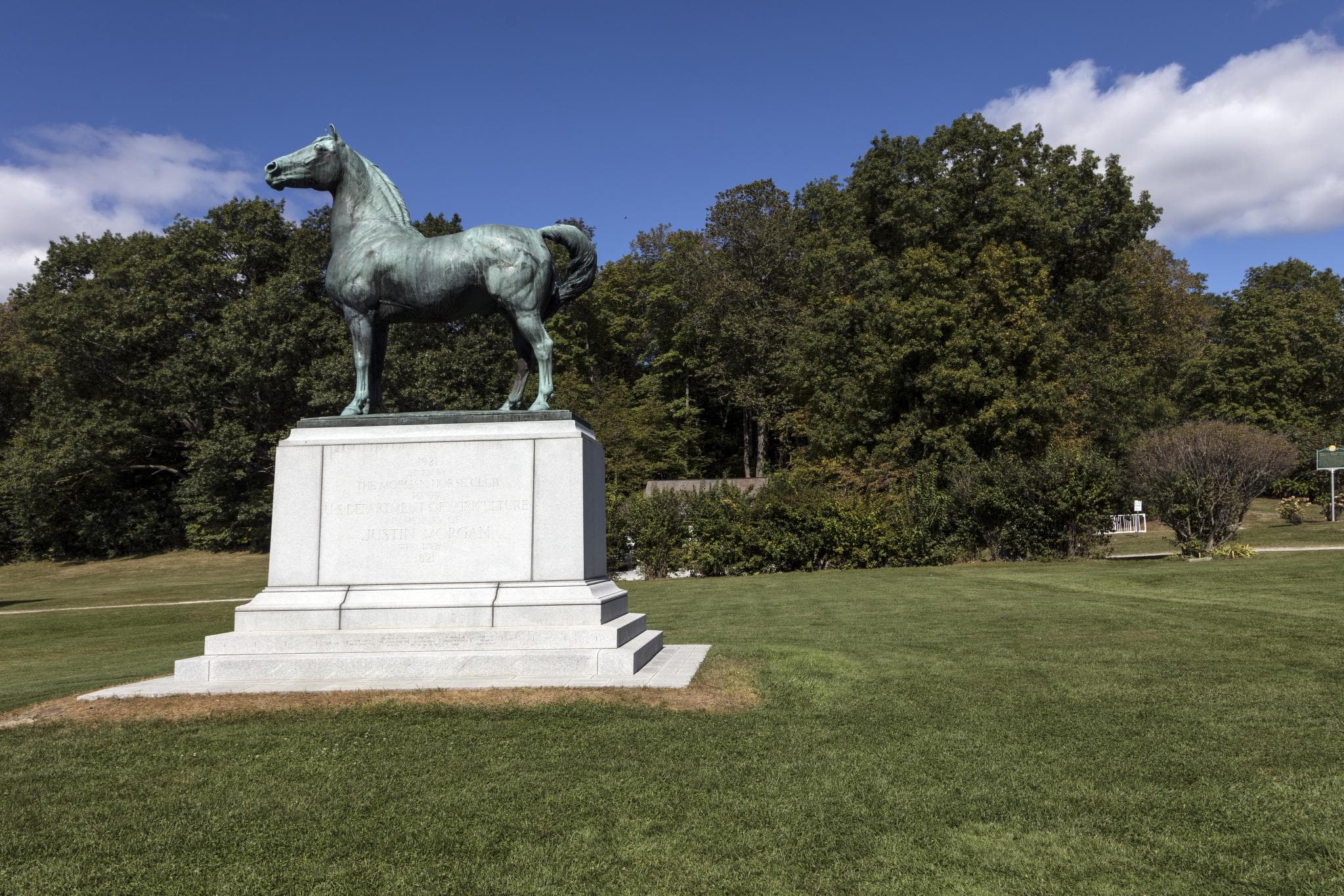
The 1921 statue at Weybridge, sculpted a century after his death from description alone. Carol M. Highsmith Archive. Library of Congress.
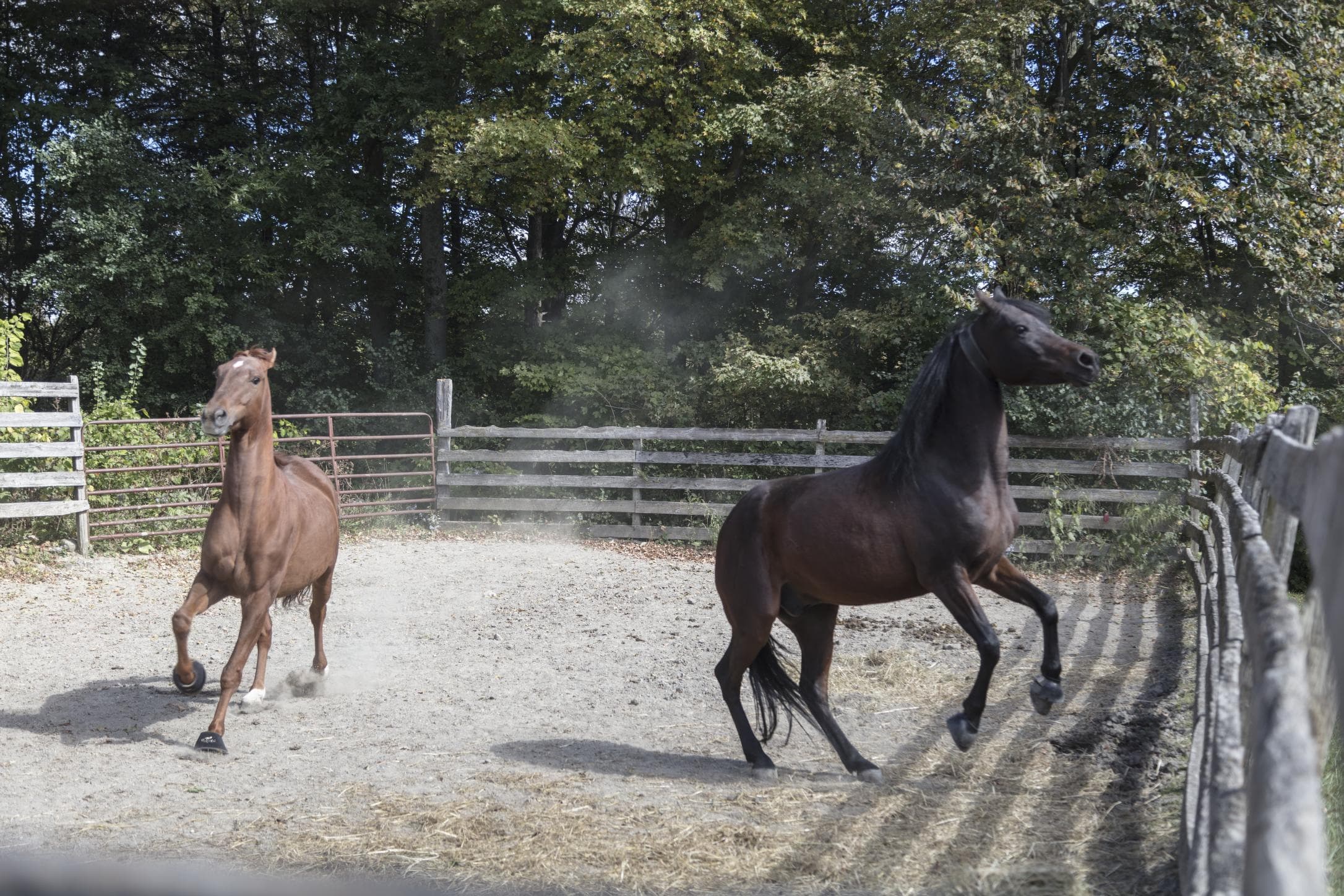
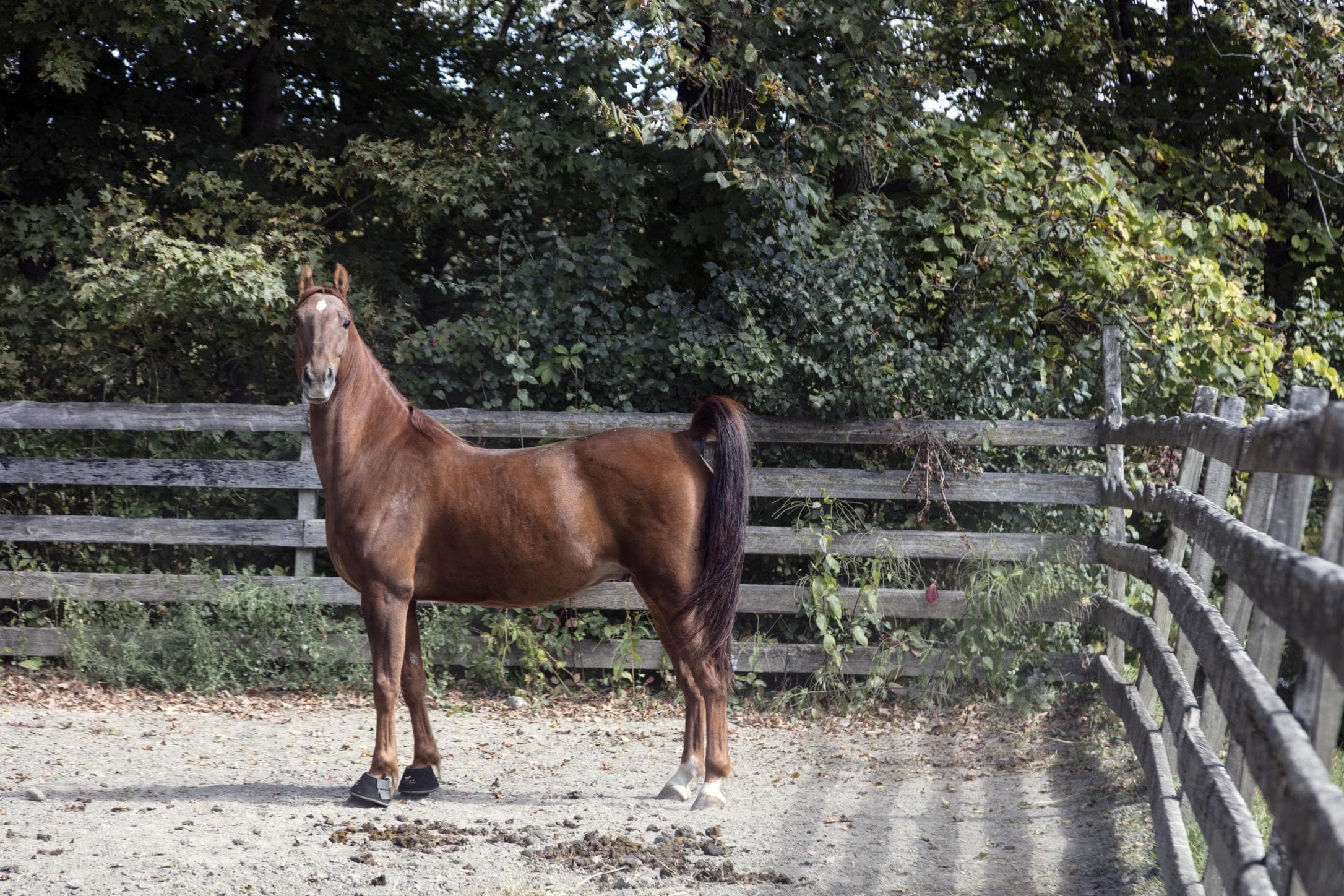
Every Morgan horse alive descends from one stallion, and nobody can prove who his father was. He was foaled in West Springfield, Massachusetts in 1789, a bay colt named Figure. In 1792 a man called Justin Morgan took him in payment of a debt and brought him to Randolph, Vermont. Morgan was a farmer, a tavern keeper, a town clerk and a singing teacher who wrote music. Nine of his compositions survive in printed tune books, and one of them, Montgomery, was among the most frequently reprinted fuguing tunes of the eighteenth century. He died in 1798, poor, of tuberculosis. The horse outlived him by twenty-three years and took his name, because that was the custom of the day: people called him the Justin Morgan horse, and in time simply Justin Morgan. He was small. Every source agrees on about fourteen hands, which is fifty-six inches at the withers and pony-sized by modern standards, and they split between 950 and 1,000 pounds. He was worked hard. He hauled freight, cleared land, pulled stumps, carried militia officers at parade, and stood at stud up and down the Connecticut River valley. He passed through somewhere between twelve and fifteen owners depending on which list you believe, and the two published lists do not agree on the names. His parentage has been argued over for two centuries, and there is no contemporaneous record of it at all. The traditional answer is a Thoroughbred called True Briton, also known as Beautiful Bay. The American Morgan Horse Association, the breed's own registry, puts it carefully: Figure "is thought to have been sired by True Briton", and "his true origins remain hidden in history". Justin Morgan's own son said in 1846 that the sire was a horse called Traveller, and elsewhere that Figure was a Dutch horse, which is where the modern Friesian theory comes from. A respected trotting authority argued that the pedigree was a fraud outright. Others have proposed Welsh Cob, Arabian, or descent from horses sent to the New World by Louis XIV. One historian observed that the writings on the Beautiful Bay theory alone would fill forty-one detective novels and a membership application for the Liars' Club. The earliest systematic attempt to sort any of it out was published in 1857, thirty-six years after the horse was dead. What he could do is remembered as fact and recorded as legend. The Vermont state marker says he "possessed a legendary ability to walk, trot, run and pull better than other horses", and the registry's own history page uses the same word. The breed museum's timeline gives named opponents in a race at Brookfield, Vermont, horses called Sweepstakes and Silvertail, for a fifty-dollar stake, and then marks the date with a question mark. There is a pulling contest at a tavern in St. Johnsbury in 1804. The most-repeated story of all, the log that no other horse could move, we could not source to anything. He died in 1821, aged thirty-two. The registry says an untreated kick from another horse. One Vermont account says he was hurt fighting. The state marker gives no cause at all, and no source we found cites a document for any version. He is buried near the Chelsea and Tunbridge town line, on a farm, and the registry's own guide says he lies "somewhere on the surrounding property". There are two stones. Nobody is certain which ground holds him. What is not in doubt is the thing that made him matter. He stamped his build, his temperament and his way of going onto everything he sired, and it held for generations. His three great sons were Sherman, Bulrush and Woodbury. Around 180,000 Morgans have been registered since. In 1961 Vermont made the breed its state animal, in a statute one line long: the State Animal shall be the Morgan horse. There is a bronze of him at the University of Vermont's Morgan Horse Farm in Weybridge, unveiled in 1921. We could not find out who sculpted it. If you keep Morgans, you have an opinion about the sire question. We would like to hear it, and we would like your evidence. Put it here. Compiled by MyHistoryStone from the American Morgan Horse Association, the University of Vermont Morgan Horse Farm, the Vermont state historical markers at Randolph Center and Weybridge, the National Register nomination for the U.S. Government Morgan Horse Farm, and the Vermont statutes.
Share a memory
Leave a memory or a message for the family. What you write appears right away, and the family can remove any entry.
Loading messages...