 Home
Home
In Memory of
Standing Bear
MyHistoryStone Archive
1829 – 1908
Niobrara, Nebraska, United States · 79 years
Final Resting Place
Niobrara, Nebraska
In motion
3 photographs
The photographs on this page, brought to life.
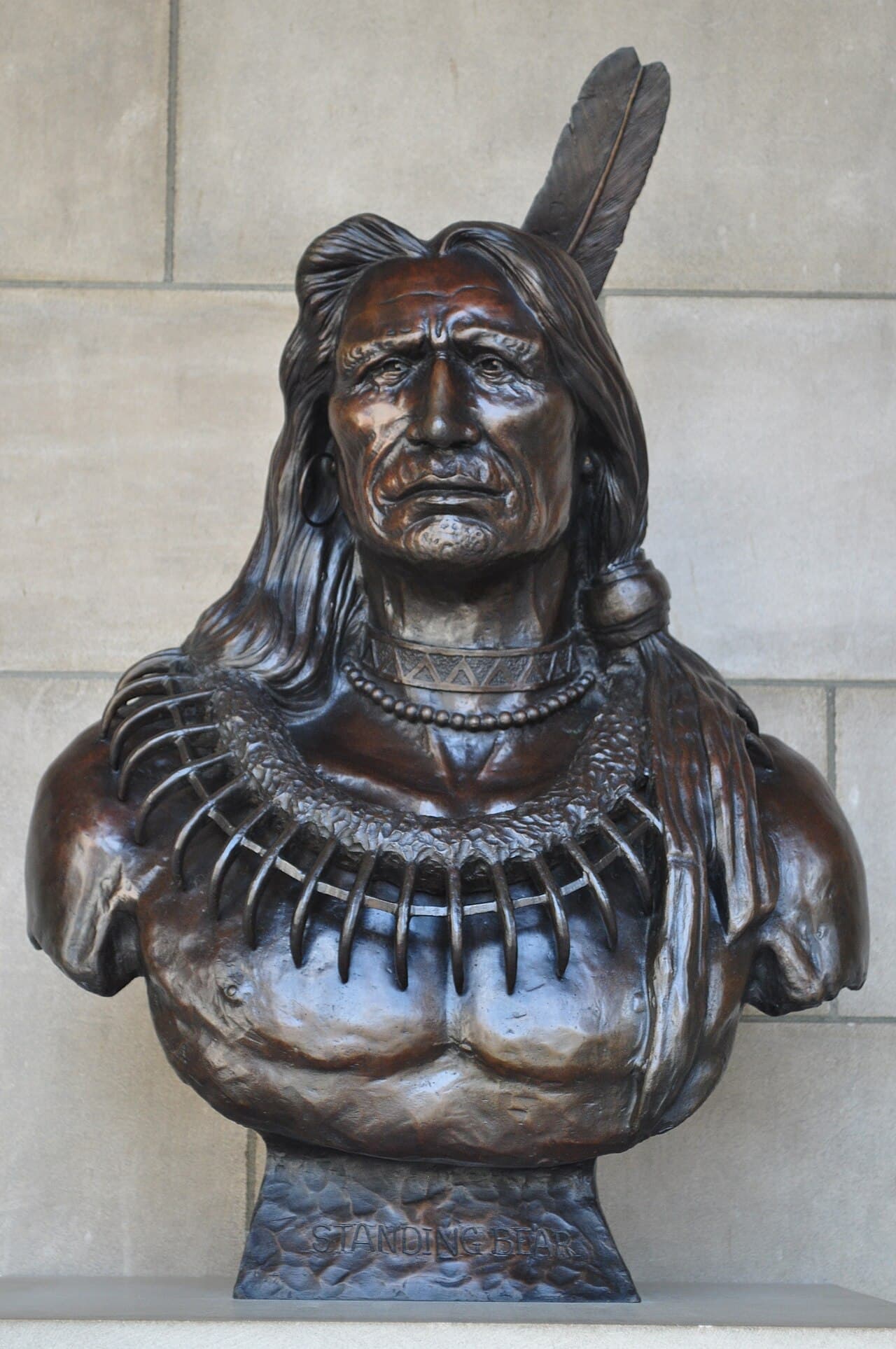
A bronze of Standing Bear by Ted Long in the Nebraska Hall of Fame. No verified photograph of the man could be cleared. Capitolist, via Wikimedia Commons (CC BY-SA 4.0)
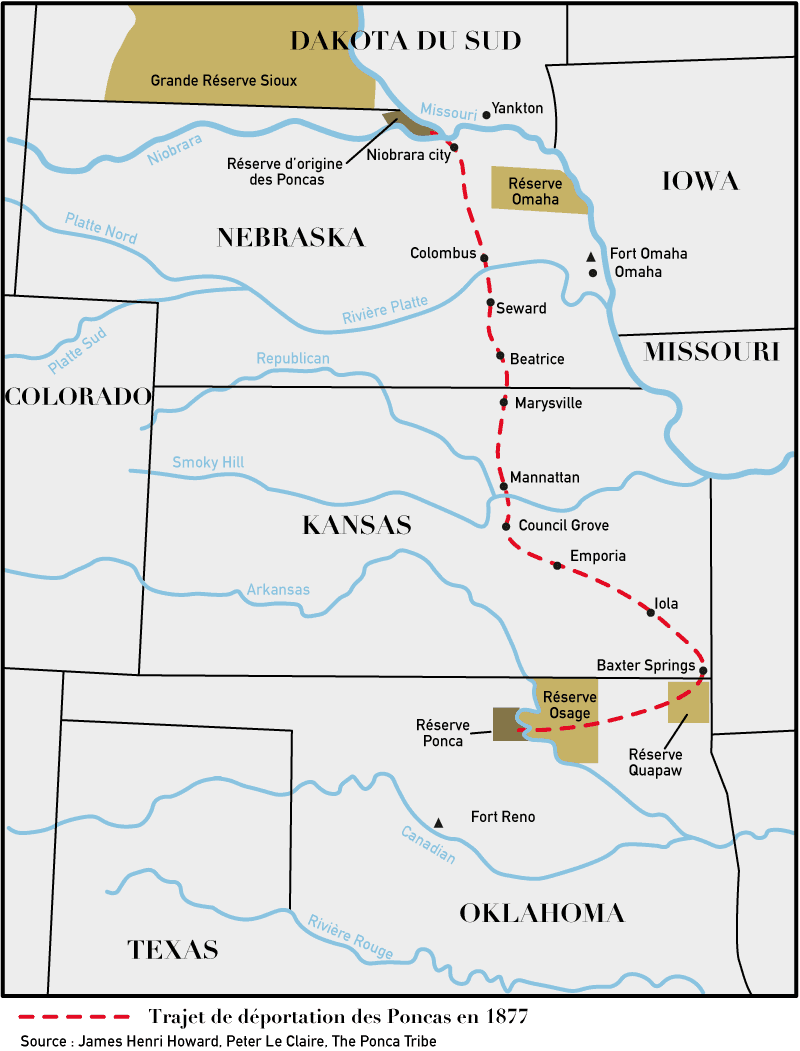
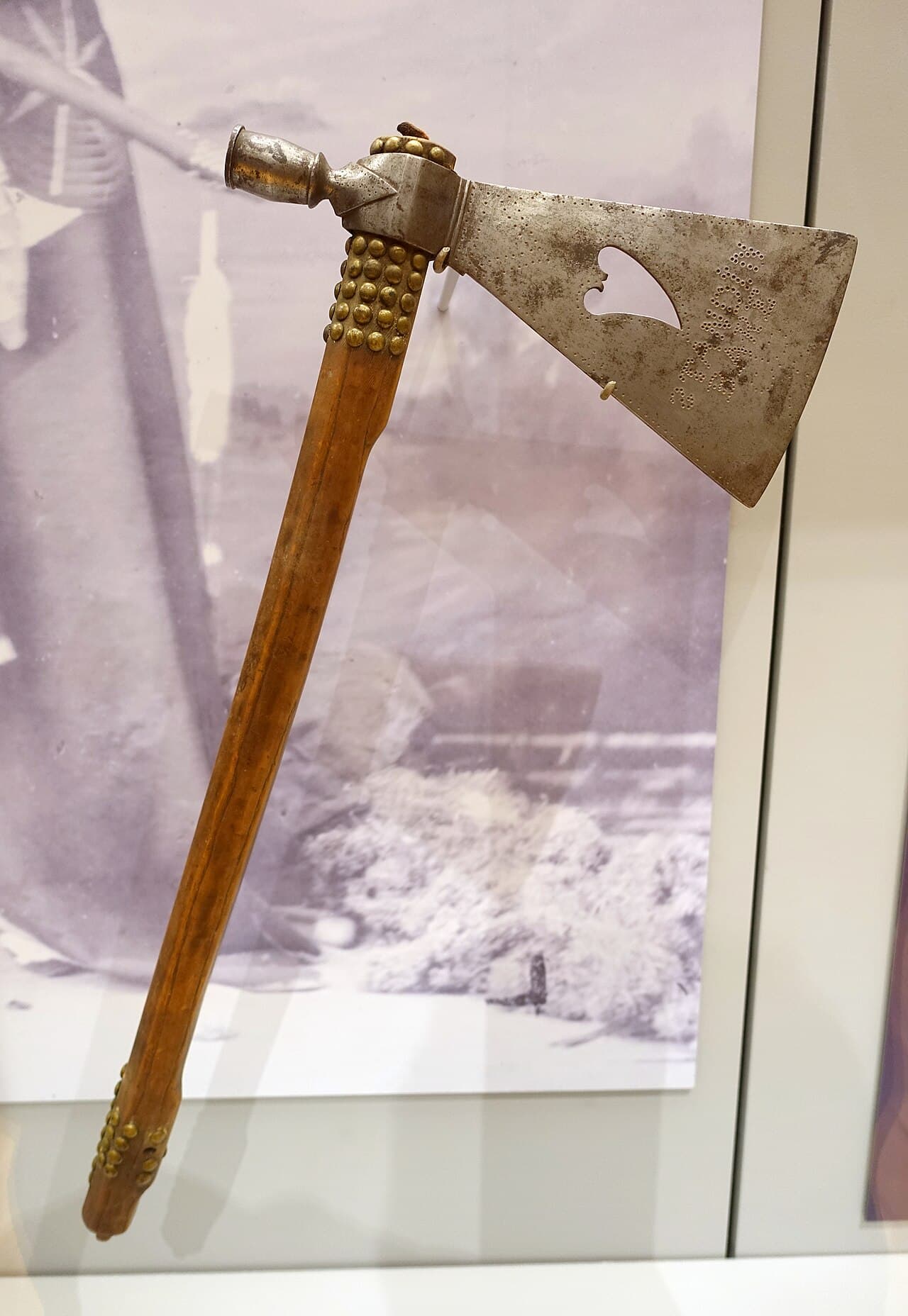
In 1879 a federal court in Omaha was asked to decide whether a Native American was a person. It had never been settled. Standing Bear was a chief of the Ponca, a small tribe of never much more than eight hundred people, living where the Niobrara meets the Missouri in what is now Nebraska. In 1868 the United States signed a treaty with the Sioux at Fort Laramie and, through an error nobody caught in time, drew the Ponca homeland inside the Great Sioux Reservation. The Ponca had a treaty of their own from 1865. It made no difference. In 1876 Congress appropriated 25,000 dollars to remove them to Indian Territory. The act said the removal required the consent of the tribe. They did not consent. They went anyway. The first party of 170 walked six hundred miles in fifty-nine days through continuous rain and snow in the spring of 1877. Standing Bear's group followed in May. His daughter Prairie Flower died on the road and was buried at Milford, Nebraska; a granddaughter was killed by a tornado the next day and buried with her. A child called White Buffalo Girl was buried near Neligh, where the town has tended her grave ever since. How many died is not settled. Standing Bear testified in court that of 581 Ponca who went south, 158 died within about a year. The Encyclopedia of the Great Plains says about 200. The National Park Service and others say a third of the tribe. The Nebraska state marker says nearly a quarter. Nobody has reconciled them, and the court record, which is the only contemporaneous number, is the lowest of them. In December 1878 his son Bear Shield died. Standing Bear had made him a promise, and his account of it was written down: "When he was dying, he asked me to promise him one thing. He begged me to take him, when he was dead, back to our old burying ground by the Swift running Waters, the Niobrara." On 2 January 1879 he left Indian Territory with about thirty people and his son's bones, and walked north for fifty days. This part is not folklore. It is in the published federal law report, in the judge's own words: "The bones of the dead son of Standing Bear were not to repose in the land they hoped to be leaving forever, but were carefully preserved and protected, and formed a part of what was to them a melancholy procession homeward." They were arrested near the Omaha Reservation on the orders of the Secretary of the Interior and held at Fort Omaha. Two Omaha lawyers, John L. Webster and A. J. Poppleton, the latter chief attorney for the Union Pacific, took the case for nothing and filed for habeas corpus. The government's position was simple. The writ was available to persons, and an Indian was not one. On 12 May 1879 Judge Elmer Dundy held otherwise, and his reasoning is worth reading exactly as he wrote it: "Webster describes a person as 'a living soul; a self-conscious being; a moral agent; especially a living human being; a man, woman, or child; an individual of the human race.' This is comprehensive enough, it would seem, to include even an Indian." Standing Bear is remembered for a speech he made in that courtroom, raising his hand and saying that the blood in it was the same colour as the judge's. We could not establish what he actually said. Three materially different versions circulate. The federal judiciary's own website gives one and credits a scholarly essay published in 2009. The version copied most widely online traces back to a devotional anthology of 1913. A third appears on a Nebraska state education site with no attribution at all. Every one of them leads back to Thomas Henry Tibbles, the newspaper editor who was in the room and who was also the case's organiser and publicist. There is no transcript. The published law report contains the judge's opinion and no speech at all. He spoke through an interpreter, Susette La Flesche. Whatever the words were, they were not in his own language, and nobody wrote them down as he said them. The ruling was narrower than it is usually remembered. Dundy did not touch citizenship, which came by act of Congress in 1924. The freedom he granted carried the qualifier "so long as they obey the laws and do not trepass on forbidden ground", and the government kept its authority to arrest Indians found on reservations not their own. When Standing Bear's brother Big Snake tried to exercise the same right, he was killed. Standing Bear toured the east from 1879 to 1883, testified before the Senate, and eventually got a piece of the Niobrara valley back. He died in 1908 and was buried on a hill above the place he was born. His birth year is given as 1829 almost everywhere; the 1900 census says May 1828. In 1962 Congress terminated the Ponca Tribe of Nebraska outright. It was restored in 1990. In 2019 Nebraska placed his statue in the United States Capitol. The Ponca are still here, in Nebraska and in Oklahoma. If this is your family's history, it is yours to tell, and we would rather have your account than ours. Put it here. Compiled by MyHistoryStone from the published report of United States ex rel. Standing Bear v. Crook (1879), History Nebraska, Nebraska Studies, the National Park Service, the Encyclopedia of the Great Plains, South Dakota History, the Ponca Tribe of Nebraska and the Architect of the Capitol.
Share a memory
Leave a memory or a message for the family. What you write appears right away, and the family can remove any entry.
Loading messages...