 Home
Home
A Tribute to
Farragut Naval Training Station
MyHistoryStone Archive
1942 – 1946
Bayview, Idaho, United States · 4 years
Location
Lake Pend Oreille
In motion
3 photographs
The photographs on this page, brought to life.
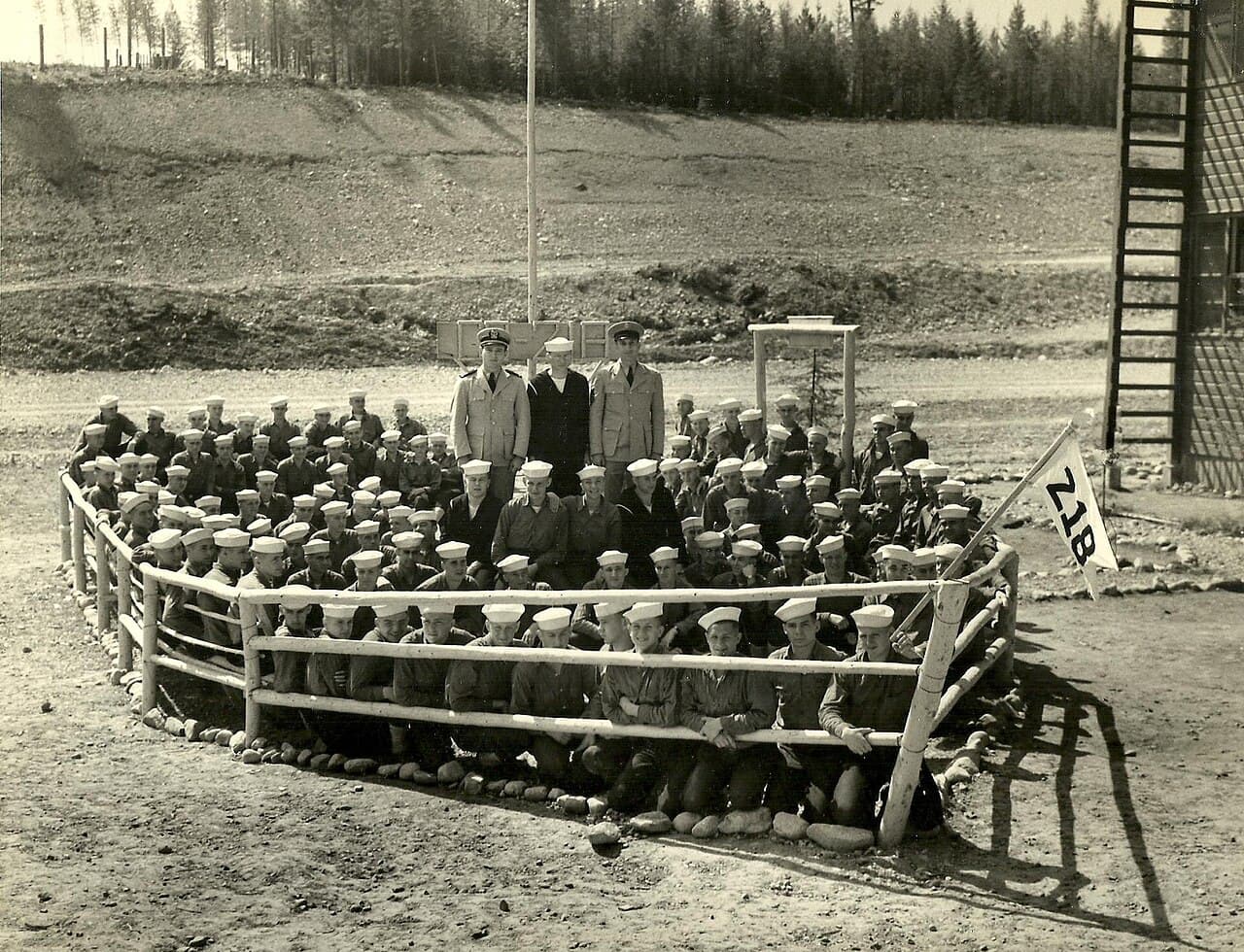
Class 218 at Farragut, about 1943, massed on ground still raw from the building of the base. U.S. Navy, via Wikimedia Commons.
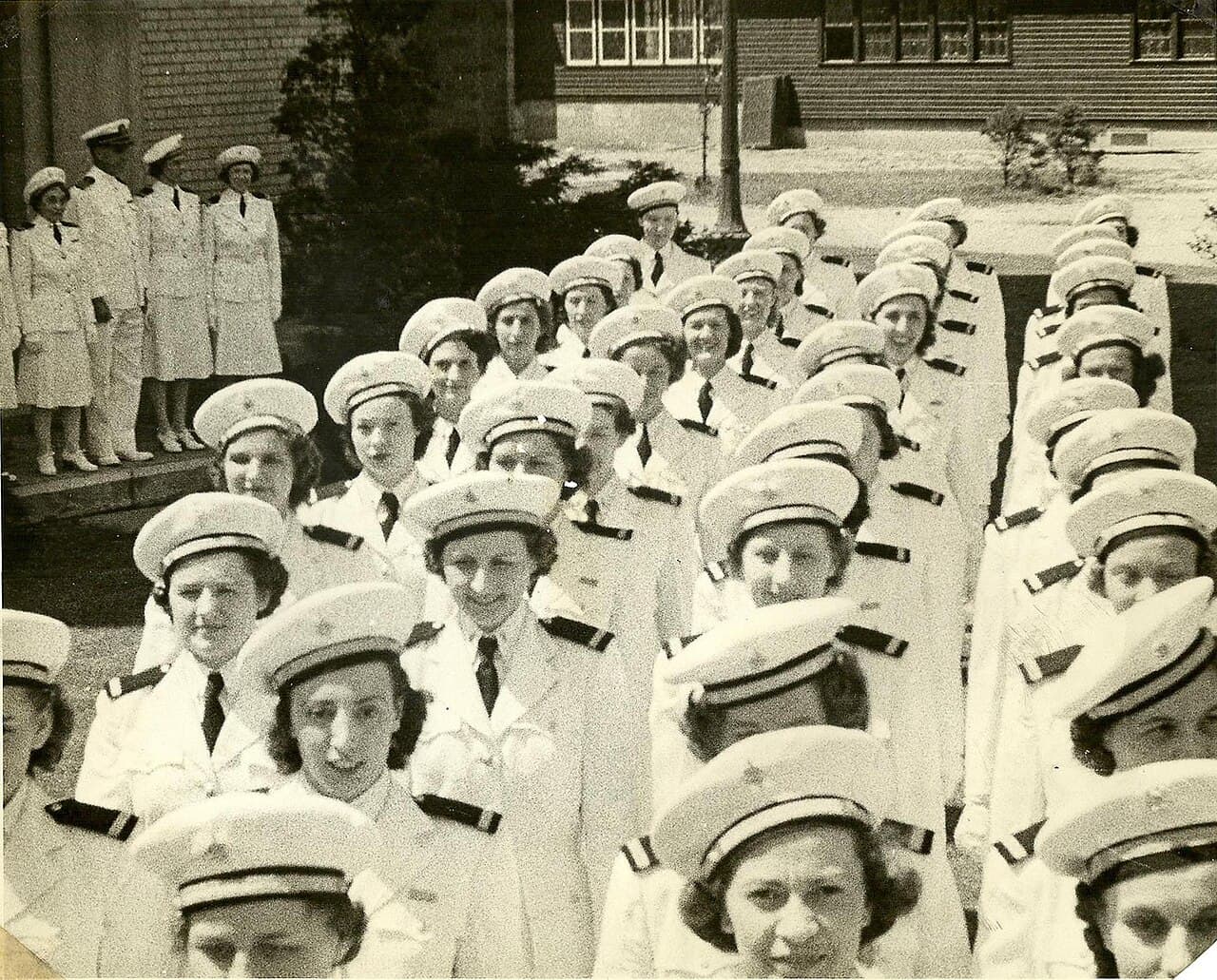
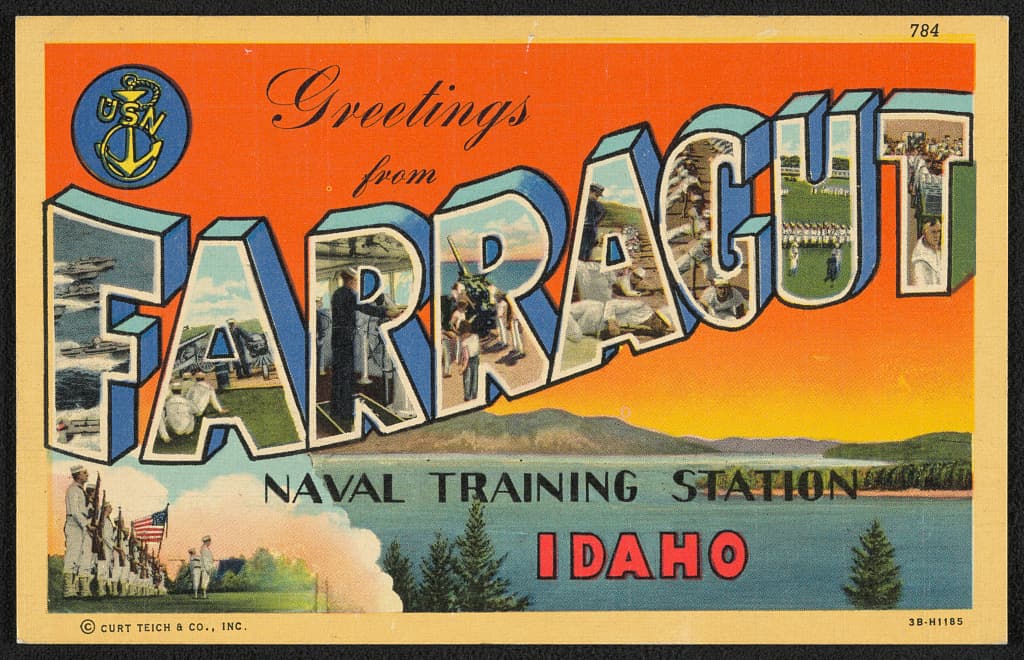
Nearly 300,000 sailors learned to be sailors on a lake in northern Idaho, three hundred miles from the nearest ocean. In March 1942 the Navy needed somewhere to train recruits that was not on a coast. Admiral Greenslade had already told the Navy's planners that the West Coast had reached saturation and that new facilities should go inland. Lake Pend Oreille was deep enough to behave like open ocean at 1,150 feet, cold, quiet, and ringed by steep timbered shore. Roosevelt named the place in May after David Farragut, and construction started that spring. Twenty-two thousand men built it, working seven days a week at about a dollar an hour. They used 98 million board feet of lumber and put up something over seven hundred buildings on 4,160 acres. The first camp was dedicated on 2 August 1942 and the first recruits arrived in September. Sources put the whole job at anywhere from five to eleven months depending on what they count, and the cost at 57 million dollars, 58 million, or 160 million, depending on who is counting. There were six camps: Bennion, Ward, Waldron, Hill, Scott and Peterson. Each held about 5,000 men, each was nearly self-sufficient, and each was named for a sailor who had died in the war, several of them at Pearl Harbor. Every drill hall had six basketball courts, a boxing ring and a swimming pool. Between a third and a half of the recruits arriving at this landlocked base could not swim. Before they graduated, every one of them had to dive off a platform and cover fifty yards. Roosevelt inspected the station on 21 September 1942. The visit was kept secret until he was back at the White House. How big it was is agreed on. What it was second-biggest to is not. The station's own wartime guide has the commandant telling recruits: "We are one of the newest, and the second largest Naval Training Station in the United States." Almost every source since has quietly upgraded that to second largest in the world, behind Great Lakes. Nobody we could find produces the comparison that would settle it. The memorial marker at the park is more careful and gives a number instead: 293,381. Several sources say the base population reached 55,000 by September 1942, which would have made Farragut the largest city in Idaho. Others say 42,000. The state's own highway marker says only that the facilities were built for 40,000. None of them supplies the 1940 census figure for Boise that the claim rests on. The last class graduated on 10 March 1945 and the station was decommissioned in June 1946. It spent three years as Farragut College, then closed. In 1966 it became Farragut State Park. The Navy never entirely left the lake. A quarter-scale submarine fleet with names like Cutthroat, Dolly Varden and Kokanee is still tested there today on twenty-five acres next door, because the water is quiet enough to measure how much noise a submarine makes. That programme dates to the 1950s or 1960s depending on the source, not to the war. The brig is a museum now. If your father or grandfather learned to swim in Idaho before he went to sea, his story belongs here. Compiled by MyHistoryStone from the Idaho Department of Parks and Recreation, the Idaho Military History Museum, the station's own wartime guide, the Naval Surface Warfare Center Carderock Division, and the historical markers at Farragut State Park.
Share a memory
Leave a memory or a message for the family. What you write appears right away, and the family can remove any entry.
Loading messages...