 Home
Home
The Story of
The Hubbell Family of Ganado
MyHistoryStone Archive
1878 – 1967
Ganado, Arizona, United States · 89 years
In motion
5 photographs
The photographs on this page, brought to life.
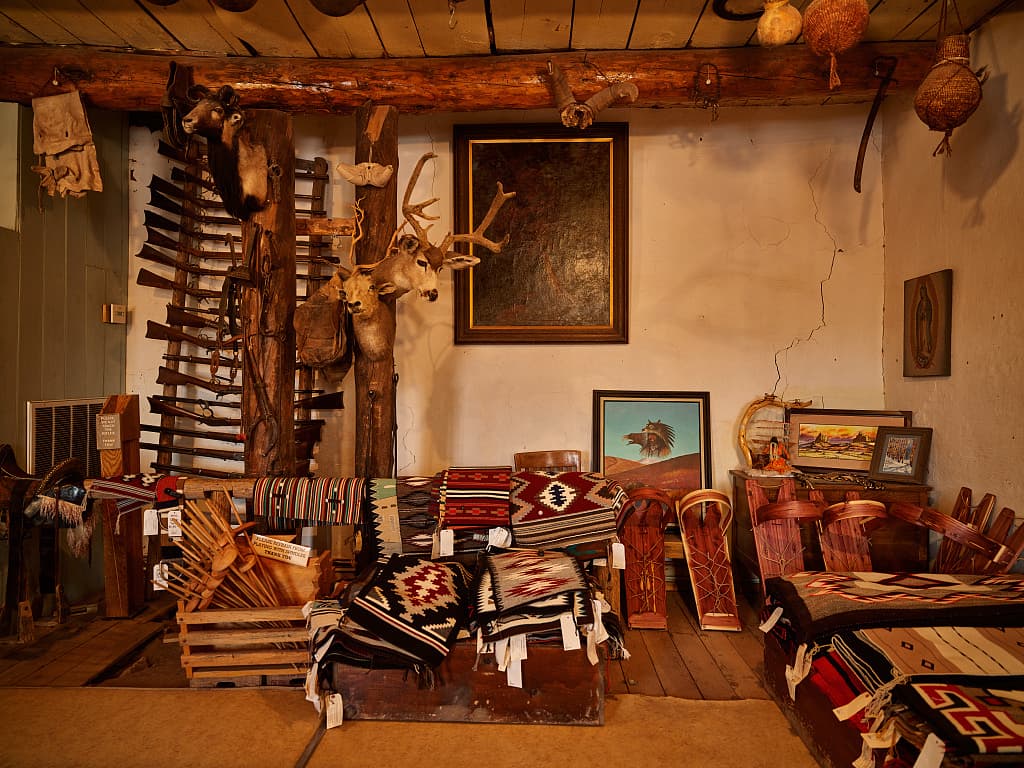
The rug room at the trading post, photographed in 2018. Carol M. Highsmith Archive. Library of Congress.
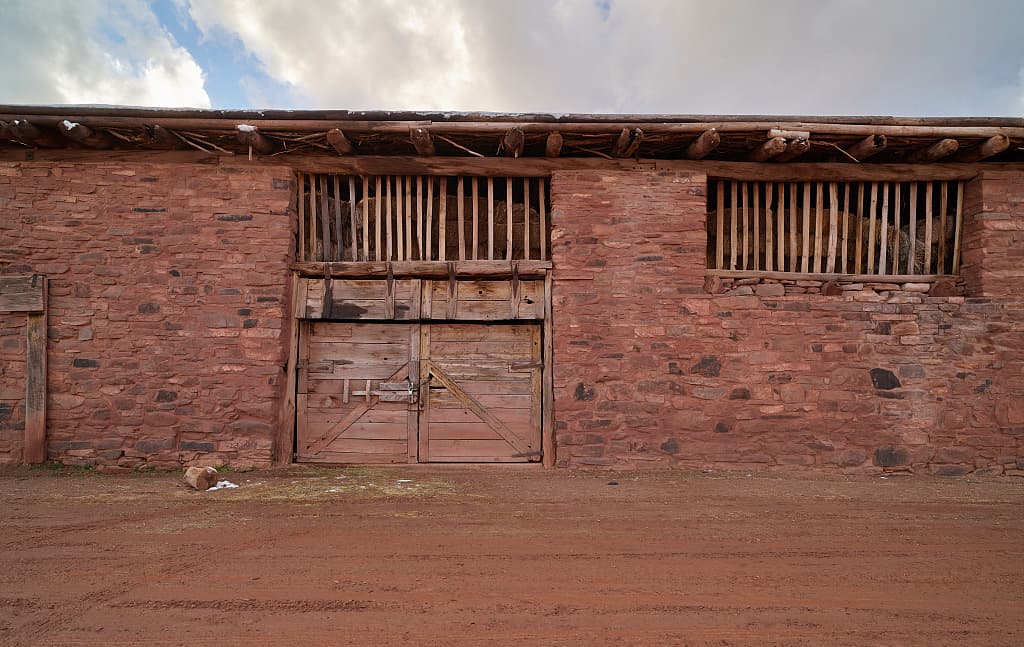
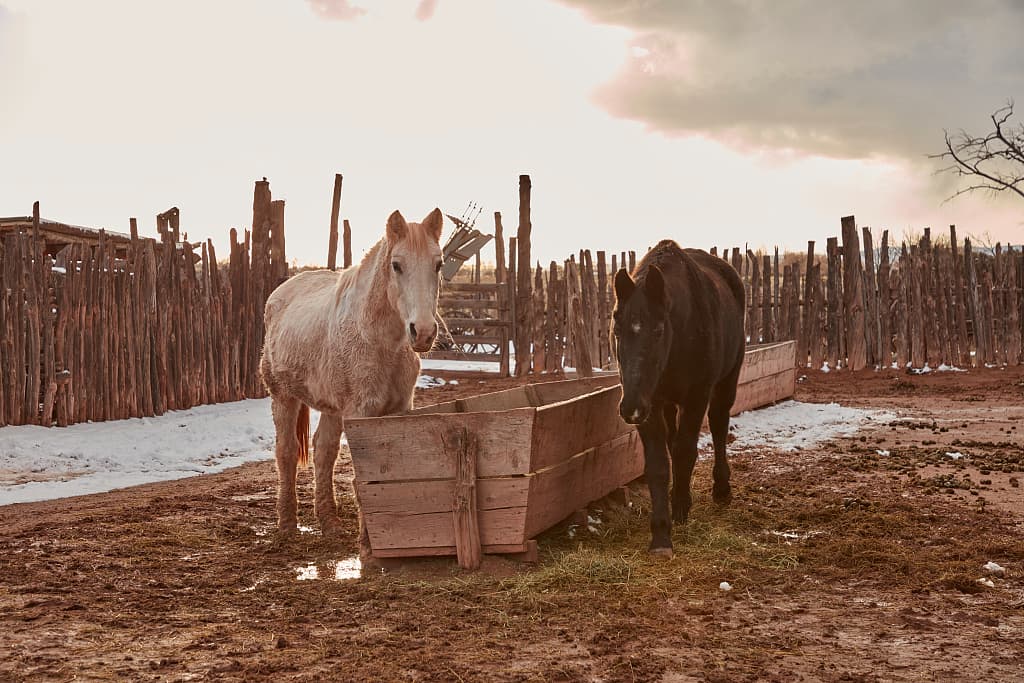
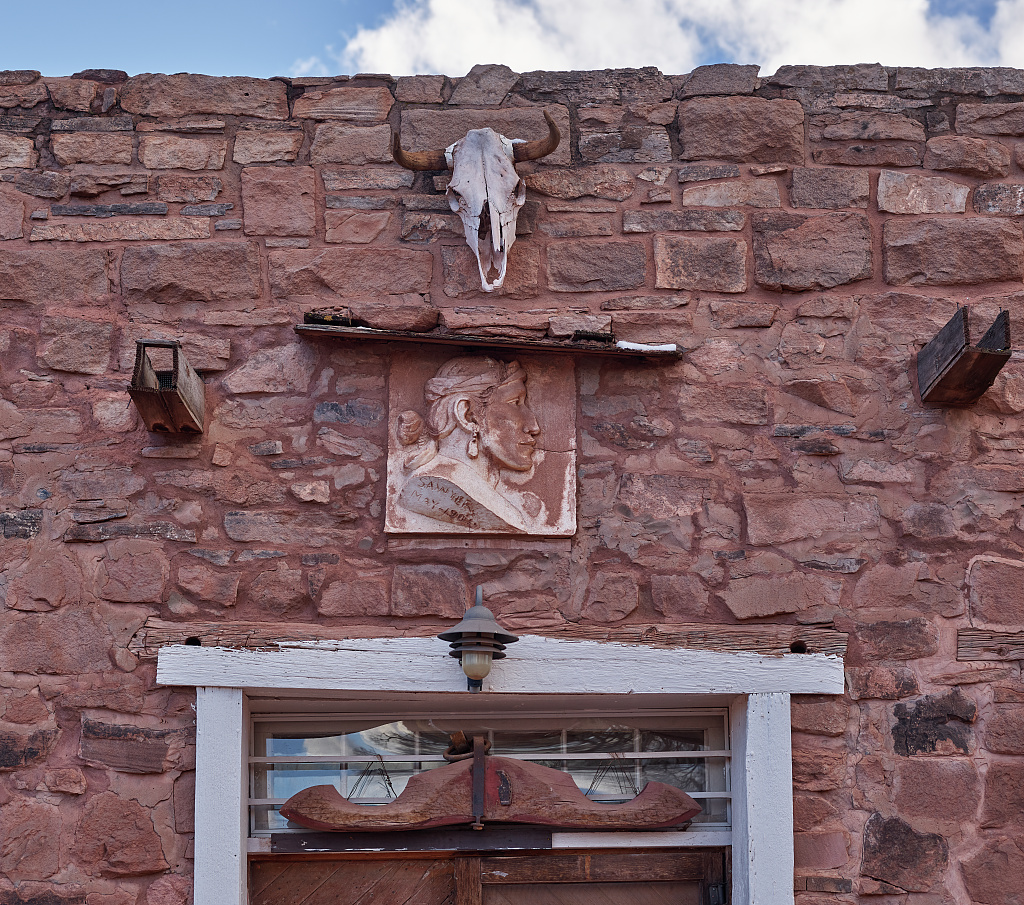
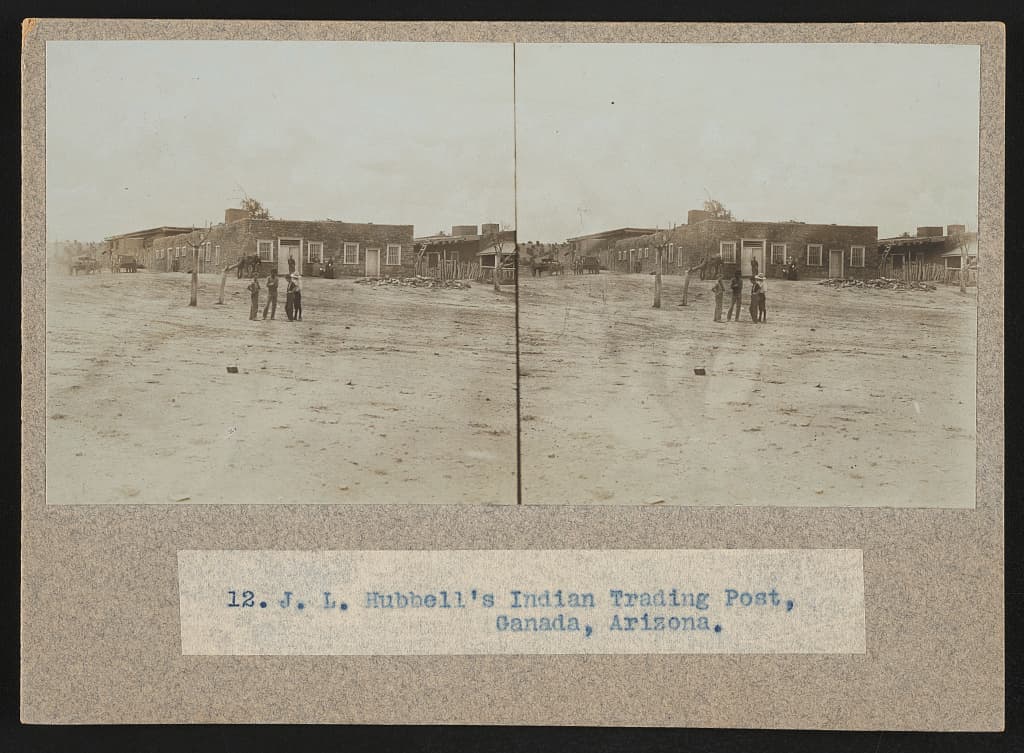
One family stood behind the same counter for eighty-nine years, and it is still a working trading post. John Lorenzo Hubbell was born at Pajarito, New Mexico, in November 1853 — third of twelve children of a Connecticut man named James Lawrence Hubbell and Julianita Gutiérrez, of an old New Mexican family. He grew up speaking Spanish, learned English at school in Santa Fe, and learned Navajo well enough to interpret for the Navajo agent at Fort Defiance by 1874. The Navajo called him Naakaii Sáni, Old Mexican. He opened his first post at Ganado Lake in 1876 and bought the one that became his in 1878 — two years after the Navajo came back from the Long Walk. A trading post in that economy was not a shop. It was the bank, the pawnbroker, the post office, the letter-writer and the wholesaler. People brought wool in a hundred and eighty pound sack, or lambs, or piñon nuts, or a rug, and left with flour and coffee and part of last season's bill paid off. The trader made his margin on the whole tangle of it. Hubbell's other business was Navajo weaving. He pushed for quality, argued against the bright aniline dyes and the cotton warp, and put the pattern now called Ganado Red — deep red with black and white — into a market that reached the whole country. Whether that preserved the craft or commercialized it is a real question; the sources we could reach all take the favorable view, which is worth saying plainly rather than pretending it settles the matter. He was sheriff of Apache County, sat in the territorial legislature and the first state senate, ran for the United States Senate in 1914 and lost badly. At its height the family held more than twenty trading posts, freight lines, curio shops and warehouses. He and his wife Lina Rubi had four children: Adela, Barbara, Lorenzo Jr. and Roman. He died at Ganado in November 1930 and was buried on the hill behind the post, beside Lina and beside a Navajo man named Many Horses. Then it narrowed. Lorenzo Jr. ran the estate and died in 1942. Roman ran the farm and died in 1957 after four years of strokes. Roman's son Roman Jr. was killed in the Second World War; his other son taught Spanish in Vermont and had no intention of being a trader. What was left was Dorothy — an Indiana schoolteacher who had arrived in 1920 to teach the Hubbell children, married Roman after his first wife died in the influenza epidemic, and became stepmother to her own pupils. By 1957 the empire was down to this one post and it was in bankruptcy. Dorothy spent the next decade making sure the place went whole rather than piece by piece to auction. She inventoried it, hosted appraisers, and worked her Congressional contacts. Congress authorized the site on the twenty-eighth of August 1965, and on the tenth of February 1967 the inventory transferred. She moved out and lived another life in Scottsdale and Sun City. It never closed. Hubbell's has been trading since 1878 and is open daily. The collection runs to more than three hundred and fifty thousand items, including two hundred and sixty-four thousand business records — the fullest record of a trading business in the Southwest. Weavers still demonstrate at the visitor center. And for the first time in its history the trader behind the counter is Navajo. If your family traded at Hubbell's, or wove for it, add what you know below. Compiled by MyHistoryStone from published reference sources, August 2026. Corrections welcome.
Share a memory
Leave a memory or a message for the family. What you write appears right away, and the family can remove any entry.
Loading messages...