 Home
Home
A Tribute to
The Great Hinckley Fire
MyHistoryStone Archive
September 1, 1894
Hinckley, Minnesota, United States
Location
Hinckley, Pine County, Minnesota
In motion
3 photographs
The photographs on this page, brought to life.
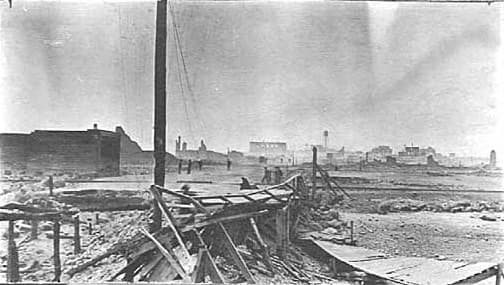
The ruins of downtown Hinckley after the fire of 1 September 1894. Minnesota Historical Society, via Wikimedia Commons.
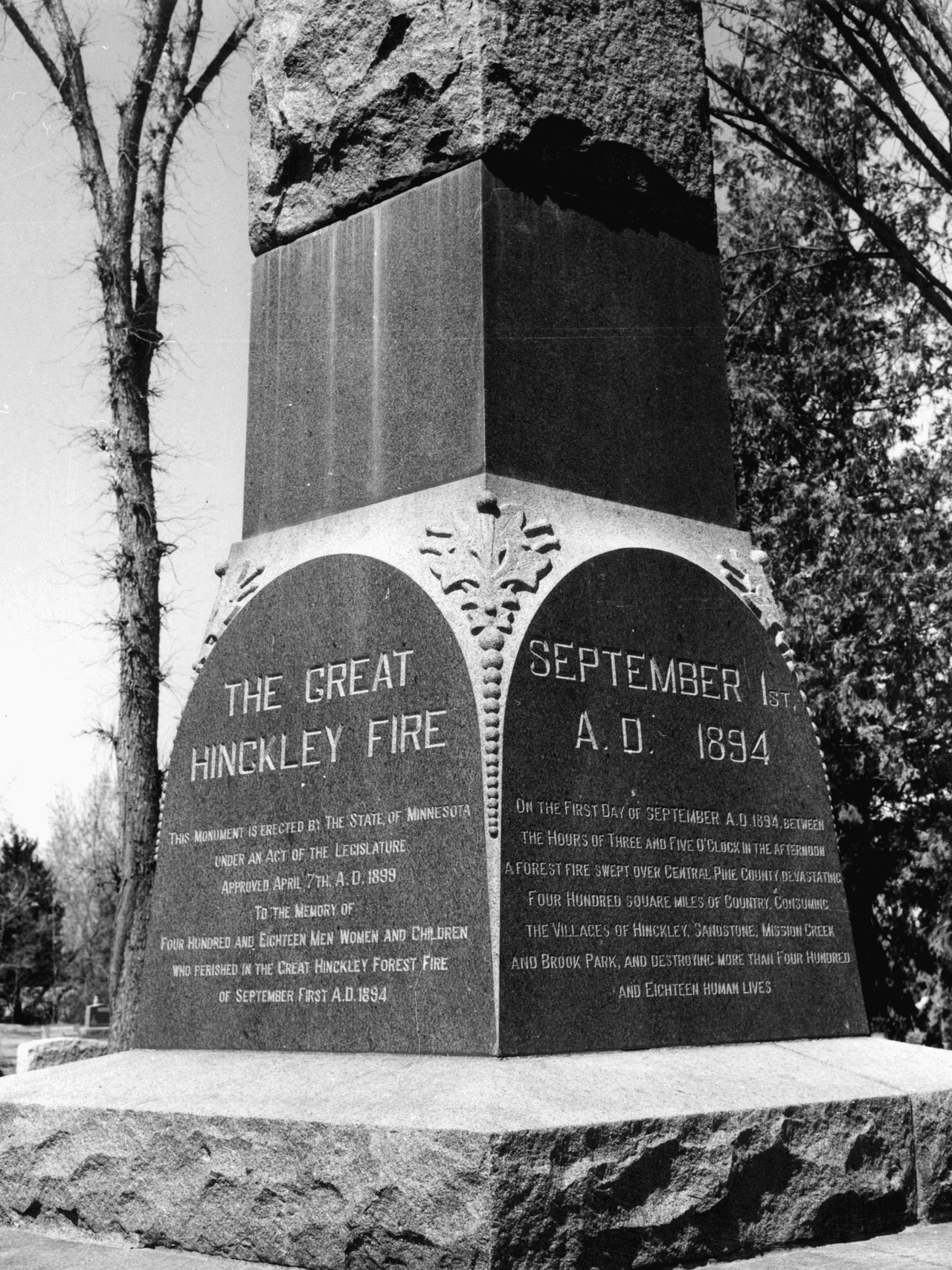
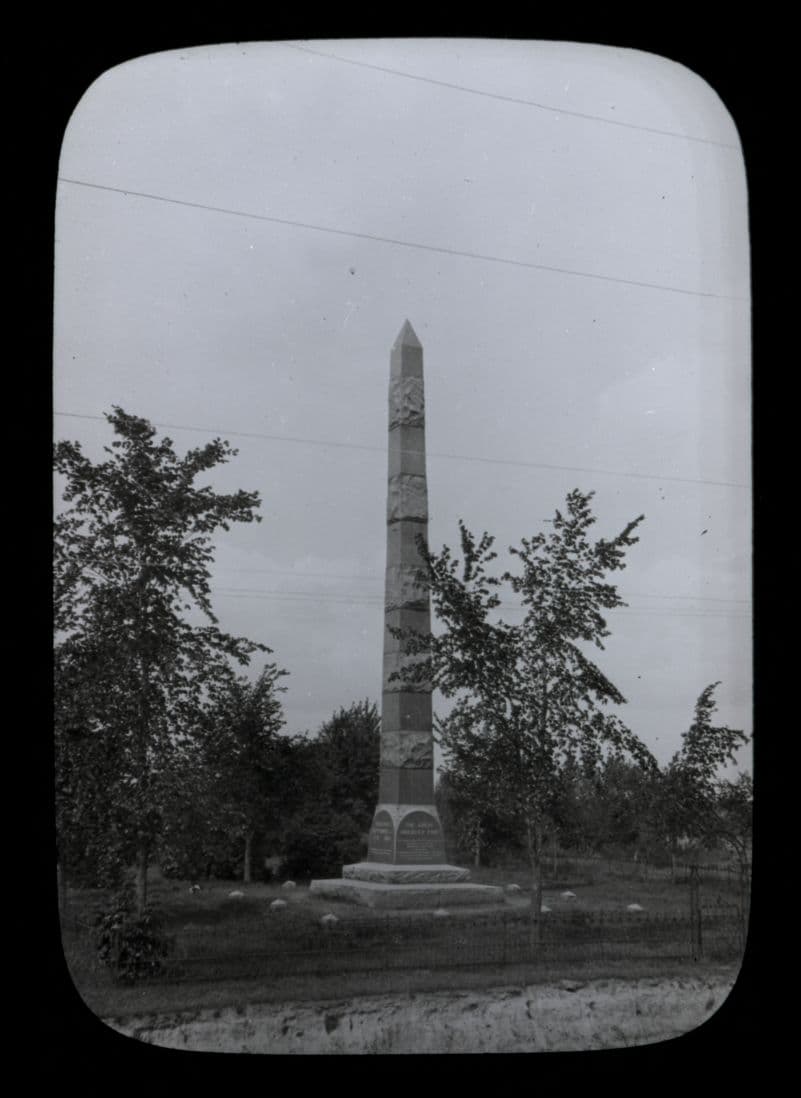
The loggers took the trunks and left the branches where they fell. Four years of drought later, the ground itself was kindling. Less than two inches of rain fell in Pine County between May and September of 1894. A temperature inversion sat over the pine country holding the heat down. The lumber companies had been stripping trees where they lay and leaving the slash on the ground for years, and at Hinckley the Brennan mill had twenty-eight million board feet of cut lumber stacked across thirty-six acres, with sawdust piles beside it. Small fires had been smouldering for weeks. On the first of September they joined. The flames broke up through the inversion, cold air rushed down to replace them, and the fire turned into a vortex — flames two hundred feet high, temperatures over sixteen hundred degrees, hot enough to fuse the wheels of railway cars, throwing burning debris thousands of feet ahead of itself. Hinckley burned between three and five in the afternoon. Somewhere between two hundred thousand and three hundred thousand acres burned in all, and six towns went with them. The official count of the dead is 418. The coroner's own list had 413. Other sources say 476. Every account that discusses it agrees the true number is higher, because Ojibwe residents and people living back in the woods were not counted — at least twenty-three from the Mille Lacs Reservation died. The last body was found in May 1898. What people did that afternoon is why this page exists. Thomas Dunn stayed at his telegraph key in the Hinckley depot sending warnings out while the town burned around him. His last message was that he thought he had stayed too long. The depot came down on him. Jim Root was driving the southbound Duluth Limited when he ran into refugees a mile north of town. He took on everyone who could climb aboard, then backed the train five miles in reverse to a shallow slough called Skunk Lake with the cars on fire behind him. His cab windows blew in and cut him, and when he fainted from blood loss his fireman John McGowan threw a bucket of water over him and he came round and kept going. Somewhere between a hundred and fifty and three hundred people got off that train into eighteen inches of muddy water and lived. John Blair, the Black porter on that train, walked the aisles the whole way handing out wet towels to women whose hair had caught fire, went back into the burning coaches for children, and got off last. A little south, engineer William Best held his air brakes against orders to let more people board, coupled his passenger cars to Edward Barry's freight, and the two of them ran a train across burning trestles to Duluth with five hundred or more people aboard. Both men were blind from the smoke by the next morning. And more than a hundred people survived by climbing into the railroad gravel pit — an eyesore the town had argued about for years. Two hundred and forty-eight Hinckley residents lie in four trenches under a granite shaft north of town, put up by the State of Minnesota and dedicated on the first of September 1900. Minnesota appointed its first chief fire warden the year after the fire, though the fines were as low as a dollar and the real forestry laws did not come until after Chisholm in 1908 and Baudette in 1910. The 1918 Cloquet fire killed more people than Hinckley did. The Hinckley Fire Museum is in the depot they rebuilt in 1895, a few feet from where Thomas Dunn died. If your family was at Hinckley, or on one of those trains, add what you know below. Compiled by MyHistoryStone from published reference sources, August 2026. Corrections welcome.
Share a memory
Leave a memory or a message for the family. What you write appears right away, and the family can remove any entry.
Loading messages...