 Home
Home
In Memory of
Stubby
MyHistoryStone Archive
1917 – March 16, 1926
New Haven, Connecticut, United States · 9 years
Location
New Haven, Connecticut, and the Western Front
In motion
3 photographs
The photographs on this page, brought to life.
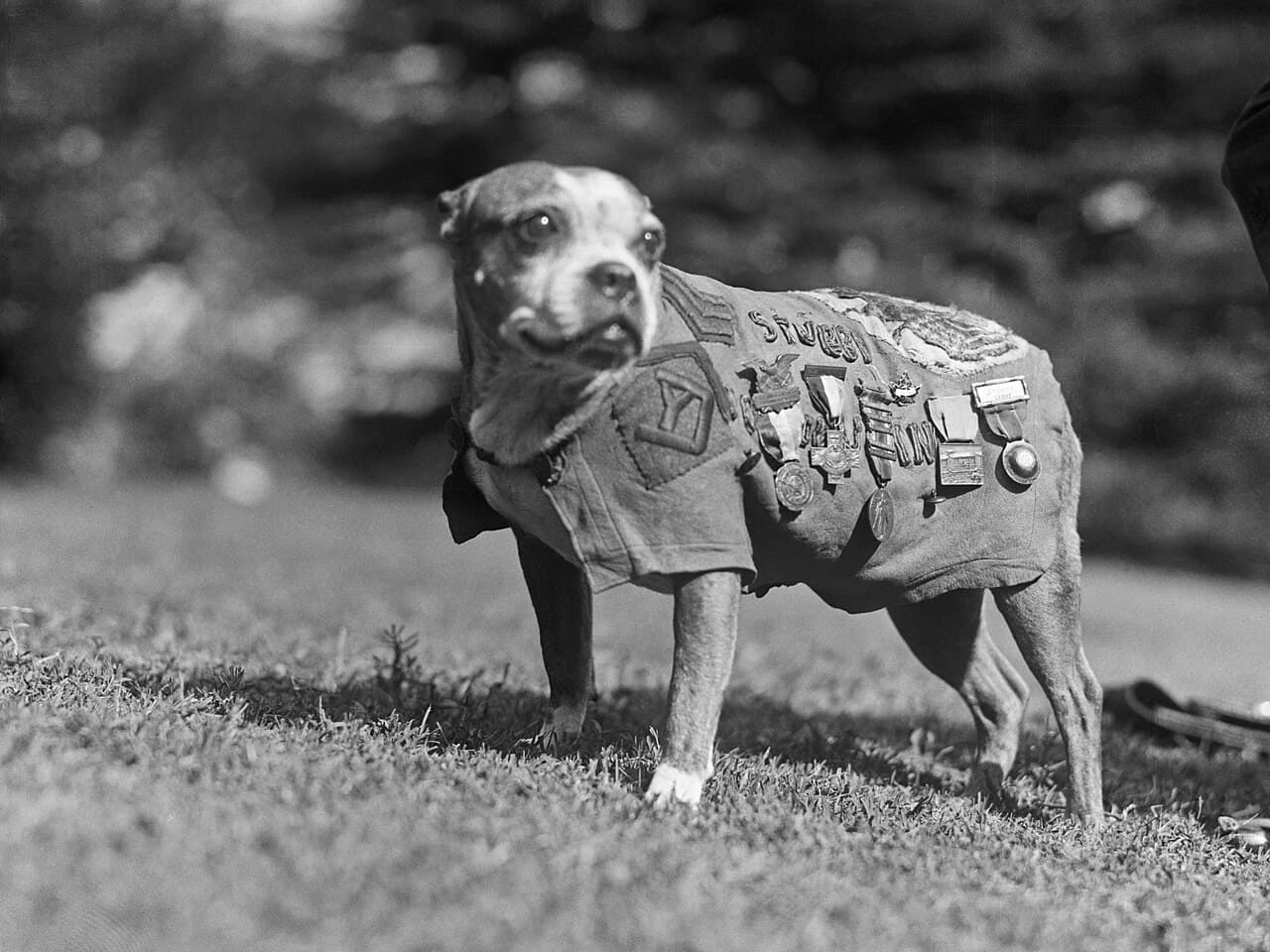
Stubby in his decorated coat. Catalogues call him Sergeant; no promotion is documented. Stubby: Terrier Hero of Georgetown, via Wikimedia Commons.
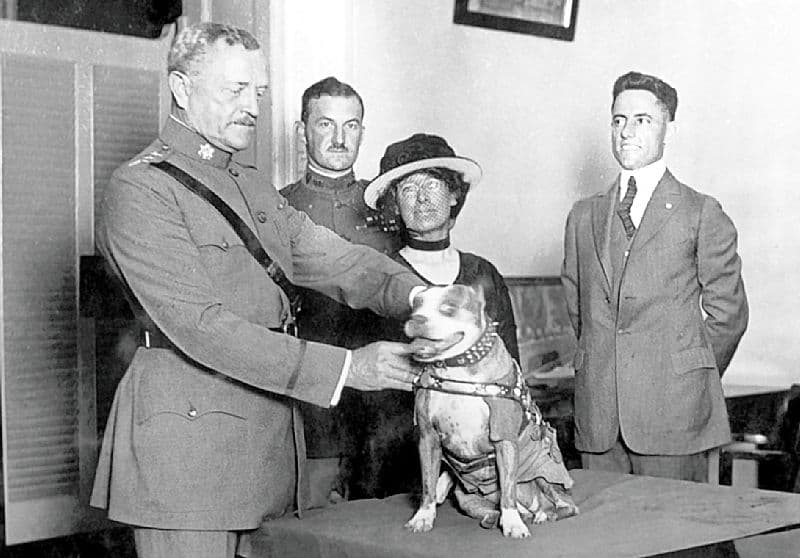
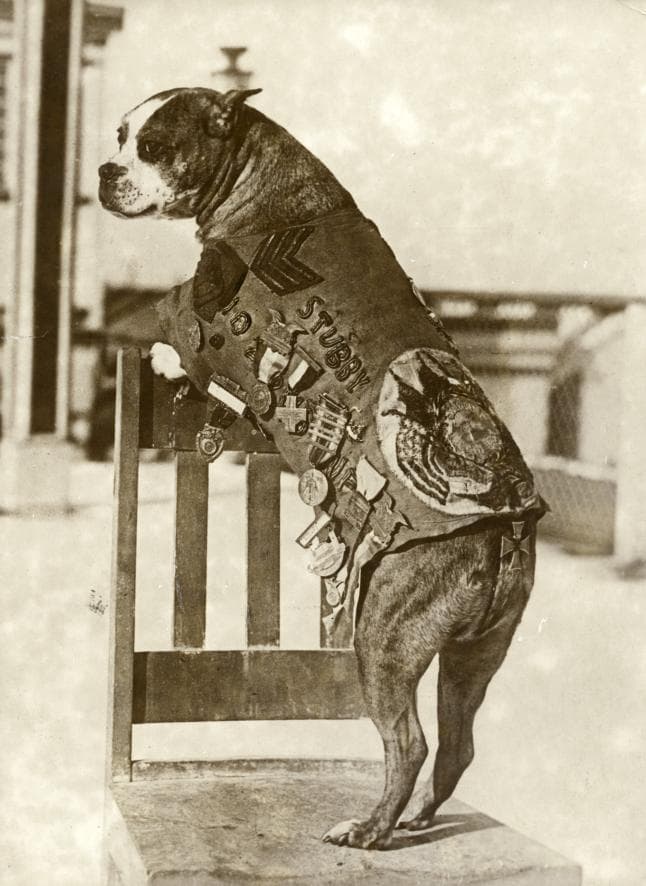
A stray wandered onto the Yale Bowl field in the summer of 1917 while the 102nd Infantry was drilling there, and went to France in a soldier's overcoat. The soldier was J. Robert Conroy of Connecticut. The regiment was the 102nd Infantry, 26th Division — the Yankee Division. Stubby was smuggled aboard the transport Minnesota at Newport News and hidden in the coal bin until somebody found him. He went into the line at the Chemin des Dames on the fifth of February 1918 and stayed with the regiment through its four offensives and seventeen engagements. What he actually did, as the sources have it: he woke men during a gas attack, running the trench barking and biting until they were up. He was sensitive to gas afterwards because he had been gassed himself. He found wounded men between the lines and barked until stretcher-bearers came. And he caught a German — the Smithsonian says a soldier, the 1926 obituary says a spy — biting his legs until he fell, and held him there. He was wounded twice: gassed once, and hit by grenade fragments in April 1918. They made him his own gas mask. The women of Château-Thierry made him a chamois blanket in June 1918, after the city was retaken. It is at the Smithsonian and it carries about thirty things: an embroidered wreath of Allied flags, a Purple Heart, service stripes, battle badges for St. Mihiel, Château-Thierry and Verdun, American Legion badges, and a tag reading Stubby A.E.F. Mascot World War I. On the sixth of July 1921 General Pershing pinned a gold medal from the Humane Education Society onto it. He led parades. He met Wilson in France on Christmas Day 1918, was received by Harding at the White House in 1921, and met Coolidge more than once. When Conroy went to Georgetown law school Stubby went with him and pushed the football around the field at halftime for five seasons. Now the honest part, because this page would be worth less without it. He is universally called Sergeant Stubby. We could not find a promotion. No order, no morning report, no named officer. The Smithsonian, which has him, never uses the word. Neither does the New York Times obituary of 1926, and neither does the Connecticut Military Department. Wikipedia says only that he was nominated for the rank. Sergeant appears to be an honorific the country gave him and never took back, which is its own kind of fact. He died on the sixteenth of March 1926 in Washington. The Times gave him half a page. He was preserved by a taxidermist with his ashes sealed inside, and he stands today in the Price of Freedom gallery at the National Museum of American History, wearing the blanket, beside a carrier pigeon named Cher Ami. If a war dog served with your family's regiment, add what you know below. Compiled by MyHistoryStone from published reference sources, August 2026. Corrections welcome.
Share a memory
Leave a memory or a message for the family. What you write appears right away, and the family can remove any entry.
Loading messages...