 Home
Home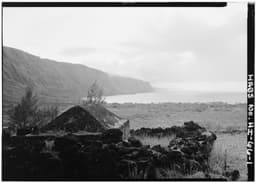
The Story of
Kalaupapa, Molokai
MyHistoryStone Archive
January 6, 1866
Kalaupapa, Hawaii, United States
Circa
The Kalaupapa Peninsula, Molokai, Hawaii
In motion
4 photographs
The photographs on this page, brought to life.
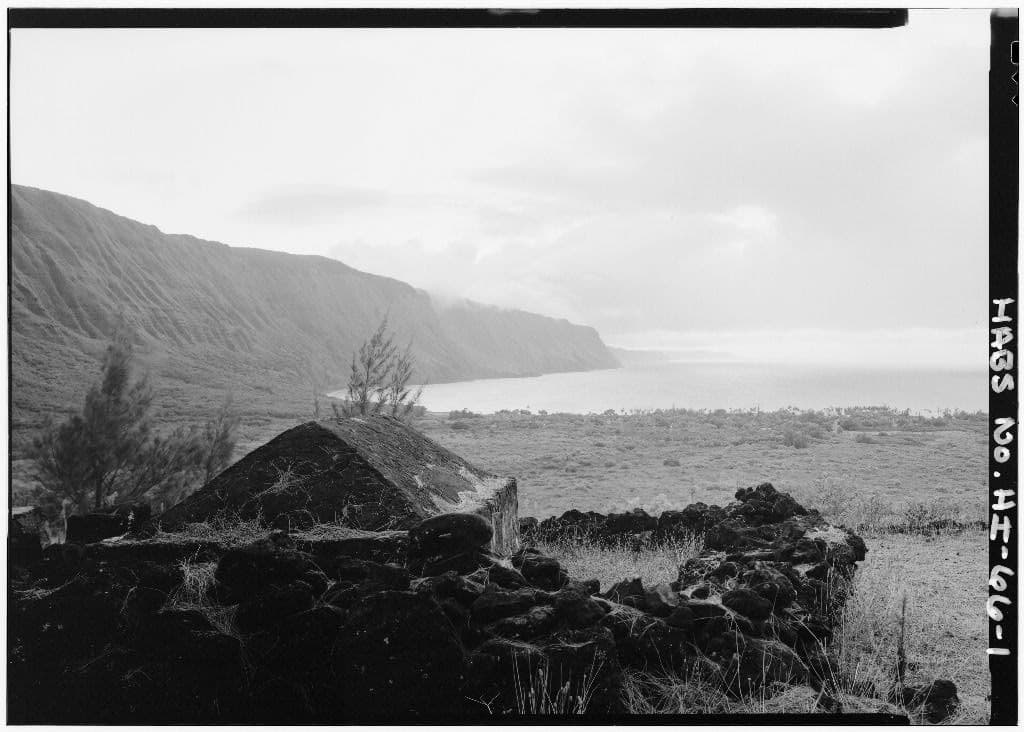
The peninsula and its sea cliffs, photographed for the survey in 1991. Jack E. Boucher, Historic American Buildings Survey. Library of Congress.
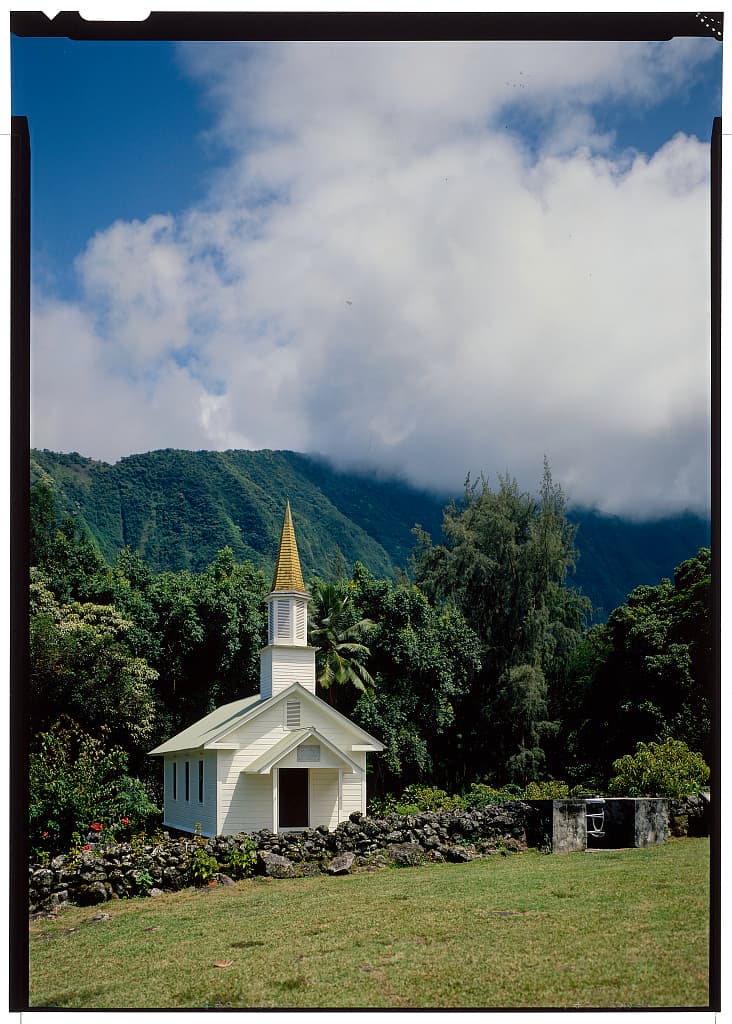
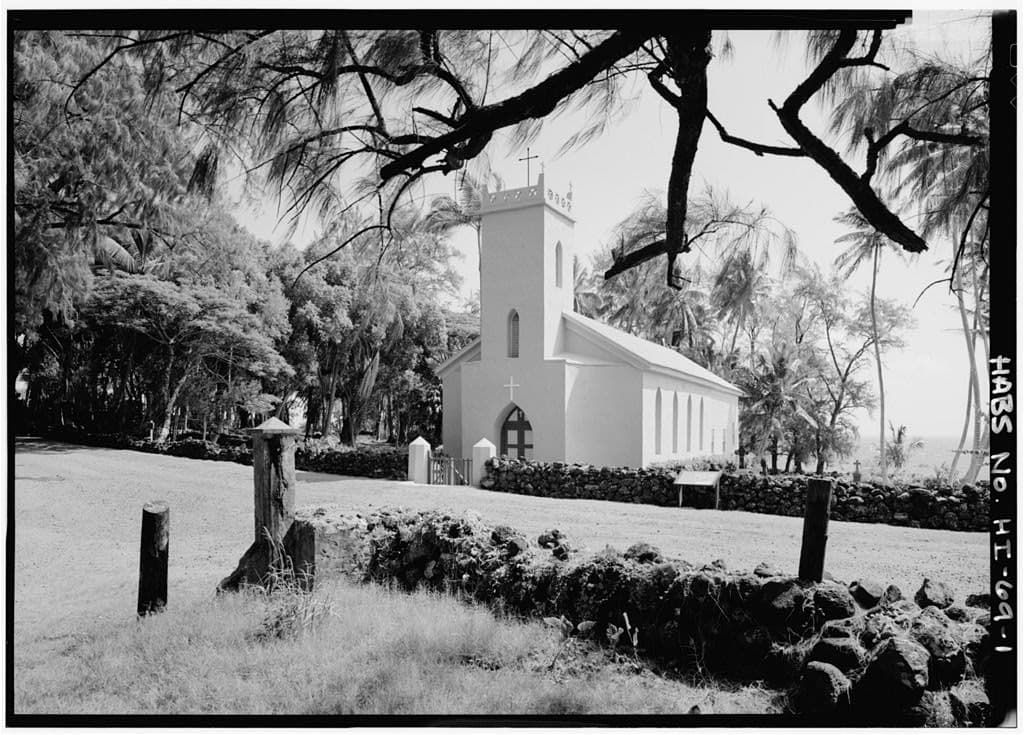
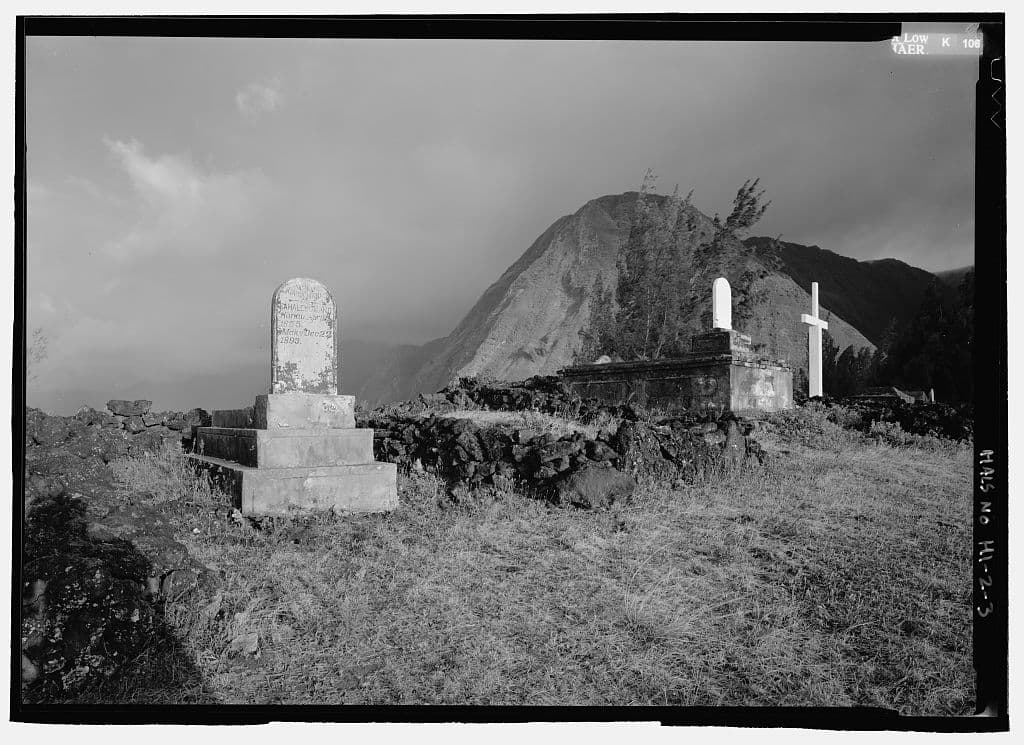
Nearly eight thousand people were taken from their families and put on this peninsula. About a thousand of their graves can still be identified. The Hawaiian Kingdom passed an act to prevent the spread of leprosy in January 1865. It gave the Board of Health the power to have people arrested, examined and removed. On the sixth of January 1866 the first twelve arrived on the rocky beach at Kalawao — nine men and three women, whose names are known: J.D. Kahauliko, J.N. Loe, Liilii, Puha, Kini, Lono, Waipio, Kainaina, Kaaumoana, Nahuina, Lakapu and Kepihe. There was nobody there to receive them. Before the end of that year more than a hundred more had been put aboard ship at Honolulu. The peninsula was chosen because you cannot leave it. Ocean on three sides, and behind it some of the highest sea cliffs in the world. Until an airstrip was built in 1935 the only ways in were by boat or down a trail of twenty-six switchbacks. Hawaiian families had lived on that ground for more than nine hundred years; the Board of Health bought their houses, their crops and their fruit trees, and moved them off. Roughly eight thousand people were sent there between 1866 and 1969, about nine in ten of them Native Hawaiian, ranging in age from four to a hundred and five. They married. They had children, and the healthy babies were taken from them and sent to a home in Honolulu. They built churches — Siloama in 1871, St. Philomena, and three more by 1888 — and a social hall that sat three hundred and fifty, where Shirley Temple and Paul Robeson performed and where patients were still seated separately from everyone else. Father Damien came in 1873, stayed sixteen years, built houses and coffins and dug graves, contracted the disease himself and died there in 1889. Mother Marianne Cope arrived in Hawaii in 1883, ran the home for women and girls at Kalaupapa for thirty years, and never caught it. Both are saints now — Damien canonized in 2009, Marianne in 2012. Joseph Dutton, a Civil War veteran, came in 1886 and ran the boys' home for thirty-five years, and is buried there. The isolation law was repealed in 1969. Some people left. Others stayed, because it was home, and Congress guaranteed them the right to remain for the rest of their lives when it made the place a National Historical Park in 1980. As of the end of 2024 there were seven left with that right, four of them still living in the settlement. Here is the part that belongs on this website. Because so few graves are marked, the names of most of the people sent there had dropped out of the history entirely. In 2003 the residents and their families founded Ka Ohana O Kalaupapa, and in 2007 they began going through admission registers, church rolls, marriage and death records, census returns and Hawaiian-language newspapers to write down every name. Congress authorized a memorial in 2009 that will carry all of them. The organization has already helped more than nine hundred families find an ancestor they had lost. Their own words to those families: they are not lost, they are waiting for you. If someone in your family was sent to Kalaupapa, add their name below. Compiled by MyHistoryStone from published reference sources, August 2026. Corrections welcome.
Add to this story
Know something about Kalaupapa, Molokai? Add it here - a memory, a detail, a correction. What you write appears right away, and the page owner can remove any entry.
Loading messages...