 Home
Home
A Tribute to
The Overseas Railroad
MyHistoryStone Archive
1905 – September 2, 1935
Islamorada, Florida, United States · 30 years
Worked At
The Florida Keys, from Homestead to Key West
In motion
4 photographs
The photographs on this page, brought to life.
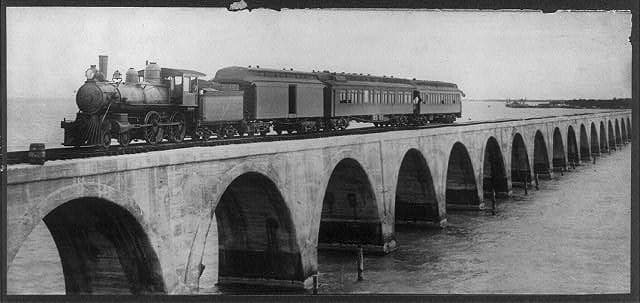
A train on the Long Key Viaduct, April 1909, three years before the line reached Key West. J. N. Chamberlain. Library of Congress.
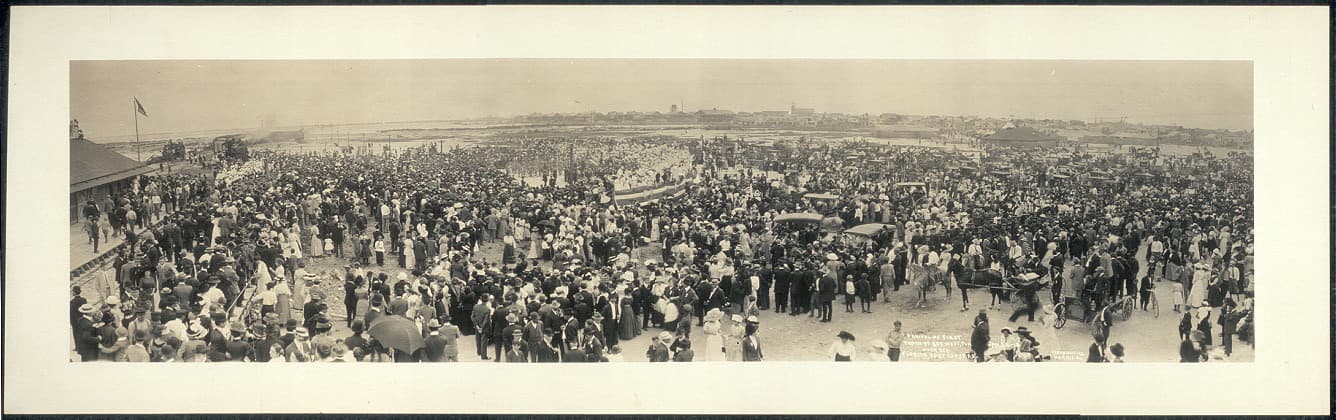
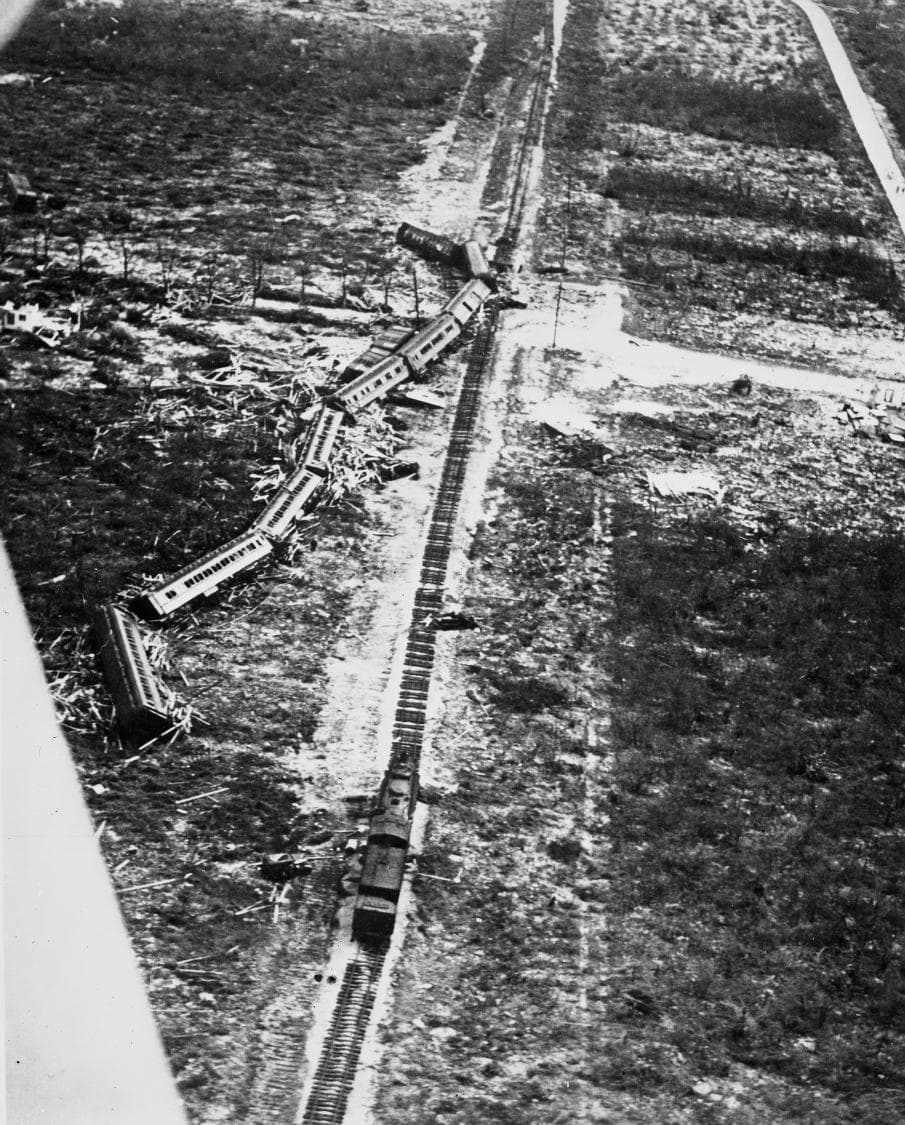
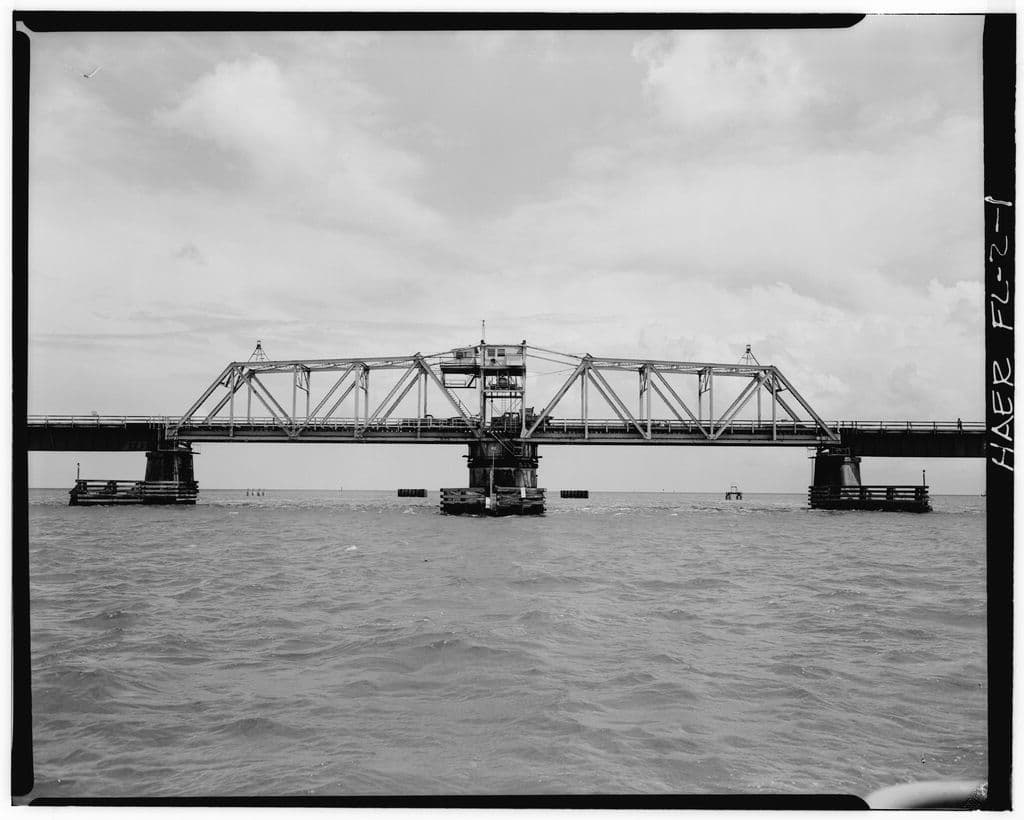
It took seven years and more than fifty million dollars to build a railroad across the open ocean, and one afternoon to end it. Henry Flagler began the Key West Extension in 1905. At the height of it four thousand men were working, and the hurricane of 1906 alone killed a hundred and thirty-five of them, a hundred and four on a single houseboat. They laid track over the Long Key Viaduct on its concrete arches and over the seven miles of the Knights Key bridge, using thirty-eight million pounds of structural steel, eight hundred thousand barrels of cement and seventy thousand pine piles. The first train reached Key West in January 1912. Flagler was eighty-two, nearly blind, and said as he came in that now he could die in peace. He died sixteen months later. In 1935 the men working in the Florida Keys were veterans of the First World War. Three years earlier they had marched on Washington to ask for their service bonus early, and had been driven out of the capital by the Army. The relief administration put several hundred of them into work camps in the Keys, building the highway that was to run beside the railroad. There were three camps, on Windley Key and Lower Matecumbe. The payroll for the thirtieth of August listed 695 men. The hurricane came ashore near Long Key on the evening of the second of September 1935. The barometer read 892 millibars — still the lowest pressure ever measured at a landfall in the United States. Winds around a hundred and eighty-five miles an hour. A storm surge of eighteen to twenty feet across islands that were a few feet above the sea. A rescue train was requested at about two in the afternoon. It left Miami at 4:25. It lost time to a drawbridge, to debris on the track, to poor visibility, and to the fact that there was no turntable anywhere south of Miami, so the locomotive had to be run round and backed down the Keys to be facing the right way for the return. It reached Islamorada at about twenty past eight, at the same moment as the surge. Eleven cars went off the rails. Only the locomotive and its tender stayed upright, and every person aboard the train survived. The count of the dead has never settled. The Weather Bureau's figure is 408. The relief administration counted 423 in November and 485 by the following March. About 260 of them were the veterans. Hemingway came up from Key West in a boat and wrote what he saw for a magazine in New York. The federal relief agency ran its own investigation, finished it in six days, called the disaster an act of God and cleared everyone. The Veterans Administration sent its own investigator, David Kennamer, who spent seven weeks on it and named three relief officials as negligent. His report was suppressed and stayed suppressed for decades. When he appeared before a congressional hearing in 1936, nobody asked him about it. The railroad was never rebuilt. The Florida East Coast was already bankrupt and sold the roadbed and the surviving bridges to the state for six hundred and forty thousand dollars. Florida paved the tops of Flagler's bridges, and the Overseas Highway opened all the way to Key West in March 1938. Twenty-three of those bridges are still standing, carrying a bicycle trail. The memorial at Islamorada, at mile marker 82, was unveiled in November 1937. The Works Progress Administration built it out of Keys limestone, over a crypt holding the ashes of the dead, under a tile map of the islands. If one of the veterans in those camps was your relative, add his name below. Compiled by MyHistoryStone from published reference sources, August 2026. Corrections welcome.
Add to this story
Know something about The Overseas Railroad? Add it here - a memory, a detail, a correction. What you write appears right away, and the page owner can remove any entry.
Loading messages...