 Home
Home
In Memory of
Homer Plessy
MyHistoryStone Archive
March 17, 1863 – March 1, 1925
New Orleans, Louisiana, United States · 61 years
Location
New Orleans, Louisiana
In motion
3 photographs
The photographs on this page, brought to life.
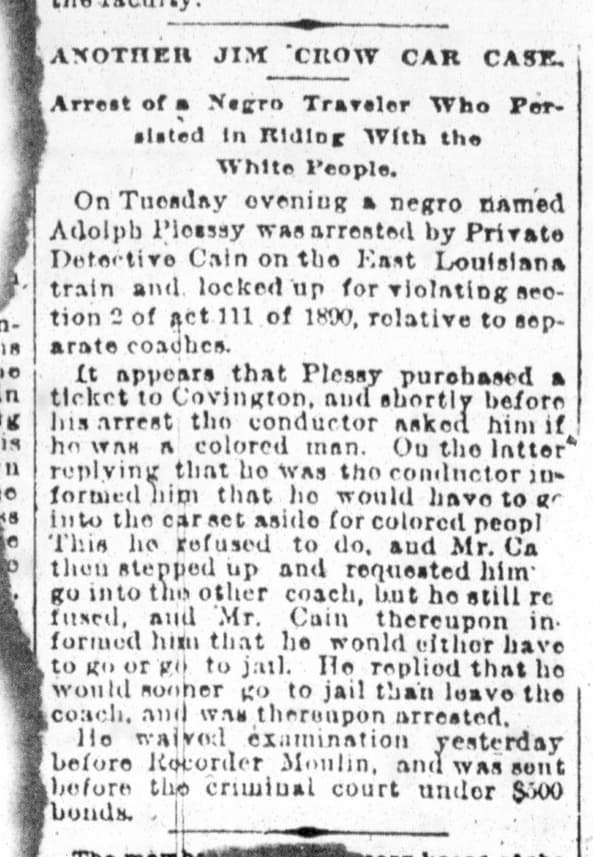
The Daily Picayune reports the arrest, 9 June 1892. It prints his name as Adolph. Daily Picayune, New Orleans, via Wikimedia Commons.
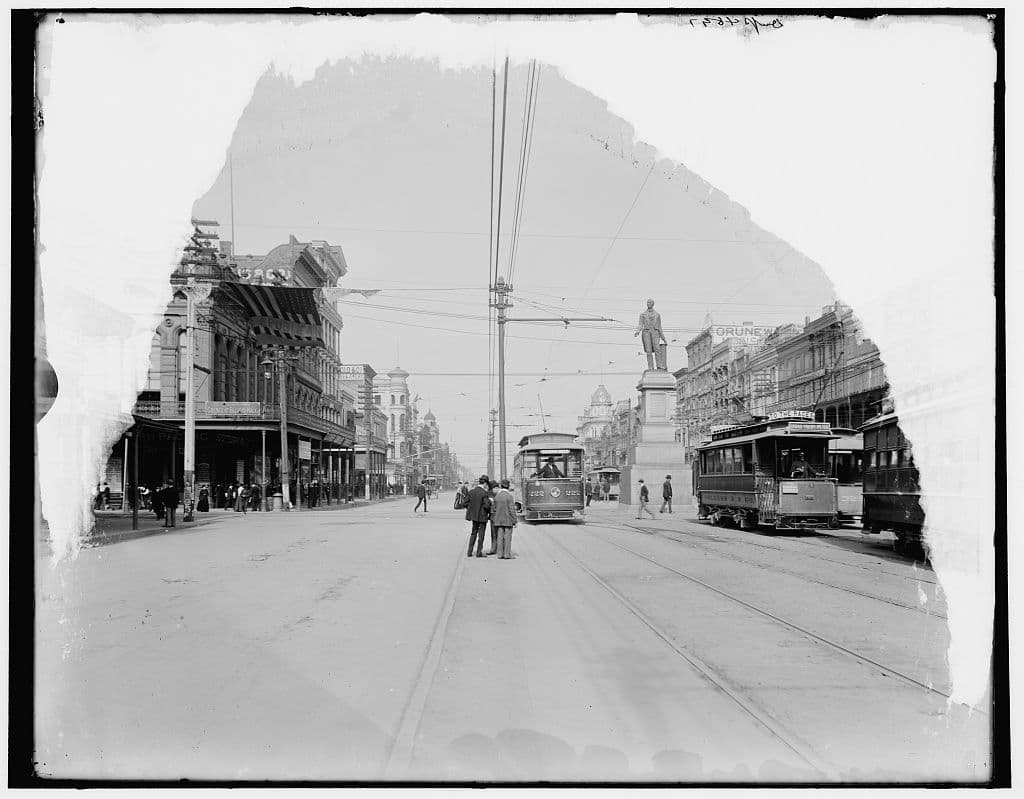
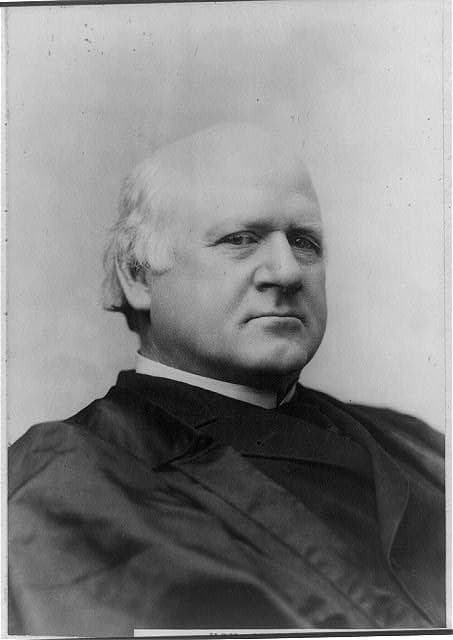
His name is on one of the worst decisions the Supreme Court ever handed down, and no photograph of him is known to exist. Homer Plessy was a shoemaker. He was born in New Orleans, most likely on the seventeenth of March 1863, into a French-speaking Creole family of free people of color; his grandfather had come from Bordeaux by way of Saint-Domingue in the 1790s. His father was a carpenter, his mother a seamstress. He married Louise Bordenave at St. Augustine Church in July 1888 and they lived in Tremé. The part most people never hear is that the whole thing was arranged. A group of eighteen New Orleans men — the Comité des Citoyens — set out to break Louisiana's Separate Car Act in court. Their lawyer, Albion Tourgée, wanted a plaintiff who could pass for white, so that the state would have to say out loud how it decided who was which. Plessy was seven-eighths white and legally Black. The committee notified the East Louisiana Railroad in advance, and the railroad went along with it, because separate cars cost money and it did not want them either. The conductor knew who Plessy was before he boarded. And the committee hired a private detective, Chris Cain, to make the arrest — because a police officer might have charged him with disturbing the peace, and the case needed him charged under the Separate Car Act and nothing else. On the seventh of June 1892 he bought a first-class ticket at the Press Street depot for Covington, thirty miles away, sat down in the whites-only car, refused to move, and was taken off the train at Royal and Press. Judge John Howard Ferguson ruled against him that November. Ferguson had been born on Martha's Vineyard and had married the daughter of a Pennsylvania abolitionist. On the eighteenth of May 1896 the Supreme Court affirmed it seven to one. Justice John Marshall Harlan dissented alone, and wrote that our constitution is color-blind. Plessy went back to New Orleans, pleaded guilty, and paid the twenty-five dollar fine. The committee paid it for him and dissolved, saying they had met with defeat but not with ignominy. He lived another twenty-eight years. Machine production was killing the shoemaking trade, so he worked as a laborer, a warehouseman and a clerk, and finished up collecting premiums for the People's Life Insurance Company, a Black-owned firm. He died on the first of March 1925 and lies in his wife's family tomb in St. Louis Cemetery No. 1. In 2009 Keith Plessy and Phoebe Ferguson — his cousin and the judge's great-great-granddaughter — started a foundation together. In 2018 part of Press Street became Homer Plessy Way. On the fifth of January 2022, a hundred and twenty-nine years after the arrest, the Governor of Louisiana pardoned him. If you are connected to the Plessy or Bordenave families, or to any of the Comité des Citoyens, add what you know below. Compiled by MyHistoryStone from published reference sources, August 2026. Corrections welcome.
Share a memory
Leave a memory or a message for the family. What you write appears right away, and the family can remove any entry.
Loading messages...