 Home
Home
A Tribute to
The Navajo Code Talkers
MyHistoryStone Archive
May 4, 1942 – 1945
Fort Wingate, New Mexico, United States · 2 years
In motion
3 photographs
The photographs on this page, brought to life.
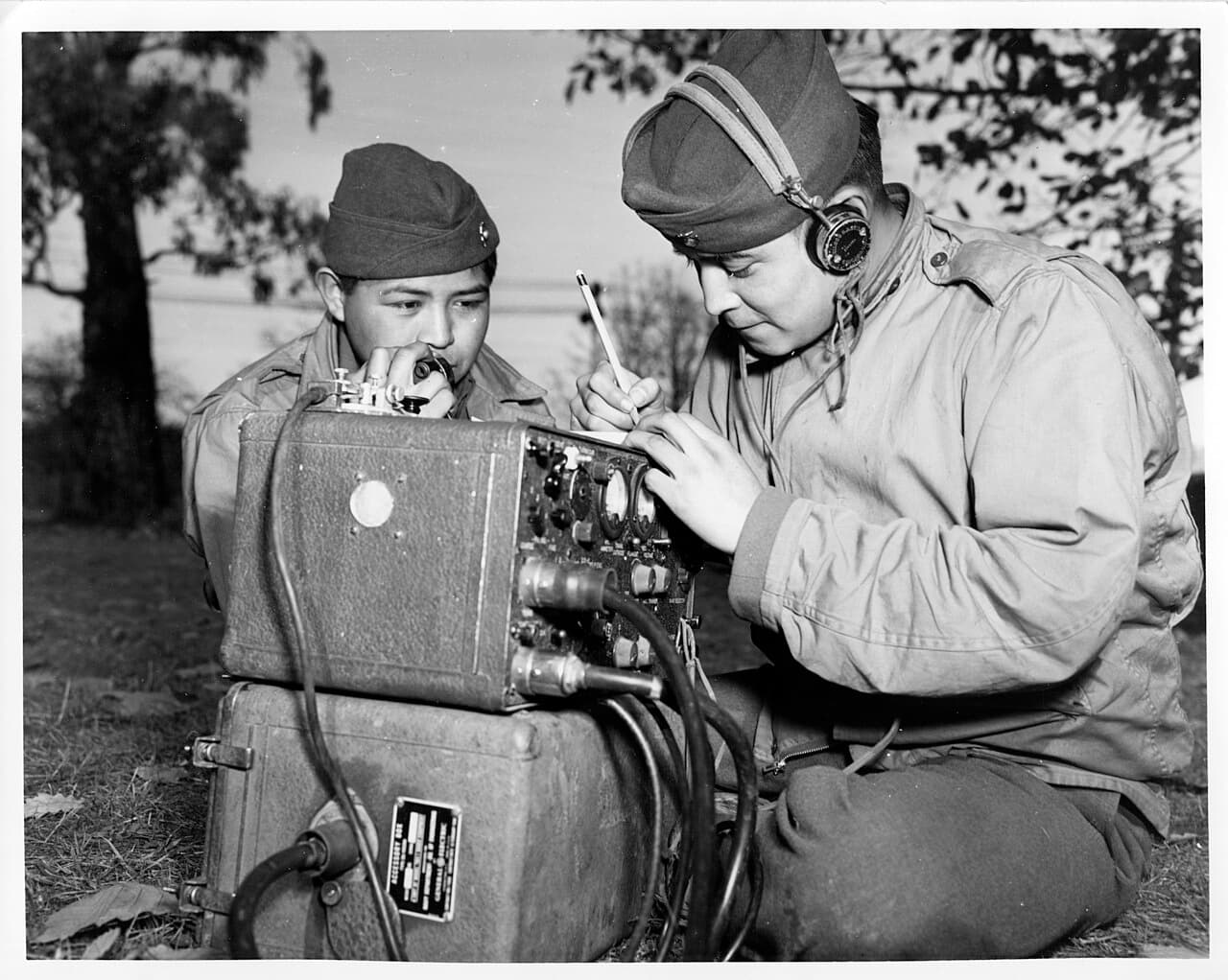
Preston and Frank Toledo, cousins, relaying orders in Navajo, July 1943. U.S. Marine Corps; National Archives, via Wikimedia Commons.
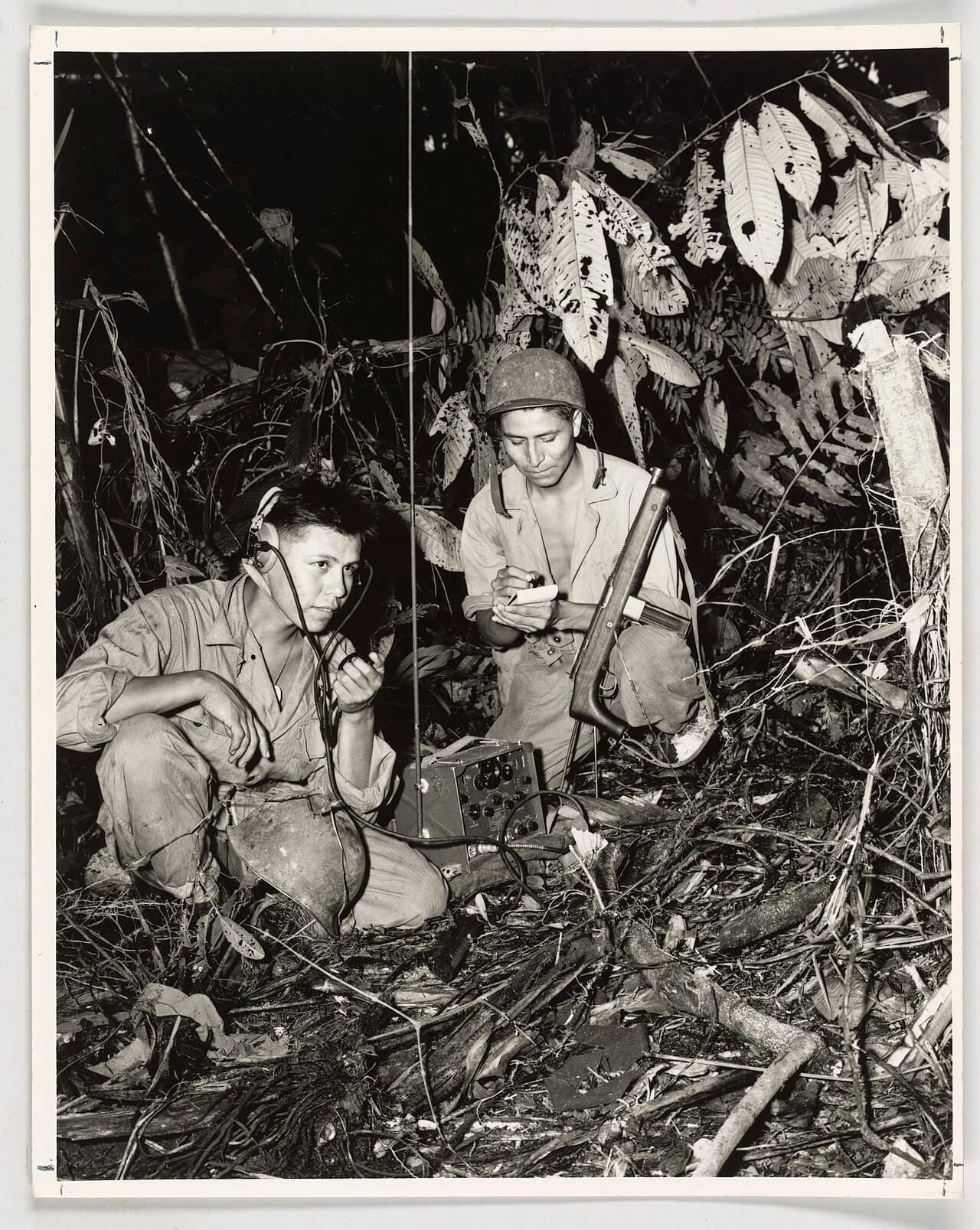
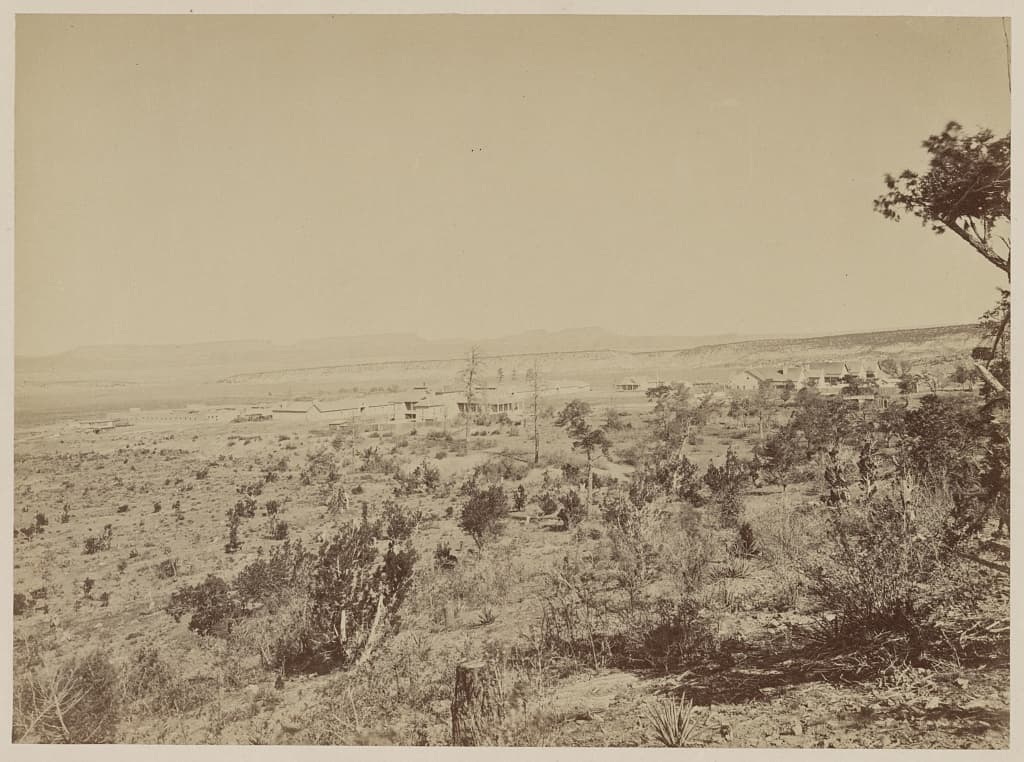
The government had spent forty years punishing Navajo children for speaking Navajo. Then it asked them to win a war with it. Philip Johnston, a missionary's son who had grown up on the reservation and was working as a civil engineer for the city of Los Angeles, proposed the idea in early 1942. At a demonstration at Camp Elliott near San Diego he showed that Navajo speakers could send and decode a three-line message in twenty seconds. The coding machines of the day took thirty minutes. The general who watched it asked for two hundred men. He was allowed thirty. On the fourth of May 1942, twenty-nine Navajo men were sworn in at Fort Wingate, New Mexico, and became Platoon 382. The oldest was thirty-five. The youngest was fifteen. And the code was not handed to them — they built it themselves. It had two halves. An alphabet, where a Navajo word stood for an English word that started with the letter: wo-la-chee, ant, for A. Dzeh, elk, for E. Gah, rabbit, for R. Chester Nez, one of the original twenty-nine, explained why they chose the things they did: A, we took a red ant that we live with all the time. Then a vocabulary of coined terms for the things the alphabet was too slow to spell — besh-lo, iron fish, for submarine. Jay-sho, buzzard, for bomber. Hummingbird for fighter plane, eagle for transport plane. It began at 211 terms and grew to 411. All of it was memorized. A codebook existed to teach new men and was never allowed into the field. A Navajo speaker who had not been trained on it could not read it. That was tested. Joe Kieyoomia, a Navajo soldier in the 200th Coast Artillery, was captured in the Philippines, survived the Bataan Death March, and was made to listen to intercepted transmissions. He understood every word and none of it meant anything. They tortured him and he still could not tell them, because there was nothing in his head to tell. At Iwo Jima six code talkers worked around the clock through the first two days and sent more than eight hundred messages without a single error. The signal officer of the 5th Marine Division said afterwards that without the Navajos the Marines would never have taken the island. The code was never broken. It was also classified until 1968, so for twenty-three years the men who made it were ordered not to mention it. John Brown Jr., one of them, remembered the boarding school first: we got punished if you was caught speaking Navajo. President Clinton signed the medal into law on the twenty-first of December 2000. The Congressional Gold Medal went to the original twenty-nine and Silver Medals to everyone else who qualified. When President Bush handed them out on the twenty-sixth of July 2001, four of the twenty-nine were alive to take theirs. One number is genuinely unsettled: how many Navajo served in the program. Published figures run from about 300 to 540, depending on whether you count qualified code talkers or every Navajo Marine in it. If a Navajo code talker is in your family, add his name below. Compiled by MyHistoryStone from published reference sources, August 2026. Corrections welcome.
Add to this story
Know something about The Navajo Code Talkers? Add it here - a memory, a detail, a correction. What you write appears right away, and the page owner can remove any entry.
Loading messages...