 Home
Home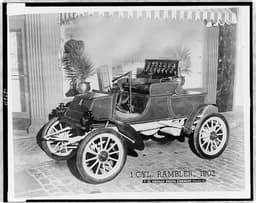
The Story of
The Thomas B. Jeffery Company
MyHistoryStone Archive
December 6, 1900 – 1916
Kenosha, Wisconsin, United States · 15 years
Built At
Kenosha, Wisconsin
In motion
4 photographs
The photographs on this page, brought to life.
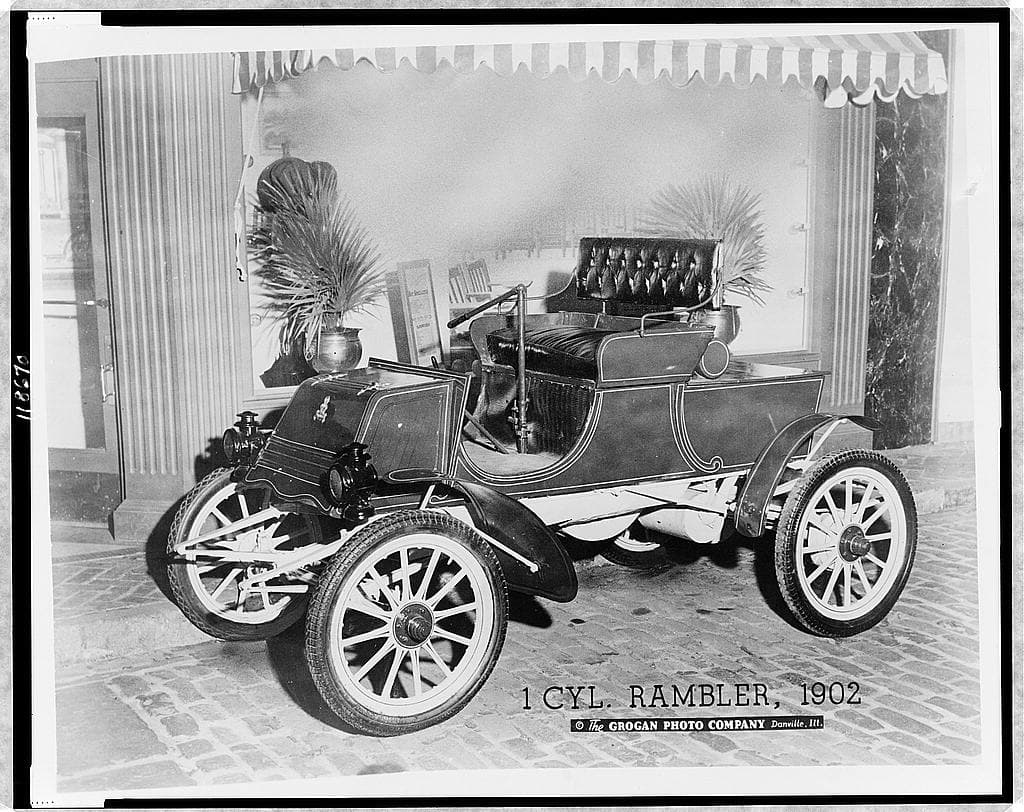
A one-cylinder Rambler of 1902. The caption is printed inside the picture. Grogan Photo Company. Library of Congress.
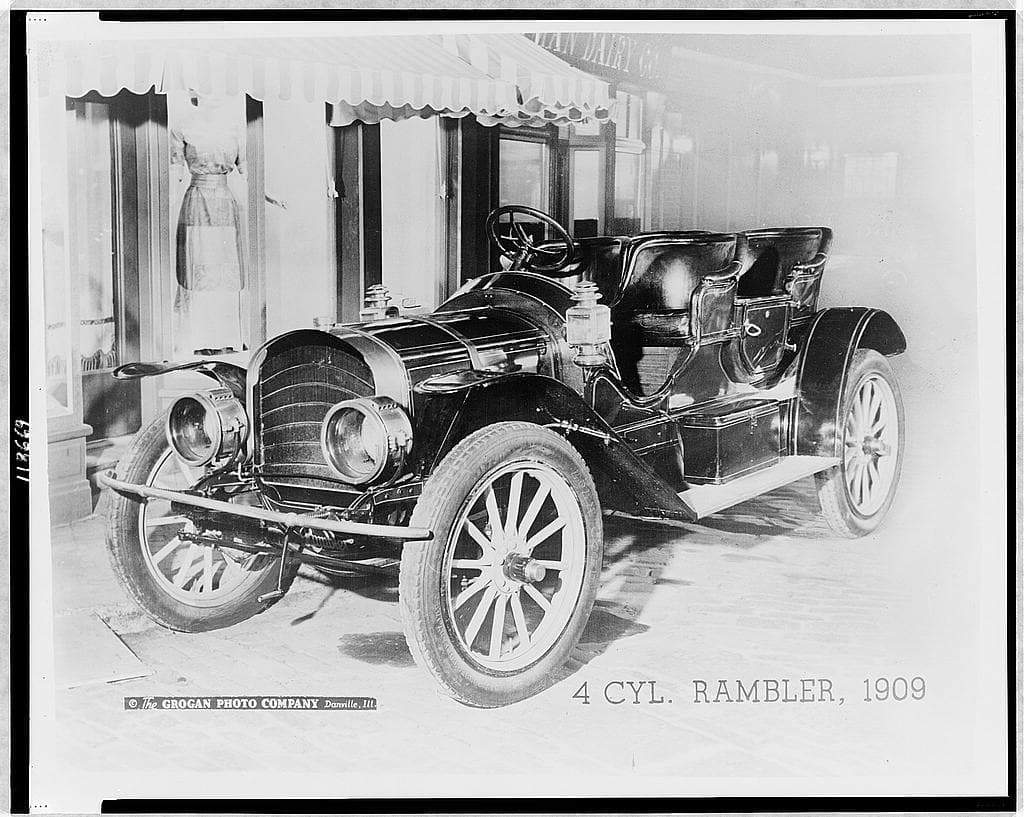
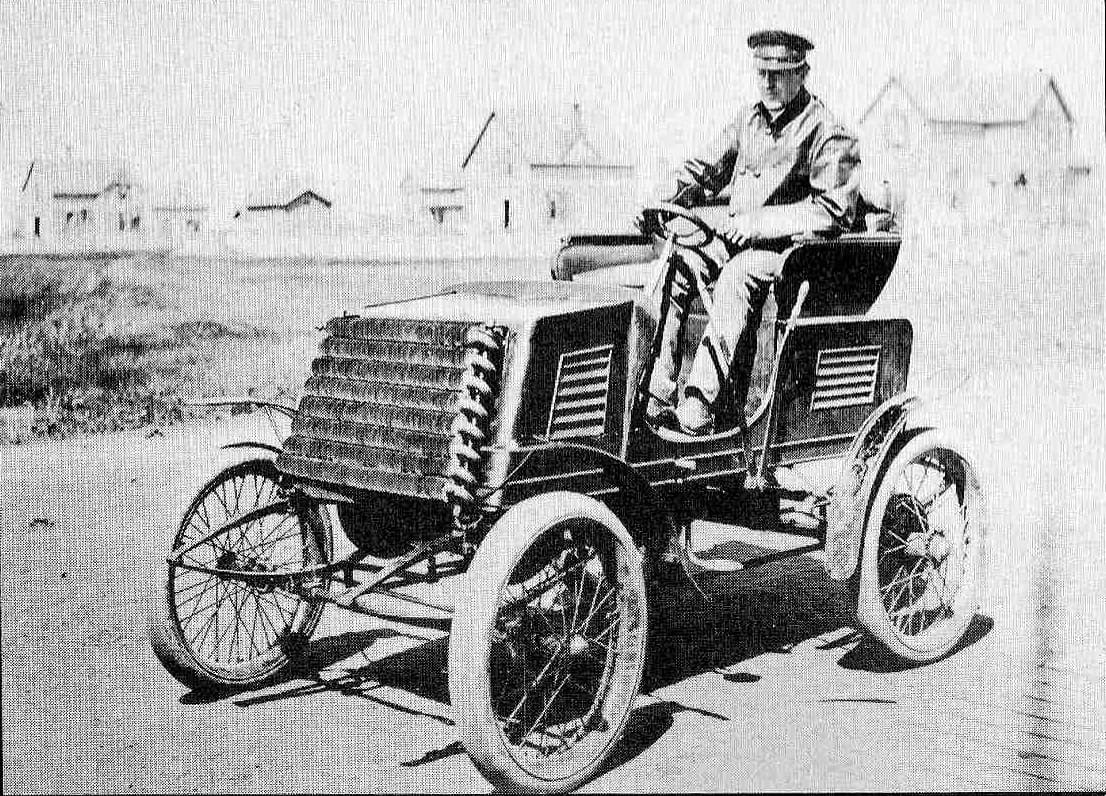
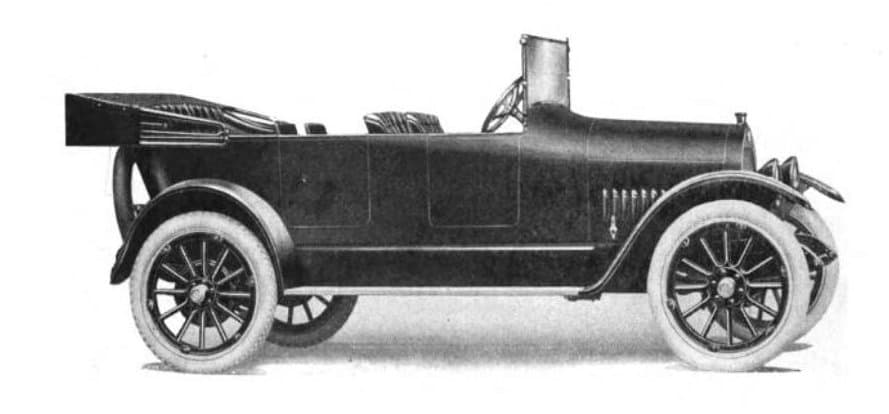
A bicycle man bought a dead bicycle factory in Kenosha, and cars were built on that ground for the next eighty-six years. Thomas B. Jeffery was English, and he came to it through bicycles. Gormully & Jeffery of Chicago, founded in 1879, was the second bicycle manufacturer in the United States, and from 1887 it sold its machines under the name Rambler. When his partner died, Jeffery sold the bicycle business but kept the name. On the sixth of December 1900 he paid sixty-five thousand dollars for the shuttered Sterling Bicycle plant at Kenosha, Wisconsin. The first production Ramblers came out in 1902 — a one-cylinder runabout at seven hundred and fifty dollars, engine under the seat, steered by a tiller on the right. He built fifteen hundred of them that year. That was roughly one out of every six automobiles made in America in 1902, and it put a bicycle works in Kenosha second only to Oldsmobile. Rambler was the first to send cars out with a spare wheel and tire already mounted. The driver moved to the left side in 1903, and by 1904 every Rambler had a steering wheel instead of a tiller. Thomas Jeffery died in Italy in 1910. His son Charles took the company on, and in 1914 renamed the cars Jeffery after his father. The other thing Charles built was the Quad: a truck with four-wheel drive, four-wheel brakes and four-wheel steering, which went with Pershing into Mexico in 1916 and to France after that. 41,674 of them were made. French artillery regiments were still running them at the mobilization of 1939. In August 1916 Charles Jeffery sold the company to Charles W. Nash, formerly of General Motors, for five million dollars. Nash put his own name on it the following year. The plant kept going. Nash became American Motors in 1954; American Motors was bought by Chrysler in 1987. The last car was assembled at Kenosha on the twenty-third of December 1988 and the last engine on the twenty-second of October 2010. Demolition began in late 2012, and the city took the title to the ground in 2014. One caution on the record: sources disagree about the steering wheel. One account has Thomas Jeffery insisting on left-hand drive, another has him talking his son out of the steering wheel entirely. They agree on the spare tire and they agree on the fifteen hundred cars. If your family worked at Kenosha — for Jeffery, Nash, American Motors or Chrysler — add what you know below. Compiled by MyHistoryStone from published reference sources, August 2026. Corrections welcome.
Add to this story
Know something about The Thomas B. Jeffery Company? Add it here - a memory, a detail, a correction. What you write appears right away, and the page owner can remove any entry.
Loading messages...