 Home
Home
A Tribute to
The Ludlow Tent Colony
MyHistoryStone Archive
1913 – April 20, 1914
Las Animas County, Colorado, United States · 1 year
Worked At
Ludlow, Las Animas County, Colorado
In motion
3 photographs
The photographs on this page, brought to life.
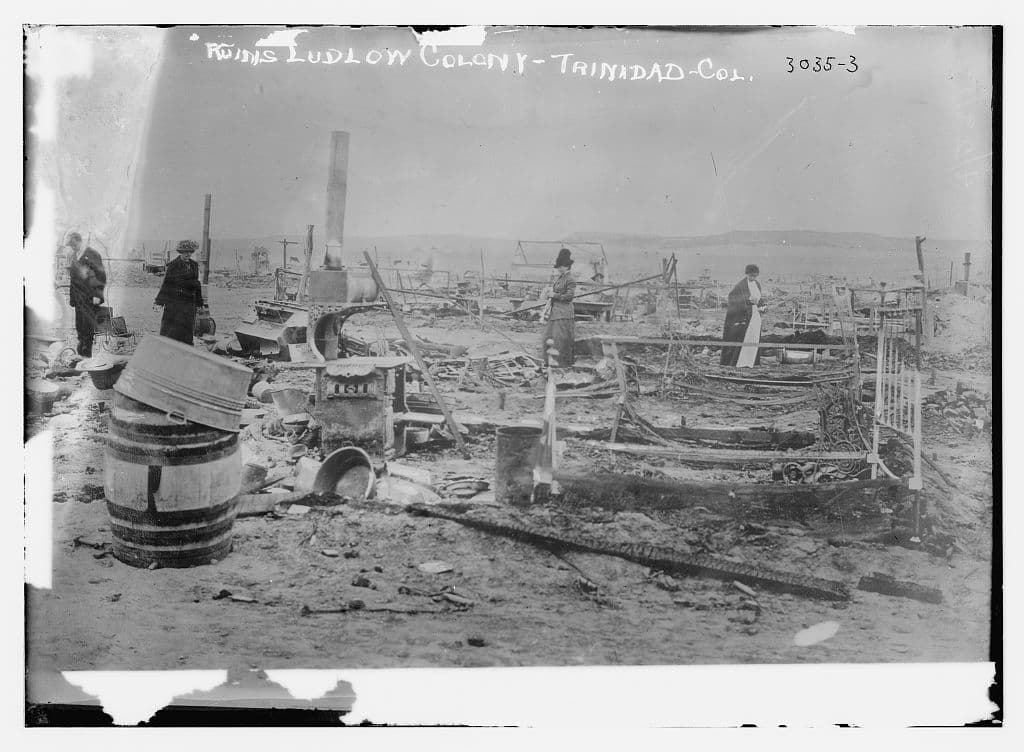
The ruins of the Ludlow tent colony, photographed 29 April 1914, nine days after. Bain News Service. Library of Congress.
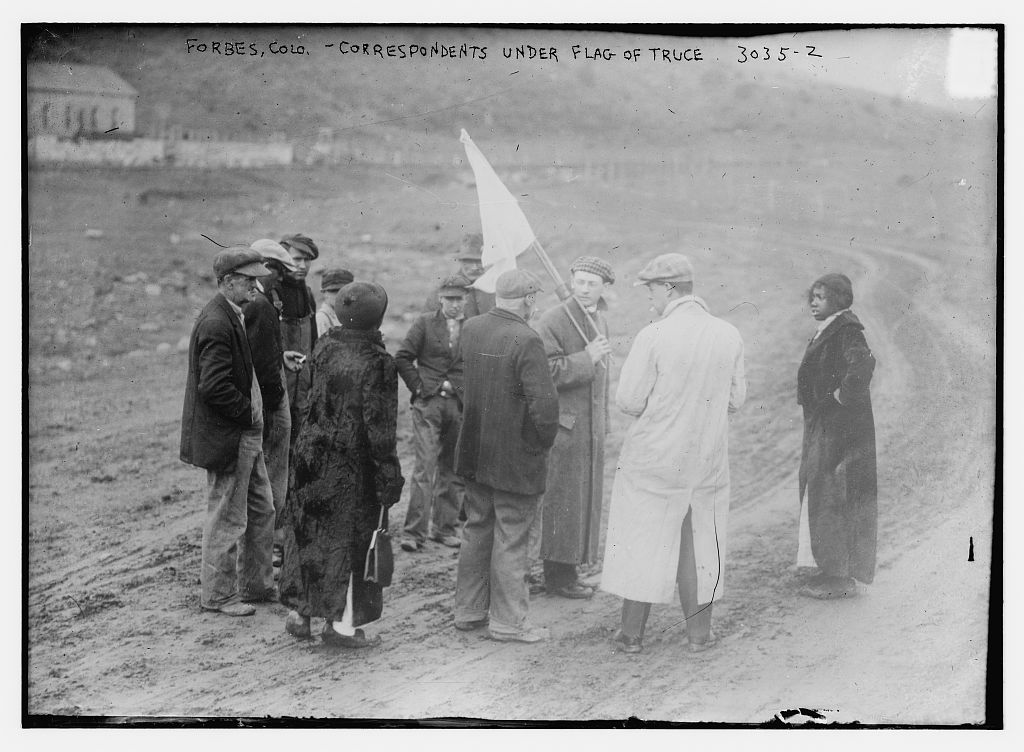
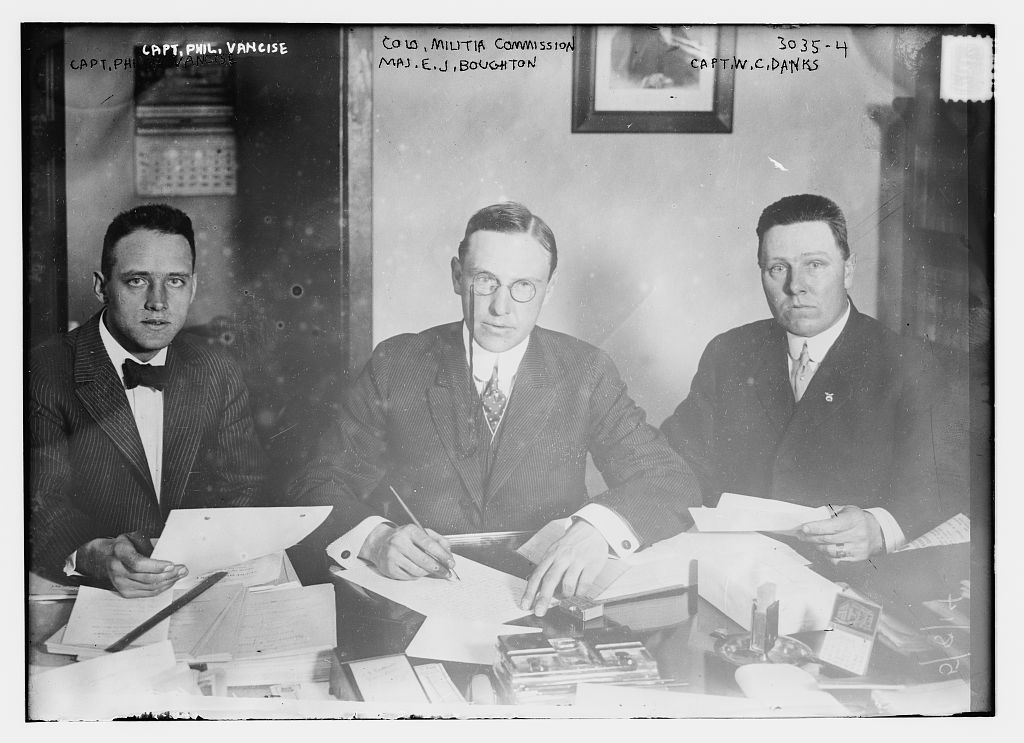
They were living in tents because they had gone on strike, and the houses belonged to the company. The southern Colorado coal strike began in September 1913. The union was the United Mine Workers, District 15. The demands were an eight-hour day, an end to payment in company scrip, an end to the company guard system, enforcement of mine-safety laws already on the Colorado books, and recognition of the union. Colorado's mines killed 7.06 men per thousand in 1912 against a national rate of 3.15. A hundred and ten men died in them in 1913. The largest operator was Colorado Fuel & Iron. John D. Rockefeller Jr. held a controlling interest — forty percent of the stock — and sat on the board as an absentee director from New York. When the men struck, the company evicted them, and up to twenty thousand people walked out of company housing into union tents. Ludlow was the biggest of the colonies: around two hundred tents on wooden platforms. Under some of them the families had dug cellars, for storage, for warmth, and for shelter from gunfire. On the twentieth of April 1914 the Colorado National Guard set a machine gun on the ridge above the camp. Nobody knows who fired first. The fighting ran from mid-morning until past five. By seven that evening the colony was burning. Four women and eleven children were sheltering in a pit under one of the tents when the tent above them caught. Two of the women and all eleven children suffocated. The youngest, Elvira Valdez, was three months old. Louis Tikas, the Greek miner who led the colony, was clubbed with a rifle butt and shot three times in the back. His body and two others lay on the railway tracks for three days. Around twenty people died that day. The exact figure has never settled — different sources give eighteen, nineteen, twenty. What is not disputed is which eleven of them were children. Then the miners came down out of the hills and burned mines for ten days, until President Wilson sent the Army in at the end of April. The strike itself collapsed on the tenth of December 1914, when the union ran out of money. The men got none of what they had asked for. Three hundred and thirty-two strikers were indicted for murder. Twenty-two national guardsmen faced courts-martial. Every one of the guardsmen was acquitted, and the four striker convictions were all thrown out. The one lieutenant found responsible for the killing of Tikas was acquitted, and a Colorado military board commended the militia's truly heroic behaviour and blamed the strikers for the civilians. The union bought the ground in 1916 and put up the monument in 1918. Vandals took the head off one of the figures in 2003; it was restored with private money and rededicated in June 2005. The site became a National Historic Landmark on the sixteenth of January 2009. If one of the Ludlow families is your family, add their names below. Compiled by MyHistoryStone from published reference sources, August 2026. Corrections welcome.
Add to this story
Know something about The Ludlow Tent Colony? Add it here - a memory, a detail, a correction. What you write appears right away, and the page owner can remove any entry.
Loading messages...