 Home
Home
The Story of
The Raising of Galveston
MyHistoryStone Archive
September 8, 1900 – 1911
Galveston, Texas, United States · 10 years
Circa
Galveston, Texas
In motion
4 photographs
The photographs on this page, brought to life.
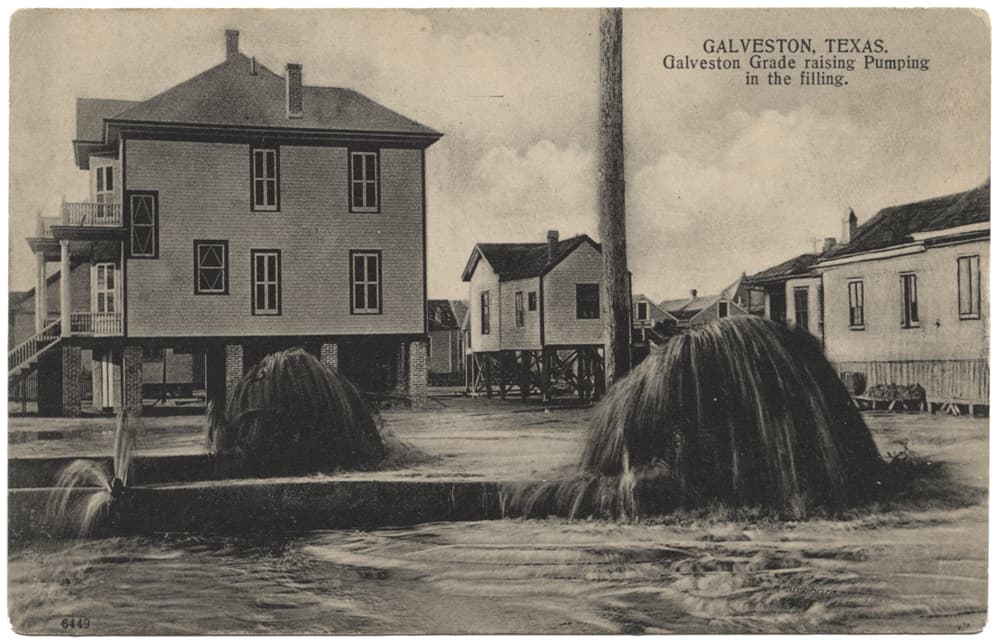
Pumping the fill in beneath the raised houses. A period postcard of the grade raising. SMU Central University Libraries, via Wikimedia Commons.
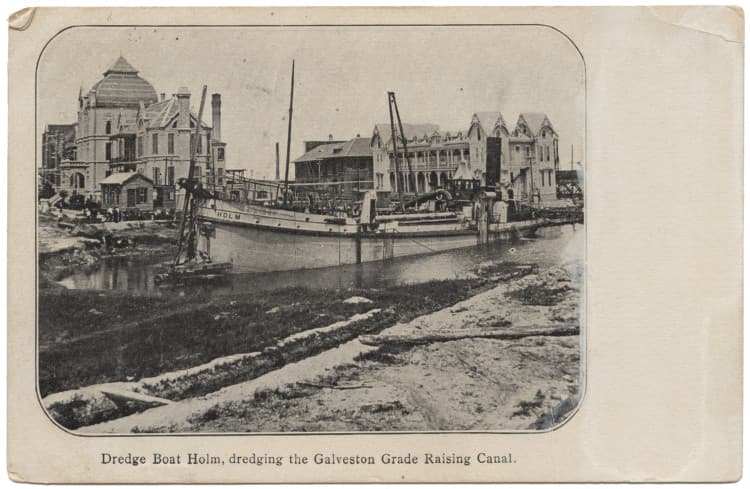
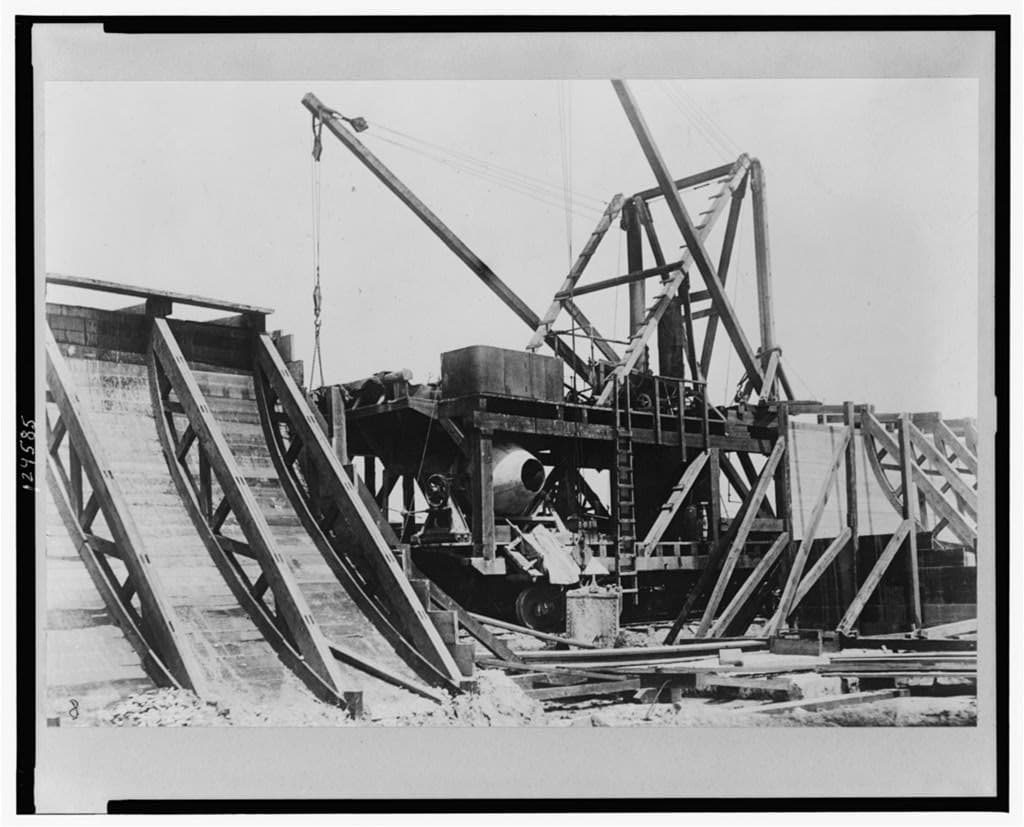
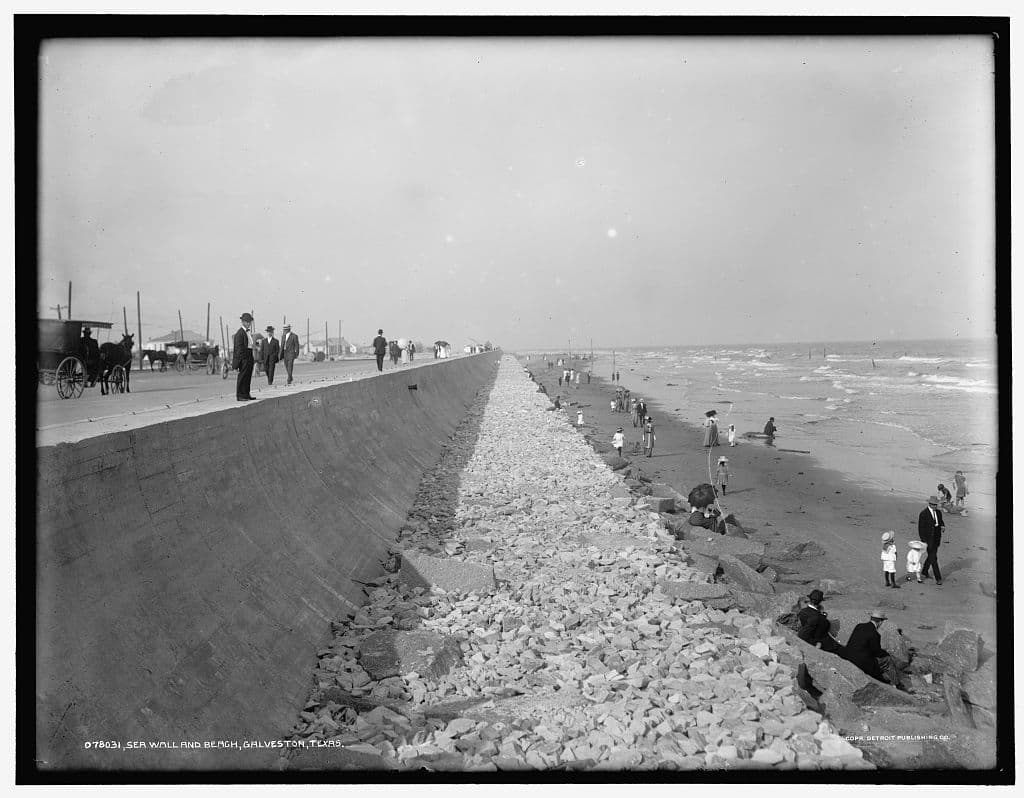
Around eight thousand people died at Galveston in a single night. Then the survivors picked the city up off the ground. The hurricane came ashore on 8 September 1900, driving a storm surge of more than fifteen feet across an island that was little more than a large sandbar. Estimates of the dead run from six to twelve thousand, and eight thousand is the figure most often given. It is still the deadliest natural disaster in American history. A seawall had been proposed before and rejected. The city's own weather man had written in 1891 that a hurricane of real strength could not strike Galveston, and as the storm approached, the Weather Bureau in Washington suppressed the warnings coming from Cuban meteorologists who could see it forming. What happened afterwards is the part that does not get taught. Galveston voted three thousand and eighty-five to twenty-one to pay for a seawall, and built one seventeen feet high that eventually ran more than ten miles. Then it raised the ground underneath the city. Fifteen million cubic yards of sand were dredged out of the shipping channel and pumped in, and more than two thousand one hundred buildings were physically lifted — St. Patrick's Church among them, which weighed three thousand tons. By 1911 roughly five hundred city blocks stood as much as seventeen feet higher than they had before. In 1915 another hurricane threw a twelve-foot surge against the new wall. Fifty-three people died. If your family was in Galveston, in 1900 or afterwards, add what you know below. Compiled by MyHistoryStone from published reference sources, August 2026. Corrections welcome.
Add to this story
Know something about The Raising of Galveston? Add it here - a memory, a detail, a correction. What you write appears right away, and the page owner can remove any entry.
Loading messages...