 Home
Home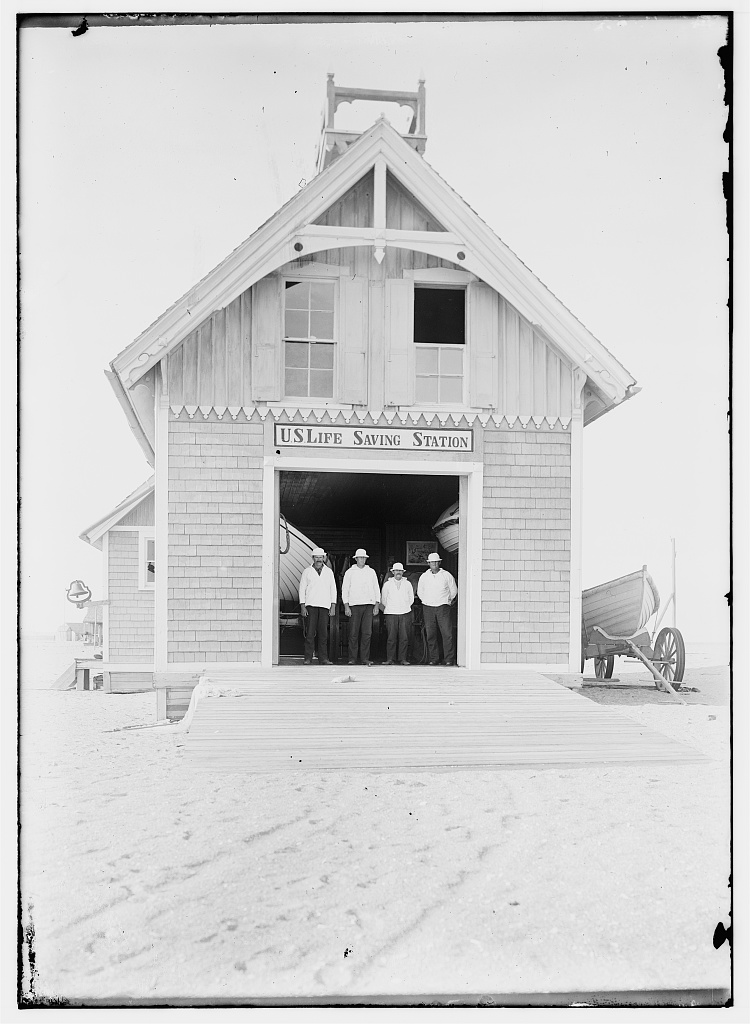
A Tribute to
The United States Life-Saving Service
MyHistoryStone Archive
August 14, 1848 – January 28, 1915
United States · 66 years
Location
The Atlantic, Pacific and Gulf coasts, and the Great Lakes
In motion
3 photographs
The photographs on this page, brought to life.
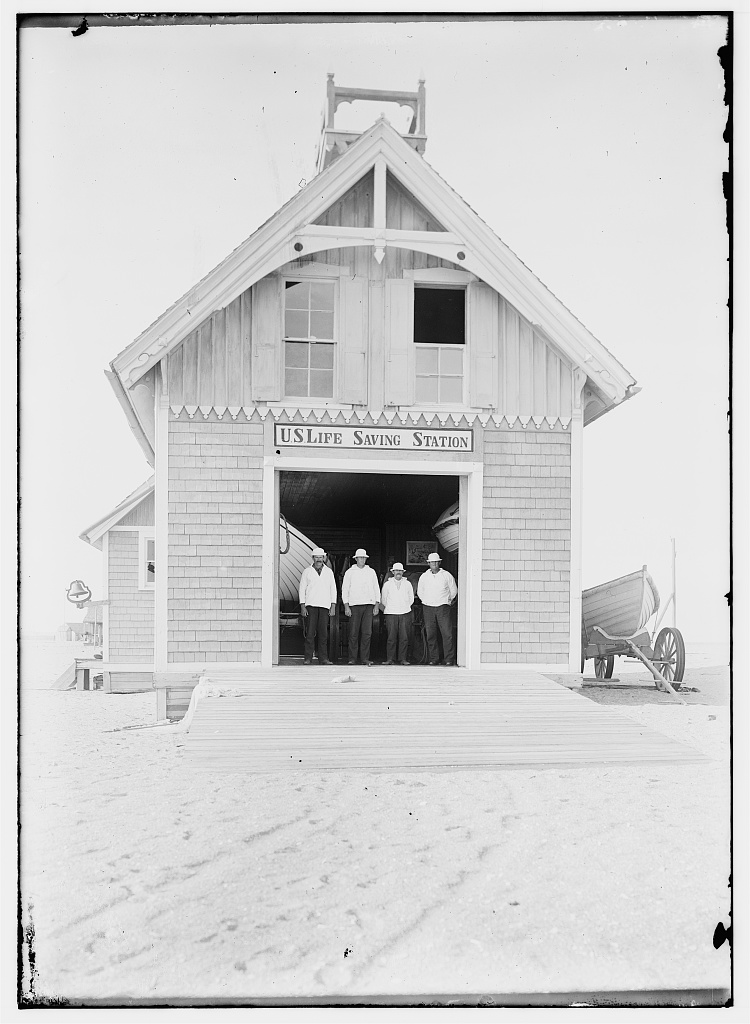
Four surfmen in the doorway of the Kill Devil Hills station, 1902. The Wrights took it. Wilbur and Orville Wright. Library of Congress.
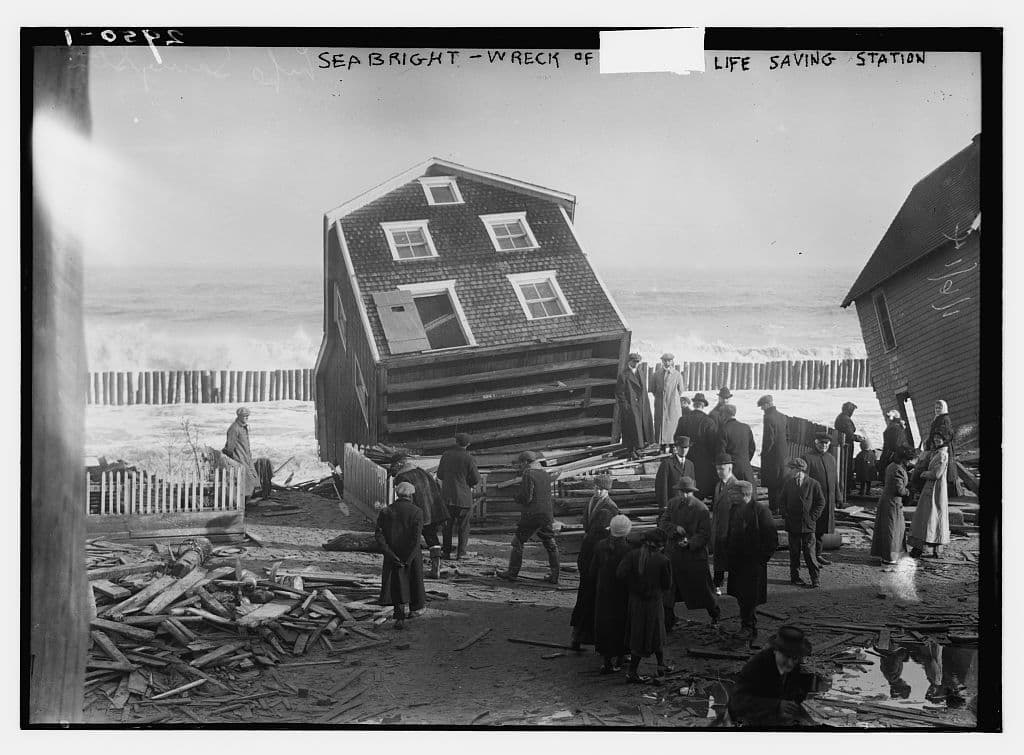
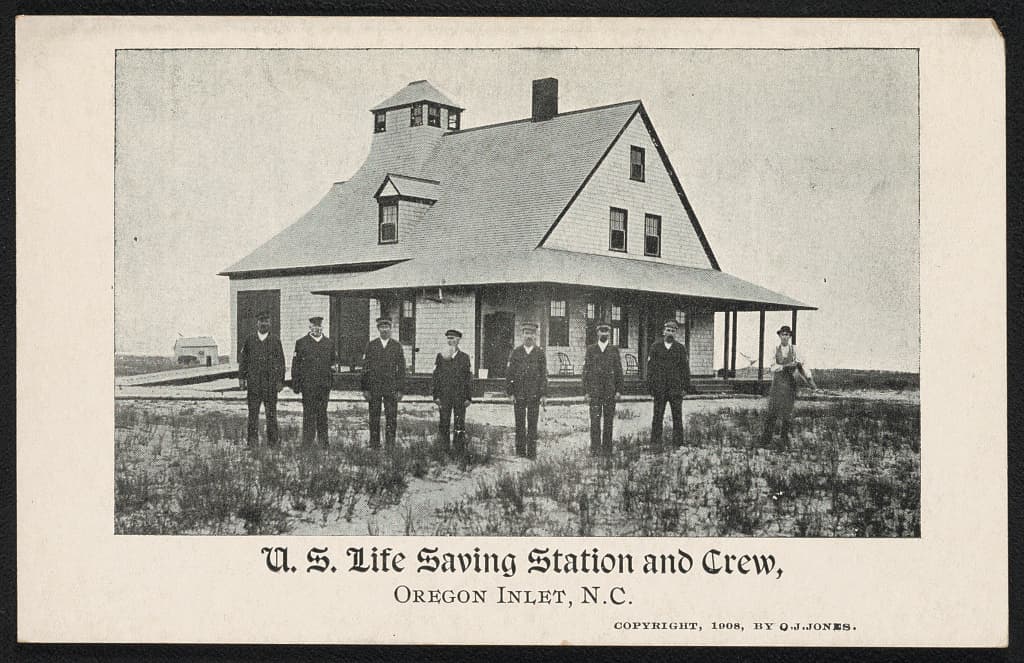
The regulations told them to launch. They did not say anything about getting back. The United States Life-Saving Service ran more than two hundred and seventy stations on the Atlantic, Pacific and Gulf coasts and around the Great Lakes. A station was six men and an open boat, and the work was to row out from a beach into the surf that had just wrecked somebody else. The line the service is remembered by comes out of its 1899 regulations: you have to go out, but you don't have to come back. It started in 1848 with unmanned stations and volunteer crews, an arrangement that worked badly enough that after the Carolina hurricane of 1854 Congress paid for full-time keepers. Not every station was built to launch. The houses of refuge strung along the South Carolina, Georgia and Florida coasts held no rescue crew at all — they were shelter, stocked and waiting for anyone who got ashore on their own. There was one inland station, at the Falls of the Ohio at Louisville. In January 1915 the service was folded into the new Coast Guard and stopped existing under its own name. Two hundred and seventy stations means thousands of surfmen, most of them unrecorded anywhere but a station log. If one of them was yours, add his name below. Compiled by MyHistoryStone from published reference sources, August 2026. Corrections welcome.
Share a memory
Leave a memory or a message for the family. What you write appears right away, and the family can remove any entry.
Loading messages...